
Bold moves needed to beat back omicron
Advertisement
Read this article for free:
or
Already have an account? Log in here »
We need your support!
Local journalism needs your support!
As we navigate through unprecedented times, our journalists are working harder than ever to bring you the latest local updates to keep you safe and informed.
Now, more than ever, we need your support.
Starting at $15.99 plus taxes every four weeks you can access your Brandon Sun online and full access to all content as it appears on our website.
Subscribe Nowor call circulation directly at (204) 727-0527.
Your pledge helps to ensure we provide the news that matters most to your community!
To continue reading, please subscribe:
Add Brandon Sun access to your Free Press subscription for only an additional
$1 for the first 4 weeks*
*Your next subscription payment will increase by $1.00 and you will be charged $20.00 plus GST for four weeks. After four weeks, your payment will increase to $24.00 plus GST every four weeks.
Read unlimited articles for free today:
or
Already have an account? Log in here »
Hey there, time traveller!
This article was published 17/01/2022 (1527 days ago), so information in it may no longer be current.
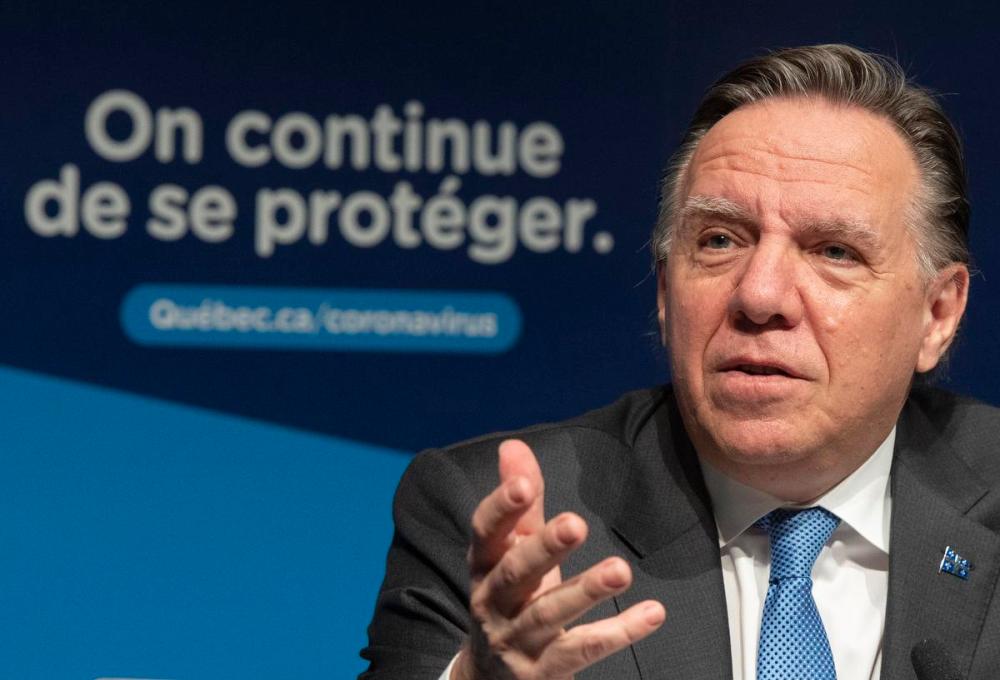
The premier of Quebec ruffled some feathers last week when he proposed a tax — or, in his words, a health-care “contribution” — for people who have refused to get vaccinated against COVID-19.
Further details are pending, but François Legault said it would be a “significant” amount and would affect people who have chosen not to get vaccinated for non-medical reasons.
It may be the boldest plan in Canada to incentivize vaccination against the coronavirus. With boldness, however, usually comes controversy.
There are both ethical and legal obstacles possibly preventing this plan from moving forward. Whether or not you support vaccination, it is not a policy to be taken lightly.
Imposing a tax like this could further marginalize people who have a mistrust in the health-care system and government for historic and present-day injustices, advocates recently told The Canadian Press.
“In parts of the country, let’s say in places like Toronto and Montreal, there are particular populations — Black, racialized, low- and very low-income — who have high COVID burden and lower COVID vaccination,” said the executive director of Black Health Alliance, Paul Bailey.
“We know that they’re already living with the spectre of poverty and many other inequities, whether it be food insecurity, housing insecurity. And so for this specific population, applying a tax to them only further entrenches those inequalities.”
There is also the question of legality.
The health-care system should not judge patients for their behaviour, said Kerry Bowman, who teaches bioethics and global health at the University of Toronto.
“We don’t lecture people that drank too much wine with dinner the night before, people that smoke. You can point out the health risks to people, but you don’t turn them away. You don’t lecture them, and you don’t fine them,” he told the Toronto Star. “This really tears at the roots of the Canada Health Act and the ethics that underpin the Canada Health Act.”
But other experts say the tax would be acceptable because it does not prevent people from accessing health-care services.
At the end of the day, Legault’s proposed health-care “contribution” could just be a bluff to scare holdouts into getting the jab in fear of having to literally pay the price for being unvaccinated.
But it does prompt an important question: how can provinces incentivize the unvaccinated?
Manitoba Premier Heather Stefanson has said the province will not follow in Quebec’s footsteps.
“I think there’s other measures we could probably take before we go to that step,” Stefanson said at a press conference last week.
No surprise there. But it seems like other than reiterating the need to get vaccinated during press conferences — which is still important — the province has become lazy in its efforts to increase vaccine uptake among the defiant holdouts in Manitoba.
When vaccines first started to roll out in Manitoba, the Pallister government made sure people knew about it.
Under the #ProtectMB campaign, which was announced by then-health minister Stefanson as vaccines became available to the public, the province implemented a number of strategies to increase uptake.
This included enlisting vaccine “ambassadors” and partnering with community groups, such as Indigenous-led organizations, to build trust and provide education at the grassroots level.
The province even printed stickers with “I’m COVID-19 vaccinated” in Low German to encourage southern Manitobans to get immunized.
And let’s not forget the 4-3-2-One Great Summer Reopening Path, which rewarded Manitobans for hitting specific vaccine milestones. The uptake was so successful that all milestones were reached before their deadline.
In hindsight, you have to give the Pallister government (and then-health minister Stefanson) some credit for being creative. However, it seems that zest was lost after Manitoba’s vaccine rate peaked and plateaued.
Federal health officials presented new data modelling on Friday that suggests COVID-19 cases could reach unprecedented heights. An estimated 170,000 COVID-19 cases a day are expected in Canada under current health restrictions.
“Most areas of the country are starting or expecting to see heavy increases in daily hospital numbers over the coming weeks,” said Dr. Theresa Tam, Canada’s chief public health officer.
“With several weeks of very intense activity expected to come, we need to do our best now to limit the size of the omicron surge in order to maintain the health system and critical functions of society.”
Health officials continue to say vaccination is key to ending the pandemic and preventing severe outcomes from the virus. As of Friday, 85 per cent of Manitobans had one dose, 78 per cent had two doses and 33 per cent had three doses. This is certainly something worth celebrating, but it is time for the government to get creative again. How will it persuade the remaining holdouts to get vaccinated?
Simple reminders fall flat; we need something bold. Maybe not as bold as Quebec’s proposed no-vax tax, but it will have to be daring enough to turn heads among the unvaccinated population and its impacts should be immediately felt, such as granting more power to the vaccine passport.
Whatever it is, it needs to be quick, because it seems the worst of the omicron variant is yet to come.