
1982 BRIER — Part 2: Playdowns set the field
1982 Labatt Brier Retrospective
Advertisement
Read this article for free:
or
Already have an account? Log in here »
We need your support!
Local journalism needs your support!
As we navigate through unprecedented times, our journalists are working harder than ever to bring you the latest local updates to keep you safe and informed.
Now, more than ever, we need your support.
Starting at $15.99 plus taxes every four weeks you can access your Brandon Sun online and full access to all content as it appears on our website.
Subscribe Nowor call circulation directly at (204) 727-0527.
Your pledge helps to ensure we provide the news that matters most to your community!
To continue reading, please subscribe:
Add Brandon Sun access to your Free Press subscription for only an additional
$1 for the first 4 weeks*
- Enjoy unlimited reading on brandonsun.com
- Read the Brandon Sun E-Edition, our digital replica newspaper
*Your next Free Press subscription payment will increase by $1.00 and you will be charged $20.95 plus GST for four weeks. After four weeks, your payment will increase to $24.95 plus GST every four weeks.
Read unlimited articles for free today:
or
Already have an account? Log in here »
Hey there, time traveller!
This article was published 10/08/2022 (1395 days ago), so information in it may no longer be current.
Unlike today — when betting ads bombard viewers as they try to watch any sporting event — there wasn’t a list of odds printed up going into the 1982 edition of the Labatt Tankard at the Winnipeg Arena.
If there was though, it would be hard to find a bigger favourite than 23-year-old Kerry Burtnyk and his rink from the Assiniboine Memorial Curling Club.
After capturing a gold medal at the 1979 Canada Winter Games in Brandon, Burtnyk reached the semifinal at the 1980 provincial men’s playdowns before losing to eventual champion Earle Morris.
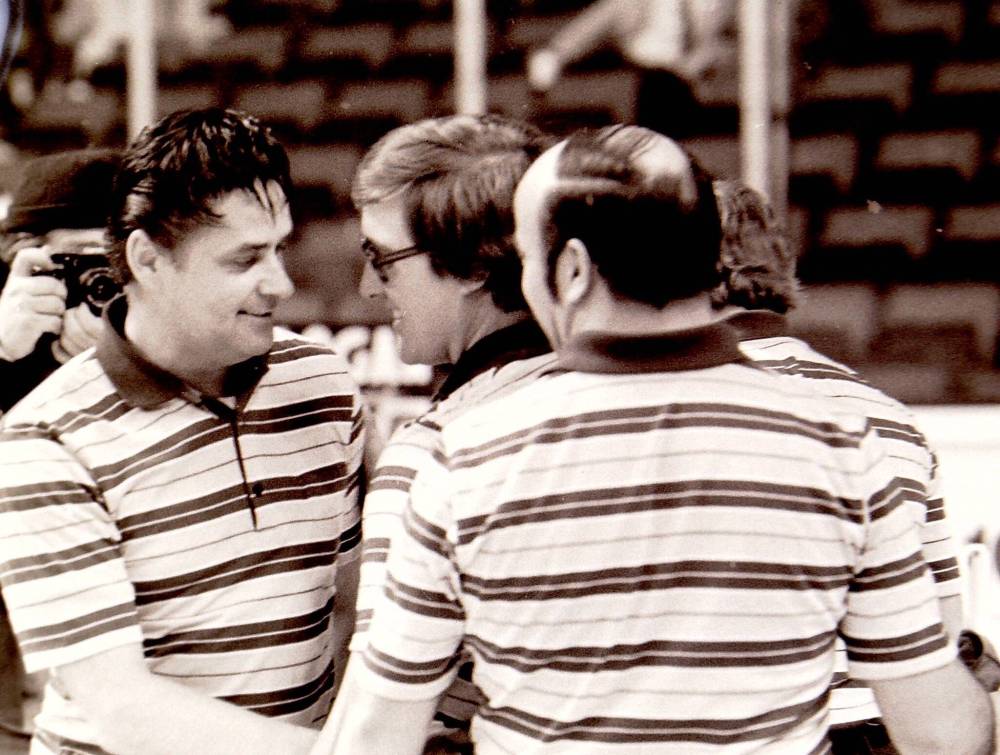
In 1981, he and third Mark Olson, second Jim Spencer and lead Ron Kammerlock earned the opportunity to wear the Buffalo by defeating Murray Nye at the Keystone Centre.
At just 22 years of age, Burtnyk became the youngest skip ever to win the Brier as he scored three points in the final end in Halifax to stun Northern Ontario’s Al Hackner in a 5-4 affair.
“That team really changed how the game was played,” former Brandon Sun sports editor Jack Gibson said. “In a lot of ways, they brought an offensive point of view that wasn’t common back then.
“Back in those days, when a team would put up a corner guard, the other guys would just take it out. The Burtnyk team started going behind those corner guards. Even though they were young kids going up against men, they changed things up to the real wide-open offensive style there is now.”
Following a bronze medal result at the 1981 Air Canada Silver Broom in London, Ont., the rink had a slight change to their lineup for the following season as John Allardyce came in at lead to replace Kammerlock, who stepped back from the sport due to work commitments.
Even with a new face in the mix, Burtnyk had picked up where he had left off on the cashspiel circuit and was named as the top seed going into the Tankard.
However, it was a Westman rink that wasn’t even among the 12 squads ranked by the Manitoba Curling Association that would end up earning the chance to represent the province at that year’s Brier in Brandon.
Bringing home the Buffalo
It had been a solid 1981-82 campaign for Mel Logan and his rink from Souris.
Logan — who played alongside third Doug Armour, second Lloyd Lang and lead Allan Granger — had come out on top at bonspiels in Boissevain and Virden, in addition to being the runner-up to Darryl Andrews in the Westman Super League.
So how did he feel about his chances going into the provincial playdowns?
“Well, we were hoping we’d win a few games but we weren’t confident to the level that we thought we would win the whole thing,” Logan said. “Back then, there were probably 24 out of the 32 teams that could have (beat).”
“I guess Kerry would have been the favourite, but Vic Peters was always tough and Gary Ross had been in five finals by that point,” Armour added. “We didn’t curl those teams a lot … but we weren’t scared of them.
“We were solid at each position. We weren’t the prettiest team in the world to watch as some of our deliveries were a little bit off course, but we usually got the rock where we wanted it to go at the end.”
The Logan rink started off strong by beating Jim Sampson of the Fort Rouge in a 5-4 affair, engineering a 6-5 upset of Orest Meleschuk’s second-seeded rink from Lac du Bonnet and picking up a 5-4 victory over Jim Dewart of Altona.
Following a 5-4 loss to Peters in an ‘A’ event final, the Souris quartet rebounded with 9-4 triumphs over Jeff Tipping of Elmwood and Mike Riley’s Heather rink to earn a spot in the playoffs.
The semifinal rematch with Peters’ squad from the Rossmere was a back-and-forth affair that went to an extra end, where Logan made an open hit on a rock in the eight-foot for two points and a 6-4 victory.
According to Logan, the most crucial moment of the week came on his final stone without hammer in the 10th end, as he made a freeze to the four-foot and forced Peters into taking a single.
“If I don’t make that shot … we’re history,” Logan said.
Awaiting him in the final was Ross and his rink from the Miami Curling Club, who had knocked out Burtnyk in a playoff qualifier 7-4 and beat John Bubbs’ Wildewood squad 9-7 in the semifinal.
For Ross, the meeting with Logan marked his sixth attempt at capturing the Purple Heart.
In the old best-of-three format, he went the distance before losing to Bruce Hudson in 1964, was swept aside by Hudson and Meleschuk in 1967 and 1972 respectively and could only watch on as Don Barr stole a pair of games in 1974 after he had prevailed in the first meeting.
At the Keystone Centre in 1978, Ross had won a 5-4 contest to force a winner-take-all affair with Doug Harrison, only to lose the rematch by a score of 8-2.
“I just knew that we had to keep the pressure on Gary, as he had been in so many finals by that point and was a bit of a hard-luck loser,” Armour said. “We knew that we wanted to get into a position where one shot meant the difference in the whole game.”
“I said to the guys before we even started that, ‘I don’t care whether we are up or down after five ends … as long as we’re close,’” Logan added. “I had a feeling that if we stayed close in the first five, I figured we could beat ‘em in the last five, because Gary would probably be thinking, ‘I’ve been in this spot before.’”
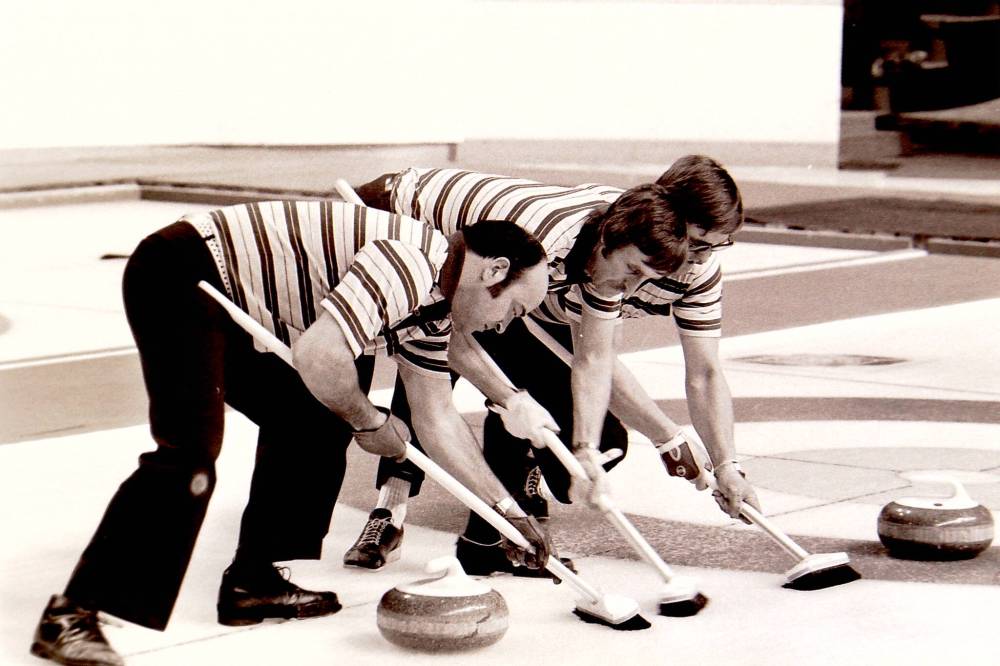
Logan’s assumption proved to be correct, as he entered the second half trailing Ross 2-1.
By that point, he and Armour had their draw weight figured out and began to make their move.
“I had gambled on a rock that wasn’t quite a corner guard, it was more closer to centre, but we went around it anyway,” Logan said. “Doug made his shot perfectly and Gary just touched the guard on his first.
“I followed Doug in and put a second rock right on top of his. Then Gary just clipped it (the guard) over by a couple of inches on his last shot and I had a free draw for three.”
Now trailing 4-2, Ross found himself facing four and needing to make a draw to the button on his final shot in the seventh end after Logan made a perfect hit-and-roll.
“They actually swept it a bit at the start, which I was surprised about,” Logan said. “As it (the rock) came down I said to Doug, ‘You better get on that,’ as it hit the tee-line. I knew then that we were going to steal two for sure, but the rock really slid good and we ended up stealing four.”
“When I swept the rock through the house, it was all I could do to not throw my hands up in the air,” Armour added.
An eighth end only delayed the inevitable outcome as Logan and his teammates had earned a spot at the Brier with an 8-2 victory.
“To get the big prize was kind of unbelievable,” Logan said.
“We never really thought about the fact that it was going to be in Brandon until after the game,” Armour added. “I think that was when it really hit home.”
As the Souris rink celebrated, it was yet another tough finish for Ross, who never again reached the provincial men’s championship contest.
“(Losing six finals) was completely unfair to Gary’s reputation as he was such a fine player,” said Manitoba Curling Hall of Fame vice president Resby Coutts.
“When he won the provincial and Canadian senior men’s title in 2001, I don’t think there’s been a more popular winner in Manitoba curling. People were so happy to see him finally get that victory.”
Double Extra End
While Logan’s win was dramatic, his run to the title had nothing on what Mark Noseworthy accomplished in Newfoundland.
The runner-up to Burtnyk at the 1979 Canada Winter Games, Noseworthy and his rink from the St. John’s Curling Club headed to the playdowns in Labrador City as the 16th and final squad to qualify for the event.
“We were just happy to be there at that point,” said Noseworthy, who was joined on his team by third Randy Perry, second Eugene Trickett and lead John Wheeler.
“Then we found out we were playing the top seed Jim Ward. He had been to the Brier (in 1973), had been to the final three or four times and was on his home rink. His reputation proceeded him and we were absolutely terrified.”
The first-year rink proceeded to “throw caution to the wind” against Ward and that approach paid off as they upset the top seed.
Three more wins followed and Noseworthy found himself as the ‘A’ event champion.
“We were on cloud nine at that point,” he said. “We were automatically in the provincial final and we had to be beaten twice. By that time, we were pretty much rolling with the punches.”
After losing his first matchup to clubmate Geoff Cunningham, Noseworthy was down by a score of 5-4 going into the 10th end of the provincial final and was without the hammer.
“We put up six guards and they peeled six guards,” Noseworthy said. “I put up another guard on my first and they ended up nosing it … so I just came around their guard and drew to the back four.
“He had a draw for the win and they waited and they waited until they got to the hog line. They hammered away with their brooms but it ended up three or four inches short and we stole one.”
The 11th end was another guard-peel feet until Noseworthy’s final stone, when he elected to play a draw out to the wings.
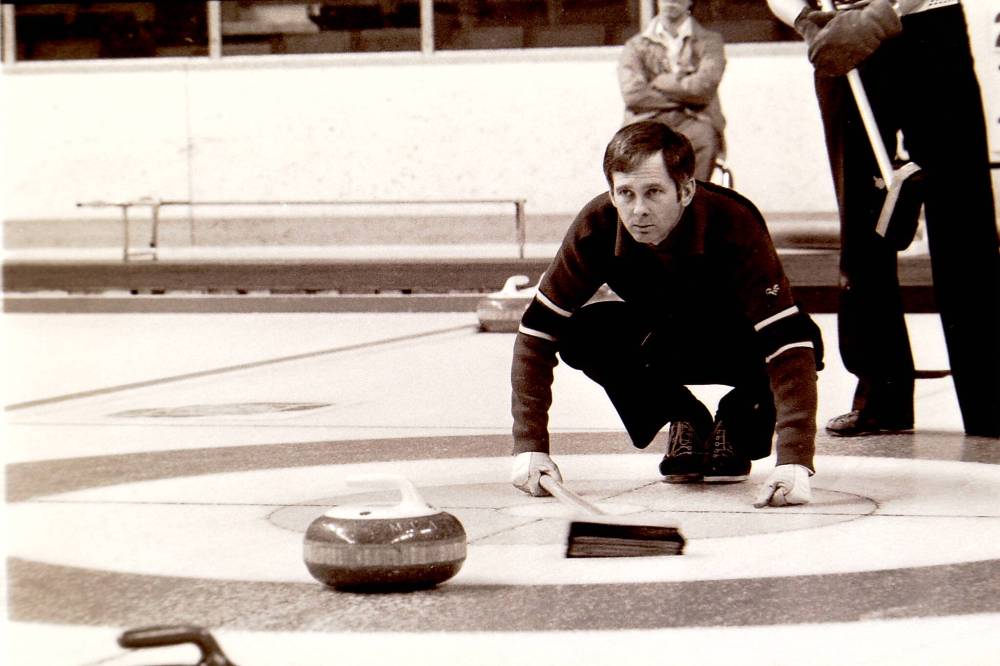
Although Cunningham just needed a piece of the eight-foot to win the game, he elected to throw a takeout, only to have his shooter roll across the house and stop about an inch outside of the rings to set up a 12th frame.
“None of us on the ice could believe what was happening and the fans were in the same boat,” Noseworthy said.
The second extra end played out similarly to the 10th, only this time Cunningham needed a draw to the four-foot to win the provincial title.
“I guess they were worried about what had happened two ends earlier because they just pounded the rock from hog line to hog line,” Noseworthy said. “They yelled ‘Whoa’ once they crossed the hog line and the rock ended up sliding about a foot too long.”
It was another steal of one for the 22-year-old skip as he and teammates nabbed their first Brier berth with a dramatic 6-5 comeback.
“We were on the next sheet doing cartwheels and jumping up and down,” Noseworthy said. “We just couldn’t believe our good fortune.”
Youth is Served
Over in Saskatchewan, a 23-year-old skip was realizing his dream.
Two years earlier, Brad Heidt and his friend Wayne Charteris were outside of a curling rink in the village of Coleville (population 280 according to the 2021 census) and listening to the radio as Rick Folk captured the province’s seventh Brier title, and their last to date.
“I’m pretty sure we ended up being 10 minutes late for our game,” Heidt joked.
“At that point, Wayne and I decided that our goal was to win the province during the next 10 years. As it turned out, it only took us two years.”
Heidt’s rink from Kerrobert, which featured Charteris at third, John Whetter at second and Warren Rechenmacher at lead, hadn’t played a ton together, but got hot when it mattered the most.
“Our goal was to get out of our districts and just make it to the regionals, but then we just started playing good and getting on a roll,” Heidt said.
“We might have had a little bit of good fortune being small town curlers and playing on every ice condition from really good to really poor. The top teams from Saskatoon seemed to struggle on the ice in Rosetown during the regionals, which was a little bit trickier, but we adapted to it a lot quicker.
“It’s not like we weren’t making shots either. We were a big hitting team back then and we were making a lot of double takeouts. It was a lot different game than it is now.”
Like Noseworthy, Heidt won the ‘A’ event at the provincials in Yorkton and needed to be beaten twice in the final.
The first meeting with Regina’s Ron Brucker didn’t go as planned, as Brucker scored a four-ender in the eighth end to take a 10-5 victory and snap a 13-game win streak that Heidt had gone on during the playdown process.
Once that game ended, Heidt caught a glimpse of his dad Harvey, who had been watching the action in the stands.
“He rarely had a chance to watch me curl as he was always babysitting the 150 heads of cows we had on the farm,” Heidt said. “He got our neighbour to take care of them and he was sitting right in the middle (of the stands) on top of the ice as we went out for the first practice.
“As we were coming off (the ice) from that loss to Brucker, he got up from his seat, went down to the next sheet and sat down right in the middle (of the stands) almost two hours before the game. He wasn’t going to miss out on a minute of the action and that was a big motivating factor for me.”
In the rematch against Brucker, Heidt found himself trailing 4-2 after seven ends and decided to give himself a pep talk.
“It’s kind of renowned in Saskatchewan curling circles,” Heidt said. “I had just thrown a bad shot (which would lead to Brucker having a free draw for two) and I just went for a walk behind the scoreboard to have a talk with myself.”
According to John Chaput’s recap in the Regina Leader-Post, the crowd could “see Heidt’s fists shaking underneath the scoreboard and reacted to the site with considerable laughter.”
That seemed to turn things around for Heidt as he took the lead with a three-ender in the eighth and followed that up with a steal of two in the ninth to take a 7-4 win and earn a trip to Brandon.
“I think our dads actually ended up being the big winners, as they had bought us in every Calcutta and were more lucrative from the whole deal than we were,” Heidt joked.
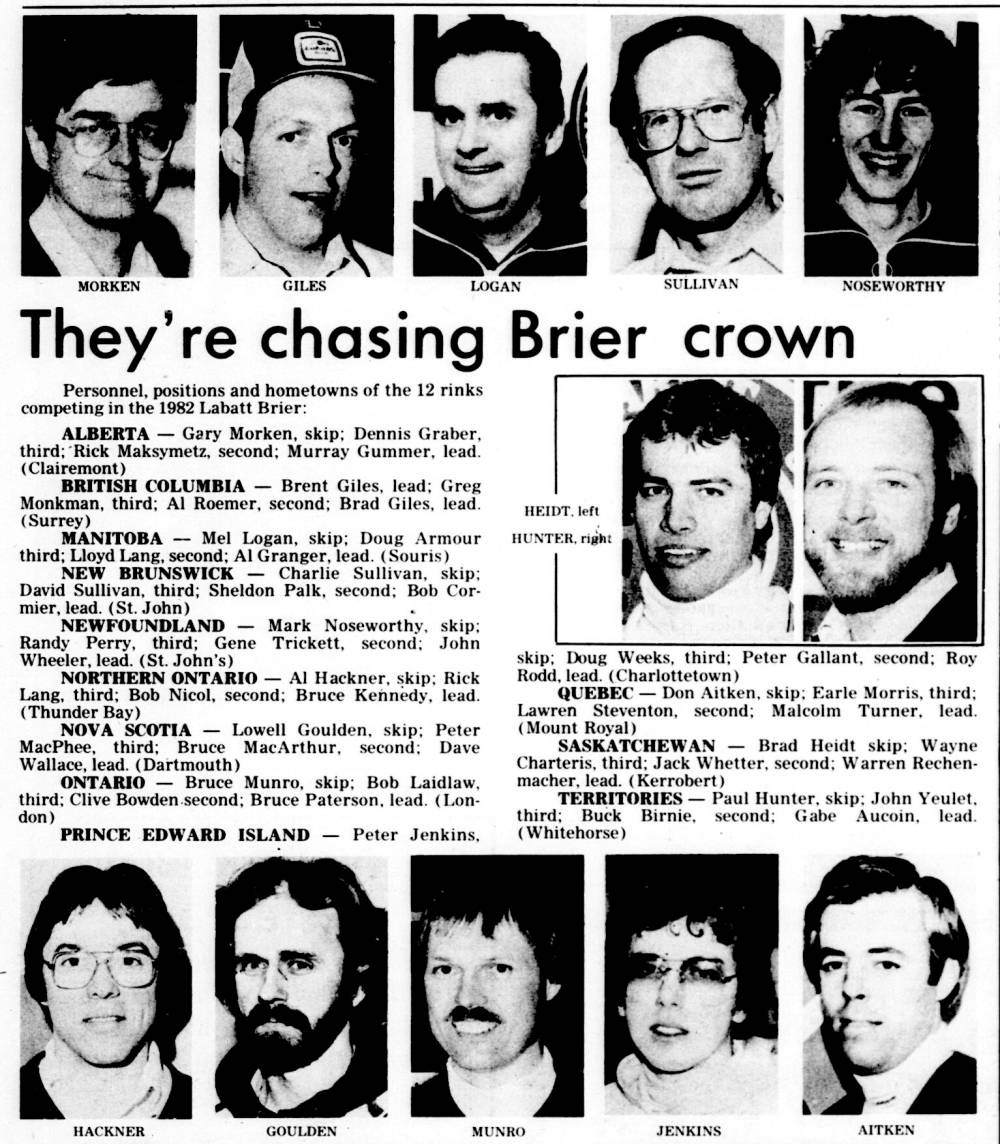
“I don’t think the win settled in for us until the following day. I remember driving back home with the guys and we all kind of realized, ‘We’re going to the Brier … this is it.’”
The surprising wins for Logan, Noseworthy and Heidt were indicative of many of the playdowns in 1982, as there were several upsets and unknown victors from across the country.
The exception to the rule, however, was in Northern Ontario.
The Iceman Cometh
In the span of a couple of years, Al Hackner’s rink from the Fort William Curling Club in Thunder Bay, Ont., had become one of the best in the country.
The quartet — which featured Rick Lang at third, Bob Nicol at second and Bruce Kennedy at lead — reached the Labatt Brier final in their first two attempts, but a win had proven elusive.
The Northern Ontario champions fell to Folk in 1980 and lost a heartbreaker to Burtnyk a year later.
“We weren’t down on ourselves at all over those results,” Hackner said. “We kept pretty positive and as the years went on, we had grown a ton as a team and we were a lot stronger by the time 1982 rolled around.
“Our chemistry had improved by that point, but individually we were better as well. We were all young guys then and throwing rocks all the time. It doesn’t take much to win or lose a game and it was a marginal increase in our abilities that put us over the top.”
As the team swept aside the opposition on their way to a third straight provincial crown, it was the play of the 27-year-old skip known as The Iceman that people took notice of.
“He’s the Wayne Gretzky of curling,” a fan reportedly said at the Northern Ontario playdowns in Marathon, Ont., in North Bay Nugget sports reporter Mike Umphrey’s recap of the event.
Lang — who had won a Brier as the third for Bill Tetley’s squad in 1975 — noted that Hackner seemed to have a magic element about him.
“He never had a bad game,” Lang said. “I remember the first time our rink played together at a bonspiel as we trying to get things figured out. The three of us (Lang, Nicol and Kennedy) were struggling and here’s Al making everything in some tough conditions.
“Al had this focus that was rare … and he had an uncanny ability for strategy, especially at that age. Whenever I watched him I’d say, ‘Man, this guy is good,’ and those thoughts were confirmed for me when we became teammates.”
Unlike today when results from playdowns are known in an instant, the Hackner rink had to wait a few days before finding out what went on elsewhere.
When all of the outcomes were revealed, many of the top curlers in the country were nowhere to be found, which led to many pundits pencilling in the Northern Ontario squad as the team that would stand on the top of the podium in Brandon.
“That scared the hell out of us,” Lang said.
“In those days, anyone who got to the Brier was a good team. So not only were we dealing with that, but we still had our own doubts about not having been able to pull it off when we had a great chance to win the year before.”
The tournament favourites wouldn’t have long to wait for their first real indicator of how the week at the Keystone Centre would go, as they had to go up against Logan’s Manitoba champions in the opening draw.
» See Part 3 of the five-part series in Thursday’s edition of the Brandon Sun.
» lpunkari@brandonsun.com
» Twitter: @lpunkari