
Derek Ingram breaks down psychological side of golf
THE MENTAL GAME — PART 3: GOLF
Advertisement
Read this article for free:
or
Already have an account? Log in here »
We need your support!
Local journalism needs your support!
As we navigate through unprecedented times, our journalists are working harder than ever to bring you the latest local updates to keep you safe and informed.
Now, more than ever, we need your support.
Starting at $15.99 plus taxes every four weeks you can access your Brandon Sun online and full access to all content as it appears on our website.
Subscribe Nowor call circulation directly at (204) 727-0527.
Your pledge helps to ensure we provide the news that matters most to your community!
To continue reading, please subscribe:
Add Brandon Sun access to your Free Press subscription for only an additional
$1 for the first 4 weeks*
- Enjoy unlimited reading on brandonsun.com
- Read the Brandon Sun E-Edition, our digital replica newspaper
*Your next Free Press subscription payment will increase by $1.00 and you will be charged $20.95 plus GST for four weeks. After four weeks, your payment will increase to $24.95 plus GST every four weeks.
Read unlimited articles for free today:
or
Already have an account? Log in here »
Hey there, time traveller!
This article was published 14/06/2024 (738 days ago), so information in it may no longer be current.
Take a deep, deep breath through your nose, and another little one for good measure. Exhale through your mouth, and repeat a few times.
According to hundreds of studies, you’ll feel noticeably less stressed now.
Golf Canada coach Derek Ingram encourages this technique, the “Physiological sigh,” with players at all levels.

Manitoba's Derek Ingram, who coaches some of the top Canadian golfers, has written two books on the psychology of golf. (Winnipeg Free Press files)
“It will help you relax and calm down super quickly,” Ingram said. “It’s scientifically proven that with one or two of those breaths, you’ll be a lot more relaxed, a lot clearer and have a lot less anxiety or stress in your body.”
During the past week, The Brandon Sun has examined the psychological side of sport. It seems only fitting to focus a part of the series on one especially mentally demanding sport with insights from the man who wrote the book — two books, actually — on golf psychology.
The Winnipegger has taught golf for decades, played on the PGA Tour Canada, and coached nearly all the Canadians currently playing on the PGA Tour.
He spent 12 years with Mackenzie Hughes, nine with Adam Svensson, six with Nick Taylor, three or four with Adam Hadwin, and currently coaches Corey Conners, Taylor Pendrith and DP World Tour player Aaron Cockerill, who’s from Stony Mountain.
MENTAL TIPS
While Ingram is more of a technical coach, he feels mental approach and attitude go hand in hand with physical skills in his coaching.
He also takes an individualized approach to the majority of his work with golfers but emphasizes three key mental tips.
The first is the physiological sigh as a way to relax.
The second is a mindset shift to embracing and enjoying the challenges you face on the golf course.
“Just be aware that it’s not going to be easy, it rarely is, maybe one out of 10 rounds is easy, if that,” Ingram said.
The third is positive self-talk, especially when things aren’t going to plan.
“You can’t bull… yourself like, ‘Oh, I’m playing great today,’ but a little bit of positive self-talk… like ‘OK, let’s see what I can do with that.’’’
STRESS
The big issue golfers face is usually nerves.
Ingram doesn’t consider them an issue at all.
“My personal feeling is we’re going to take a two-pronged approach to that,” he said.
“One, we’re going to have some tools in the toolbox to deal with high-stress situations that we’re going to get. Two, we’re going to want them, embrace them and be glad for them because when you’re highly stressed, your body’s recruiting blood, adrenalin and hormones to help you perform at your best.
“By having the ability to self-manage, you can certainly manage the negative momentum swings and possibly even capitalize a little bit on the positive momentum swings.”– Derek Ingram
“Lots of people play their best when they’re in that situation.”
His idea is nervousness kicks in when we care, whether it’s down the stretch with a chance to break 100, 90, 80 or par for the first time, the last hole of a league match or money game with friends, to win a local event or a major championship.
It’s important to put yourself in those situations and understand how your body and mind respond. Some players rush and make erratic swings, others get shaky and struggle to hit a putt straight. Every honest golfer will admit negative thoughts have crept in before big shots in their past.
Circling back to Ingram’s tips, it’s time to slow down, take some deep breaths and include positive self-talk while embracing the exciting challenge ahead.
FOCUS
If you hit a mediocre drive and spend the entire walk or drive to your ball thinking about what went wrong, or stick an approach tight and spend the next three minutes thinking about how the impending birdie can help your score, it will be tough to focus by the end of your round.
Ingram says it’s important to take little “vacations” throughout the round. Enjoy the weather, conversation with playing partners and the simple fact you’re not in the office.
Narrow your focus for 30 seconds to decide on a shot, and 30 more to execute it.
Once you hit the ball, the rest is out of your control so it’s time to react, accept the result and move on. Ingram says it’s OK to show some emotion, especially when the shot means a lot. “You can’t bullshit guys who miss putts for $100,000 … but on a smaller scale, everyone’s doing that. They have to regroup, they have to focus, there’s a level of acceptance and having a post-shot routine that allows you to do that [helps],” Ingram said.
“We just don’t want to get too high or too low and when we do get too high or too low, we want to be there quickly and get back to a more manageable state.”
GAME PLAN
In the end, this game is about doing the same thing repetitively and consistently.
Ingram urges players to devise a game plan for every round that maximizes their skill set and doesn’t change based on how previous holes have gone.
It doesn’t have to be complex, just three or four mental focuses
Pendrith had to lean on this idea once when he three-putted, missing a two-footer, then missed another putt he should make more often than not the following hole.
Instead of blasting away and taking dead aim at tough pin positions, he stayed calm and drained a 20-foot birdie putt, then rolled another in two holes later and posted a 2-under opening round to put himself in position to make the cut.
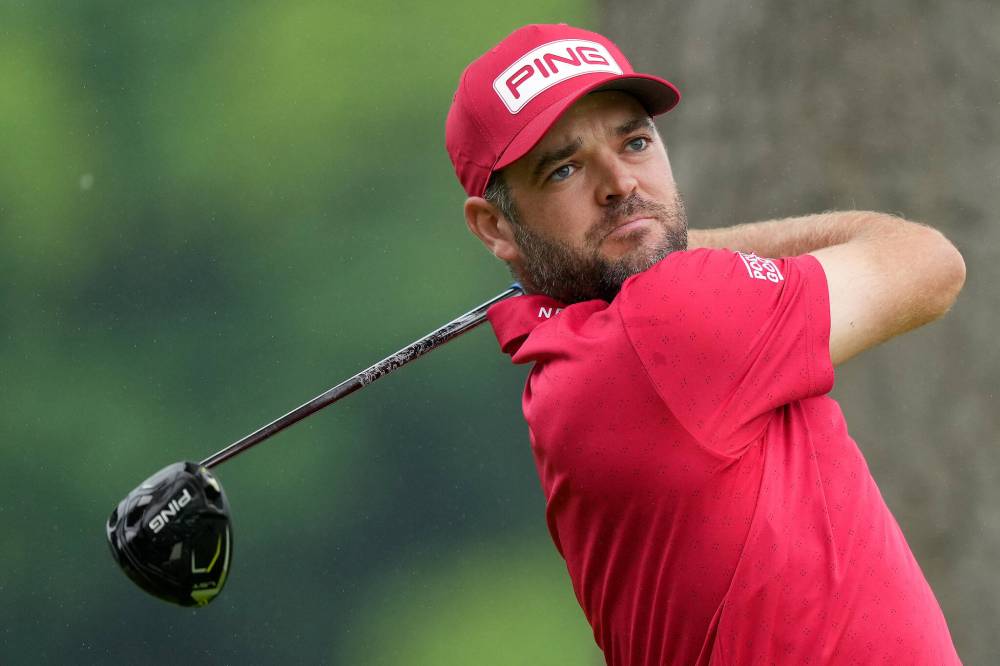
Derek Ingram said Corey Conners, shown during a PGA Tour event earlier this season, has learned a lot about the mental side of golf through experiences in high-pressure situations. (The Canadian Press)
“By having the ability to self-manage, you can certainly manage the negative momentum swings and possibly even capitalize a little bit on the positive momentum swings,” Ingram said.
“In a vacuum, does [momentum] really exist going forward? Maybe it doesn’t, but I do think we’re humans and sometimes we build off that positive momentum and sometimes we build off that negative momentum.”
The work Ingram and Pendrith have put in during the past few years paid off in May when he captured his first PGA Tour victory at the CJ Cup.
IMPACT
Ingram doesn’t take all the credit for Conners’ first PGA Tour win at the Valero Texas Open in 2019. However, he firmly believes the biggest reason he got over the hump after a handful of chances to win in the year leading up to it was his mental game.
Conners played the final round of the 2018 Valspar Championship with Justin Rose, leading the Englishman, Brandt Snedeker and a guy nicknamed “Tiger” by one stroke. Conners collapsed, shooting 77 to let it slip away.
Most of the crowd followed Woods, understandably, and roared while Conners was over the ball on a few occasions. Ingram said it bothered Conners, but he reflected on the experience and returned stronger.
“Learning from those experiences, knowing he’s Corey Conners, not Tiger Woods, that four or 5,000 people aren’t necessarily going to be super quiet for you, they’re not going to be pro-Corey for you,” Ingram said. “Understanding that, accepting that and still being able to play great golf really helped him when he won his first tournament.”
Conners had a few close calls between the collapse and his first victory, which earned him a trip to the Masters. Eventually, Ingram said, he developed a mindset of, “If my good golf is good enough to have me leading after three rounds … why not four?”
It’s easier said than done, of course. Until a PGA Tour player earns their elusive first win, or until a beginner makes their first par, breaks 100, 90 or 80, or achieves any other goal, they’ll have doubts.
“Whether it’s a 30 handicap trying to break 100 for the first time or it’s Corey Conners trying to win a major for the first time … you still feel it,” Ingram said. “Having a plan and working your plan is super important.”
The first step towards your golf goal is your next shot.
So take a deep breath through your nose, then another small one and let it out. Then, let it fly.