
Hlady cherishes time with Wheat Kings
Advertisement
Read this article for free:
or
Already have an account? Log in here »
We need your support!
Local journalism needs your support!
As we navigate through unprecedented times, our journalists are working harder than ever to bring you the latest local updates to keep you safe and informed.
Now, more than ever, we need your support.
Starting at $15.99 plus taxes every four weeks you can access your Brandon Sun online and full access to all content as it appears on our website.
Subscribe Nowor call circulation directly at (204) 727-0527.
Your pledge helps to ensure we provide the news that matters most to your community!
To continue reading, please subscribe:
Add Brandon Sun access to your Free Press subscription for only an additional
$1 for the first 4 weeks*
- Enjoy unlimited reading on brandonsun.com
- Read the Brandon Sun E-Edition, our digital replica newspaper
*Your next Free Press subscription payment will increase by $1.00 and you will be charged $20.95 plus GST for four weeks. After four weeks, your payment will increase to $24.95 plus GST every four weeks.
Read unlimited articles for free today:
or
Already have an account? Log in here »
Hey there, time traveller!
This article was published 08/07/2025 (301 days ago), so information in it may no longer be current.
Not many people have formed a relationship with the Brandon Wheat Kings as deep and lasting as Scott Hlady.
A billet, fan, player and eventually the squad’s first-ever equipment manager, the 50-year-old Brandonite left the Wheat Kings recently to become the assistant equipment manager with the Manitoba Moose.
“It was unreal,” Hlady said of the job he just left. “It gave me an opportunity selfishly to be Wheat King the way I wanted to be a Wheat King. That sounds selfish but it’s not. My career as a player didn’t go anywhere near the way I wanted it to and I probably ended it prematurely. As frustrating as it was, it wasn’t because of anyone in the organization.
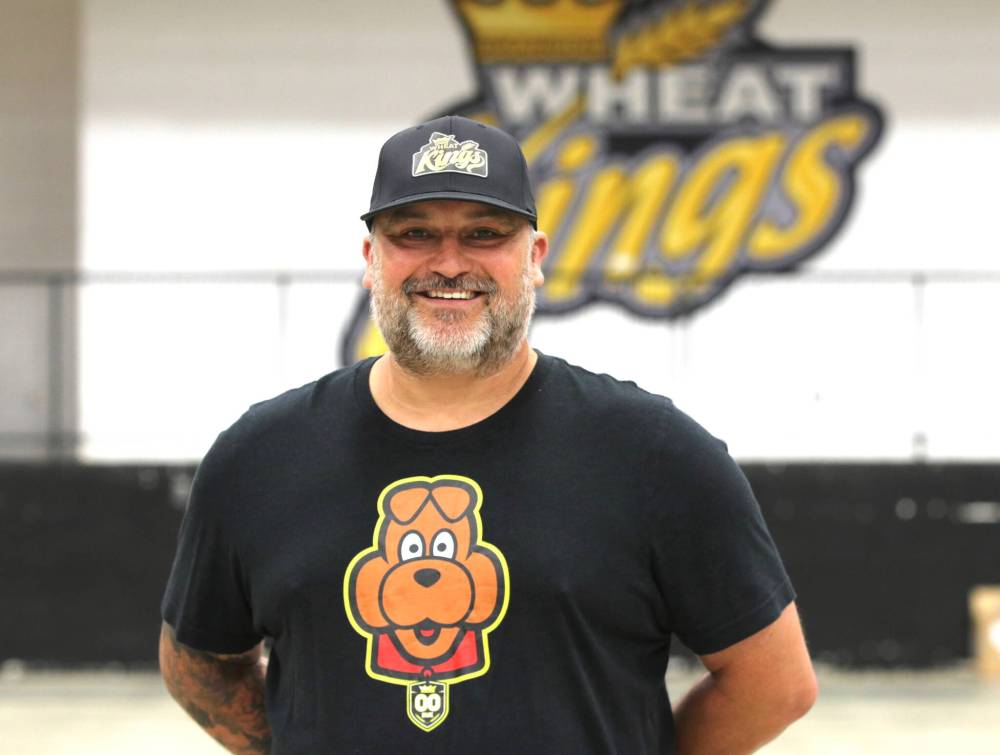
“I loved (former coach) Bobby Lowes, obviously (former owner) Kelly (McCrimmon) has been the best to me and this doesn’t happen without Kelly. And when Jared (Jacobson) and his family took over, they gave us every opportunity to succeed.
“It’s been an awesome ride. It’s bittersweet to leave and hard to leave but it’s time. Everything has its shelf life, and the opportunity given to me now, if you don’t take it, you’re going to regret it.”
Brandon head coach and general manager Marty Murray has known Hlady for a long time. He said his friend will be missed.
“It goes back for me and Scooter to probably when we were nine years old and playing hockey and baseball against each other,” Murray said. “We were pretty big rivals with Brandon and Westman so I’ve known Scooter forever.
“Then I played with him with the Wheat Kings and it was full circle coming back to work with him. He’s been a big part of our organization for a long time. He’s very well respected in what he does and I certainly enjoyed my three years back in Brandon getting reacquainted with him and working with him. We’ll certainly miss him on a professional level but also a personal level.
“He’s a good friend.”
WHEAT KING WAY
His relationship with the team began earlier than most.
The Hlady family began to billet Wheat Kings when Scott was five years old, a list that included Ken Schneider, Dean Kennedy, Mark Schneider, Larry Bumstead, Randy Cameron and many others.
“That’s where it started for me,” Hlady said. “My dad (Richard) was heavily involved with sponsorship with the beer company with Labatt’s and my mom and dad helped start the booster club. Right from the get-go, the Wheat Kings are the only thing I’ve ever known.”
The family moved to Winnipeg in Hlady’s first year of bantam, and two years later he joined the Manitoba Junior Hockey League’s Winnipeg South Blues for his 16-year-old campaign.
He was listed by the Wheat Kings after being spotted by then assistant coach and scout Mark Johnston, and future GM and current Toronto Maple Leafs scout Darren Ritchie helped with the recruiting efforts when he spoke to him after a playoff game.
“He came over and said hello and was talking about playing for the Wheat Kings,” Hlady said. “As a Brandon kid, that was real exciting. At the time, my dad wanted me to go to school but I wanted to play junior hockey in front of my hometown. That decision wasn’t hard.”
In a nice twist, Hlady lived with Ken Schneider for his first season back in Brandon prior to his mother Janet moving back.
“The world is small,” Hlady said. “Those relationships like that, Ken is like a brother, a father, a mentor for me so that was easy.”
With his deep ties to the organization and the city, he said the chance to play for the Wheat Kings was unforgettable. As a youngster at the outdoor rink he had pictured himself in that position, and as he made his way down to the ice from the dressing room for the first time as a WHL player, it was impossible to ignore the moment.
“The first time you step on the ice in that jersey, it’s really special,” Hlady said. “That’s the name you’ve worn from the time you were four or five until the time you don’t play hockey anymore.
“When you come down the stairs and turn the corner, it’s just different … It’s special. It’s hard to explain the feeling you get when you go down those stairs but it’s a feeling I’ll never forget.”
Hlady, a defenceman, had three goals, six assists and 27 penalty minutes in 38 games with the team in the 1992-93 season, his 17-year-old campaign. He missed more than half the season due to a sports hernia that took time to diagnose and required season-ending surgery.
Once he started feeling better, he spent that summer on the ball diamond.
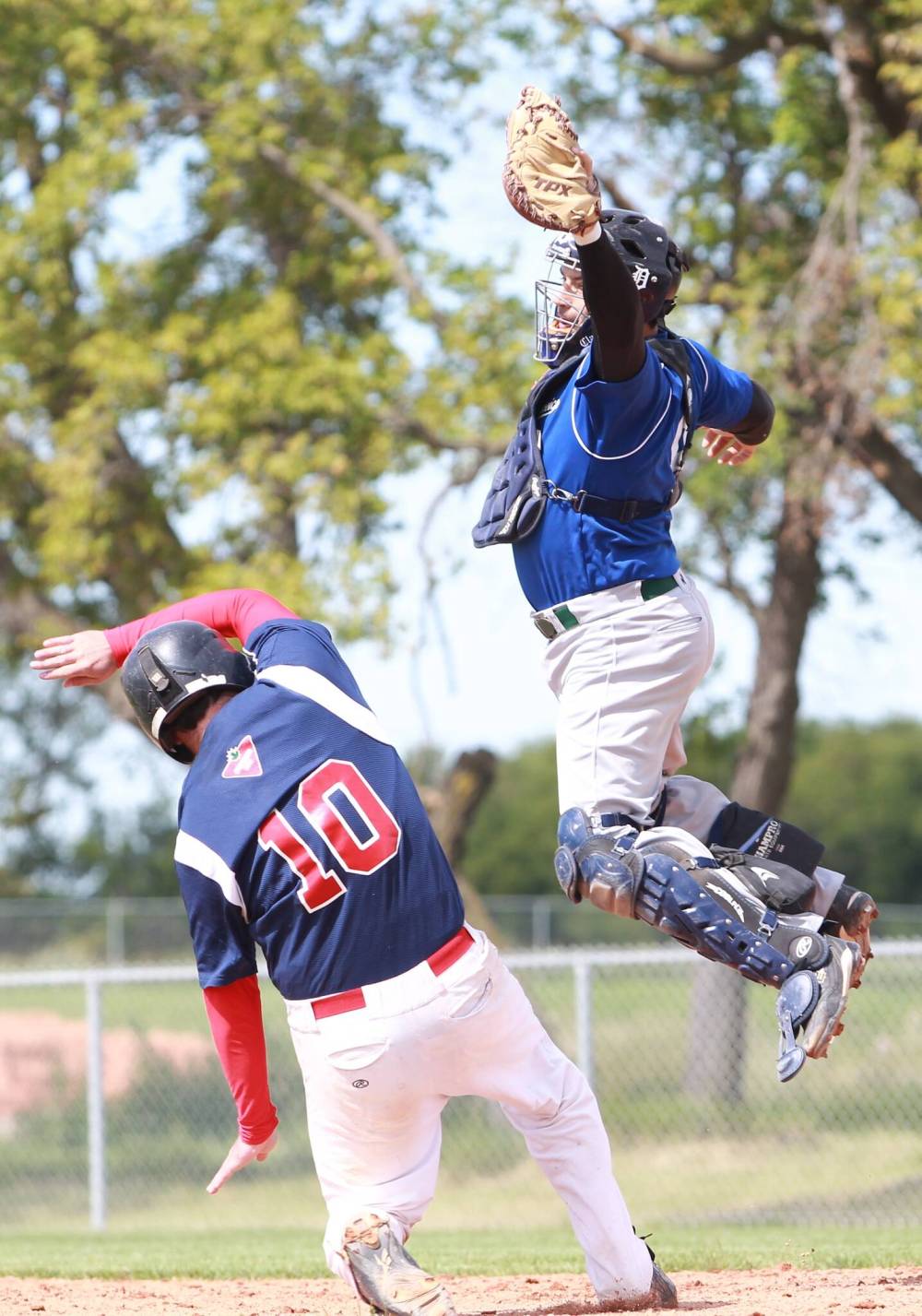
His father had been drafted by the Minnesota Twins, and the younger Hlady followed in his footsteps, making the provincial team, competing at nationals and then playing for Team Canada. Unfortunately, the injury started to bother him again early in the 1993-94 season.
“Crim (Wheat King owner Kelly McCrimmon) was happy I made the national team tryout but was upset I wasn’t going to be there and then the injury reoccurred because it never really healed,” Hlady said. “I remember I got off to a real good start — I was playing on the power play and feeling great — but then the injury reoccurred and they wanted to do surgery again.
“To avoid doing surgery, I made the tough decision to stop playing hockey and concentrate on that ball career.”
He played just three games and had a goal and an assist that season.
Back on the baseball field, Hlady spent two seasons with the Brandon Grey Owls in the Prairie League, hitting .283 in his first season. With the short season and the chance to finally completely heal, he returned to hockey after Bobcats coach Tom Skinner reached out to him.
He played the 1995-96 campaign with the Brandon University Bobcats in his 20-year-old year, and after five seasons with the club, spent parts of two years with the Muskegon Fury of the United Hockey League, retiring for good after the 2000-01 season.
GOLDEN AGE
He returned to the Wheat Kings in the 2013-14 season, this time as an employee. He was working with MPI but took on the part-time job as equipment manager, duties previously handled by the athletic therapist.
Hlady had been doing the job for the U18 team the previous winter, and learned a bit from Wheat Kings athletic therapist Grant Ammann, who left prior to the 2013-14 and was replaced by Josh Guenther.
Hlady would come in at lunch and work for an hour and then return after he was done for the day at MPI.
“I would work 7 or 8 at night until midnight, 1 o’clock, and Kelly’s car was still there when mine was there,” Hlady said. “I put a lot of hours in. I travelled the odd time when I could until he finally made the decision to have a second full-time guy.”
That came in the 2016-17 season, just after Brandon won the WHL championship in Seattle. (Hlady was the last of the full-time staff still working for the team who were in Seattle for the championship.)
Instead of starting as a young guy and apprenticing on the job with older staff, Hlady was essentially carving out the duties and creating a new position when he was brought on board by McCrimmon. That meant he gradually added more and more responsibilities over the years.
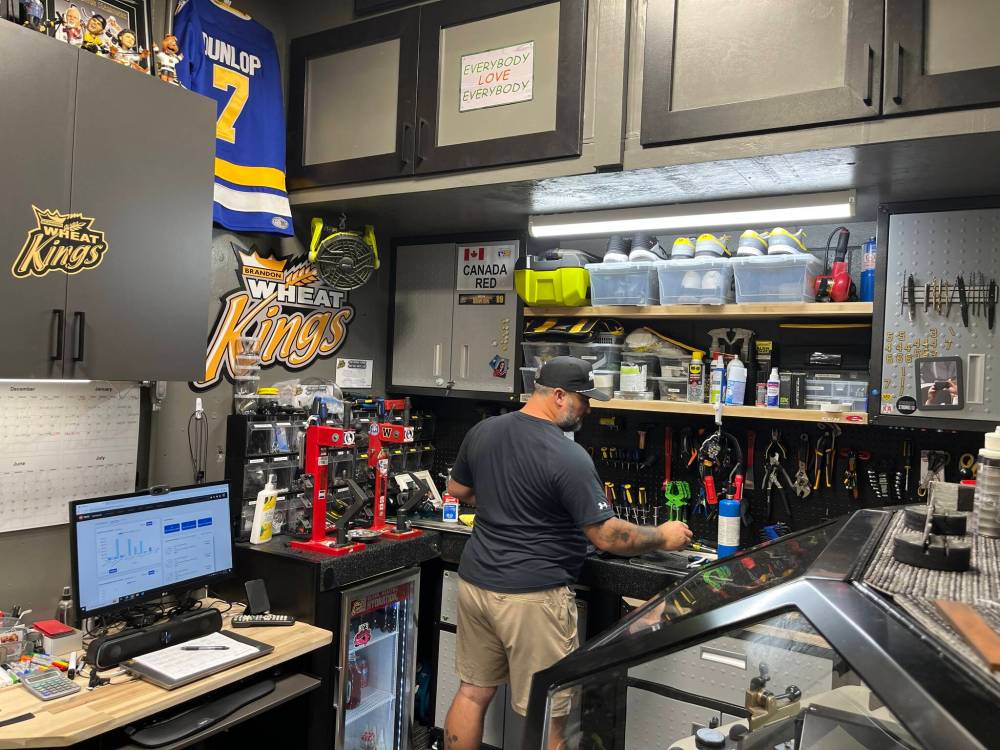
“I reinvented the wheel for the Wheat Kings,” Hlady said. “It was a unique thing. The therapists were doing the laundry, the therapists were sharpening skates, they weren’t doing a ton of sewing, they weren’t fixing gear.
“That was the stuff I had done on my own over the years and learned to work the trade. I was doing it for myself and the teams I played for. But an equipment guy is an equipment guy. I don’t care what anyone says, there is always work to do.”
Even in the summer when he had time off, he found himself at the rink working with his industrial sewing machine and tinkering with how to fix stuff and do things differently.
His dedication was noticed.
“He’s been with the organization for a long, long time so he had a system in place,” Murray said. “He ran it the same way so you didn’t have to worry. It was out of sight, out of mind. You weren’t worried about the players not being taken care of. We’re going to miss that.”
He was also visible in the community.
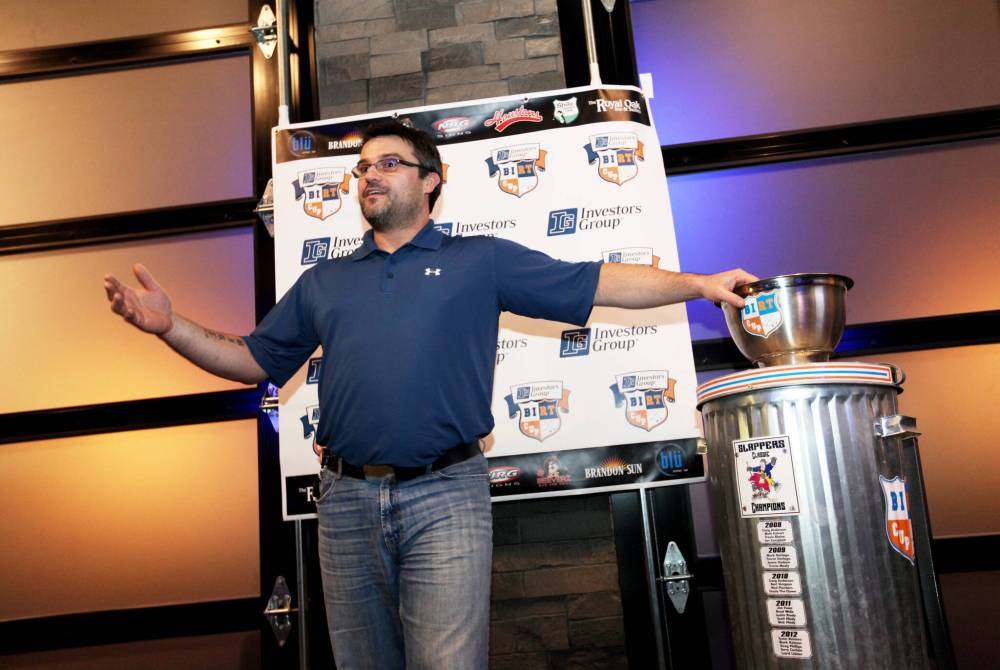
He and former Wheat Kings defenceman Dwayne Gylywoychuk founded the Birt Cup in 2008, a charity golf tournament that raises tens of thousands of dollars for a variety of projects around Brandon. They stepped aside in 2018 and Tyler Crayston took it over.
BIG JOB
It’s hard to overstate how much the equipment staff has to do. With a group of volunteers that included Jody and Jason Norminton, his brother-in-law Rob and nephew Aiden Pope and Sawyer Wallin — they only recently began to be paid for their work — Hlady and his team handle everything non-medical behind the scenes.
When Hlady usually got to the rink before 9 a.m., he might not leave before midnight or 1 a.m. If another WHL team was coming in and wanted to unload, he might get an hour’s sleep and return to the rink to help them out.
“It depended on what was ahead of you and how many curveballs you get thrown at you throughout the day, whether it was fixing equipment or we had a laundry issue a couple of times where the laundry did something funky,” Hlady said. “You roll with the punches and do what you do. For me it doesn’t feel like work. Being there was easy.”
Perhaps the weirdest stretch of Hlady’s career came when the team ended up in the Regina hub so a shortened 2020-21 season could be played. That meant he was away from home for more than two months living with former athletic therapist William Sadonick-Carriere and equipment assistant Jody Norminton as part of a 31-person Brandon contingent.
The initial plan was that they would be able to use the gym and they had a football field booked for their use, but when they arrived they realized they were locked down in the university residence if they weren’t at the rink.
He noted the owners didn’t get much of a return on what it cost to stage the event, and that made his role that much more important.
“We were still getting paid to do our jobs,” Hlady said. “It was 64 days away from our family, you didn’t see your pets, you didn’t see your parents, it was something else. It was a lot of fun at times too.”
Even back in Brandon after the pandemic, the job has changed in some big ways. When he started, if a player lost an edge, he would take his skate off when he got back to the bench and the staff would run it to the dressing room, give it a buzz in the sharpener and rush it back.
Now the blade detaches from the skate, and a new one can be swapped in a matter of seconds. Since players all have their own preferences for the profile and hollow of the blade, the extra blades are carried in bags with individual compartments sorted by player number.
“You can have multiple sets of steel for guys,” Hlady said. “We run three new sets every year, and with the sets from the year before, up to five or six. I can remember Provy (all-star defenceman Ivan Provorov) the year that we won, I think I changed his steel nine times in one game. He was a guy who could feel it, and how do you argue with a guy who was as good as he was?”
He said pro teams now carry up to a dozen sets of steel for each player, which allows the equipment staff to give players a level of flexibility unimaginable not that long ago.
“Your priority is that a guy never misses a shift,” Hlady said. “You do everything you can. If a guy blows a lace out, rather than changing out the lace, I’ll cut it, tie a knot and somehow jimmy rig that lace to get him through the rest of period. “That’s the part people don’t understand. You only have 20 guys so if one of your top players isn’t playing, that’s important. Our job is to make sure they don’t miss a shift.”
He is also a master of having sticks ready and waiting for players at the bench after they break one, showing how closely he watched the game.
But Murray suggested Hlady’s value went far beyond the jobs that define his profession.
“It’s an important position,” Murray said. “They’re the guys sharpening skates and repairing gear but outside of that, they’re a branch of the locker room. You want guys to feel comfortable.
“A lot of times, these guys are more than just the equipment manager, they’re maybe a little bit of an ear for the players. There might be some things kids don’t want to talk to coaches about and they’ll talk to (athletic therapist Zach (Hartwick) and Scooter about it. “It’s a much bigger role than just skates and handing out sticks.
“They’re a big part of the family and big branch of the culture we’re trying to create.”
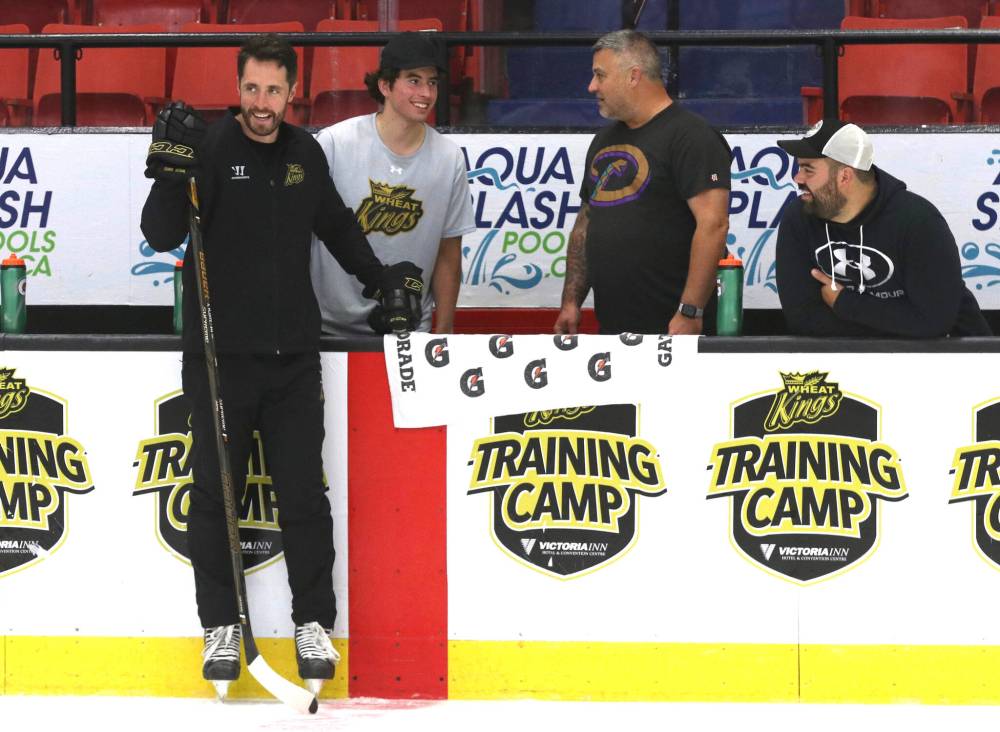
During practice, Hlady took on the role of a perpetually annoyed uncle, often hollering at players to get off the ice if they dawdled too long after practice. His next move was to simply shut off the lights.
At the same time, it was clear there was a tight bond between Hlady and the players.
“It’s changed a lot over the years with how you handle it because the kids have changed,” Hlady said. “Nowadays, kids are way more entitled than they used to be, especially from when I played. I remember trying to get a new pair of underwear and it was a chore. Now they get everything they need. At this level, it’s our responsibility, our obligation, our duty, to make them better people.
“I feel like coddling them isn’t always the best way to make them a better person so that they understand when they get to that next level what it takes. Sometimes being that grumpy old man and a guy who is sometimes hard to approach is the best thing for them.”
Honestly, it was a measure of his affection for them. He told the players if they weren’t ever hearing from him, it probably meant he didn’t like them.
“And if I don’t like you, there’s something wrong,” Hlady said. “I’m an easy guy to get along with. That’s what I explained to them. I’ll do anything for you but I won’t always be nice to you or make it easy for you. I’m going to make it hard.”
Hlady said the approach seems to work because players who move on are ready for whatever comes.
He understand the game has fundamentally changed in the 30 years since he skated with the team, adding some basic truths have remained.
“The most important thing I learned as a player is that those relationships that you build with your staff, your training staff, the coaching staff, your GM, your owner, are the most important relationships that you can build,” Hlady said. “If they don’t know you’re a good person and can do things at any level or any moment of your season, then you’re not doing it right.
“The best advice — and it’s not arrogant advice when my guys are going to the next level — the first people you need to make friends with are your equipment manager and your therapist because those are the guys who are going to help get you to the highest level possible.
“Some kids come in and just think those are the guys who are sweeping the floors and doing my laundry. They don’t see until they get a little older and more mature how much we can do for them and how much easier it is if you have a good relationship.”
He said he learned it as a player in the 1990s from older leaders like Jeff Hoad and Trevor Robins.
NEW CHAPTER
Hlady had previous opportunities to leave during his 14-year tenure with the Wheat Kings but the timing wasn’t right for him or his family, wife Terri-Lynne and daughters Mya and Maci, who are both in university.
“This wasn’t just a Scott decision,” Hlady said. “This was a family decision.”
Former Wheat Kings athletic therapist Craig Heisinger, who is now the assistant general manager and director of hockey operations for the Winnipeg Jets and the general manager of the Moose, reached out to him in mid-June asking if he might be interested in coming on board.
Hlady certainly was.
“I don’t what happened this summer but it all fell into place,” Hlady said. “It started with a couple of interviews and some people in the business who helped with the process. It all came together with a few opportunities but this one in particular was the one that made the most sense for my family because it was close to the family but two, because of the family that they have there and the feeling you get with them is just right?
“People asked me when I would know it was the right opportunity, and I said ‘I’ll know because I’m a team guy and family guy,’ and it just felt right with the people who are involved there.”
He is taking the job as assistant equipment manager with the Moose, serving under new equipment manager Cole Hillier, who is moving into the main role after two years as an an assistant and also working with the former Winnipeg Ice.
“It’s a really unique opportunity for me because I don’t have to worry as much about the whole picture,” Hlady said. “I’m more worrying about being the equipment guy who is making sure players have everything they need.
“It’s going to be a better time how to learn things and when to do things and how to do it at that different level. It’s a whole different monster at the pro level because you have more staff and the expectations are that much higher.”
He started on June 28 in a job will also him to reunite with Sadonick-Carriere, who serves as strength and conditioning coach and assistant athletic therapist.
Hlady is looking forward to working with him again, and learning from Jets equipment manager Jason McMaster.
“He sets the level in the NHL,” Hlady said. “People want to do things his way. To me, working with those guys is a no-brainer. Their staff don’t leave and that says a lot.”
“It should be a fairly smooth transition,” he added. “It’s different and it’s going to be hard and it still makes me nervous, but who wouldn’t want to be part of their home province’s professional teams?”
pbergson@brandonsun.com