
Bobcats rose through ranks in 1970s Brandon University alumni series: Through the decades
Read this article for free:
or
Already have an account? Log in here »
We need your support!
Local journalism needs your support!
As we navigate through unprecedented times, our journalists are working harder than ever to bring you the latest local updates to keep you safe and informed.
Now, more than ever, we need your support.
Starting at $15.99 plus taxes every four weeks you can access your Brandon Sun online and full access to all content as it appears on our website.
Subscribe Nowor call circulation directly at (204) 727-0527.
Your pledge helps to ensure we provide the news that matters most to your community!
To continue reading, please subscribe:
Add Brandon Sun access to your Free Press subscription for only an additional
$1 for the first 4 weeks*
- Enjoy unlimited reading on brandonsun.com
- Read the Brandon Sun E-Edition, our digital replica newspaper
*Your next Free Press subscription payment will increase by $1.00 and you will be charged $20.95 plus GST for four weeks. After four weeks, your payment will increase to $24.95 plus GST every four weeks.
Read unlimited articles for free today:
or
Already have an account? Log in here »
Hey there, time traveller!
This article was published 21/11/2020 (2035 days ago), so information in it may no longer be current.
In the early 1970s, the overwhelming majority of Canadian university sports fans couldn’t tell you where Brandon was.
By the decade’s close, Brandon University was definitely on the map.
With the 2020-21 Canada West season cancelled and BU bleachers staying tucked in for the foreseeable future, we’ll take a look back and highlight the ideal starting lineups and all-decade teams throughout Bobcats men’s basketball history.
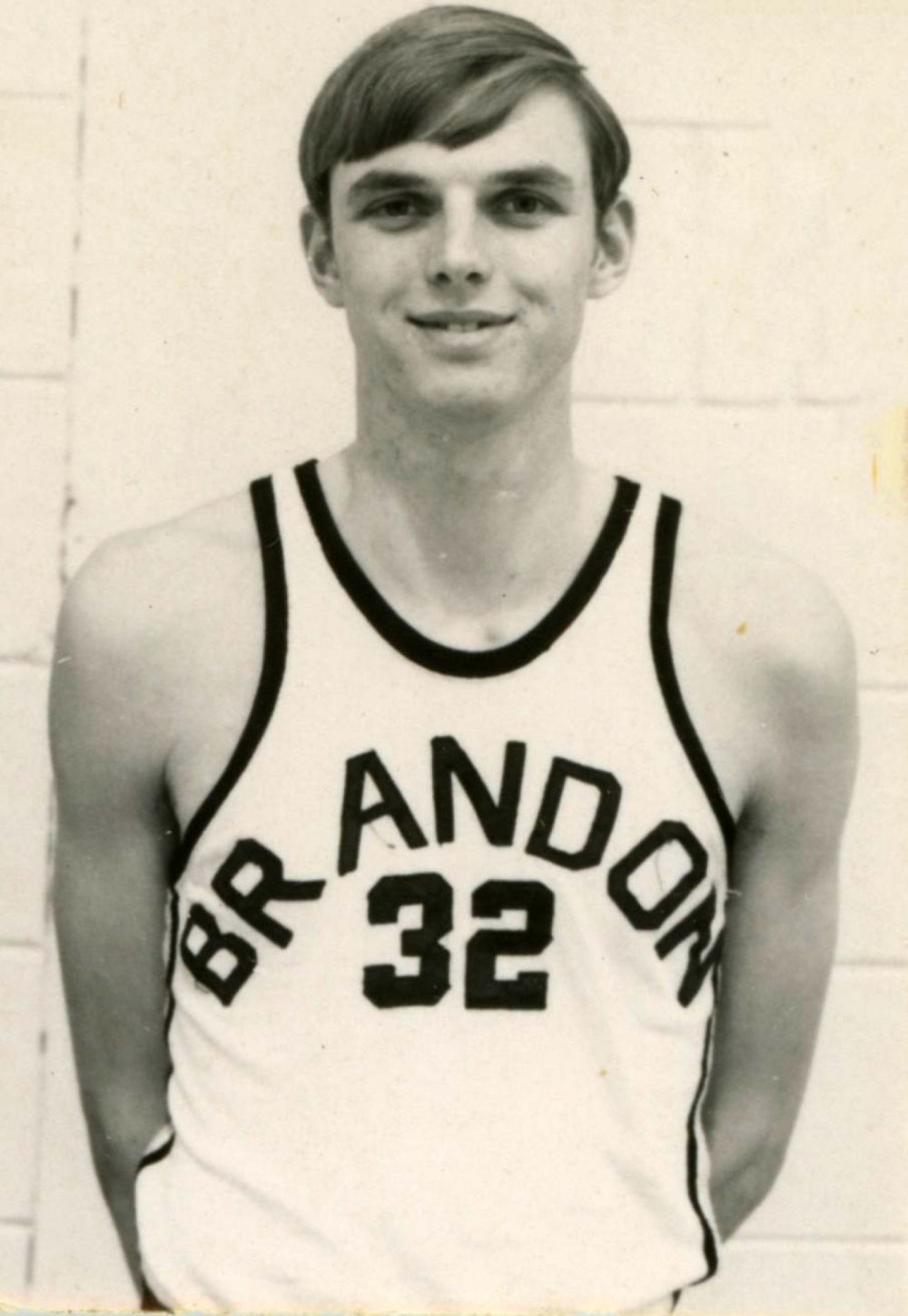
The story starts about 50 years ago.
A lot changed in a short amount of time those days and that was the problem. Rosters turned over faster than a high school football on a rainy day.
When Jerry Hemmings joined the team in 1971, he shared a locker room with 10 freshmen. The Mount Airy, N.C., native played out his fifth year, receiving an all-Canadian honourable mention.
He’ll tell you it was a good year for Jerry Hemmings — less so for the Bobcats. BU went 3-13 that season and didn’t fare a whole lot better in the years to follow. But soon after, Hemmings had a chance to change that.
He took over as head coach in 1974 and the team gradually, then suddenly, looked nothing like it ever had before.
Combining the strengths of those who blazed the trail for success on a national scale and the firepower of a group that nearly won it all, this super-70s squad would have been quite the sight.
STARTERS
Dave Bauman
Six-foot-two forward from Sheridan, Ore.
Played from 1968 to 1972
Former BU basketball coach Gary Howard brought Dave Bauman in from Oregon in 1968 and he turned heads from the start. Bauman featured at forward on the hardcourt and receiver on the Bobcats football team. He racked up 536 points in his rookie basketball season, earning BU athlete of the year honours in three of his four seasons.
He also caught a Bobcat record 96-yard touchdown his rookie year.
Jack Gibson, former Sun sports editor: “He was the university’s first real, true star … He brought to Brandon the notion that there was a lot more to basketball than what everyone in Brandon and Westman had seen. He was above and beyond the type of player that had been at the university previously.
“He was really good. He brought an awakening that basketball could be a heck of a lot more than what everybody had seen. It would be silly to equate it that he had the same impact that Vince Carter’s career in Toronto had … but I think Dave was a trailblazer in that he showed there was a lot more to the game than anybody in Brandon had seen before.”
Hemmings: “Dave was a very competitive. A player that probably stood no more than six-two but played bigger.
“From my perspective, Dave is the main player you would have to say that in the late 60s, early 70s made Brandon competitive. He gave Gary Howard at that time a player to really build his team around.”
Fred Lee
Six-foot guard from Brooklyn, N.Y.
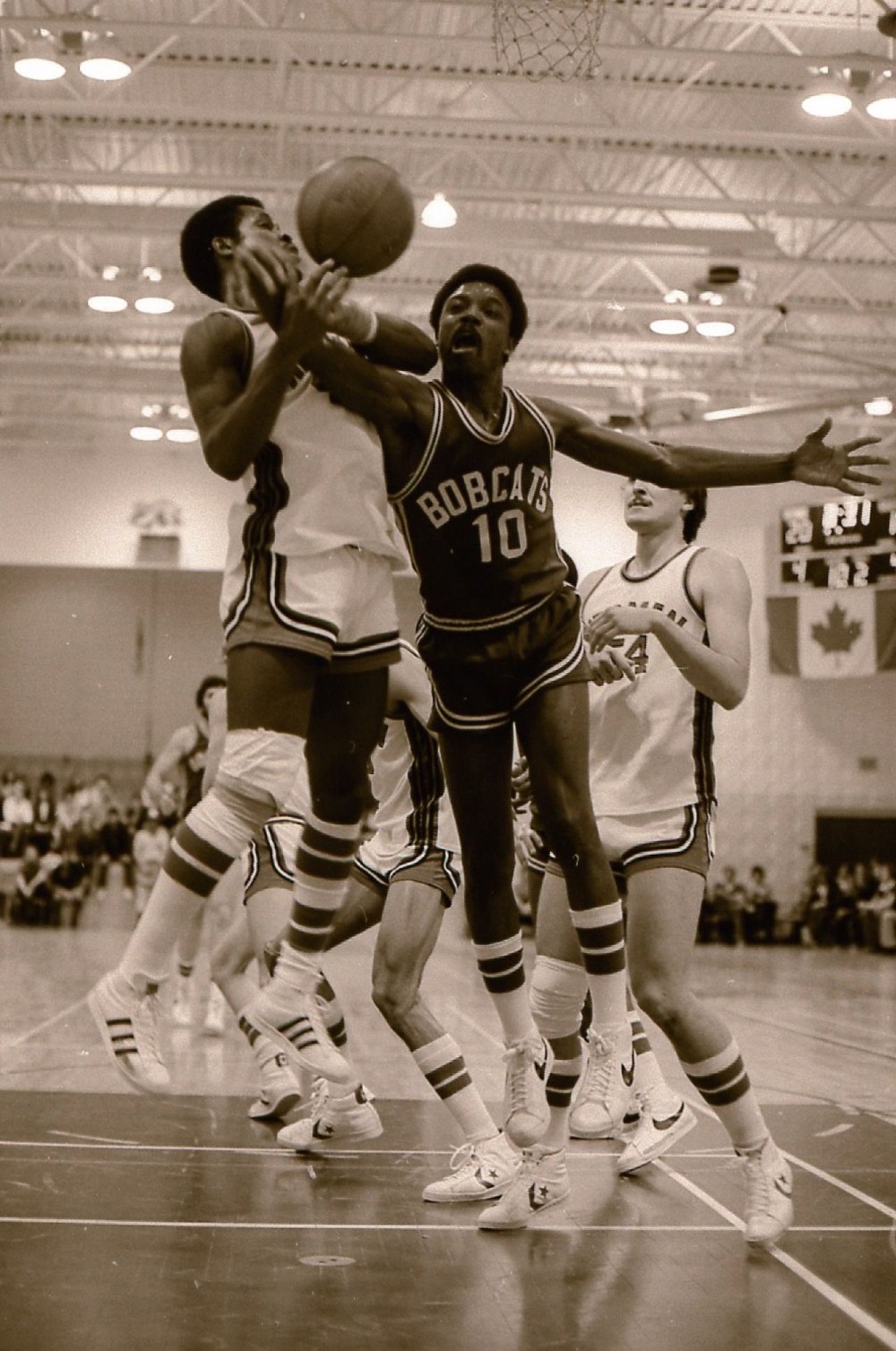
Played in 1979-80
Hemmings brought Fred Lee in after a he ran a year of track and field and played three of junior college ball in the United States in hopes of getting two seasons out of him. The point guard was only allowed one campaign north of the border, but left an indelible impression on fans. He helped the Bobcats win their first-ever GPAC title — they’d never won a post-season game before — guiding them all the way to the 1980 national final, which they lost to the Victoria Vikings. Lee racked up 998 points, 24.3 per game, earning a first-team all-Canadian nod.
Hemmings: “When we recruited Freddy Lee, and this is inexperience or not understanding the nature of competition in terms of the political part … We thought we had Fred for two years of basketball … but then because of competition, you got a guy that’s good, now they come back and say … no, that one year of track and field is counting towards his eligibility. That was a bummer, that hurt.”
Gibson: “Freddy Lee was a fantastic player. The thing about Freddy was that he didn’t always succeed in the big moment but he never shrunk from it. He could make something out of nothing when he had the ball and like I say, he never backed away from a big moment. A lot of times guys are good players until it really matters when the game is there, then they don’t want the ball so much. He was never afraid to have the ball.
“He was really something. He was terrific off the dribble, he could create his own shot off the dribble or get someone else their shot.”
Lew Worrell, guard from 1975 to 1980: “He was like Isiah (Thomas). He could take over a game, he could do whatever you needed to do and he’s one of the few people I knew who got sick before every game.
“He could take a game over.”
Hemmings: “Fred was a true point guard and growing up in New York City, it’s the land of great point guards. You really learn the game, you learn what your job is … and that’s to get other people involved before you get yourself involved and he was great at that.”
Jerry Abernathy
Six-foot-10 centre from Brooklyn, N.Y.
Played from 1978 to 1981
A top lineup needs elite defending and Jerry Abernathy, literally, rose above the rest. It’s a shame blocked shots weren’t tracked during his Bobcat tenure, but he wasn’t interested in statistics anyway. The late big man just wanted to win, and nearly took the biggest prize in Canadian basketball with a group no one expected to see close to the winner’s circle. He left BU with as the school’s first two-time second-team all-Canadian.
Hemmings: “Abernathy definitely, without a doubt, from a defensive perspective was the best basketball player we’ve ever had at Brandon and probably in Western Canada in terms of a player that rebounded the ball, played great inside defence, a tremendous shot blocker and a person that was more happy with team success than he was with individual stats.
“He was probably more like 12, 13 or 14 points a game and more rebounds than he had points. Some games having eight to 12 blocked shots a game, you realized how important that was back then because … your style of game was more inside offence and penetration as today it’s probably more shoot the three first and then penetration.”
Gibson: “You have to go with Abernathy. He had the one great thing coaches can never coach, and that’s size. But beyond his size, he had real good timing on the defensive end and the offensive end in rebounding … tremendous timing on defence which really made him the player that he was. He was a rim protector before there were rim protectors. He was integral to anything they did.
“He was always a better player when he wasn’t worried about offence. He was never a great offensive player, I thought anyway, but when he wasn’t worried about scoring he was a better player on the defensive end and rebounding.”
Worrell: “He was a shot-blocker and protected the rim like no other.”
Keith Strieter
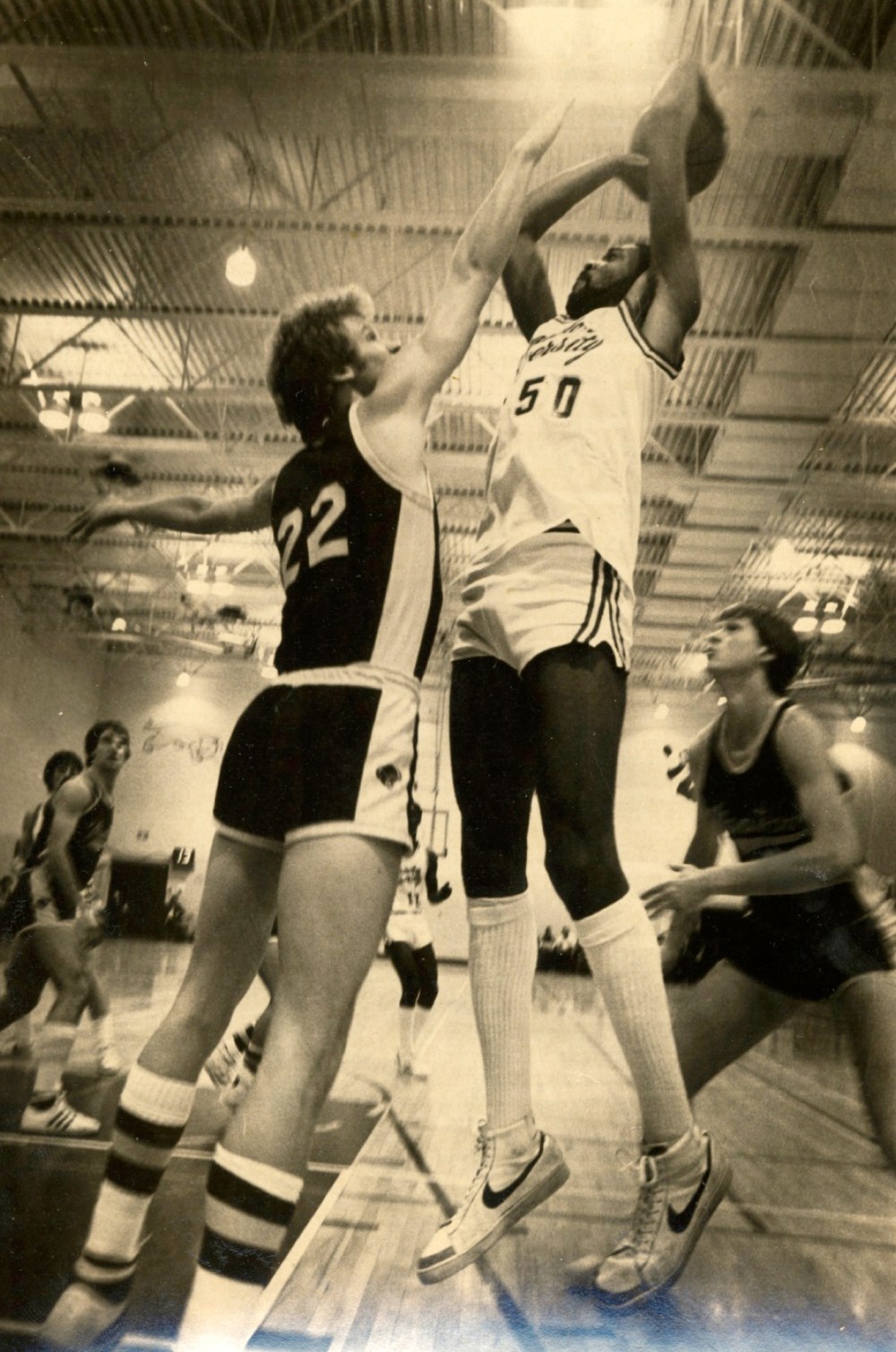
Six-foot-seven forward from Unionville, Mich.
Played from 1978 to 1980, and 1982-83
Keith Strieter was described as the Mack truck to Lee’s Cadillac during the silver-medal season. The import forward brought a physical presence at both ends of the floor and a level of grit matched by few, earning second-team all-Canadian honours in 1979. He sprained the medial collateral ligament in his right knee a month before 1980 nationals and returned, hobbling, to help BU to the GPAC title and through to the national final at far from 100 per cent. Strieter left it all on the court with a gutsy 13-point, 14-rebound effort in an eight-point loss.
Hemmings: “He’s six seven, 235, and without a doubt not only the best power forward to ever play at BU but nationally. He had great hands and at his size would run the court very well. Was a tough scorer around 15 feet and in, could rebound and was a tough defender.”
Worrell: “I have Keith Strieter, because he was a beast of beasts. His injury is why we didn’t win, simply put, his injury is why we didn’t win.”
Hemmings: “Without a doubt, if he hadn’t blown out his knee we win in 1980. A lot of people, Ken Shields probably wouldn’t agree with that but he played with torn cartilage the last month of the season and ran out of gas basically at nationals because of the circumstances of having to play a tough game, a 91-90 win over York, coming back and beating Winnipeg the next night 85-81.”
Worrell: “Girth. That muscle moves you our a yard or two, doesn’t allow you to come in and he was not afraid to take a hard foul.”
Mike Vaira
Six-foot guard from Sheridan, Ore.
Played from 1970 to 1975
Mike Vaira followed Bauman to Brandon and shot the lights out throughout his time in blue and gold. In his fifth year, the first with coach Hemmings at the helm, he became BU’s first-ever second-team all-Canadian, finishing fifth in the country at 24.4 ppg. (Coincidentally, the exact same mark Hemmings hit in his lone Bobcat season).
The late, great shooter famously had to sit out his final game, “Mike Vaira night,” in 1975 after getting ejected for kicking a referee in the backside the night before.
Hemmings: “Mike just continued to develop as a player. The year I was here mike was a second-year player, not a good defender — I’ve never seen you play basketball but he probably couldn’t guard you — wasn’t a great passer. He was a shooter, but he continued to develop his shot to become one of the best shooters in the nation. He had a competitive heart, got better in all aspects of the game, became a better passer, became a better defender.
“The last year with Gary Howard here he averaged in the 20s, then my first year he averaged 24 and a half points per game.”
Worrell: “He’s another person that could take over a game because he was so f—ing quick and natural. If you dominate at the one (end) it makes a lot of other things easy.”
“He’s quick enough and could shoot so well.”
Gibson: “Mike was a tremendous scorer, but a game-breaker both ways, great in the offensive end and nothing on the other end.”
“… On-ball defence, bad. Help defence? Forget it. He would be like the high-powered hockey team that’s happy to let the linesman carry the puck out of the defensive end for a faceoff.”
Worrell: “The rim is protected. You just go score. On a break he would just make people sick. He was as deadly as Joey Vickery in that way.”
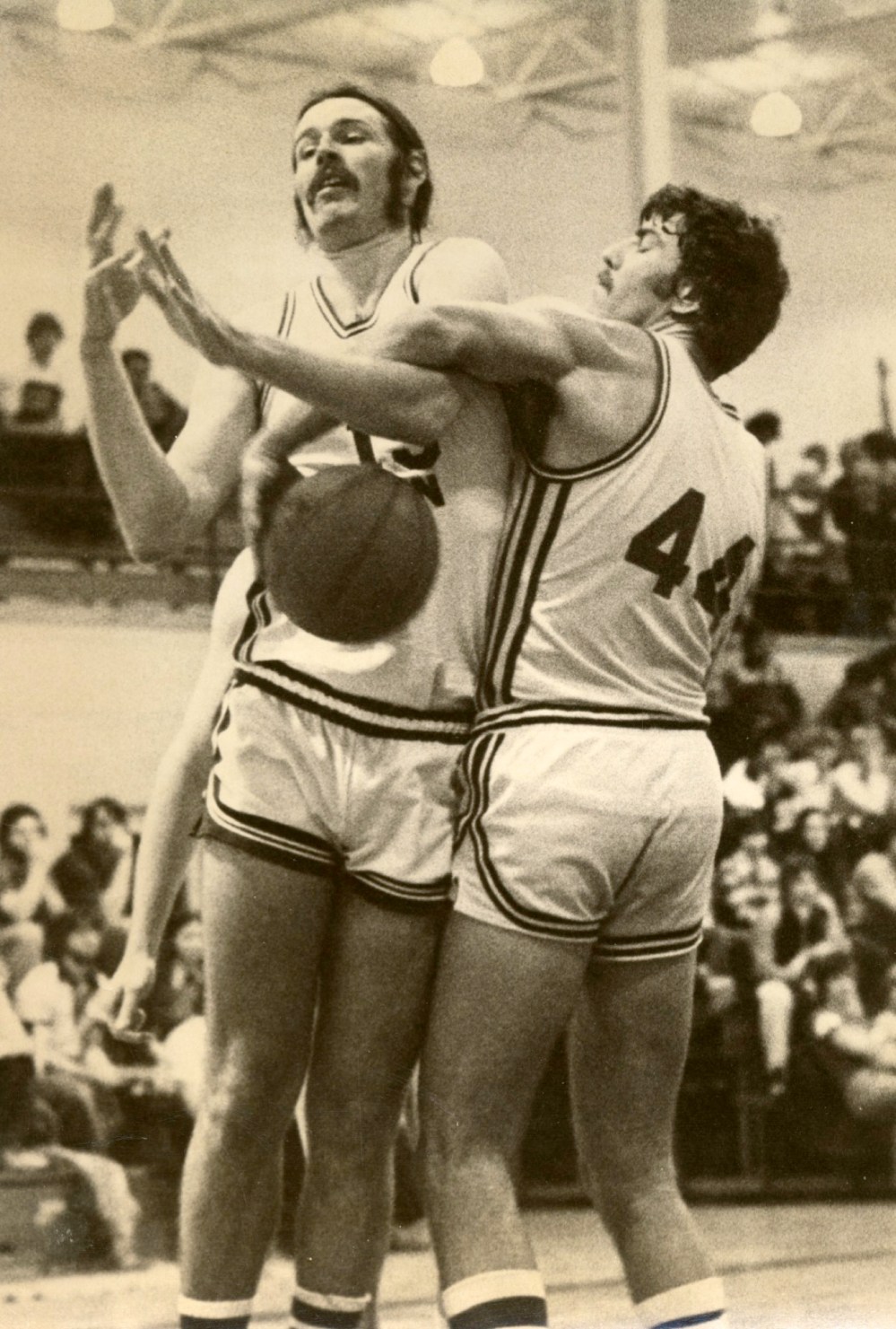
BENCH
Jerry Hemmings
Six-foot-four forward from Mount Airy, N.C.
Played in 1971-72
Jerry Hemmings came to BU as a player, and that ultimately led to his hiring at the school three years later. In his lone season following two years of junior college ball and two at Lakehead University in Thunder Bay, Ont., Hemmings averaged 24.4 ppg, good for second in Canada.
Gibson: “He was a good player at Lakehead. I can’t remember the circumstances that brought him to Brandon but he had a very unique style of inside play and played much bigger than his size. Really good player.”
Mike Dean
Six-foot-nine centre from Cincinnati
Played in 1972-73
Mike Dean joined the Bobcats in 1972 with Rick Condo. He’d played NCAA Division I for Wake Forest in North Carolina, where he averaged 8.7 points per game.
Gibson: “If you had taken him and transposed him into the late 70s or early 80s, put guys around him like that instead of guys like me, everybody would talk about Mike Dean. He was a high school guard who grew six or seven inches in one year and ended up being (six-foot-nine). There were a number of games we used him to break the press. He still had guard skills and in large part he was malcontent and a little lazy, which probably explains why he didn’t end up staying in Wake Forest and ended up in Brandon, but man, what skills.”
Dave Price
Six-foot-three forward from New York
Played from 1975 to 1977
Dave Price was the first American Hemmings recruited. He quickly settled in as a starter and left after his second season as an all-Canadian honourable mention.
Hemmings: “Very good all-around player, very competitive, six-two, could jump out of the gym, attack the basket, could play inside, could shoot it outside and had a big heart to win. Probably the two years he was with us during that period of time I’m sure he was a great plays all-star in both years and played against good teams. People got to keep in mind that probably for a 20-year stretch the Great Plains conference with Brandon, Winnipeg and Manitoba had very competitive men’s basketball programs.”
Worrell: “If the Price was right, you were set all night. Defensively he could protect the rim. One of my favourite memories is us playing Waterloo in Waterloo … they have a guy named Jamie Russell who’s six-foot-eight and at that time on the national team. He comes in on a semi-break and goes up for a two-hander and Price stops it in the middle of the square with one hand and tries to grab it. It goes off him and out of bounds off the backboard. He comes down and stands in front of Jamie Russell, who’s taller than him and looks him up in the eye, he’s like ‘What?’”
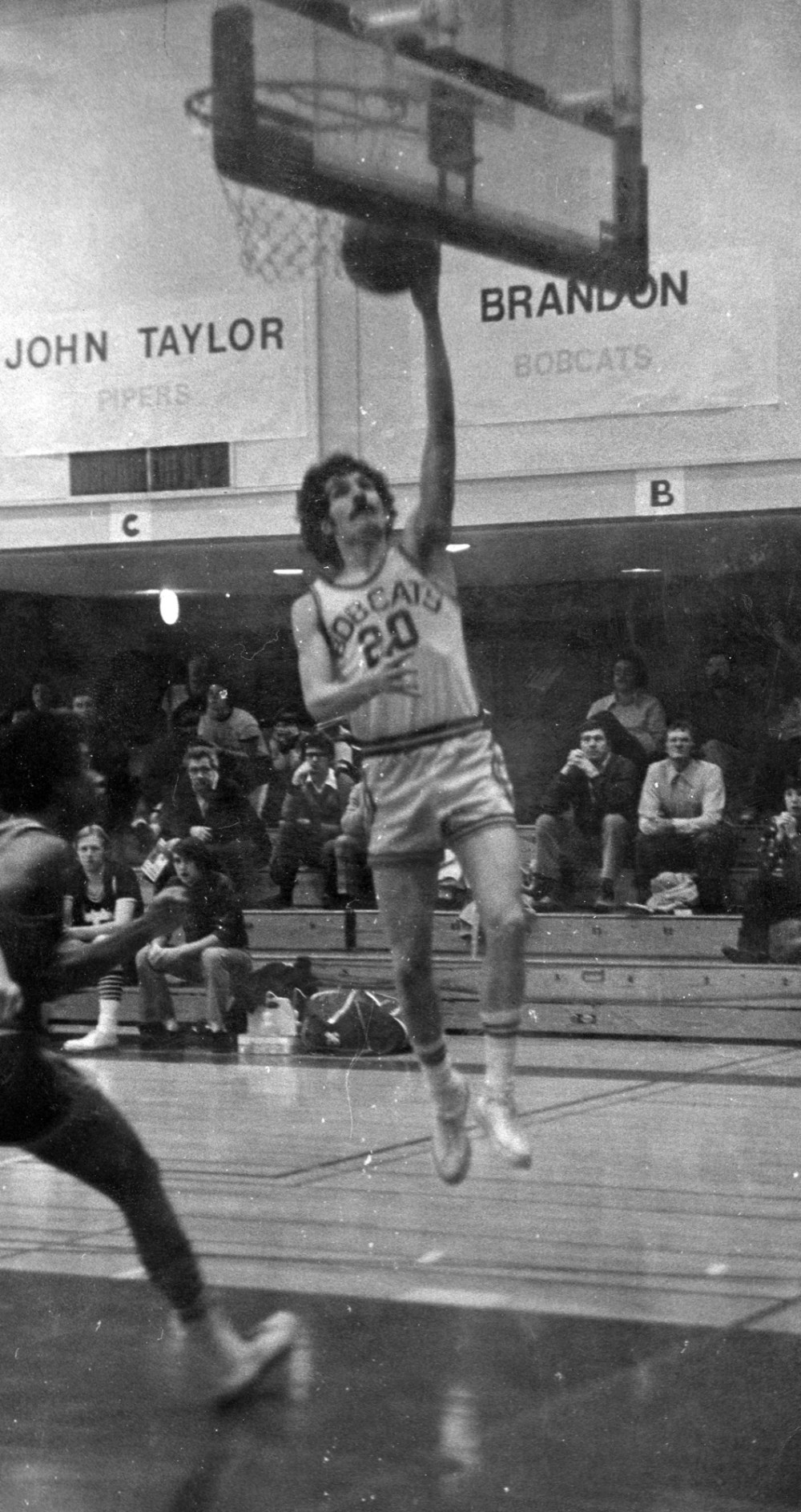
Ken Rucker
Six-foot-three forward from Alexandria, Virg.
Played from 1972 to 1975
Ken Rucker was named the Bobcats’ MVP in 1973 and 1974 and finished second in GPAC scoring — to Vaira — his second season, and once hauled down 23 rebounds in one game.
Gibson: “Kenny was a good all-around player. I played on the same team as he did in his first year and he was good that year. His game really took off in his second year.
“He was six-foot-two, six-foot-three forward who could shoot and put the ball on the floor.”
Jude Kelly
Six-foot-four forward from Hamilton
Played from 1979 to 1983
Jude Kelly transferred to Brandon after a year at UPEI and was a four-year starter as a Bobcat. He was somewhat quiet his rookie season, however, helping all-stars Lee, Abernathy and Strieter reach the national final. He’s still among the best Bobcats to suit up in the 1970s, but comes off the bench before becoming a three-time all-Canadian.
Hemmings: “Jude a prototypical small forward. My whole offence I designed when we got Jude was to create separation. We ran Jude off screens because with Jude Kelly all you needed to do was get (a foot) of separation because his jump shot he elevated like that and realized it an nobody could get to him. He was a great baseline shooter.
Gibson: “Jude was a tremendous shooter. They ran a lot of stuff for him where he ended up with baseline jumpers, particularly in zones. He was just deadly in the sets they ran for him.”
» tfriesen@brandonsun.com
» Twitter: @thomasmfriesen