
SCARS AND STRIPES: Series examines how fans get it wrong with referees
Scars and Stripes: How issues surrounding officials are hurting sports
Advertisement
Read this article for free:
or
Already have an account? Log in here »
We need your support!
Local journalism needs your support!
As we navigate through unprecedented times, our journalists are working harder than ever to bring you the latest local updates to keep you safe and informed.
Now, more than ever, we need your support.
Starting at $15.99 plus taxes every four weeks you can access your Brandon Sun online and full access to all content as it appears on our website.
Subscribe Nowor call circulation directly at (204) 727-0527.
Your pledge helps to ensure we provide the news that matters most to your community!
To continue reading, please subscribe:
Add Brandon Sun access to your Free Press subscription for only an additional
$1 for the first 4 weeks*
- Enjoy unlimited reading on brandonsun.com
- Read the Brandon Sun E-Edition, our digital replica newspaper
*Your next Free Press subscription payment will increase by $1.00 and you will be charged $20.95 plus GST for four weeks. After four weeks, your payment will increase to $24.95 plus GST every four weeks.
Read unlimited articles for free today:
or
Already have an account? Log in here »
Hey there, time traveller!
This article was published 12/07/2022 (1580 days ago), so information in it may no longer be current.
The first soccer game I refereed ended with a coach taking a swing at me.
Well, it ended with my three whistles, abandoning the match due to a sudden bolt of lightning. “One Mississippi, two Mississippi,” then loud, rumbling thunder as the skies opened.
In hindsight, it’s probably my fault the coach was upset. I’ve never called a perfect game and my first one was far from flawless. The penalty kick that led to the game’s only goal, however, was clear and obvious but the coach still screamed about that.
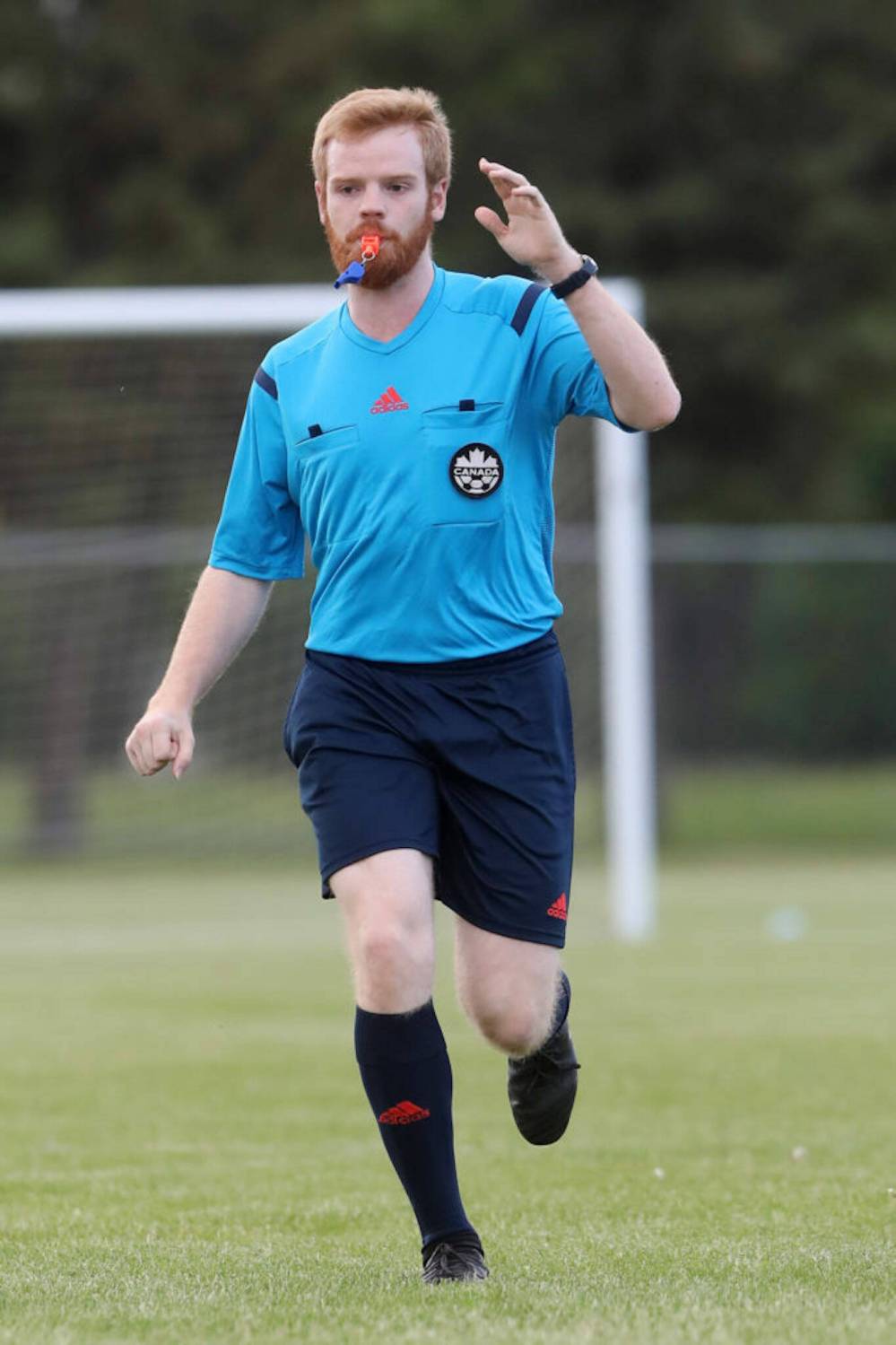
His side, which sat atop the 10-and-under league standings, fell to one of the bottom feeders in a match that ended 15 minutes shy of the full hour. As the coaches met at my drenched duffel bag to discuss how we’d proceed, my 13-year-old, know-it-all self thought it was my job to inform the losing coach that since we completed more than two-thirds of the match, the result was final and he lost. That’s the moment he lost it.
As I ducked his punch, scooped up my bag and bolted for my mom’s baby blue 2006 Dodge Caravan, I decided that was my first and last game.
That was a few hundred matches ago.
In the meantime, I’ve developed something resembling an obsession with officiating. I chatted with 13 mostly Manitoban officials across seven team sports, from promising young provincial-level referees to men who refereed with the world’s best basketball and hockey players.
Over the next week of Sun sports sections, we’ll speak man to fan, highlighting the best insights from those conversations.
This isn’t that same old story you’ve read about abuse every couple of years. Telling disrespectful fans and coaches not to yell at officials via newsprint will probably have the same effect a court story has on criminals — nothing. You’re about to get a piece of advice that’ll help you and your team long term.
See, this might work because everyone besides the refs and reporters is inherently biased towards a particular colour of laundry. If there’s something in it for us, we’re all ears.
We’ll discuss the breadth of work that goes into officiating and doing the job well. Instead of simply saying, “Stop yelling at umpires,” we’ll cover effective communication strategies for players and coaches that benefit their teams.
We’ll explore several sport-specific rules that fans, players and coaches commonly misinterpret. These led to at least five lightbulb moments for me.
We’ll talk about why referees quit and what makes them stay despite the pressures. The common reasons for officials to quit, which ultimately weaken every aspect of our sports, are all connected.
There’s a domino effect and we’re going to fix it.
We need to fix it.
Here’s a summary of my officiating career as someone who has had it relatively easy.
I’ve been sworn at, accused of bribery and reduced to tears on a few occasions. You develop a thick skin and brush off most insults, but having one’s integrity questioned hits harder.
I met one of the most dedicated groups of people I know, the Manitoba Soccer Referees Association, upgraded to Regional (Level 2) status following a handful of positive evaluations and joined the shortlist of officials that worked the provincial cup finals in 2018.
Then a player I dismissed 17 minutes into a 10 p.m., senior men’s match in Winnipeg’s North End said he’d see me in the parking lot afterwards. Thankfully, at some point in the next 73 minutes, he decided it wasn’t worth it.
I joined the Manitoba Volleyball Officials Association in 2016, worked a Volleyball Canada club nationals and upgraded to Level II in the first few years.
It turns out that even games where teams are separated by a net have issues. For one, a coach in Brandon publicly accused me of trying to help my former school win a meaningless regular-season match.
On the other hand, if you believe in karma, I deserved at least some of this. In high school and my first few years of college volleyball and soccer, I couldn’t keep my mouth shut when it came to calls I disliked. I later learned I’d developed a reputation with the volleyball refs, who understandably scoffed when I joined them.
As a reporter and referee, the only unbiased individuals at a sporting event, I say with confidence that the majority of displeasure with officials is flat-out misguided, let alone unwarranted. Sometimes it’s fair criticism but still becomes personal far too often.
This series will enlighten every reader in some way. I’ll leave this introduction with one reminder: Every amateur sports official you see is a human being taking time out of their day to keep their sport going. They’re not perfect but they’re trying to improve and will only get better if the negativity doesn’t break them first.
If at any point you feel their concerns aren’t justified or you could do a better job, reach out to your provincial sport organization and sign up for the next officiating clinic.