
SCARS AND STRIPES: No stupid questions; only poor approach
Scars and Stripes Part 5: Communicate
Advertisement
Read this article for free:
or
Already have an account? Log in here »
We need your support!
Local journalism needs your support!
As we navigate through unprecedented times, our journalists are working harder than ever to bring you the latest local updates to keep you safe and informed.
Now, more than ever, we need your support.
Starting at $15.99 plus taxes every four weeks you can access your Brandon Sun online and full access to all content as it appears on our website.
Subscribe Nowor call circulation directly at (204) 727-0527.
Your pledge helps to ensure we provide the news that matters most to your community!
To continue reading, please subscribe:
Add Brandon Sun access to your Free Press subscription for only an additional
$1 for the first 4 weeks*
*Your next subscription payment will increase by $1.00 and you will be charged $20.00 plus GST for four weeks. After four weeks, your payment will increase to $24.00 plus GST every four weeks.
Read unlimited articles for free today:
or
Already have an account? Log in here »
Hey there, time traveller!
This article was published 18/07/2022 (1316 days ago), so information in it may no longer be current.
Good luck keeping up with O’Neil Gordon, one of the fastest players in Brandon University men’s basketball history.
When the speedy guard took off in transition, Rick DeGagne knew he wasn’t in a good position to make a call and while he’s pretty sure Gordon got fouled, he wasn’t going to guess.
“The other team got the basketball, and going back up the floor, O’Neil gave me a piece of his mind. He barked at me and rightfully so,” said DeGagne, a former international basketball referee who still works U Sports games.
“So I said to myself, ‘Two wrongs don’t make a right, I don’t want to make a bad situation worse.’ I took some chewing … he needed to vent and I understood that. I wasn’t about to penalize him by giving him a technical foul in that particular situation.
“Just because a player barks at you doesn’t mean it’s automatic. It’s all about the context.”
The jury’s out on whether players and coaches should be able to express frustration this way. Some officials don’t tolerate anything while others let a lot go, either out of understanding or fear of further conflict by assessing a technical foul or another form of penalty.
Some allow more when they know they might be wrong and are firm when they know they’re correct while others don’t care what caused frustration, they’re only concerned with how the individual responds.
• • •
Now this might be a truly shocking revelation for some sports fans: Referees are human beings, and they’re doing a job most fans have never stepped up to do.
Judging by the number of parents and sometimes their young children in the stands at professional sporting events, down to peewee games on Saturday mornings who deem it just to scream at officials, at least some reading this will learn something new.
They aren’t robots, they aren’t perfect, but as humans, they’re actually more receptive to conversations than many players and coaches think.
It varies from one sport to the next. In volleyball, only the game captain may address the officials directly. Baseball umpires may converse with anyone who talks to them.
In conversations with more than a dozen national-level officials across a variety of team sports, the Sun heard a common theme.
Communication is welcome as long as it’s brief, at an appropriate time and respectful.
It also varies between officials. At any level of sports where the outcome matters, teams get to know the regular officials and should know how much feedback they can deliver before the game starts.
In DeGagne’s case, he’s OK with the odd reaction.
“It’s when a player explodes … or uses profanity that we have no option,” DeGagne said.
• • •
It’s not lost on elite coaches that “working the refs” can pay dividends, depending on the official.
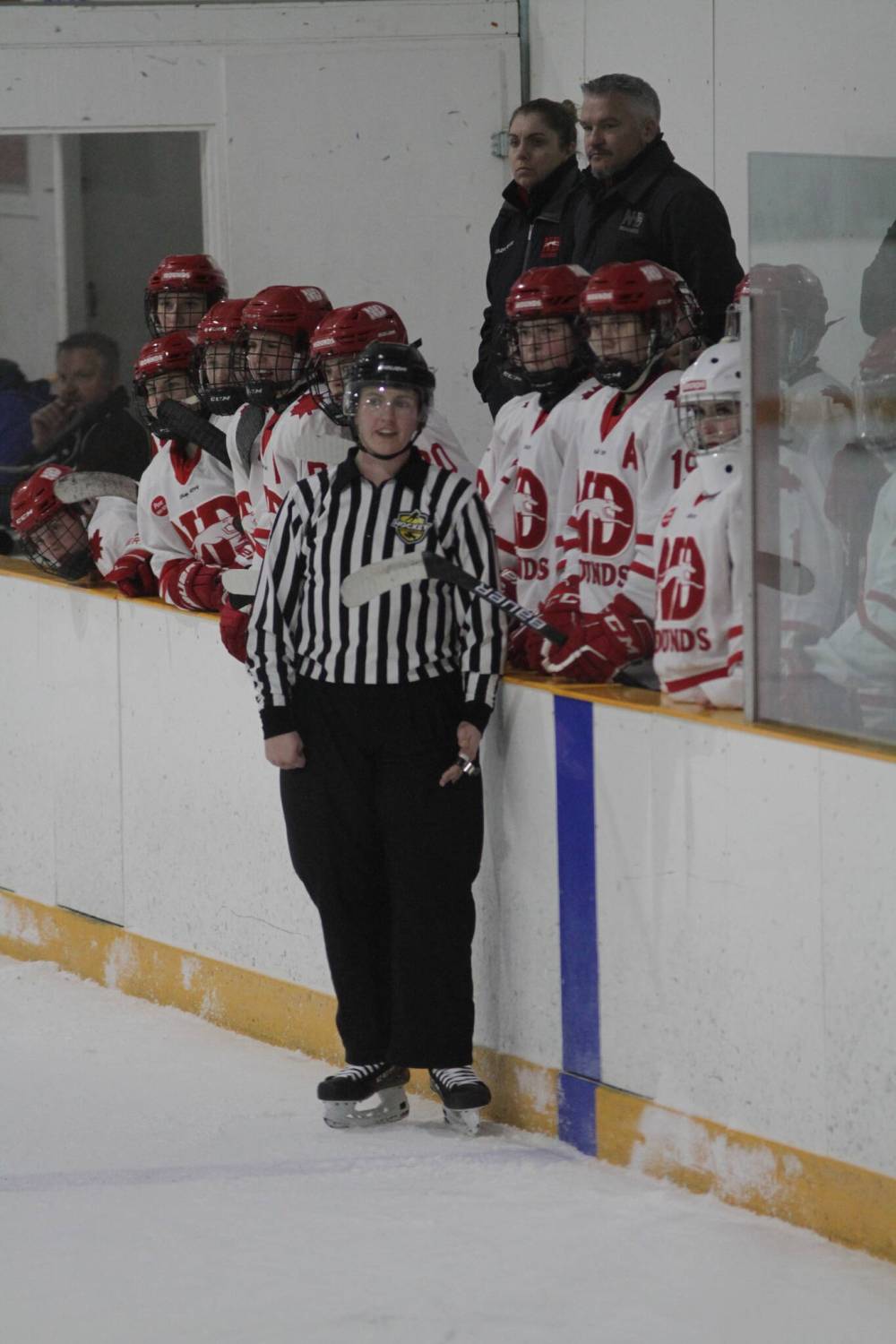
National volleyball referee Kevin Newton said some officials respond strongly to a coach challenging their integrity while others second-guess themselves.
“The coach can work the referee and it can make a difference in the outcome at times, sorry to say, for some people,” Newton said. “You hope as a referee that it doesn’t get to that in the match but it happens.”
DeGagne noted it’s usually the younger, less experienced refs who coaches take advantage of. He’s less convinced it truly helps, especially when they’re typically coupled with a veteran who will see through the tactics.
“Depends on who you are … and your approach,” said Stacy Hawash, who worked the 2022 U Sports women’s basketball championship. “If you’re belligerent, it hurts you. If you can play the game — and everything’s a game as we know in life — you can definitely when you need it possibly have an advantage.”
“A much more effective strategy for coaches would be more is less,” DeGagne added. “… Pick and choose when you ask your questions and you’ll have more impact when they are posed.”
• • •
Major League Baseball has seen more dramatic outbursts than the rest of North America’s top leagues combined. Diamonds at all levels are home to more regular conversations with umpires than rinks, courts and fields, due to the stop-and-start nature of the game and frequency of judgment calls.
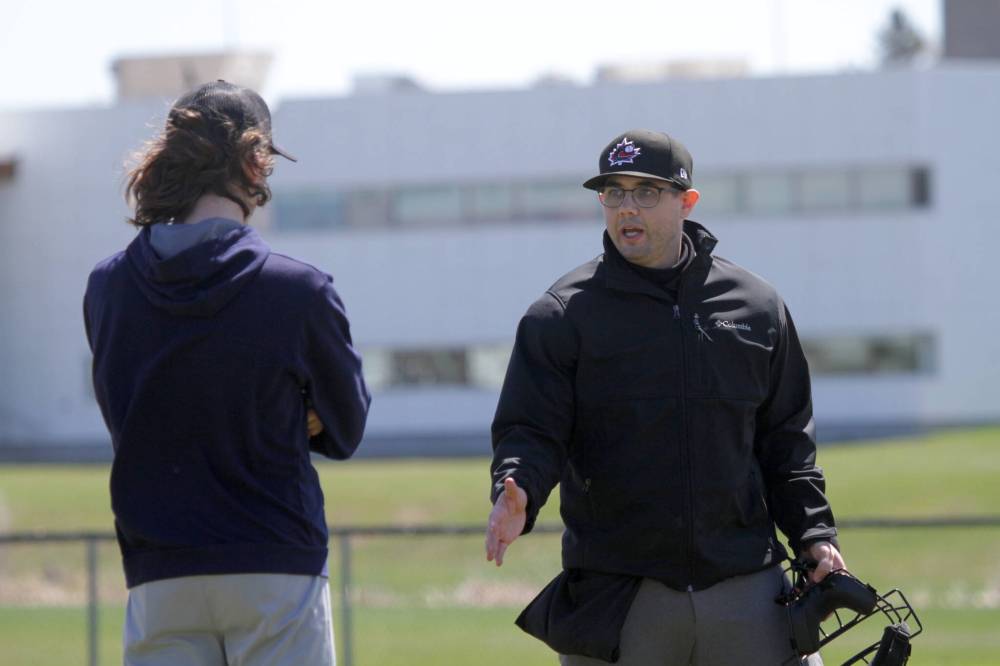
Bruce Luebke, Westman Softball Association umpire in chief, welcomes regular two-way communication with the catchers when behind the plate as he can relay messages to a pitcher doing something incorrectly or quickly explain a call the team’s concerned about. He’d also rather hear a team’s issues and address them than leave them in the dark.
“To me, it’s about the approach of ‘Are we having a conversation or are you complaining?’” said Luebke, a national-level umpire.
“When you start doing higher-level ball, there’s a lot of conversations that go on with the players that no one really knows about. When you have the respect of the players, that’s how things are handled without making a show of it.
“That’s where a lot of officials … draw the line is when you make a show of questioning my call or showing me up, that’s where it gets out of hand.”
• • •
It’s human nature to want to be liked, so when in doubt, the call that makes hundreds or thousands of fans cheer instead of boo is easier to make.
Some officials make “homer” calls on tough decisions for this reason at higher levels.
But if you ever think an official is there to cheat your house-league team or senior men’s squad out of a win, you’re only kidding yourself. They might, however, stop giving you the benefit of the doubt if you continuously whine and question their integrity.
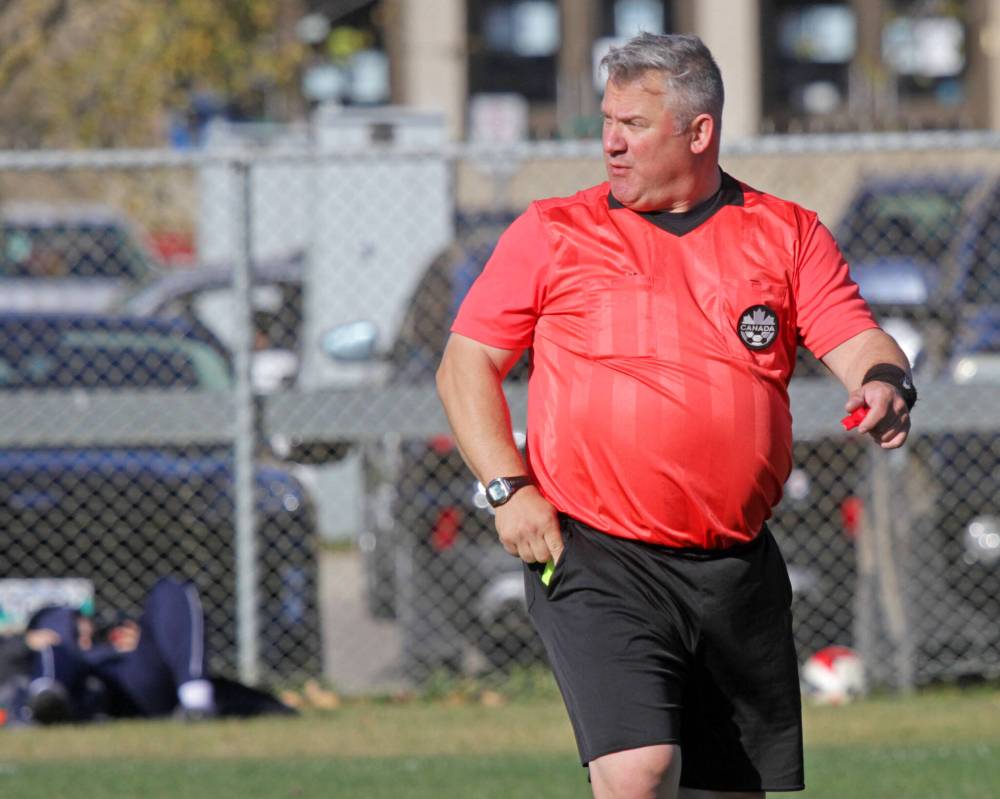
There’s also a difference between a quick, reactionary outburst and repetitive nagging. Provincial soccer referee Sabrina Ferraz offers a terrific perspective for both players and referees.
She doesn’t want to take the passion out of the game but can’t let it translate into anger, which translates into aggression and disrespect.
“I don’t want to have a game where people are frustrated and they don’t say anything because that doesn’t make refereeing or the game better if we don’t know how people are feeling,” Ferraz said.
“… There’s a certain tolerance for emotional reaction towards something and I think just because something was unclear to certain people or I only had a piece and made a decision based on that piece of information I have, I don’t think that impacts the tolerance I have for being treated as a human being.”
• • •
So what’s the solution? Manitoba Soccer Association executive director Hector Vergara pointed out Alberta tried silent games, where fans couldn’t say a word and players couldn’t say anything negative towards anyone.
“I don’t want to get to that level. I want people to understand we want people to enjoy the experience but we want everyone to enjoy the experience, not a select few,” Vergara said.
“To say something out of frustration in a quick one word and walk away and that’s the end of it, that’s one thing. But there’s a situation where they persist and they persist and at that time the referee doesn’t want anything to do with the game anymore, those are the situations we need to get rid of.”
The final part of this series in tomorrow’s issue of The Brandon Sun offers the first step towards improving the fan-official relationship. It highlights a few sport-specific rules that people yell about without understanding.
They’re typically black-and-white decisions for anyone with a proper understanding of the rule book, and they will likely lead you on a deep dive into your favourite sport’s rules. As a player, coach and observer, this is a game-changing experience.
» tfriesen@brandonsun.com
» Twitter: @thomasmfriesen