
Almost impossible not to look ahead to World Cup semifinals
Ominous spectre menaces matchups as tourney enters final week
Advertisement
Read this article for free:
or
Already have an account? Log in here »
We need your support!
Local journalism needs your support!
As we navigate through unprecedented times, our journalists are working harder than ever to bring you the latest local updates to keep you safe and informed.
Now, more than ever, we need your support.
Starting at $15.99 plus taxes every four weeks you can access your Brandon Sun online and full access to all content as it appears on our website.
Subscribe Nowor call circulation directly at (204) 727-0527.
Your pledge helps to ensure we provide the news that matters most to your community!
To continue reading, please subscribe:
Add Brandon Sun access to your Free Press subscription for only an additional
$1 for the first 4 weeks*
- Enjoy unlimited reading on brandonsun.com
- Read the Brandon Sun E-Edition, our digital replica newspaper
*Your next Free Press subscription payment will increase by $1.00 and you will be charged $20.95 plus GST for four weeks. After four weeks, your payment will increase to $24.95 plus GST every four weeks.
Read unlimited articles for free today:
or
Already have an account? Log in here »
It is oh-so-very tempting to look ahead to next week Wednesday and the semifinal showdown everyone wants to see. Everyone, that is, except the Norwegians and the Swiss, whose national teams could also square off in Atlanta on July 15.
If that happened, the World Cup would be guaranteed a debut finalist — something that’s happened just four times in 60 years — and FIFA president Gianni Infantino would be outraged. So maybe Norway-Switzerland is the match-up most of us should want. You know, for the plot.
But then we’d be deprived of the tantalizing prospect of England-Argentina.
FERNANDO LLANO / THE ASSOCIATED PRESS
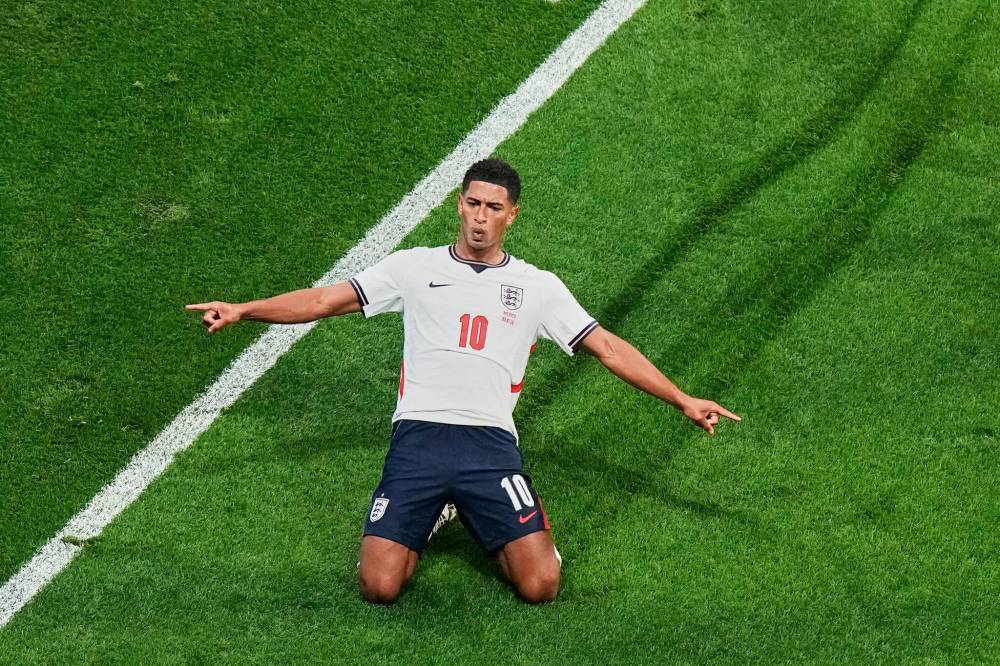
England’s Jude Bellingham has transformed into a dominating box-to-box presence for his country.
Yes, we’re getting ahead of ourselves, but it’s almost impossible not to.
An England triumph in Saturday’s early quarterfinal against Norway and an Argentina victory over Switzerland in the nighttime kickoff would set up a semifinal loaded with history, primed with bad feeling and ready to ignite from the tiniest spark. Which would inevitably come. It always does.
If it’s not David Beckham’s red card in 1998, it’s the “Hand of God” in 1986. And if not the deceit of Maradona (or genius, depending who you ask), then the enmity of the Falklands (or Malvinas, depending who you ask).
Infantino’s speculated coddling of Argentina might have set it off already. Then there’s the two-match ban being served by England’s Jarell Quansah. This after U.S. President Donald Trump intervened to have an American player’s red card overturned — a decision he claims, and most people believe, was handled by Infantino personally.
It’s been nearly a week since that incident (or scandal, depending who you ask), but it nevertheless continues to cast its shadow on a competition FIFA and the White House co-ordinated in concert.
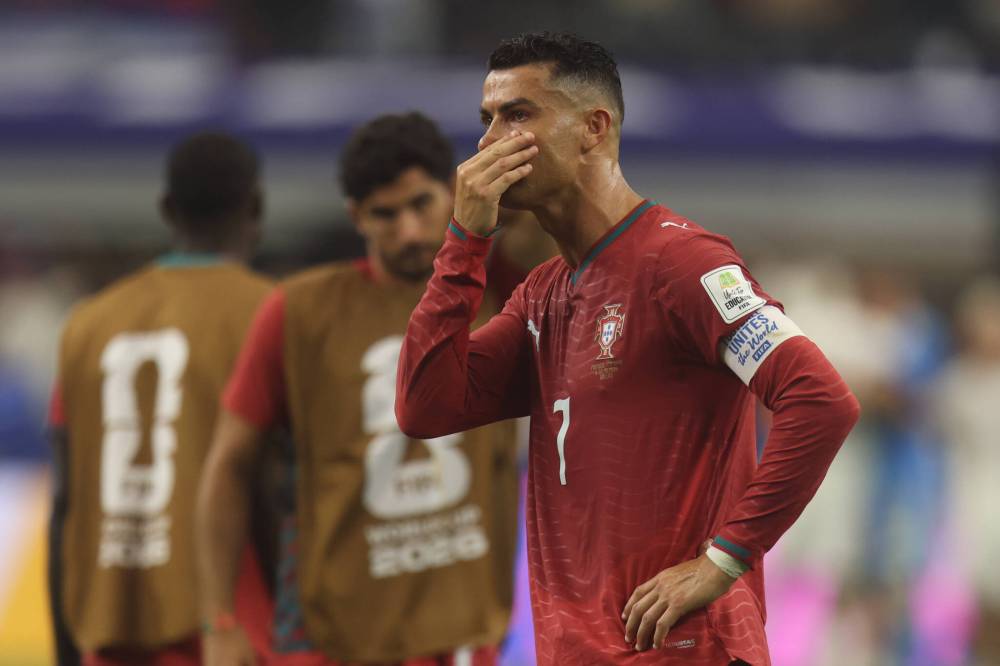
It reminded everyone, two days later, how Trump interfered to have Cristiano Ronaldo’s suspension cancelled. But Ronaldo and Portugal have since been knocked out, as has the United States, and yet an ominous spectre still menaces the World Cup as it enters its final week.
Egypt, which was eliminated by Argentina on Tuesday, has not gone quietly, alleging at Association level that FIFA has been easing the way for the Albiceleste since the Qatar tournament. It’s even gone so far as to publish a list, complete with explanations, of incidents it claims at least favoured Argentina in both the last World Cup and this one.
Now, the prevailing view is that the episodes in question were, and are, merely junctures in a series of coincidences — and that’s if they’re even worth remembering at all.
Over the course of a now five-week World Cup, a team that goes the distance will inevitably have experienced a bit of luck — as well as bad luck long since forgotten — and, more practically, drawn more fouls and compelled more referee involvements because it was the one doing the running, executing, looking to score, or to prevent scoring, and so on.
That said, it’s also hard to deny that Infantino does have a soft spot for Argentina, and for Lionel Messi in particular.
We all see the fawning, the not-so-subtle cheering. We scoffed when Messi’s Inter Miami was invited to last summer’s Club World Cup for no reason other than Messi needed to be there for some reason.
We also see Infantino’s relationship with Trump and its inherent proximity to corruption.
And then come the suspensions: whether overturned or upheld to a double standard; the number of penalties awarded to a certain team, or the fouls committed and seemingly ignored; or the paranoid justifications from FIFA in the face of “public comments,” whatever that means.
Suddenly, we see conspiracies everywhere. It’s what happens when trust is destroyed and we start noticing things in the sinister darkness of that destroyed trust. But then there’s the blowback from national associations, the charges from ethics groups and the referrals to the International Olympic Committee that convince you that you, yourself, are not a conspiracy theorist.
Even so, you can’t help but investigate the referee for the Argentina-Switzerland quarterfinal.
GARETH PATTERSON / THE ASSOCIATED PRESS
The reversal of a red card suspension earlier this week for the U.S. team’s Folarin Balogun reminded everyone that U.S. President Donald Trump had already interfered in the tournament to have Portugal’s Cristiano Ronaldo’s (7) suspension cancelled.
Turns out it’s a Portuguese fellow who courted controversy as recently as the spring when he refused to give Bayern Munich a penalty after a Paris Saint-Germain player seemed to handle the ball in a crucial Champions League encounter.
But didn’t the Portuguese also try to annex the River Plate in the early-19th century? Hmmm…
Full credit to the Swiss. They’ve so far managed to stay above the nonsense and focus on their preparations for Saturday night. They’re quietly confident, and if they’re worried about anything — at least in public — it’s the heat of the American midwest.
Defenders Manuel Akanji and, in particular, Nico Elvedi have been singled out for praise, and goalkeeper Gregor Kobel has so far had just five shots to save through two knockout rounds. Head coach Murat Yakin has seen some weaknesses in the Argentina team he thinks he can exploit. Blue-chip midfielder Johan Manzambi, injured earlier this week, might even be able to play a part in Kansas City.
Switzerland, while obviously up against it, will expect to win its quarterfinal.
Norway, meanwhile, is doing its best to heap all the pressure on England. Problem is, when you’ve already bumped off Ivory Coast and Brazil, there’s really nowhere to hide.
This match will be won by the side that best controls the middle of the park. With neither team especially strong in the wide areas, Norway’s trio of Martin Odegaard, Sander Berge and Patrick Berg will look to crowd out Declan Rice and Elliot Anderson, providing time and chances for Antonio Nusa and Erling Haaland.
England, however, has Jude Bellingham — the Real Madrid playmaker who endured a disappointing, injury-riddled club season before transforming into a dominating box-to-box presence for his country.
The 23-year-old played one of the best games of his career in England’s 3-2 defeat of Mexico in the Round of 16, and no doubt the Three Lions would love to see him unleashed in a prospective clash with Argentina.
But that’s a matter for next week. Maybe. There’s still some way to go before we get the showdown we want to see.
Most of us, anyway. It really depends on who you ask.
winnipegfreepress.com/jerradpeters