
WHERE ARE THEY NOW – Robins finds way to overcome obstacles
Advertisement
Read this article for free:
or
Already have an account? Log in here »
We need your support!
Local journalism needs your support!
As we navigate through unprecedented times, our journalists are working harder than ever to bring you the latest local updates to keep you safe and informed.
Now, more than ever, we need your support.
Starting at $15.99 plus taxes every four weeks you can access your Brandon Sun online and full access to all content as it appears on our website.
Subscribe Nowor call circulation directly at (204) 727-0527.
Your pledge helps to ensure we provide the news that matters most to your community!
To continue reading, please subscribe:
Add Brandon Sun access to your Free Press subscription for only an additional
$1 for the first 4 weeks*
- Enjoy unlimited reading on brandonsun.com
- Read the Brandon Sun E-Edition, our digital replica newspaper
*Your next Free Press subscription payment will increase by $1.00 and you will be charged $20.95 plus GST for four weeks. After four weeks, your payment will increase to $24.95 plus GST every four weeks.
Read unlimited articles for free today:
or
Already have an account? Log in here »
Hey there, time traveller!
This article was published 22/01/2019 (2693 days ago), so information in it may no longer be current.
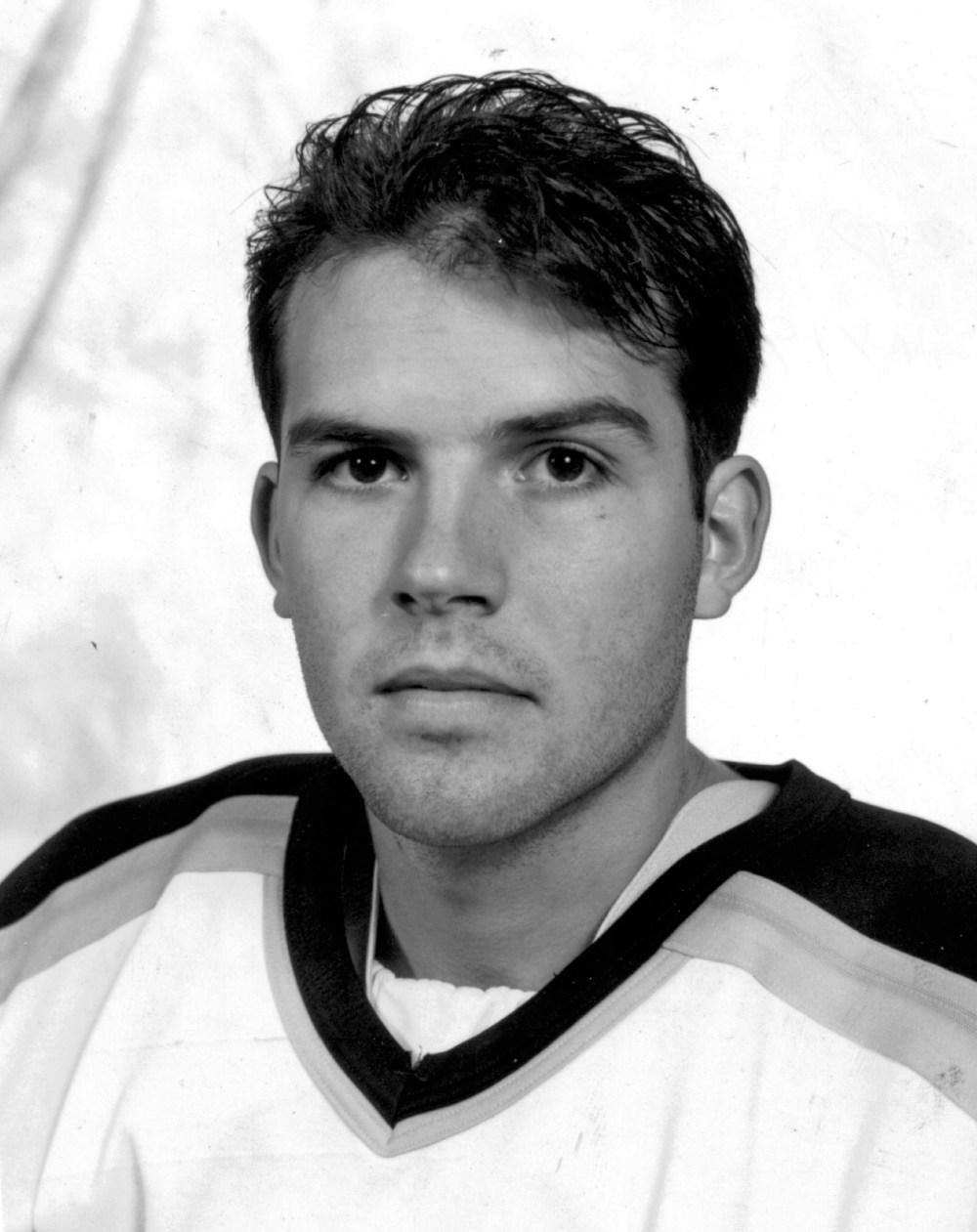
Trevor Robins admits that he was deeply conflicted when he learned in the summer of 1992 that he had been traded to the Brandon Wheat Kings.
Robins, who is now 46, had been an Eastern Conference first-team all-star with a Saskatoon Blades team that had just reached the Western Hockey League final. He was heading to a team that had won 11 games in the 1991-92 season, but it was home.
“My emotions were all over the place,” said Robins, who was on a flight home from the WHL awards dinner with Kelly McCrimmon when the general manager let him know about the deal. “I was excited to come home to Brandon but also thinking this is my last year of junior hockey where I need to have a good year and have a deep playoff run with a good team in order to catch the eye of some (pro) scouts and possibly getting an NHL contract.

“I’m not going to lie. I was concerned going to a team that had struggled.”
Happily for Robins and the Wheat Kings, the 1992-93 season would turn out just fine. In fact, Robins would play a huge role in turning the franchise around.
Robins grew up in a sports family. His father Don was inducted into the Manitoba Softball Hall of Fame in 2006, so it was hockey in the winter and baseball in the summer.
He started skating around age five on a dugout on the family farm south of Brandon. His father would shovel it off, and Robins and his older sister Michelle would trudge a quarter mile to get on the ice.
“We would walk down there, and by the time we got down there our skates were ice cold,” Robins said. “You’d take the boots off, skate for 10 or 15 minutes and walk up to the house and warm up, then do it again.”
He began playing house league hockey in Brandon immediately. It wasn’t until the young forward was 10 or 11 that he became a full-time goalie.
“It wasn’t by choice,” Robins said. “My dad happened to coach me and there were a couple of years where we didn’t have any goaltenders and nobody wanted to play goal so being the coach’s son, my hand was forced.”
Regardless of how it happened, he quickly began to enjoy the position and decided to stay in the crease.
“It’s typical small-town Manitoba where the family drops everything to take the kids to their sporting activities,” said Robins, who is thankful for the support he received from his dad and mother Diane.
He also grew up under the shadow and the influence of the Wheat Kings. He said like most young players who live in WHL cities, he had aspirations of playing in the league one day.
“Usually if we weren’t playing hockey and it was a Friday or Saturday night, we were sitting in front of the TV watching Don Cherry and Ron MacLean or were at a Wheat Kings game,” Robins said.
While he may have dreamed of being a WHL player, it was no sure bet for the youngster who was late to the position.
In what would become a recurring theme in his career, there was a glut of good goalies in his age group so he played house league and one season of Tier 3 before his 16-year-old season, when midget Wheat Kings coach Tom Skinner selected him over an older netminder for the 1988-89 season.
“That was my break, and I ended up having a fairly good season that year and made the midget all-star team,” Robins said. “It kind of put me on the map.”
He still wasn’t listed by any WHL teams and ended up in camp with the Wheat Kings. Robins played well, but Brandon had a young goaltender named Trevor Kidd entering his second season.
He was released by the club, but had been noticed by Saskatoon head scout Mickey Bootsman and was invited to join the Blades.
They had four goalies in camp when Robins arrived. One was cut, one got hurt, and Robins settled in for the 1989-90 season as the backup behind overage starter Damon Kustra.
But when Kustra suffered a season-ending injury, Robins suddenly found himself as a 17-year-old rookie starter on a team that just hosted the 1989 Memorial Cup. He ended up playing 51 games that season.
“It was a real whirlwind for me so I think I was just more caught up in the excitement of everything,” Robins said. “I didn’t really have a chance to think about all that was going on or be nervous or scared. I was just excited and looking forward to the new opportunity.”
After going 33-34-5 and losing out in the East Division semifinals in 1989-90, the Blades dropped to 29-42-1 a season later and missed the playoffs. Robins played 49 games — giving him an even 100 in his first two seasons in the league — putting him on the hot seat. He felt it most acutely as a rookie.
“It was a new kind of pressure I sure wasn’t used to,” Robins said. “It was probably only my third year of playing high-end hockey.”
Fortunately for Robins, he said a Blades team he thought underachieved in his second season rebounded in the 1991-92 season, falling in seven games to the Kamloops Blazers in the league final.
“They didn’t take losing lightly,” Robins said of the organization. “It was a real winning attitude that they demanded for their team.”
Robins said he had an uneasy summer after being traded to Brandon, wondering what lay ahead. But the young team welcomed a new head coach, Bob Lowes, and also hoped to draw on Robins’ experience.
“I think they wanted to have the right older guys who had the right qualities of hard work, had some playoff experience and just try to create a winning culture and an attitude that was probably different from what had happened in the last three or four years,” Robins said. “That was kind of my role. I was always known as an intense player.”
It certainly worked. After going 11-55-6 in 1991-92, the Wheat Kings exploded to a record of 43-25-4, with Robins playing 59 games.
A franchise that had missed the playoffs in seven of the previous eight years was utterly transformed, and would miss twice in the next 26 seasons.
“It’s pretty remarkable and it says a lot about what Kelly McCrimmon has done with that organization and how key it is bringing in the right players at the right time and changing the culture,” Robins said. “It was a pivotal year for the organization, and it just happened to be the right group of guys and the right mix to put the past behind and look to the future.”
He said the youthfulness of that club also ensured that the success would continue.
Robins said it was also everything he hoped for in returning home.
“Finishing off my last year playing with them and having my friends and family there every night watching and then with us having success, it was a lot of fun,” Robins said. “It was a great team to be a part of, and a great success story for the organization.”
The goaltender had gone to camp with the NHL’s expansion Tampa Bay Lightning prior to his overage season, but signed a free agent contract as a WHL overager with the second-year San Jose Sharks.
In his second pro season in 1994-95, he was called from the International Hockey League’s Kansas City Blades to the Sharks after Wade Flaherty was injured. Robins backed up Arturs Irbe, going up and down for about three months.
Robins was scheduled to start against the Jets in Winnipeg, and had family and friends in the crowd to see him, but a last-minute change meant he didn’t play. He ultimately wouldn’t see a minute of NHL action.
“My one regret or unfortunate part of my career is that I didn’t get an NHL start,” Robins said. “I wish I would got at least one NHL start but regardless, it was fun being up there and having a cup of coffee in The Show.”
After a third season in the North American minors — and with San Jose quickly putting about a dozen goalies under contract — Robins elected to head to Europe with his wife Shane.
He played six seasons in the United Kingdom with the Nottingham Panthers and London Knights, winning championships and making all-star teams. He chuckled that Nottingham’s rink looked like a medieval castle, people smoked in the stands and there was no plexiglass but instead mesh above the boards.
“It was an experience but after my first game playing there, the passion and the excitement of the fans was second to none,” Robins said. “They treat hockey over there like they do their soccer or football, where it’s a complete party and a night out.”
Robins said he quickly learned that pro hockey was about putting food on his table, and it wasn’t until he played in the UK that his sheer love of the game returned. Unfortunately for him, the move also directly led to his retirement.
He suffered a bad knee injury when a player came hard to the net and fell on him.
After four surgeries, he returned for one more season in 2000-01. Since their son Tristen was two years old, the couple decided to return to Brandon after the season ended.
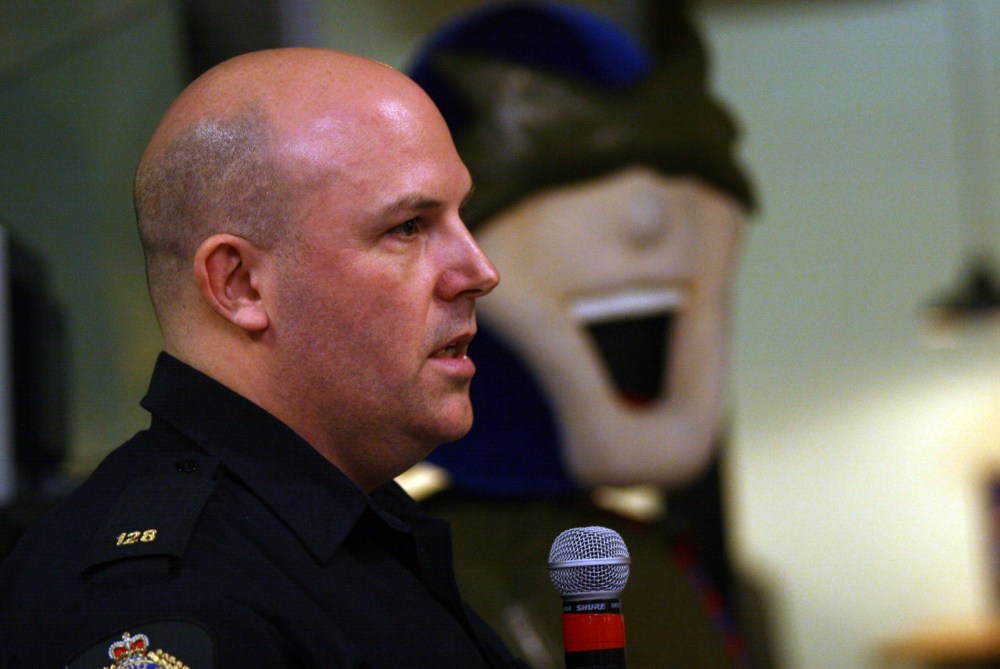
Robins knew he wanted to go into policing or firefighting, and was hired by the Brandon Police Service in 2004.
He kept his hand in the game, however, running a goaltending school for nearly two decades that he started in his Wheat King days. He stopped when fellow Wheat Kings alumnus Tyler Plante started his school, seeing it as a changing of the guard.
Robins also coached his son Tristen, who now plays with the Blades after being dealt to them by the Regina Pats. He said it was proud moment when he was drafted by Regina, and he was elated when he was traded to Saskatoon.
“We couldn’t believe he would have an opportunity to play with a team that I played for,” Robins said. “So far this season it’s been outstanding for him and for our family, and it brings back a lot of memories.”
But Robins, who also has a younger son Chaz, has faced recent challenges too.
On Aug. 4, 2017, his vehicle was struck by a young driver who veered into his lane on Highway 10 north of Forrest. She died in the crash, and Robins was left with a broken wrist, a broken leg, a broken sternum and fractures in the L1-5 vertebrae in his lower back.
He’s had three surgeries so far, and there could be more in his future.
“My recovery has been excellent with the physiotherapy,” Robins said. “As of right now, it’s just my back that is the main issue. I still have a vertebrae that is cracked and not healing so right know we’re at a crossroads on whether to have a surgery on my back or not. We’ll have to cross that bridge when we come to it. Hopefully I keep progressing and healing so that I don’t have to have that surgery. Time will tell.”
Robins, who has been off work since the accident, is hoping to return to light duty soon.
He said the experiences he had in hockey have proven invaluable as he recovers: He saw people in recovery centres who had essentially given up.
“Being in professional sports, you’re always dealing with injuries and you’re doing whatever you can to put it in the back of your mind and just keep forging on and doing the best you can,” Robins said. “I had numerous injuries and numerous surgeries as a player and I think that’s helped me because you know you’ve battled through it and you can get through it.
“I think that’s the biggest thing is mentally knowing you can get through difficult situations because you’ve done it before.”
» pbergson@brandonsun.com
» Twitter: @PerryBergson