
Kolesar’s hockey path led him from the farmhouse to the big leagues
Where are they now? Brandon Wheat Kings alumni
Advertisement
Read this article for free:
or
Already have an account? Log in here »
We need your support!
Local journalism needs your support!
As we navigate through unprecedented times, our journalists are working harder than ever to bring you the latest local updates to keep you safe and informed.
Now, more than ever, we need your support.
Starting at $15.99 plus taxes every four weeks you can access your Brandon Sun online and full access to all content as it appears on our website.
Subscribe Nowor call circulation directly at (204) 727-0527.
Your pledge helps to ensure we provide the news that matters most to your community!
To continue reading, please subscribe:
Add Brandon Sun access to your Free Press subscription for only an additional
$1 for the first 4 weeks*
- Enjoy unlimited reading on brandonsun.com
- Read the Brandon Sun E-Edition, our digital replica newspaper
*Your next Free Press subscription payment will increase by $1.00 and you will be charged $20.95 plus GST for four weeks. After four weeks, your payment will increase to $24.95 plus GST every four weeks.
Read unlimited articles for free today:
or
Already have an account? Log in here »
Hey there, time traveller!
This article was published 19/02/2020 (2291 days ago), so information in it may no longer be current.
Mark Kolesar is grateful to the game of hockey for not only the experiences it gave him, but also the lessons it taught him.
Kolesar, 47, played three seasons with the Brandon Wheat Kings between 1991 and 1994 and would go on to skate in the National Hockey League.
“What does every hockey kid when they’re young want to do?” Kolesar asked. “They want to play as long as they can and as high as they can. Maybe (under-18) is all you play, but that’s the NHL for you or if you go play pro that’s the NHL. I learned a lot. I was very fortunate throughout my career to play hockey and do what I did. There were a lot of lucky breaks but everything happens for a reason.
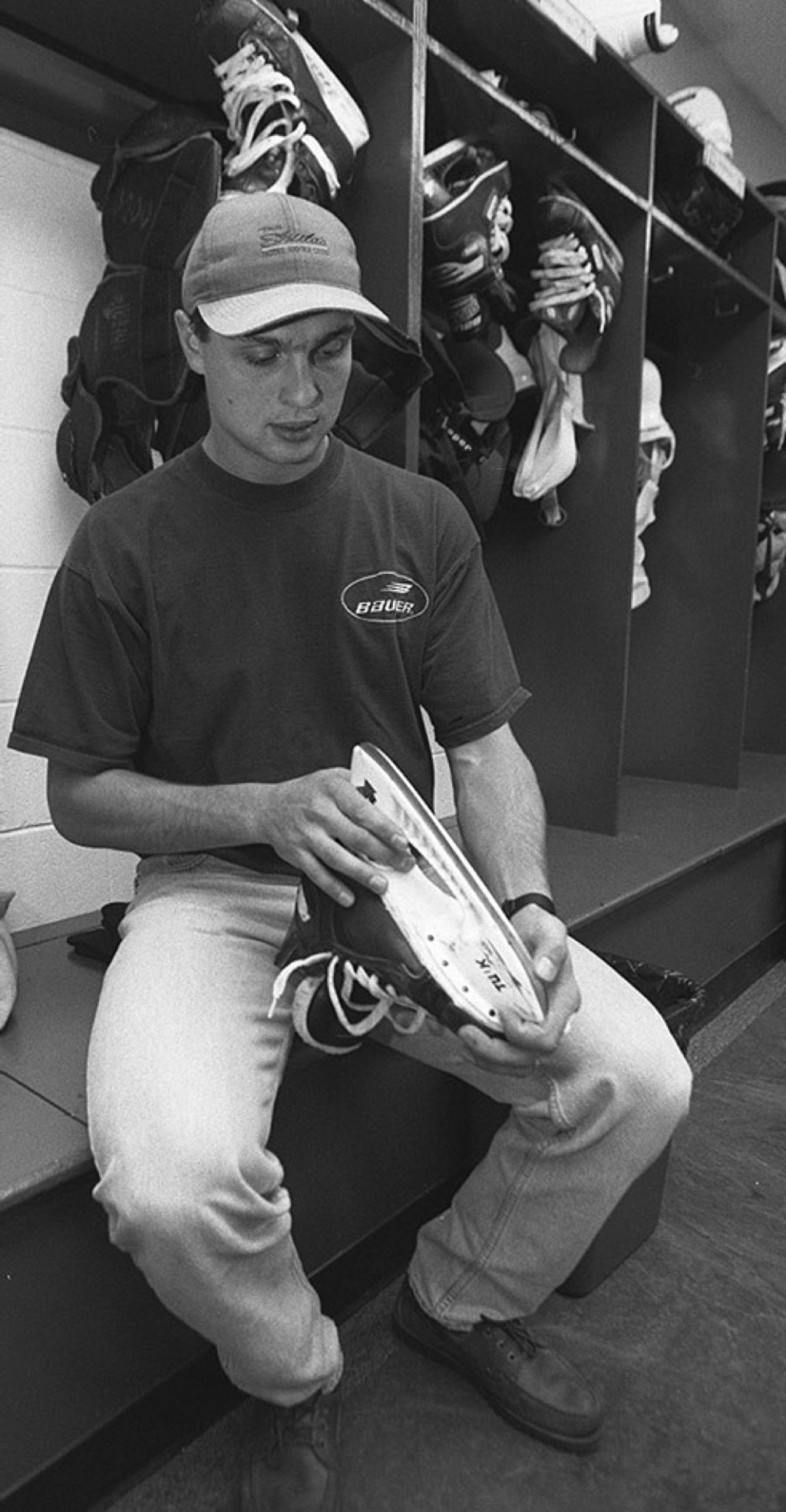
“As much as people say it’s just a game, well I don’t think it is because it paves the way for how you go on later in life. You have to work hard and that applies to your everyday life.”
He certainly came by his work ethic honestly.
Kolesar grew up on a grain and cattle farm near Neepawa, skating on a dugout about a quarter mile from the house they rode over to on snowmobiles.
“I was the youngest of five so my older brother (Jerry) would drive up and we’d go,” Kolesar said. “The neighbours’ kids would come but as we got older and those kids get older and go away, we used to build a rink right in the front yard. It was 15 feet out the door and I would be on the rink.”
Jerry would go on to enjoy a fine career in the Manitoba Junior Hockey League with the Winkler Flyers.
Father Jim and mother Marian were always supportive of the boys playing hockey, Kolesar said, but there was a big lesson tied to the rides into town.
“Mom and Dad were always there for us to get us to the rink, my brother and I,” Kolesar said. “But one thing about that, chores had to be done before we went to play hockey. If chores weren’t done, we didn’t go. You got up earlier or whatever you had to do. There were many times that we would get dressed on the way into town in the car.”
He began playing around five, long after he had started skating. He rotated through every position — “My turn in goal didn’t go so well so that was the last turn in goal — but we used to play all positions. If you have eight or nine kids on a house league team, you learn to play every position.”
His cohort of friends he played with included current Neepawa Natives head coach and general manager Ken Pearson.
By peewee, Kolesar was emerging as a high-end player. He headed to the Vancouver Super Series tournament with a rural provincial all-star team that included future teammates Craig Geekie and Mark Wotton.
He took another step forward when he joined the Shoal Lake-based Yellowhead Chiefs of the Manitoba U18 AAA Hockey League at age 15 for the 1988-89 season.
“It’s an eye opener for any 15-year-old moving up and playing a division,” Kolesar said. “And now you’re travelling. I was fortunate in my first year that I could get my driver’s ed and we had five guys from Neepawa going up so we would all car pool together. It made it really easy, and those were guys you guys you knew going in.”
Kolesar was listed by the Wheat Kings that season, attending his first camp as a 16-year-old the next fall.
It wasn’t just the eyes of Brandon scouts he was catching.
Both Kolesar and Geekie, who were the only Yellowhead returnees for the 1989-90 season, played in the U18 all-star game on Jan. 27, 1990, a matchup that also included their future Wheat Kings teammates Jeff Hoad, Marty Murray, Todd Dutiaume and Mike Maneluk.
Kolesar would attend the occasional Brandon game, but it was a different era.
“The Wheat Kings in the late ’80s, early ’90s weren’t very good so you weren’t following them much,” he said.
In his 17-year-old season, unsure of whether he would choose college hockey or the WHL, Kolesar returned to play for his hometown Natives in the MJHL for the 1990-91 campaign.
“It was good,” Kolesar said. “We weren’t very good either. We made the playoffs by some miracle. I think it was easier for me to be at home and graduate while you’re still playing.”
Kolesar’s hockey path would change for good a year later. He made the Wheat Kings in his 18-year-old season, and while the 1991-92 team is remembered as the last bad team before the franchise turnaround, it was pivotal for Kolesar.
But it certainly wasn’t easy. Kolesar posted six goals and seven assists in 56 games, and was a healthy scratch for the first time in his career.
“It took me a long time to figure out my place, and it was evident that year,” Kolesar said. “I was in and out of the lineup all year and I nearly quit at Christmas time. I wasn’t used to not playing and not being a big part of the team.”
He took a couple of high school classes to upgrade and raced from school to the rink for practice every day. He also remembered arriving back in Brandon at 6 or 7 a.m., and heading to school soon after.
“People look at hockey players and see all the glitz and glamour of their life, and don’t get me wrong, you’re doing something that you love to do, but at the end of the day it’s a demanding task,” Kolesar said. “You don’t just go to the rink. Guys are at the rink two or three hours before practice getting ready and then you’re there for two or three hours after practice. You put a full day in.”
But he was grateful that at least he remained close to home.
“It was great,” Kolesar said. “I saw Mom and Dad every week, sometimes more. If we had a day off, I could drive back out to the farm. There was one time we had a day off in hunting season and we went out hunting. It was nice. That helped me with the transition into Brandon too.”
Hard work paid off for Kolesar in his second season as the Wheat Kings made a dramatic 62-point jump in the standings. In 68 games, the forward scored 27 goals and added 33 assists.
Led by Bobby House and Marty Murray offensively, with a new bench boss in Bob Lowes and a competitive overage goalie in Trevor Robins, everything simply went right as the team went from a record of 11-55-6 to a mark of 43-25-4.
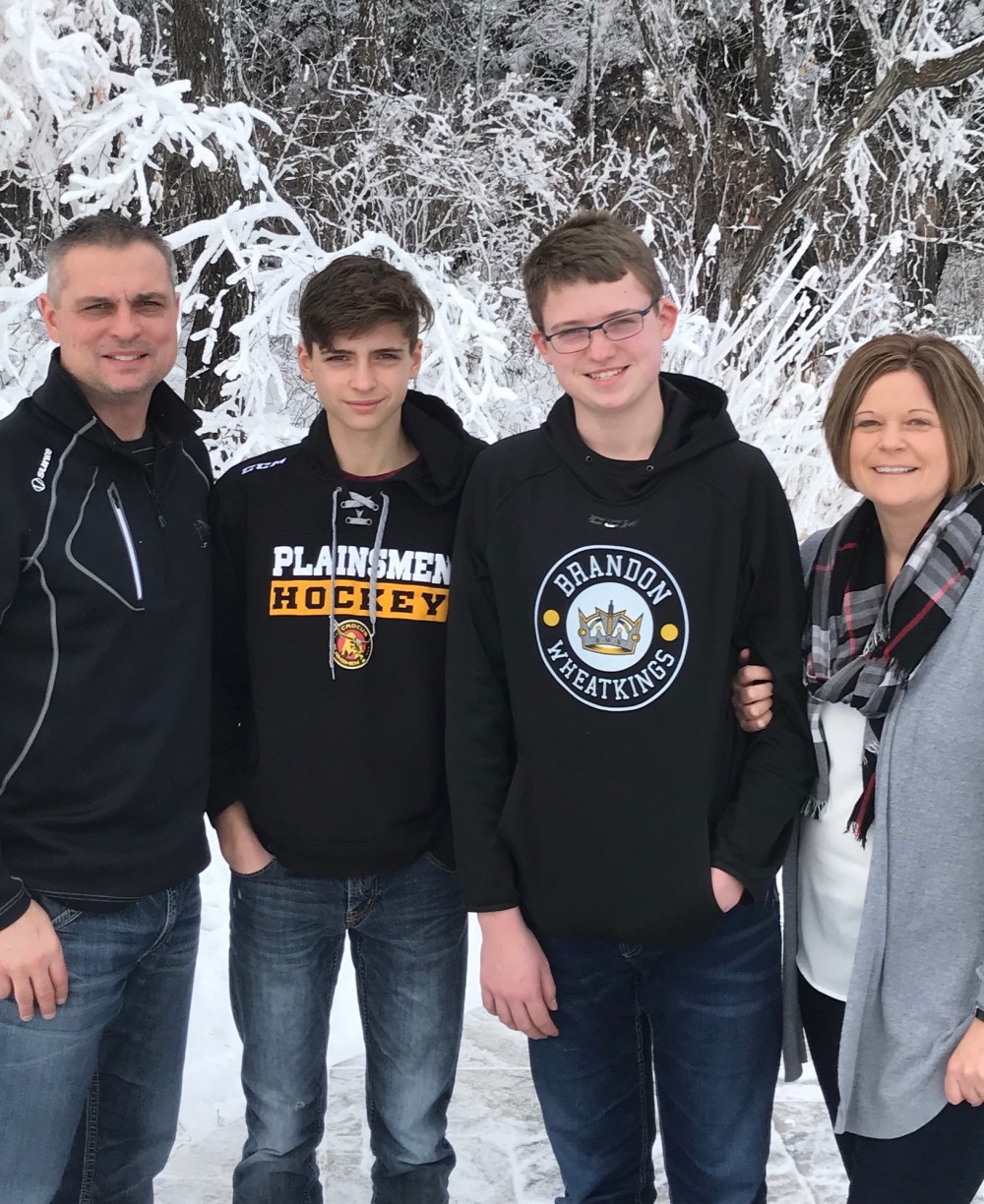
“We had a different mentality coming in,” Kolesar said. “All of a sudden we have a new coach to start the new year and everyone is committed … Training camp is different, it was a whole new ballgame. I don’t know if you could define one thing but there was a group of things. It was quite the turnaround for us.”
Kolesar noted the team realized early on it was pretty good, especially after Robins solidified a position that a season earlier had six different goalies start games.
The forward played the most with current general manager Darren Ritchie, and Chris Schmidt after he was acquired in a trade.
“The biggest success for me was finding my role as more of a defensive player and a penalty killer,” Kolesar said. “That’s where I started to get some confidence and some success. It made a big difference.”
He never thought of himself as an offensive player, considering himself a third-line centre whose job was to not get scored on.
The Wheat Kings fell in four games to the Medicine Hat Tigers in the best-of-five East Division quarterfinal in the spring of 1993, ending the team’s dream season early.
“That left a pretty sour taste in our mouths, especially after the season we had and the players we had,” Kolesar said.
Brandon was set up for success in the 1993-94 season, but there was no guarantee that Kolesar would have a chance to taste it. He was in a battle for one of three overage spots against Geekie, Maneluk, Hoad, Todd Dutiaume, Dwayne Gwylwoychuk and Pete Mehalic.
Geekie and Dutiaume were dealt right out of camp, and Hoad was traded after Kolesar returned from his first pro camp with the Chicago Blackhawks.
“You don’t want to see guys who you know get traded but you can only keep three,” Kolesar said. “It’s unfortunate but now it becomes ‘Yeah, you’re my friend but really you’re not my friend because I’m fighting for my job against you now.’ It gets a little more personal.”
Kolesar had turned down a pro contract to return, and scored 29 goals and added 37 assists in 59 games. He played with Ritchie and Chris Dingman, and was named an alternate captain.
“There was a little more responsibility but it’s just another day at the rink,” Kolesar said. “We had a tight-knit group there and looked after the young kids like Wade Redden and Justin Kurtz. That was their first year.”
The contract gamble paid off. Just after the season — Brandon lost in five games in the East Division final to the Saskatoon Blades — he signed with the Toronto Maple Leafs on May 24, 1994.
But life had taken another unexpected turn by that point. His father suffered a heart attack that he would recover from, but was in hospital that spring. The boys responding by planting the crop.
“My brother and I, day in and day out from 6 in the morning to 1 o’clock at night, are getting the crop in,” Kolesar said. “All of a sudden there’s a phone call and it’s my agent so we just signed with Toronto. It was kind of good news to take in.”
He spent the next season with the American Hockey League’s St. John’s Maple Leafs, earning 30 points and ending up in the top five on his team in plus-minus at plus-6. His wife Nancy, who he met in Brandon, joined him, making that transition a lot easier.
Kolesar received the call that he was joining the Maple Leafs on Oct. 28, 1995. He was at the rink early in the morning, and general manger Tom Watt called him into his office to say he was going up.
Kolesar quickly packed, caught a morning flight and spent half the day travelling.
“I don’t think you even process it at the time,” Kolesar said. “You’re flying so high for the whole day. You can’t settle down on the plane, you’re running on adrenalin pretty much the whole day. You walk in (to the Toronto dressing room), there’s Doug Gilmour and Mats Sundin and Felix Potvin and you’re sitting in your little corner stall thinking ‘Look at these guys.’ It doesn’t get any better than that.”
His baptism of fire came quickly.
On his first shift, the Leafs turned over the puck. Kolesar picked up his defensive assignment and was suddenly staring down Wayne Gretzky coming up the ice against him.
“You’re thinking ‘What am I going to do if he gets the puck?’” Kolesar said. “You can’t paste this guy but you don’t want to look stupid. Your thoughts go there. That might be all I remember of my first game.”
He played his first six NHL games on the initial month-long recall — including a game in the old Winnipeg Arena against the Jets before they moved — but bounced between Toronto and St. John’s five or six times. It was difficult for Nancy to even visit him in Toronto because he could be back in Newfoundland before she even arrived.
He came up for the rest of the season in late February, seeing action in 21 games. He scored his first of his two NHL goals at Joe Louis Arena against the Detroit Red Wings on March 19, 1996. (The other came in St. Louis against the Blues on April 6, 1996.)
Kolesar spent the entire time in the hotel, and remembers the kindnesses shown to him by the veterans.
“Two or three months in a hotel is a long time,” Kolesar said. “Nick Kypreos would knock on the door ‘Let’s go out.’ The older guys were good to the younger guys. We would go out for supper and it would be ‘I’ve got the tab.’ They were good.”
He admits there were some moments he found himself a little starstruck. One of those times came against the Red Wings.
“You’re in warmup and looking over and there’s Steve Yzerman,” Kolesar said. “That was my hero growing up and there he is. And playing against Gretzky for like the 10th time. It’s something but once the game starts, all that stuff gets shut down.”
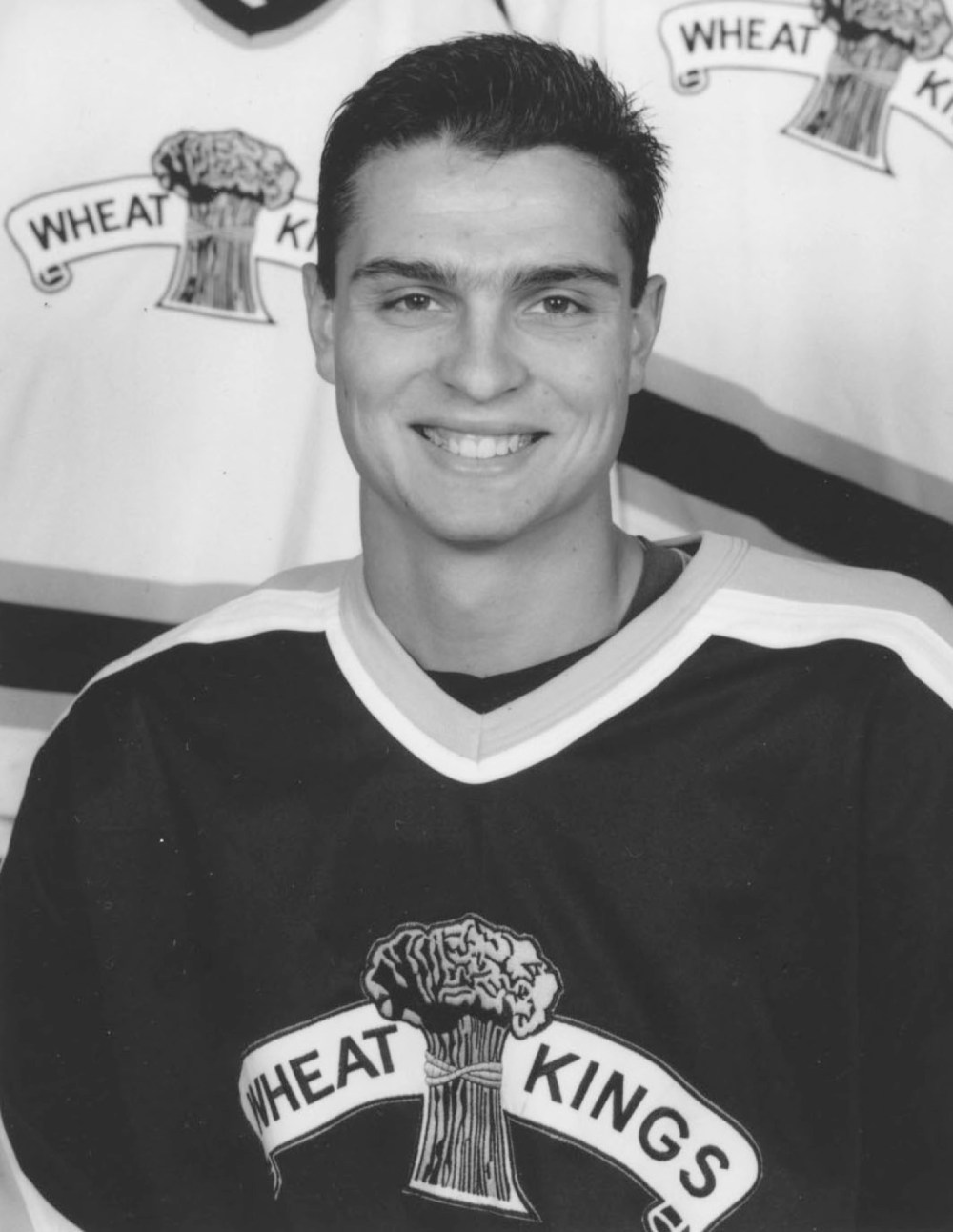
As encouraging as the end of the 1995-96 season was for Kolesar, frustration lay ahead at the start of the 1996-97 season.
“Everybody has their off seasons and I got hurt at the start of the year,” Kolesar said. “That didn’t help.”
Despite his nagging shoulder injury, which limited his strength, he went back to Toronto, a move he suggests a more mature player would have resisted.
“You get caught up in the moment where I finished off the year so maybe I should be there,” Kolesar said. “It was just one of those years.”
He saw action in what proved to be the final seven games of his 28-game NHL career, spending the rest of the year in St. John’s, where he finished third in team scoring with 50 points in 62 games.
Despite his showing, he was loaned to the International Hockey League’s Manitoba Moose in the 1997-98 campaign and later traded to the AHL’s Hamilton Bulldogs. In 59 games with the three teams, he managed just 24 points.
Something had to change, and it did. Kolesar fired his agent and made his own phone calls. There wasn’t much interest in signing him, so Kolesar accepted the advice of his former Brandon teammate Robins and joined him and Brandonite Graham Garden with the Nottingham Panthers in the British Ice Hockey Superleague.
A big part of playing in Europe is embracing the off-ice experience, and the Kolesars were able to travel a bit during what stretched into five full seasons abroad. After moving for one season to Schwenninger Wild Wings in Germany — their oldest son Nate was born there — the family returned to the United Kingdom.
Kolesar played three seasons with the London Knights, where he played with Robins, Hoad, Dutiaume and Regina Pats head coach Dave Struch under Pilot Mound product Bob Leslie as head coach.
London folded after five seasons — Kolesar is the all-time franchise scoring leader with 74 points in 124 games — and after a brief spell in Italy, he returned for one final pro season in North America.
Kolesar joined the Wichita Thunder of the old Central Hockey League, putting up 59 points in the 2003-04 season under head coach Derek Laxdal, the former Wheat King from Stonewall.
When the season ended, it was time for the 31-year-old Kolesar to call it quits.
“My oldest was going to be getting close to kindergarten and I broke my leg at the end of the year, which is what happens when you go down to block shots, and Nancy had had enough and I had had enough of travelling,” Kolesar said. “The Central League was an eye opener to come back and play in. You’re playing 64 games in six months.”
The schedule was condensed, and Kolesar found he was struggling to practice or play every day.
“I wasn’t 20 anymore,” Kolesar said. “I needed a day off here or there.”
He had opportunities to go back overseas, but the family, which by then included younger son Mason, decided to return to Brandon instead. Kolesar admits he hadn’t spent much time thinking about what would come after hockey, but had a lucky break when he had an opportunity to work at Nexen, which is now Canexus.
He’s still there.
Kolesar didn’t leave the game entirely, coaching Mason and later the U18 AAA Wheat Kings for four seasons. He also played some senior hockey.
“With being a shift worker, you do what you can,” Kolesar said. “I helped out with (Mason’s) age group and I was fortunate enough for Tyson Ramsey to ask me to come for four years there working with the (U18s). That was awesome, working with the kids.”
He certainly never forgot the impact his Wheat Kings coach had on him. Kolesar remains grateful to Lowes.
“He demanded the most out of players and if you weren’t up to snuff, you didn’t play,” he said. “It’s like everything, you want to play, and if you’re not going to work you’re not going to play. Lowesy brought out the best in a lot of guys. He was there for nine years. You don’t get that title for that long unless you’re good at what you do.
“He helped me a lot. I learned a lot from Bobby Lowes and not just the aspects of playing. It was commitment, what it took, the mental side of things. He helped a lot of guys out.”
» pbergson@brandonsun.com
» Twitter: @PerryBergson