
Piche remains proud of Wheat Kings ties
Advertisement
Read this article for free:
or
Already have an account? Log in here »
We need your support!
Local journalism needs your support!
As we navigate through unprecedented times, our journalists are working harder than ever to bring you the latest local updates to keep you safe and informed.
Now, more than ever, we need your support.
Starting at $15.99 plus taxes every four weeks you can access your Brandon Sun online and full access to all content as it appears on our website.
Subscribe Nowor call circulation directly at (204) 727-0527.
Your pledge helps to ensure we provide the news that matters most to your community!
To continue reading, please subscribe:
Add Brandon Sun access to your Free Press subscription for only an additional
$1 for the first 4 weeks*
*Your next subscription payment will increase by $1.00 and you will be charged $20.00 plus GST for four weeks. After four weeks, your payment will increase to $24.00 plus GST every four weeks.
Read unlimited articles for free today:
or
Already have an account? Log in here »
Hey there, time traveller!
This article was published 06/05/2020 (2158 days ago), so information in it may no longer be current.
Rick Piche’s short hockey journey certainly took him a long way.
Now 65, the product of Fannystelle played three seasons with the Brandon Wheat Kings from 1972 to 1975 and two pro campaigns. But many of the blessings that would follow in his life can be directly traced back to the game, and he’s grateful to the team that made it happen.
“I’m proud to be part of that elite group of players,” Piche said of the Wheat Kings. “I can see names on a roster and not know who they are. But I know that they are alumni and we all played for the same team at one time and we all wore the same sweater. That’s the biggest honour, wearing that big sheaf of wheat on your chest.”

It was something he couldn’t have imagined as a youngster. Piche grew up in Fannystelle, a village located on Highway 2 that is located about 55 kilometres southwest of Winnipeg.
The community’s outdoor rink played an important role for Piche, who was quite young when he began skating.
“Dad used to tie my skates and I would walk to the rink because it was three or four blocks away through snowbanks,” Piche said. “I would walk there and they had an old shack with a coal-heating furnace. I remember that vividly because I used to walk in there and put the rest of my stuff on — I usually just had skates, gloves and warm clothes on — and I would go over there and skate at night.”
The outdoor rink was cleaned by a neighbour’s front-end loader or by volunteers shovelling the snow over the boards. He said he regularly lost pucks in the snow because he would try to shoot as high as he could and the boards were made out of two-by-sixes and heavy chicken wire at the ends.
“They kept it going for a few years but after while that era of hockey was pretty well gone by the time I was a kid,” said Piche, noting a senior team had once represented the community. “They had all played in the older days in the 1940s and 1930s.”
Piche didn’t have anyone his age to play with in Fannystelle — most of his school mates came from nearby farms — so he didn’t skate with anyone his age until he began to travel 18 kilometres west to nearby Elm Creek to play hockey.
His father Gaston who everyone called Jos or Joe, farmed and drove the school bus, while mother Gisele looking after the four children, which also included Guy, Gerry and Michèle.
“My dad saw that I liked to play hockey so he took me to Elm Creek,” Piche said. “He was a big part of it because he drove the school bus, and you know what a school bus was worth in those days. You would be carrying all the players or tournaments they were going to.”
His dad’s first bus was a three-quarter ton, four-wheel drive truck with a cap on the back that could seat seven or eight kids. He eventually bought a full-sized orange bus that could take the whole team to tournaments.
If he couldn’t drive, people in Elm Creek filled in.
Piche doesn’t remember his mom going to a lot of games, especially later when his rugged style of play evolved.
A Wheat Kings scout approached him in Elm Creek at 14, asking if Piche wanted to move on in the game and imploring him to keep up the good work, which he certainly did when the team won a provincial bantam title.

After one year of midget in Elm Creek, Piche attended Brandon’s camp at age 16. He didn’t make the team, instead jumping into the Manitoba Junior Hockey League for the 1971-72 season with the Winnipeg Monarchs, coached by former Wheat Kings bench boss Gerry Brisson.
Piche went to school in Winnipeg and lived his aunt and uncle, his first time away from home, even if it was just 30 miles.
“We didn’t have a great season but I got to play with some fairly interesting fellows and it was a fairly decent league at the time,” Piche said.
He was invited back to Brandon’s camp the next fall and made the roster for the 1972-73 season on a team led by Ron Chipperfield, Robbie Neale, Rick Blight and Kelly Greenbank.
He said facing Chipperfield in practice was an initiation to the league.
“It was an eye opener,” Piche said. “If you were a defenceman, if you looked at the puck he would be around you in no time at all. He was such a good skater.”
Piche said veteran defenceman Dwayne Pentland helped him to prepare for the league’s stars, who at that time included Lanny McDonald and Tom Lysiak of the Medicine Hat Tigers, Dennis Sobchuk and Clark Gillies of the Regina Pats, Blaine Stoughton of the Flin Flon Bombers and Bryan Trottier and Dave (Tiger) Williams of the Swift Current Broncos.
“They were all pretty good hockey players so it was a real awakening for me,” Piche said.
His off-ice transition went relatively smoothly.
Brandon wasn’t a complete mystery because Piche had been attending Dunc McCallum’s hockey school, and working with instructors who included Juha Widing, Bob Ash and Jim Murray.
In addition, he had family in the city. Piche’s uncle Barney Mollot founded Barney’s Motel, which in its heyday had a restaurant, a drive-in restaurant and a cocktail lounge. Mollot was among the local businessmen who was a director with the Wheat Kings, and even managed the club for a time in the 1940s and 1950s.
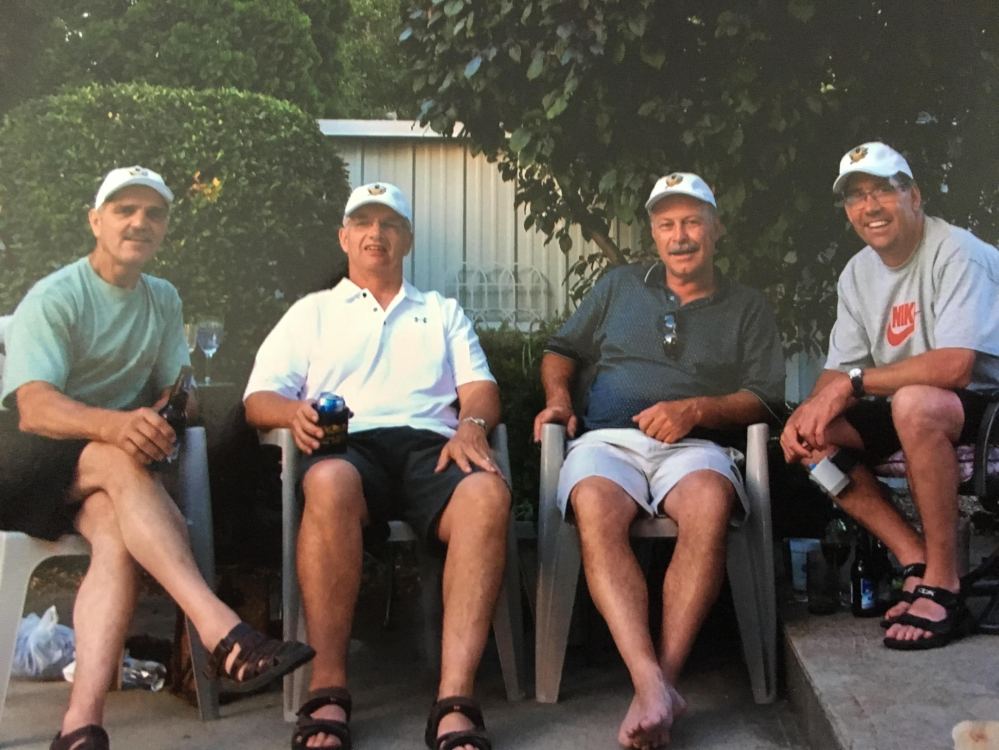
Piche lived with Brandon barber Orv Prokopchuk’s family in his first year along with Greenbank, who had a vehicle and could drive the pair to school and practice.
Piche liked head coach Rudy Pilous, who had guided the Chicago Blackhawks to a Stanley Cup in 1961.
“He was very knowledgable and would let you know,” Piche said. “He would always say, ‘Piche, it’s like a g**damn hoop on a barrel. These guys are going around you.’ That was his favourite saying for me. Rudy was always there for me. For my first junior coach to play in that league, I was quite impressed.”
Piche said one time on the bus, the driver seemed to be getting tired so Pilous offered to take the wheel.
“They switched drivers and I’ll be damned if we didn’t almost go into the ditch,” Piche said. “That was the last time Rudy drove the bus.”
He said when the team arrived at their destination, Pilous would pull a big wad of cash out of his pocket and give each player $7 or $8 for that day’s meal money.
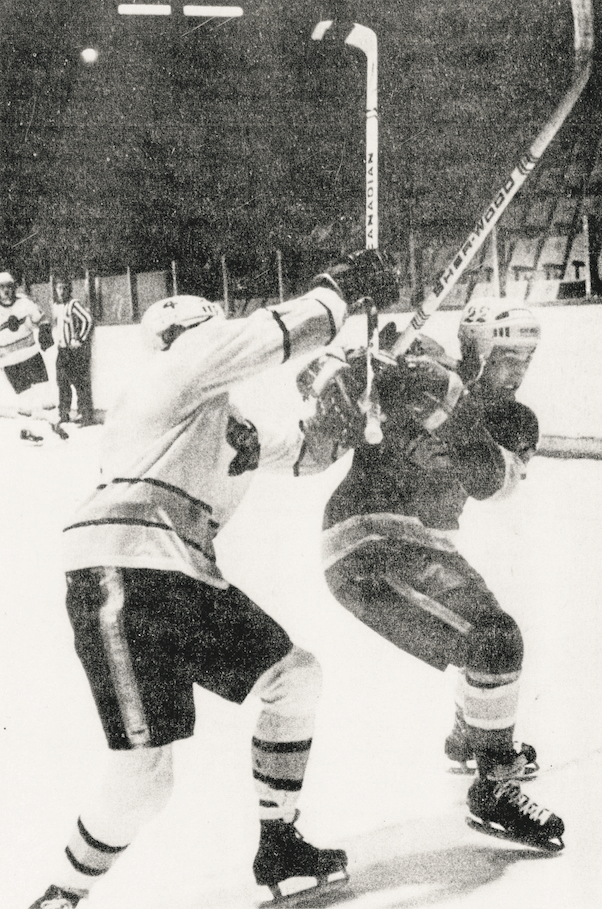
Piche said he was never a fancy hockey player, instead blocking shots, guarding his net and relying on the body to separate the attacking player and the puck.
“I didn’t have a finesse game,” Piche said. “You’ve heard of cement hands. I had cement hands and that was about it. (Wheat Kings goalie) Wayne Wilhelm used to tell me in practice ‘Quit chopping up the pucks! You’d shoot one puck and three would come at me.’ I wasn’t very smooth at all but that was the game I played with and it attracted a lot of eyes and the fans really loved it.”
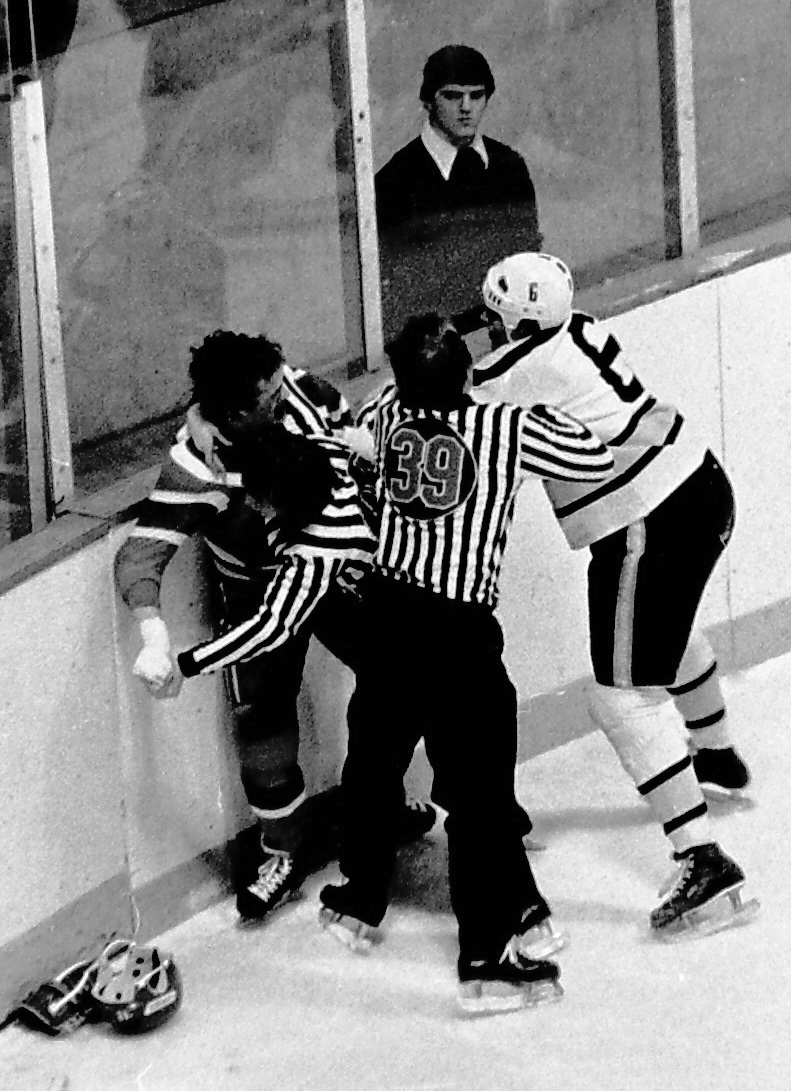
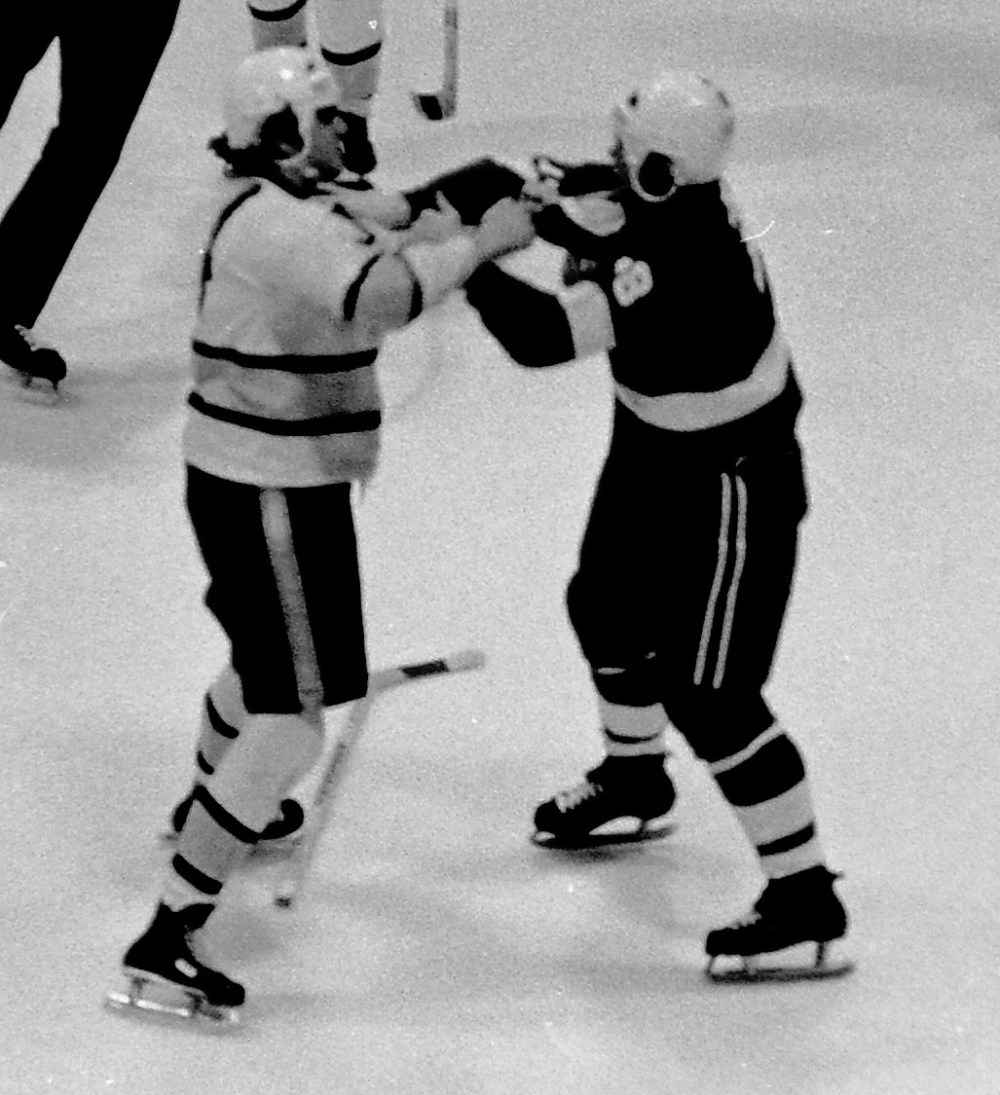
Pilous told him that approach would get him in trouble positionally, but it did in another way too, as his penalty-minute totals per season were 203, 170 and 292. Piche sits ninth in franchise history for career penalty minutes with 675 as he protected his less physical teammates. He also had eight goals and 55 assists in his career.
Usually his physical role was fine, but he remembers a visit to the New Westminster Bruins during the 1974-75 season when it turned out poorly. On their blue-line, the Bruins had big defenceman Barry Beck, who would go on to play 11 seasons in the National Hockey League. He apparently took offence to the hits that Piche was laying on New West forwards.
A young referee named Kerry Fraser, who would go on to a long and distinguished career in the NHL, was on the ice that night.
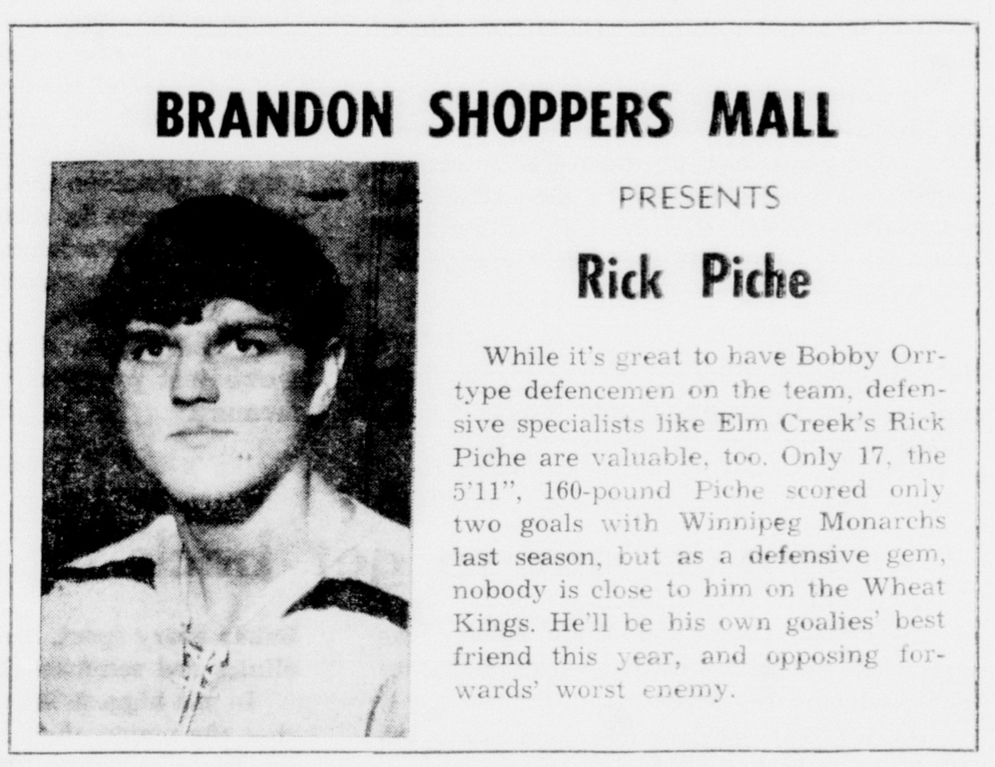
“We got into an all-out brawl,” Piche said. “Barry Beck hated my guts — I used to go after those guys in New West and at home all the time — and they had a real tough team in those days. Lo and behold, I was on the ice and there’s Barry. He just pummelled me. I had to turtle and he was literally just banging my head on the ice. He was a man playing in a boys’ league at the time, he was just such a powerful man. He threw me around like a rag doll.
“I never forgot that day, and I never forgot how much hatred he had for me. That always bothered me for a long time after. I never thought someone could hate me that much but I guess I don’t blame him.”
Piche said that was what he had to deal with serving a role he never especially wanted.
“I never intended to be a scrapper but I think the way I played the game and the way I got tempers up and the way I got the game rolling, it caused me a lot more than I could handle,” Piche said. “That happened that time.”
He chuckles that he lived through it so it wasn’t too bad.
There certainly were perks to being a Wheat King in those years.
Piche was on the ice as a rookie for Brandon’s first game in the newly opened Keystone Centre on Oct. 14, 1972. He had gone to hockey schools at the Manex Arena — “To call it a barn was almost a compliment” — and was delighted by the brand new rink.
One part of its opening certainly sticks with him.
He was up on the mezzanine with some of his teammates watching the new clock being hoisted into place one afternoon. General manager Jack Brockest was down on the floor in a hard hat with a few others watching the clock get wrapped in cables and then moved into the rafters.
“They started hoisting the clock and got it, I would say, about nine feet off the ground, and the cable snapped,” Piche said.
“One of the corners of the clock dropped and all you could see was bulbs shattering. Jack wasn’t a big man and he took his hard hat off and threw it and hit the concrete. That thing jumped up where the clock was supposed to be because he threw it so hard. He was so pissed off.
“We slowly made our way out after that because we didn’t even want to be around.”
Piche said the new arena wasn’t often full, but the fans were noisy and very supportive.
His game was certainly noticed by pro scouts. In 1975, he was drafted in the fourth round by the World Hockey Association’s Calgary Cowboys, and coincidentally by the NHL’s Atlanta Flames in the eighth round. (The Cowboys folded in 1977 and the Flames moved to Calgary in 1980.)
Piche said agents were everywhere at that time — much to the chagrin of the team at times — and he was a member of Bernie (Boom Boom) Geoffrion’s firm. Geoffrion had coached the Flames before resigning due to health issues, and he called Piche to tell him Atlanta had drafted him.
Piche doesn’t remember why he chose pro hockey as an overager but regrets leaving Brandon.
“I don’t know if my head was swelled up or I was just so excited at the time that I never gave Brandon another thought,” Piche said. “It bothered me for years after that.”
He had heard rumours the WHA wasn’t going to last so he signed with the Flames. He was excited about heading down to Georgia for the camp and then learned it was being held in Ottawa.
The advantage was they played an exhibition game against the Montreal Canadiens in a small town in Quebec, the only NHL action he would see.
“I got to play against all the Flying Frenchmen and that was a wakeup call,” Piche said with a chuckle. “I could hear Rudy’s words in my head, hoop around a barrel. They were moving so fast I was reacting but they were around me already.”
Piche split his first pro season in the International Hockey League between the Flint Generals and Columbus Owls. At the time, there were no farm teams, so each IHL team might have players from a bunch of NHL organizations.
He had been assigned to Flint, but played a dozen of his 15 games in an unfamiliar spot as a forward. They liked his hitting, but were looking to replace departed tough guy Frank Beaton.
“I don’t know if they thought I was going to be the answer to Frank,” Piche said. “They hadn’t seen me but had seen my past record. I guess they were figuring I might be the second coming of Frank but it didn’t turn out so they traded me.”
He finished the season in Columbus and began the next year with the Owls. He was traded in November to the Toledo Goaldiggers, losing in seven games in the Turner Cup final to the Saginaw Gears.
By then, he had seen enough to know it was time to walk away.
“They called it the suitcase league,” Piche said. “I saw guys who were married and had kids and they were moving around. It wasn’t a life for the kids. I guess you could make it their lives but I had been through that when I had to move away from home early to play hockey and you’re not with the family.
“There are a lot of temptations out there. You would have Monday meetings and then go to the bar and have a few drinks with the guys and sometimes things would get a little out of hand … You could go astray, and sometimes I think I lost track of what I went to play for.”
Piche met his wife of 43 years, Marta, when he was playing in Columbus and that was also a factor.
At the same time, Piche looked at his game and understood where he fit in.
“I didn’t think I was going to go too much further,” Piche said. “My dream was to always play professional hockey and come home in the summer time and farm. It just didn’t pan out. I ended up farming but that didn’t pan out either. Life has funny ways to treat you sometimes but that’s just the way it worked out. I don’t regret leaving at all.”
The couple married in Columbus in 1977 and headed up to Canada for 17 years.
They spent four years in Brandon, where Piche worked a couple of jobs before finding a spot with Canada Post.
He played with the Brandon Olympics senior team and helped Andy Murray as an assistant coach with the legendary 1980-81 Brandon University Bobcats hockey team, which was inducted into the Wall of Fame in 2017.
In 1981, the family moved to Fannystelle, with Piche working midnight shifts in Winnipeg with Canada Post and farming by day.
“I was working around the clock and burning the candle at both ends,” Piche said. “I managed to do it for 13 years.”
After a few bad years on the farm, Piche and his brother decided to sell the land and in 1994 the family moved back to Columbus, where his brother-in-law had offered him a job with a construction firm. Fortunately he had a green card to work in the United States from his hockey days.
Piche is still there. He recycles cement, something he calls ironic based on the hands he had when he played hockey.
The construction company prepares sites for development, doing all the dirt work and pipe work. Piche has done it all in the job, driving trucks and running a variety of heavy equipment.
“Now I’m getting older so I basically recycle cement and have been working by myself for many years,” Piche said. “My brother-in-law sends me out there and it keeps me busy. I figure maybe three more years (until retirement) but we’ll see.”
Their oldest daughter Jessica was born in Brandon, with Todd, Monica and Bernadette filling out the family before they moved to Ohio. Rick and Marta now have eight grandchildren.
One issue that cropped up when the family moved was that Todd was in peewee and they arrived to find a nearly non-existent hockey scene in Columbus, a city of 2.1 million people that serves as the Ohio state capital.
“It was a disaster,” Piche said.
Piche and a couple of others coached and built the scene up. Piche’s son Todd later played with the Manitoba Junior Hockey League’s Portage Terriers in the 2000-01 season, and returned home a year later when a junior team was briefly established in Columbus.
It gave Todd a chance to learn some of the same lessons that Rick learned in the early 1970s.
“I think it’s the camaraderie and the friendships and seeing how people’s personalities match their play,” Piche said of what he took from the game. “A lot of guys you meet are real class acts and they take it off the ice with them. That’s what I learned the most. Your personality reflects on the ice and you take it with you.”

He said he has also been struck by the number of guys he met in his junior days who have become lifelong friends. He still visits with them whenever he can.
“Those are my best memories through life, besides getting married and having kids,” Piche said. “Now my family is a hockey family.”
Brandon still feels like home when Piche comes up to visit his former Wheat Kings teammates like Wilhelm. He suggests the city is small enough that everybody kind of knows you and big enough to get lost in.
But Piche knows where he can find it.
“Brandon will always be in my heart.”
» pbergson@brandonsun.com
» Twitter: @PerryBergson