
Neale loved time in Wheat City
Advertisement
Read this article for free:
or
Already have an account? Log in here »
We need your support!
Local journalism needs your support!
As we navigate through unprecedented times, our journalists are working harder than ever to bring you the latest local updates to keep you safe and informed.
Now, more than ever, we need your support.
Starting at $15.99 plus taxes every four weeks you can access your Brandon Sun online and full access to all content as it appears on our website.
Subscribe Nowor call circulation directly at (204) 727-0527.
Your pledge helps to ensure we provide the news that matters most to your community!
To continue reading, please subscribe:
Add Brandon Sun access to your Free Press subscription for only an additional
$1 for the first 4 weeks*
- Enjoy unlimited reading on brandonsun.com
- Read the Brandon Sun E-Edition, our digital replica newspaper
*Your next Free Press subscription payment will increase by $1.00 and you will be charged $20.95 plus GST for four weeks. After four weeks, your payment will increase to $24.95 plus GST every four weeks.
Read unlimited articles for free today:
or
Already have an account? Log in here »
Hey there, time traveller!
This article was published 29/06/2020 (2176 days ago), so information in it may no longer be current.
Nearly five decades after he last suited up for the Brandon Wheat Kings, Rob Neale treasures his time with the team and in the Wheat City.
Neale, who is 67 and lives just off Shuswap Lake in beautiful Sorrento, B.C., was one of the team’s early stars for three seasons from 1970 to 1973 as piled up 283 points in 194 games.
“One of the most important times of my life was being a Brandon Wheat King,” Neale said. “I’ll never forget a lot of those people.”
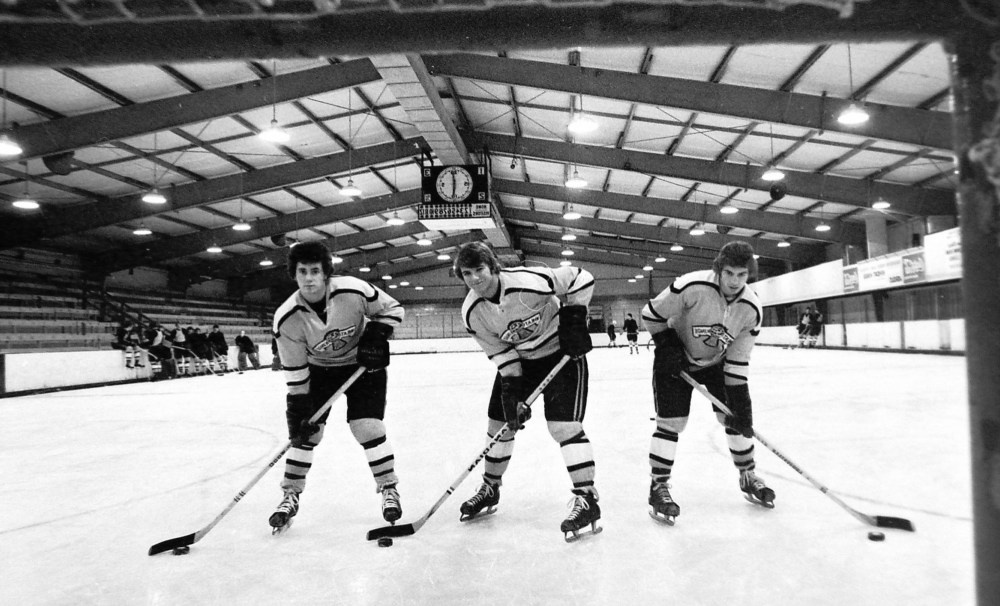
The born-and-raised Winnipegger grew up across the street from the Norberry Community Centre in St. Vital, and was on skates around age three. The facility had three hockey surfaces and one for pleasure skating, so there was no shortage of ice.
“My mom (Marie) used to have to stand on the front steps and holler at us for dinner,” Neale said. “There was always a rink full of kids playing hockey, and always a scrimmage. We used to go there at night and break the lock on the light box and play until the guy came to chase us away.”
Neale started playing organized hockey around age six, winning a city championship in peewee with his Norberry team.
His brothers Fred Jr., Kevin, Kelly and Tod also played — there is also sister Donna — but none went as far as he did in the game. But they put lots of miles on their father Fred’s car.
“My dad would come to watch me for a period, drive to another rink and watch another brother for a period and then drive to another rink and watch another brother,” Neale said. “When I grew up it was all outdoor hockey. I never played indoor hockey until I was 14.”
Neale knew about the Western Canadian Hockey League — it became the Western Hockey League in 1978 — because the Winnipeg Jets played there from 1967 to 1973. (They later became the Winnipeg Clubs, the Winnipeg Monarchs, the Calgary Wranglers and are now the Lethbridge Hurricanes.)
“They used to pack the old arena there,” Neale said.
In the early days of the league, there was no draft, with teams instead protecting players. Neale’s tenure in Brandon was completely up to chance, with Brandon’s Gerry Brisson and Flin Flon’s Pat Ginnell both interested in his rights when he was 15.
“They flipped a coin,” Neale said. “Patty Ginnell took Blaine Stoughton and Brandon took me.”
It proved to be a great day for both teams.
Neale made the Wheat Kings for his 17-year-old season, and in 62 games scored 24 goals with 35 assists and a career-high 125 penalty minutes. He was also named the team’s rookie of the year and most popular player.
Despite the success, he said it was a big step up.
“It was huge,” Neale said. “My dad didn’t think he wanted me to go because he didn’t think I would make the team, but I did make the team. There were hall-of-famers who were playing at that time.”
He was playing with some pretty good players too.
Ron Chipperfield also entered the league in 1970-71 at age 16, as did 17-year-old blue-liner Dwayne Pentland. The Wheat Kings were led by veterans Maurice Brunel, Glen Mikkelson and Terry Marshall.
“(Ron) was a super talented kid out of Minnedosa,” Neale said. “I spent my whole career in Brandon playing with Chipper. He just had a gift for scoring goals.”
The two never played on a line together but did team up on the power play, with Neale dropping back to the point.
Eventually, Neale and Chipperfield both served as alternate captains with Pentland as captain. Neale hesitated when asked about his personal strengths as a player.
“I scored goals,” Neale said. “My record shows that but I didn’t shy away from the battle either. I fought a lot the first year actually but then you gain respect and don’t fight as much.”
He billeted with the late Jack and Shirley Brockest. He said the transition to Brandon wasn’t that difficult, but juggling hockey and school wasn’t easy.
“You had to have discipline,” Neale said. “We had to go to school and we had curfews and stuff like that but I think everyone I played with helped each other along. Management back then really looked after the kids to make sure everything was good all the time. Going to school was a little tough because it’s on you to get to school and take your homework on the road: Sometimes we were gone for two weeks.”
He said the organization went to extra lengths to make sure he and Chipperfield were comfortable and settled in.
Neale exploded into a league superstar in his second season in 1971-72, recording 53 goals and 73 assists in 65 games.

He was playing on what was dubbed the GAG line — short for goal-a-game — with Donn McLaughlin and Glen Mikkelsen. The trio combined for 315 points, with Neale tying Stoughton for third in the league at 126 points.
“It was being in the right spot in the right time with good linemates,” Neale said. “We could really read off of each other and we had a few plays. It was just a good year, and I was really healthy.”
The team was between permanent homes in his first two seasons, playing in the Manex Arena as the Keystone Centre was built.
“In the old Manex, everyone was right on top of you all the time,” Neale said. “There was a substantial difference between that and the Keystone Centre. I used to work in the summer on the Keystone Centre as a carpenter’s helper hauling plywood. I never went home in the summer. I always stayed in Brandon.”
Happily for Neale, he was a Wheat King long enough to see the fruits of his labour.
The Wheat Kings moved into their new home on Oct. 14, 1972, spanking the visiting Winnipeg Jets 13-1 in front of 5,032 patrons.
“I remember opening night because my favourite player of all-time dropped the puck between me and (Dave Elliott) of the Winnipeg Jets,” Neale said. “Bobby Hull dropped the puck. Plus we were playing in front of 5,000 people, which was a lot different than 1,200.”
Neale earned the primary assist on the first goal Brandon scored in the new building, which came off the stick of defenceman Leo Parker 14 minutes and 37 seconds into the first period to tie the game.
He played 67 games in his final year in 1972-73, scoring 41 goals and adding 57 assists to finish second in team scoring behind Chipperfield. But he also suffered the left knee injury that would slow him down that season and for the rest of his career.
He thinks he fell in the corner, but got off the ice on his own and kept playing.
“I didn’t take anything for it,” Neale said. “There was no giving anybody cortisone shots. I’ve had that same knee operated on seven times. The last time I had it done was in 2005 when I had it replaced.”
Until 1979, a player had to be 20 to be selected in the National Hockey League draft. After his third season with the Wheat Kings, Neale went in the third round, 43rd overall, to the Detroit Red Wings. He was also chosen in the third round of the World Hockey Association draft, 36th overall by the Cleveland Crusaders.
“Just to be drafted was good,” Neale said. “When we flew to Detroit and then we flew to Cleveland, they were substantially different. One of the guys in Cleveland who talked me into signing there was Gerry Cheevers.”
The eventual Hockey Hall of Fame netminder spent four seasons in the WHA in Cleveland before returning to the Boston Bruins to complete his 19-year pro career.
“That was an easy transition because the game changes a lot,” Neale said of the WHA. “The players were so good.”
He scored eight goals and added nine assists in 43 games in his rookie professional year, but that knee injury came back to haunt him when he required knee surgery.
“In Brandon, they didn’t know what it was back then. It’s a whole different way of diagnosing it now than it was back then,” Neale said. “I guess I played part of my last year with torn cartilage and they never diagnosed it. Then when I went to Cleveland and they didn’t have arthroscopic surgery, so I had a big 10-inch scar down my knee. I was out for, I think, 10 weeks.”
He said the issues would come and go with the knee but it kept deteriorating for the remainder of his career.
“I’m not sure if I ever fully recovered enough to be 100 per cent,” Neale said.
In his second season, Neale played nine games with the Crusaders before he was dealt home to Winnipeg to join the Jets. He said Cleveland coach Jack Vivian was trying to make a spot for him to play more to see what he could do.
“They thought sending me back to Winnipeg to my hometown would help out,” Neale said.
While he said playing at home isn’t the easiest thing, skating out onto the ice at the old Winnipeg Arena for the first time was an unforgettable experience. He remembers a picture of him sitting on the bench beside his hero Hull.

“That was unreal at the time, even to be wearing a Winnipeg Jets jersey with all my friends and family in the stands,” Neale said. “That was a night I won’t ever forget.”
He played seven games with the Jets before they bought out his contract. Neale returned to his adopted hometown, Brandon, newly married and out of work. He was mulling over his options when Nick Polano recruited him to join the Cape Codders of the North American Hockey League.
Despite his knee problems, he posted 52 points in 50 games on a team that included future Wheat Kings coach Les Jackson. He was traded to the NAHL’s Erie Blades during the 1975-76 season, with their playoff run costing him and some of his Blades teammates a chance to appear in the iconic hockey movie Slapshot.
He scored 50 goals with 69 assists in 66 games between the Codders and Blades that season, earning an invitation to Detroit’s camp in 1976. He was late to camp because of his knee, and as the sole guy who wasn’t signed, was one of the team’s last cuts.
He played one final season in 1976-77, posting 66 points in 56 games, and returned to Brandon with a bad knee that limited how much he could do on the ice.
“That was sort of a shock that I can’t play pro, I can’t play hockey four times a week,” Neale said. “If I can’t do that, what am I going to do?”
Neale began playing with the senior Brandon Olympics team, but was recruited by the Cranbrook Royals to join their Western International Hockey League team that included former Wheat King Derek Spring. He did it with the team’s knowledge that he could only skate a couple of times a week.
The Royals got him a job as a plumber’s helper and gave him some money to help out. The job didn’t work out but another teammate helped to get him on at Finning International, the world’s largest Caterpillar dealer.
He said the game taught him a lot about working hard. In 38 years with the company, he had a handful of sick days and was always 30 minutes early for work.
He started sweeping floors and by the end of his tenure with the company, which included stops in Prince George and Kamloops, he was running the firm’s parts shipping department. The department grew from a handful of employees to 48 staff who produced more than $800 million annually by the time he was given a buyout in 2017.
He then moved to Sorrento, which is located north of Salmon Arm and northeast of Kamloops along the Trans-Canada Highway, in 2018.
Neale has two children of his own and an adopted daughter, along with five grandchildren.
He doesn’t talk about his time in the game much, although his grandchildren sometimes ask about the pictures he has on his wall.
They’re memories of great times.
“I’ll never forget Brandon,” Neale said. “It was the place that gave me opportunity. I met Rudy Pilous and Gerry Brisson as coaches. I got to to know the Hextall family really well. I used to babysit Ronny, and Bryan and I became really good friends. We had cabins across from each other. And I met a lot of guys. Juha Widing was there at the time and there were some guys who had returned to Brandon. It was home to me. I really the intention of staying and not going back to Winnipeg. I had bought a house in Brandon and my wife was a nurse at the time. The people in Brandon, even though we struggled to have good teams, they always kept that franchise going.”
While professional hockey didn’t turn out like he hoped, he’s now settled in a beautiful place after a long and fulfilling career outside of the game. He’s philosophical about his journey, and thankful for the place a big part of it started.
“There are always things you wish you could have done different, whether it’s hockey or it’s work or anything,” Neale said. “I’m still proud to be a Brandon Wheat King. There’s no doubt about that.”
» pbergson@brandonsun.com
» Twitter: @PerryBergson