
Low connected with game of hockey
Advertisement
Read this article for free:
or
Already have an account? Log in here »
We need your support!
Local journalism needs your support!
As we navigate through unprecedented times, our journalists are working harder than ever to bring you the latest local updates to keep you safe and informed.
Now, more than ever, we need your support.
Starting at $15.99 plus taxes every four weeks you can access your Brandon Sun online and full access to all content as it appears on our website.
Subscribe Nowor call circulation directly at (204) 727-0527.
Your pledge helps to ensure we provide the news that matters most to your community!
To continue reading, please subscribe:
Add Brandon Sun access to your Free Press subscription for only an additional
$1 for the first 4 weeks*
- Enjoy unlimited reading on brandonsun.com
- Read the Brandon Sun E-Edition, our digital replica newspaper
*Your next Free Press subscription payment will increase by $1.00 and you will be charged $20.95 plus GST for four weeks. After four weeks, your payment will increase to $24.95 plus GST every four weeks.
Read unlimited articles for free today:
or
Already have an account? Log in here »
Hey there, time traveller!
This article was published 26/10/2020 (2168 days ago), so information in it may no longer be current.
Hockey teaches players many lessons. Apparently one of them is that it never hurts to have connections.
Chris Low certainly did.
Now 44, the Foxwarren product and Brandon resident is the nephew of longtime NHLer Ron Low, who spent parts of 11 seasons in the NHL as a goaltender before later coaching and scouting. He won a pair of Stanley Cups with the Edmonton Oilers as an assistant coach, in 1987 and 1990.

It wasn’t hard for the hockey-mad youngster to find inspiration in the success of his uncle, who held a popular hockey school with Butch Goring in Foxwarren. Ron also had a very tangible impact on his game because he used to send him sticks.
“When I was 12 years old, I had access to every pattern on the Edmonton Oilers because he was an assistant coach there then,” Low said. “I was trying (Mark) Messier’s, (Craig) McTavish, Esa Tikkanen, and whichever pattern I liked, he would send me a dozen sticks. What 12-year-old has access to that? I had the Edmonton Oilers gear, the gloves and the pants. It was crazy.”
But it went well beyond sticks. When Low was five, Ron was playing in Edmonton and invited his nephew into the dressing room.
“My dad took me to a game, and we went around a corner, and he said ‘I’ve got somebody for you to meet,’” Low said. “It was my idol, Wayne Gretzky.”
Needless to say, hockey became a very important part of the youngster’s life.
Low’s grandparents farmed six miles north of Foxwarren, but he grew up in town with parents Jack and Marlene, plus his younger brother Jon.
He first skated at age four on a rink his father built in the yard for a couple of winters, but he had an even better facility a five-minute walk away in the town arena.
“We had a massive rink but we didn’t need it because he was the caretaker for a few years and I had the keys to the rink so I could go whenever I wanted,” Low said. “I would go before school, we would all go at lunch hour and then after school … I basically lived there.”
Low was fortunate to grow up with a strong cohort of players from the area that included his close friend Trent Tibbatts and older players Derek Tibbatts and Mark Wotton, both of whom went on to star with the Western Hockey League’s Saskatoon Blades. Pat Falloon, who was four years older, also provided an example of what Low’s path could potentially be when he led the Spokane Chiefs before playing in the NHL.
The inspiration also started at home.
Low had his father as a coach in minor hockey until he moved on to join the under-18 AAA Yellowhead Chiefs.
“It was a lot of fun playing for him,” Low said. “Even though he didn’t play high-level hockey, he was very passionate and was a really good coach, showing us the ropes.”
Low came by his hockey talent honestly on his mother’s side as well. He is also the nephew of former Wheat Kings forward Ed Tkachyk of Elm Creek.
“The bloodlines were there, and in Foxwarren, all we did was play hockey,” Low said.
Unfortunately for Low, the snow eventually goes away and hockey season ends every spring. He played some baseball until age 12, but his father and uncle took him golfing and he enjoyed that more.
He would often work out in the morning and then golf in the afternoon with his friend Rick Berry, who went on to play in the NHL.
“The summertime was hell for me,” Low said. “We liked farming but I couldn’t wait for the winter because all I thought about and all I lived was hockey, hockey, hockey, hockey.”
Low saw his first WHL game in Brandon with his Birtle friend Bobby Andrews in the late 1980s. He was instantly hooked.
“It was a real eye opener,” Low said. “I remember watching (Kevin) Cheveldayoff, obviously the GM of the (Winnipeg) Jets now, and that whole arena chanting ‘Chevy! Chevy!’ He was probably one of the toughest guys in the league. I saw my first hockey fight and it was no contest because he was so tough.
“It was fun to watch. After that, we were asking to come into the games more and more.”
The WHL started its annual bantam draft in 1990, one year before Low was eligible. In the pre-Internet era, the event’s visibility was completely different.
In the four-round, 51-player draft in 1991, Low was selected with the 12th overall pick by the Swift Current Broncos.
“I didn’t really care who took me,” Low said. “I just wanted to get drafted.”
He played five games as a 15-year-old, and remains grateful to Swift Current captain Trent McCleary for taking the time to talk to him on the bus in an effort to make him feel at ease.

In his 16-year-old year in 1992-93, he put up three assists in 51 games on a powerful Broncos squad that went 49-21-2 en route to winning a WHL championship.
“I played the point on the power play in AAA midget and everything, and to come in and take a backseat was a big wakeup call,” Low said. “I was 16 and 155 pounds my first year, and I wasn’t quite ready and probably shouldn’t have been there the whole year. But it was still pretty cool to watch.”
An active metabolism as a teenager made it virtually impossible for him to put on weight, which might seem like a nice problem to have, but it wasn’t ideal for the slight youngster.
There was also a major transition off the ice for the small-town kid.
He was in Grade 11 and cared about school, so he had lots of homework every night to keep up. He got behind in math, so he put in extra time with tutors.
He earned a spot with the Broncos again in his 17-year-old season in 1993-94, but after three games in Swift Current, he was dealt to Brandon for forward Ladislav Kohn.
It didn’t take him long to work his way through the feelings of disappointment.
“It was exciting,” Low said. “The thought I was getting dealt and somebody was getting rid of me went away quick. I didn’t really care because (Brandon) wanted me.”
But it went well beyond that. Low suddenly found himself suiting up for the team he had watched a few years earlier when playing in the WHL was his biggest immediate goal, and it was just 80 minutes from home.
“It was a bit of a dream come true,” Low said. “To put on that Wheat Kings jersey for the first time gave me chills.”
He quickly realized he was closer to Foxwarren, but he had been dealt to another talented team that didn’t need him to play a frontline role. After he had success in his debut in Brandon, he was advised to temper his expectations.
“They basically sat me down and said you had a really good game but basically told me to lower my expectations because I wouldn’t play like that all year,” he said. “I found that hard to take. I always want to be the best and be a guy who is counted on but still, at 17, that’s a young age and you’re trying to find your way.”
They tried him in different spots — even with star centre Marty Murray, who Low had idolized in years past — and he responded with eight goals and 12 assists in 69 games.
Fortunately for the young forward, assistant coach Mark Johnston quickly took an interest in him and helped him through the hard times.
“He was awesome with me,” Low said. “He kept things upbeat. I still talk to Johnny to this day. I wasn’t one of the big guns there but he was good to me. He kept me laughing and a smile on my face every day. I’m definitely grateful.”
While he wasn’t having all the personal success he was hoping for, he certainly enjoyed his time on the team. He pointed to things such as reading in schools as especially meaningful.
One of the overagers on the team who Low liked was Mark Kolesar, who would figure prominently in his life a few years down the road. In addition, Murray, who graduated after the 1994-95 season, was a leader in making the Wheat Kings a good experience.
“We had a lot of fun on that team, lots of laughs,” Low said. “Marty and the older guys, they kept it light with the rookies. They weren’t a group that would separate themselves from the rookies, like on other teams. We did everything together.”
Better times lay ahead for Low in the 1994-95 season. He used his speed to earn extra time killing penalties and the offence began to come as he tried to stay positive and shoot the puck more.
In 37 games with Brandon, he had a career-high 10 goals and six assists. He has a vivid memory of celebrating a goal one night at the Keystone Centre that demonstrated why Brandon was a good fit.
He went to the glass to celebrate and saw some of his cousins were on the other side cheering him on.
“I was basically celebrating with them,” Low said. “That was a lot of fun.”
That success ultimately came with a heavy cost, however, because it made him a target on the trade market.
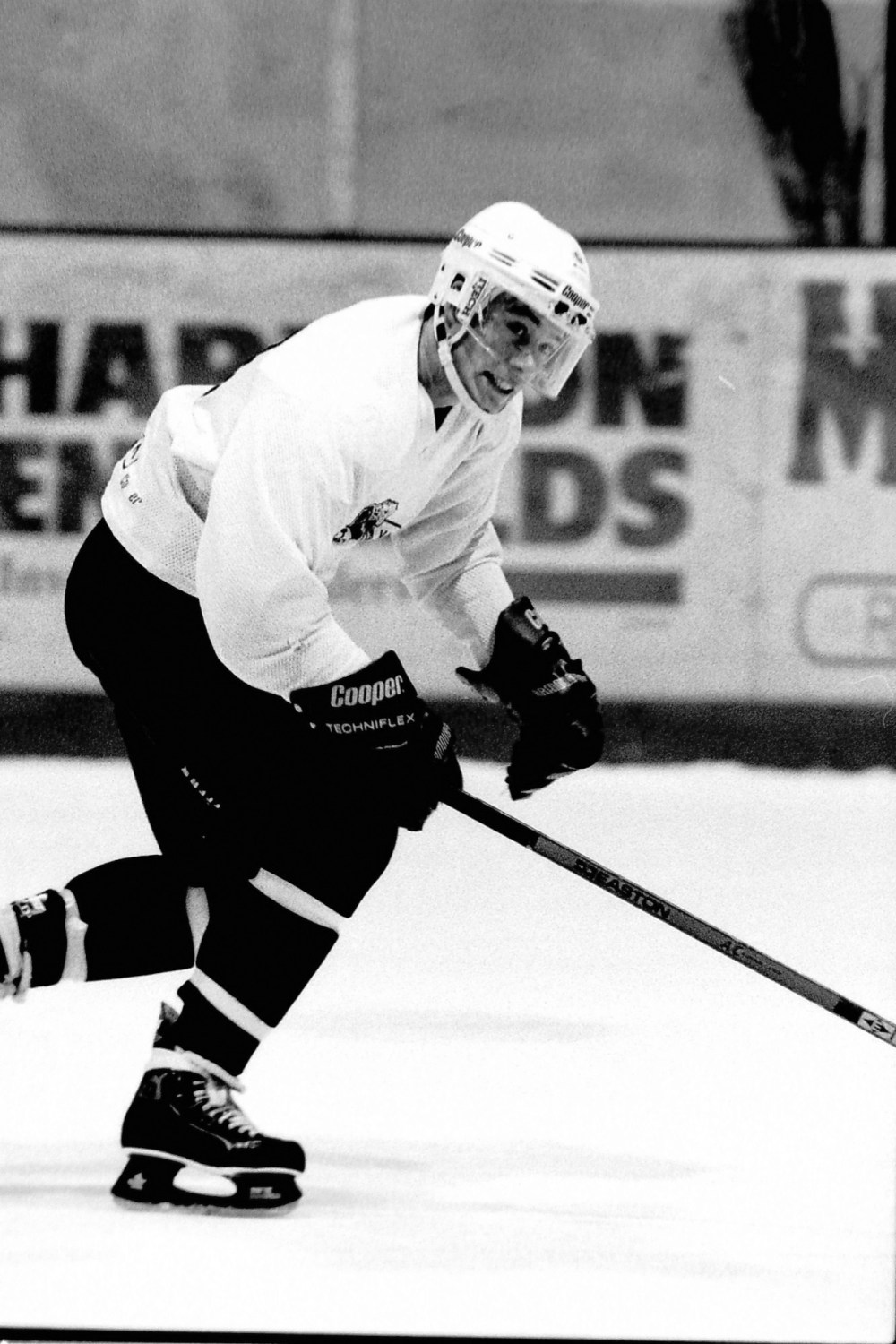
In one of the biggest deals general manager Kelly McCrimmon made in the 1990s, Low was sent to the Prince George Cougars with Ian Walterson, the rights to prospect Jeff Church and future considerations that proved to be Colin Cloutier and Scott Laluk on Jan. 26, 1995. In return, Brandon received forwards Alexander Vasilevskii and Mike Leclerc.
It wasn’t an easy day but Low quickly realized there would be benefits.
“Kelly cared about me and wanted me in a spot where I could succeed,” Low said. “With that team, it was time for me to go somewhere and be a power-play guy and it wasn’t happening there. He was basically doing me favour.
“PG wasn’t the destination anyone wanted because they were playing in an old barn. The first year it was ‘Oh my God, this is a secluded town’ but you get there, and sure enough, there’s a bunch of great guys.
“So you start to hit it off and they take you in. You’re playing in that old barn, which isn’t ideal, but guess what? There’s a new building coming and that’s exciting.”
In 23 games with the Cougars in the 1994-95 season, Low contributed six points, but offensive success was on the horizon.
In his first full season in Prince George, the 1995-96 campaign, Low contributed a career-high 22 goals and 50 points to lead the Cougars in scoring.
“I didn’t have a good first half,” Low said. “I was way over a point-per-game in the second half so I really should have been a point-per-game player that season.”
He earned a spot as an overager for the 1996-97 season, and with the team welcoming a Slovakian defenceman named Zdeno Chara, they packed the new rink by making it all the way to the Western Division final in what was then a three-division league.
After his breakout season as a 19-year-old, he fell back to 28 points, although he led the team in the six-game division final against the Seattle Thunderbirds that ended his WHL career.
University hockey was next.
After attending camp with the NHL’s Oilers and spending time with their affiliate in Hamilton, he was late getting into courses at the University of British Columbia in the fall of 1997, so he had to pick up an extra load in the second semester. He also struggled to keep up in the classroom with the team’s gruelling travel schedule.
“Most of the guys were taking business courses and that was their priority but hockey was mine,” Low said.
On the ice, it was a different situation. He was finally filling out and adding muscle. As a result, Low led the team in scoring with 33 points in 35 games, playing well enough to earn a spot on Canada West’s all-rookie team.
“It was as fast as the WHL but I was a better player there because I was stronger,” Low said.
Low said with the benefit of hindsight, the college route may have been a good one for him because he never filled out physically until age 21. It was a route suggested by his uncle Ron, and his aunt, Sharon Tkachyk, who was going to the University of North Dakota.
“I totally disregarded it because I was so blinded by what Patty Falloon and Derek Tibbatts and Mark Wotton were doing,” Low said.
After the season ended at UBC, Low joined the Idaho Steelheads of the minor pro West Coast Hockey League, where he earned seven points in 11 games.
He spent the next two seasons in the WCHL and one in the Central Hockey League before returning home after the 2000-01 season, in part because his father was sick.
The world changed for Low on Nov. 15, 2001 when his father succumbed at age 49 to the cancer he had been battling.
“Going back and forth while my dad was getting sick was really a tough time and really hard on my mom,” Low said. “She’s with us in Brandon now. It’s just really too bad that my dad didn’t get to see his grandkids. He would have been a really good grandfather. We’re still not over it but that’s the way things go.”
Low kept playing senior hockey in Foxwarren, and was picked up to join the Île-des-Chênes North Stars, winning the Allan Cup in 2003.
Then he joined his former Brandon teammate Kolesar down in the CHL with the Wichita Thunder for one final pro season in 2003-04.
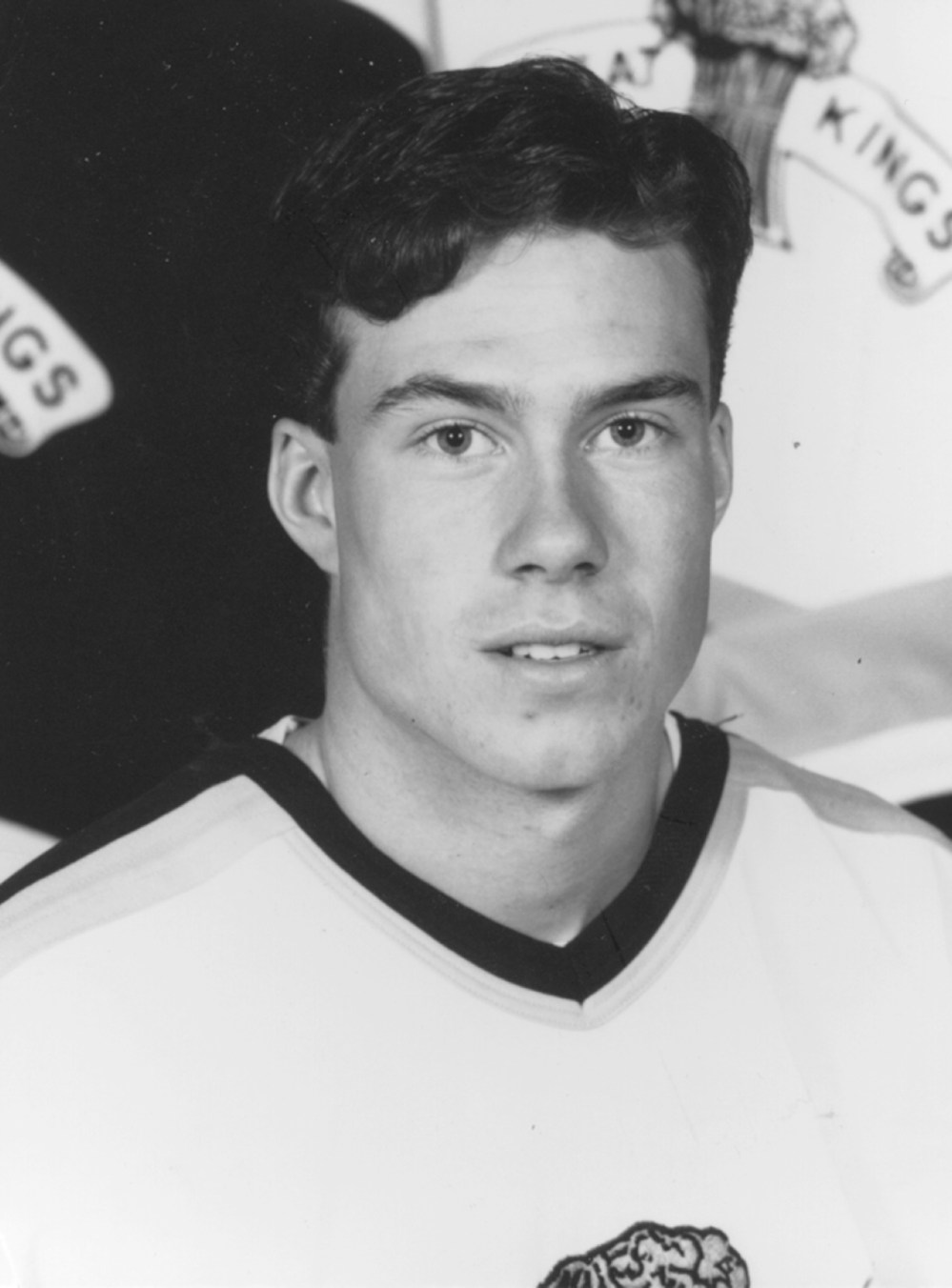
“You’re always hoping to impress somebody and move up to the American League,” Low said. “I was looking at options in Europe but always ended coming back to the Central League, which is the ECHL now. I would come home in the summer and the coaches were calling.”
The 2003-04 season ultimately proved to be the end of the line for both players.
After the season, Kolesar landed a job at Nexus, which is now Chemtrade, and helped Low find work there a month later.
“I’m really thankful to him for putting me in that position for 15 years,” Low said.
Low eventually grew weary of the shift work, and earned his realtor’s licence and began to sell properties in 2017 at J&G. This summer, he made the move to selling real estate full-time for RE/MAX.
He said the appeal of the job goes well beyond the pay packet.
“It’s not just about the commission cheque, it’s about helping people find a place, their next dream home or whatever it might be,” Low said. “They’ll be in a rush and I’ll tell them ‘You’re not wasting my time. This is my job. This what I do. I’ll show you however many homes I need until we find the right one.’”
Low continued to play senior hockey, suiting up for his hometown Falcons, plus the Souris Elks and the Boissevain Border Kings. He finally hung up his blades from competitive hockey after last season.
He stays in the game by holding an annual hockey school with Darcy Dupuis called Low and Dupuis Elite Hockey, and with some coaching.
Low has an even better understanding of the sacrifice his parents made because he and wife Tanis have daughter Tiana, an elite soccer player, and son Brady, a minor hockey goalie.
“It’s really all I spend my money on,” Low said. “We’re obviously not going anywhere now but the trips to Vegas came to a halt when they started playing sports. It really didn’t bother me at all because that’s how my parents were with me. Every dime they earned — they weren’t wealthy, my dad farmed and my mom was teacher — but I always had the best hockey equipment and the best skates and the hockey schools I wanted to go to.
“It was the same. They spent their money on my brother and I and our sports. It’s just the way it has to be. The kids have to be involved in sports because it keeps them out of trouble and teaches them how to be good teammates.”
He can only hope the lessons are imprinted on them like they were on him more than two decades ago.
Low said the way he was treated as a youngster by older players like McCleary and Murray in the WHL always stuck with him.
“To have guys talk like that talk to you and basically help you feel comfortable, you realize that’s how you want to be to the younger kids once you get older,” Low said. “It’s the inclusive factor. If somebody is having a down day, you try to pick them up because not everybody is riding a high all the time. It’s basically to be a good teammate.
“… It can be very humbling with the highs and lows, so it taught me that as well. There are going to be times it’s going well and times it’s not going as well, and you have to be a big boy and learn how to deal with it and pull yourself through it while helping others along the way.”
And while his path didn’t lead him to the NHL like his uncle Ron, it was a path well worth travelling.
“I owe everything to the game of hockey,” Low said. “It helped me grow up with a dream.”
» pbergson@brandonsun.com
» Twitter: @PerryBergson
History
Updated on Tuesday, October 27, 2020 9:18 AM CDT: Editing notes were left on the page before publication. They have been removed.