
Gillen: Bond unites former Wheat Kings WHERE ARE THEY NOW: BRANDON WHEAT KINGS ALUMNI
Read this article for free:
or
Already have an account? Log in here »
We need your support!
Local journalism needs your support!
As we navigate through unprecedented times, our journalists are working harder than ever to bring you the latest local updates to keep you safe and informed.
Now, more than ever, we need your support.
Starting at $15.99 plus taxes every four weeks you can access your Brandon Sun online and full access to all content as it appears on our website.
Subscribe Nowor call circulation directly at (204) 727-0527.
Your pledge helps to ensure we provide the news that matters most to your community!
To continue reading, please subscribe:
Add Brandon Sun access to your Free Press subscription for only an additional
$1 for the first 4 weeks*
- Enjoy unlimited reading on brandonsun.com
- Read the Brandon Sun E-Edition, our digital replica newspaper
*Your next Free Press subscription payment will increase by $1.00 and you will be charged $20.95 plus GST for four weeks. After four weeks, your payment will increase to $24.95 plus GST every four weeks.
Read unlimited articles for free today:
or
Already have an account? Log in here »
Hey there, time traveller!
This article was published 29/05/2021 (1833 days ago), so information in it may no longer be current.
Members of the Brandon Wheat Kings might not know it, but their time with the organization will always bond them with other players who skated with the club.
Don Gillen, 60, spent three seasons with the Wheat Kings between 1977 and 1980, and remembers running into Ron Chipperfield in a hotel on the road during his professional career. Gillen had gone down for a coffee and a piece of apple pie — his pregame staples — and ran into the Wheat Kings legend, who played in Brandon a few years earlier than he did.
“He was there in the hotel restaurant,” Gillen said. “We talked about Brandon. When you knew the other guy was from Brandon, you always had a connection.
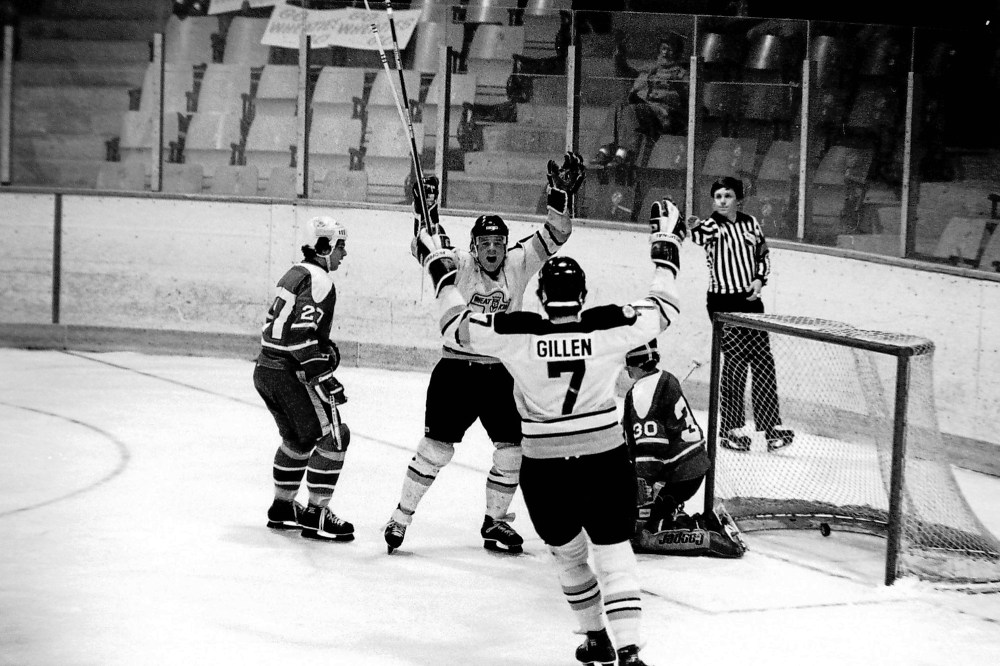
“… Brandon always had a strong foundation and (former owner) Kelly (McCrimmon) has done nothing but add to it. He did a tremendous job with that stability for 30 years. Basically there have been very few changes there. It was great to follow, especially for me because I was there plus when you grew up with a friend who basically called the shots there and done things there for years, it almost like things never changed.”
Gillen grew up on a farm near Dodsland, Sask., a community of 200 located 236 kilometres northwest of Swift Current. The nearest community is another small town, Plenty, home of his future teammates Brad and Kelly McCrimmon.
(Dodsland is also the hometown of WHL icon Ed Chynoweth.)
Gillen was the youngest of five children, and although his older brother played hockey too, the nine-year age gap meant they were never teammates in a game. Gillen began skating around age five, playing minor hockey with some kids who were virtually an entire year older than him because of his Christmas Eve birthday.
Dodsland actually had artificial ice in its arena after the community bought a refrigeration unit that had been used to help build a potash mine at Delisle.
“It was the central point of our community,” Gillen said. “It was a bigger community than they have now — smaller communities have been hurt — but when I was a kid growing up we had all the teams so everybody hung around. It was a farming community and every night was at the rink.”
Growing up outside of the community, he was utterly reliant on his parents Paul and Wilma for transportation. That also meant keeping an eye on the means of transport.
“We never had a garage and we had a half-ton truck,” Gillen said. “As a kid, I remember making sure the vehicle was plugged in to make sure it would start, because you didn’t want to miss practice or a game.”
Both parents were big sports fans, and Paul was a senior hockey player and coached a team in the Wild Goose Hockey League.
Gillen always played up front, usually at centre but also at right wing.
By age 12 or 13, he became aware of the Western Canadian Hockey League’s Saskatoon Blades, mostly because an older local defenceman named Bob Hoffmeyer played for them.
But his future in the league lay elsewhere.
He attended his first Wheat Kings camp at age 14 in 1974 when someone saw him in action and word got back to the team that he was a player to watch.
Gillen headed to the Saskatchewan Junior Hockey League’s Weyburn Red Wings, where he spent his 15- and 16-year-old seasons. In his first year there, something dramatic happened.
“I was five-10 when I first went to camp in Brandon two years prior (to making the team),” Gillen said. “I was a different player. I was a skater, a centreman whose skating was probably my strength. Then I went to Weyburn and grew three or four inches that year and another inch or two the following year.
“Obviously my body took a while to catch up, and then your game changes. You don’t expect the same game out of yourself and your coach doesn’t either. There’s a readjustment.”
He didn’t play a lot in his first SJHL as he struggled to find his way in the new frame. In his second season in 1976-77, the 16-year-old forward posted 37 points and 170 penalty minutes in just 58 games.
He said it was a mixed blessing.
“In Weyburn, it was an 18-, 19-, 20-year-old league,” Gillen said. “The guys who are coaching are coaching for that year and not really into development. If you’re not a guy who is really in the top six forwards, you don’t get the ice to develop. And it just makes sense, because they don’t know what you’re going to be the next year.”
In the 1977-78 season, the six-foot-three Gillen found a spot on a Wheat Kings squad that had lost in the league final in 1977. They were stacked with talent, with Bill Derlago in his final season, and an outstanding group of 18-year-olds that included forwards Brian Propp and Ray Allison, plus defencemen Brad McCrimmon, Tim Lockridge, Mike Perovich and Wes Coulson.
Gillen remembers a road trip early in his first season — “You’re young and insecure and not sure you belong” — and the host pulled its goalie and scored to tie the game up in an era without overtime. Off the ensuing faceoff, Derlago took a pass in full flight and ripped a shot past the goaltender to restore the lead before the final buzzer.
“I thought to myself, ‘Holy crow, this is amazing. The guys are so good here. Bill is so good. I’ve never been on a team with guys that good,’” Gillen said. “It was amazing. There are just times like that, that year. Those guys were the best in the league.”
In a very different era of the league, Gillen made one mistake he still regrets. He was attending Neelin with Laurie Boschman, whose family billeted him, until he decided it was too much and quit school in Grade 10.
“From one day to the next you’re just kind of in a fog but you don’t know it’s a fog,” Gillen said. “In hindsight, I wasn’t very mature for my age.”
He took a Grade 12 equivalent later to get his diploma.
Along with Boschman, Gillen said Brad McCrimmon was another teammate who ensured he found his way.
He also played with Coulson and Brad Kempthorne the year before in Weyburn, and sat beside Lockridge in the dressing room. Gillen said his Brandon teammates were overwhelmingly good people, and if they didn’t fit in, they simply didn’t last.
In 60 games in his rookie season, Gillen posted 18 goals, 16 assists and 128 penalty minutes. In an era where bigger players were pretty much expected to play physically and fight, Gillen said his penalty minutes weren’t a reflection of what coach Dunc McCallum expected from him.
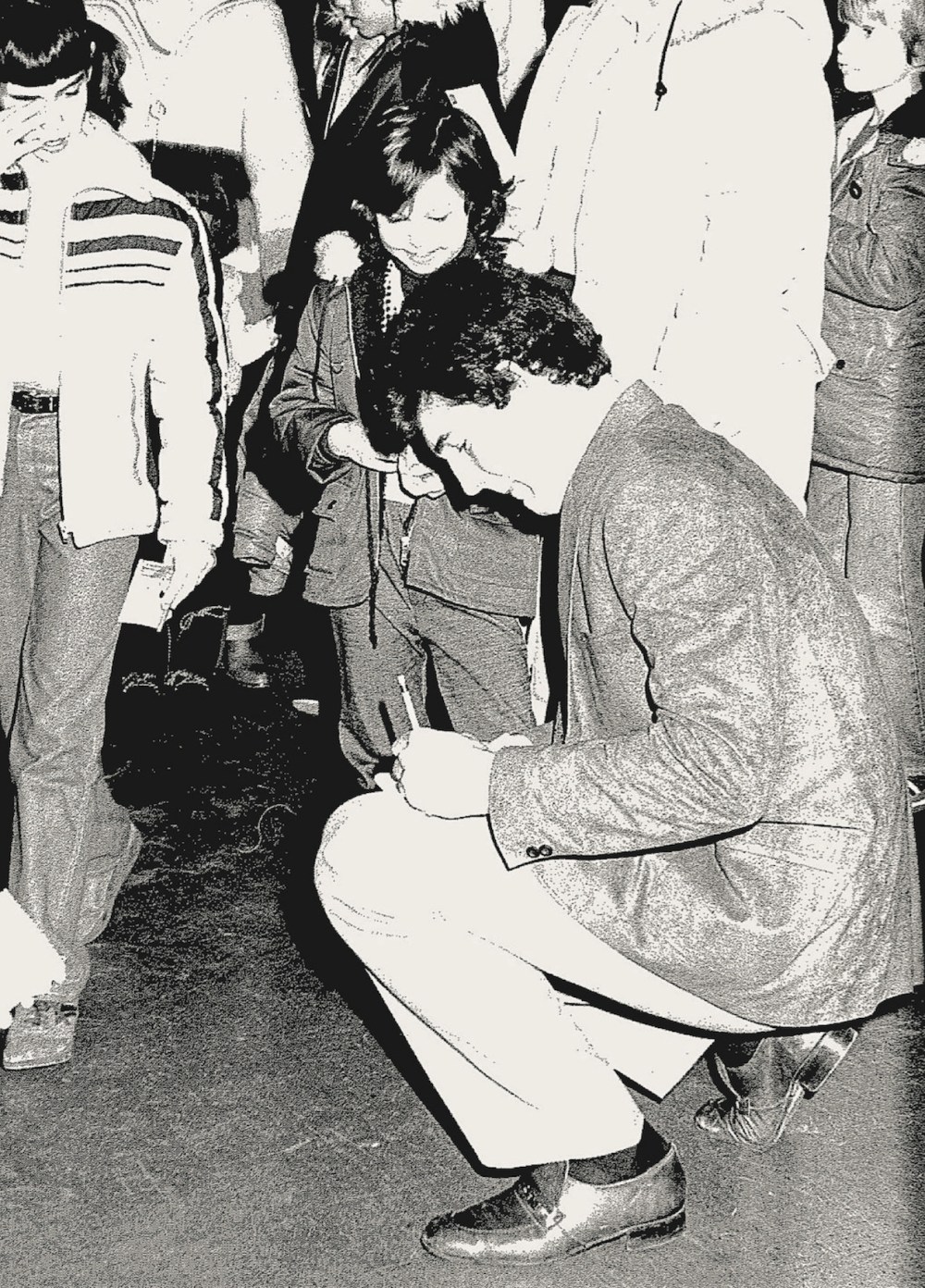
“Dunc was very good to me,” Gillen said. “He let me grow on my own. He didn’t put too much pressure on me. Later in my career, others put far more pressure on me for that aspect than he did. Dunc was a good guy. I’m not saying that because it’s a nice thing to say, he was very fair to everybody.”
Gillen added he couldn’t believe when he looked back later that McCallum only turned 39 that season, because he seemed so much older and more mature.
The team went 46-12-14, finishing first in the Eastern Division, but they went 4-4 in the divisional round-robin and missed advancing on a count back, ending a season of incredible promise.
“I felt bad for myself because it was probably the most fun I had playing for three or four years playing hockey,” Gillen said. “Playing in Brandon was a lot more fun than playing in Weyburn because I had gotten older — when I first went to Weyburn I was with 18-, 19-, 20-year-olds — and now I started to catch up to the age group and was more of a part of things. I enjoyed everything about Brandon.
“The rink was great. The city was small enough that you knew your way around but yet big enough that it had everything. Then to see that it was the end for some players, you felt bad for everybody.”
Gillen isn’t sure if the early exit had an impact on the next season. He thinks that every campaign has its unique challenges that have to be met, regardless of what came before.
“You have a different set of problems every year,” Gillen said. “The cards are always reshuffled and you have a new hand to play.”
The 1978-79 squad apparently played their hand to near perfection. The greatest regular season in Canadian Hockey League history lay ahead.
The high-powered Wheat Kings were paced by the incredible top line of Propp, Allison and Boschman, who combined for 220 goals and 496 points that year.
“Extremely consistent guys,” Gillen said. “They never took a night off. Brian Propp was like a machine, just constantly every game and the same thing in practice, they were extremely focused players.”
The level of Gillen’s play rose steadily as he upped his points total from 34 to 51 and his penalty minutes from 128 to 212. He became a valuable asset to McCallum, who called him the team’s most improved player because his skating had gotten a lot better and he had a great attitude and work ethic.
Still, Gillen wishes he had given more.
“I just didn’t focus as much as I should have,” said Gillen, who billeted with Jack and Bev Cumming in his final two years. “The guys who were consistent every game had focus every day. There were games I played and games I didn’t.”
That might be the case, but he scored 21 goals in the regular season and 10 in the playoffs, including one of Brandon’s biggest goals of the season. In Game 5 of the league final against the Portland Winter Hawks on May 2, 1979, with the series knotted 2-2, his second goal of the game came 4:28 into overtime in a 5-4 Brandon win.
“We won the faceoff in our end and I took off up the middle and Brian fed me with a pass that I could skate into,” Gillen said. “I could feel the guy that I later played with, Blake Wesley, on my heels and I thought to myself ‘I know one thing, I can’t get this puck to lay down, but I’m not going to miss the net.’
“I remember thinking ‘I hope I don’t fan on it but I’m not going to regret missing the net. When I got in, I really didn’t look at the goalie (Bart Hunter) that much but I fired it low on the ice at basically the centre of the net and it went in.”
It was truly a season-turning goal. With Game 6 set the next night in Portland, Brandon was suddenly up a game instead of a game down.
“It was definitely the most important goal I scored,” Gillen said.
After a 6-3 victory in Game 6, they headed home WHL champions for the first time in franchise history.
Within a day of getting home, the Wheat Kings headed to Montreal for the Memorial Cup. The three-team event, which included the host Trois-Rivieries Draveurs and the Peterborough Petes, began violently against the hosts.
“They came out and we had a brawl in warmup,” Gillen said. “They came out, and if my memory is correct, when we were warming up, we didn’t wear helmets in those days. They came out and all had helmets on … We weren’t prepared for what they came up with. It kind of threw us off.”
Brandon dropped the first two games and won two to get into the final, which Brandon ultimately lost 2-1 to Peterborough in overtime. More than four decades later, Gillen still can’t quite believe what happened to him to that day and how it affected him that night.
“In the morning skate, a puck came around on the boards and hit my skate as I was stepping off the ice and it broke my skate blade,” Gillen said. “I had not broken in my other pair of skates because you don’t change until you have to. I had another brand new pair of skates, and back then, they weren’t broken in when you first got them. I wore brand new skates and they felt like ski boots for that game.
“I never felt I skated as well as I could have or would have liked to have in that final game. That’s always been a bone of contention for me.”
It’s also coloured the way he looks back at that season. The Memorial Cup final left him with unfinished business.
“I look back at it fondly but when you don’t win, you’re frustrated,” Gillen said. “I look at it fondly, but if we could have somehow won that game …”
Nevertheless, the Philadelphia Flyers selected Gillen in the fourth round of the 1979 NHL draft with the 77th overall pick, one of 10 Brandon players chosen that year in a double draft class that saw the eligible age lowered from 20 to 19 for the first time.
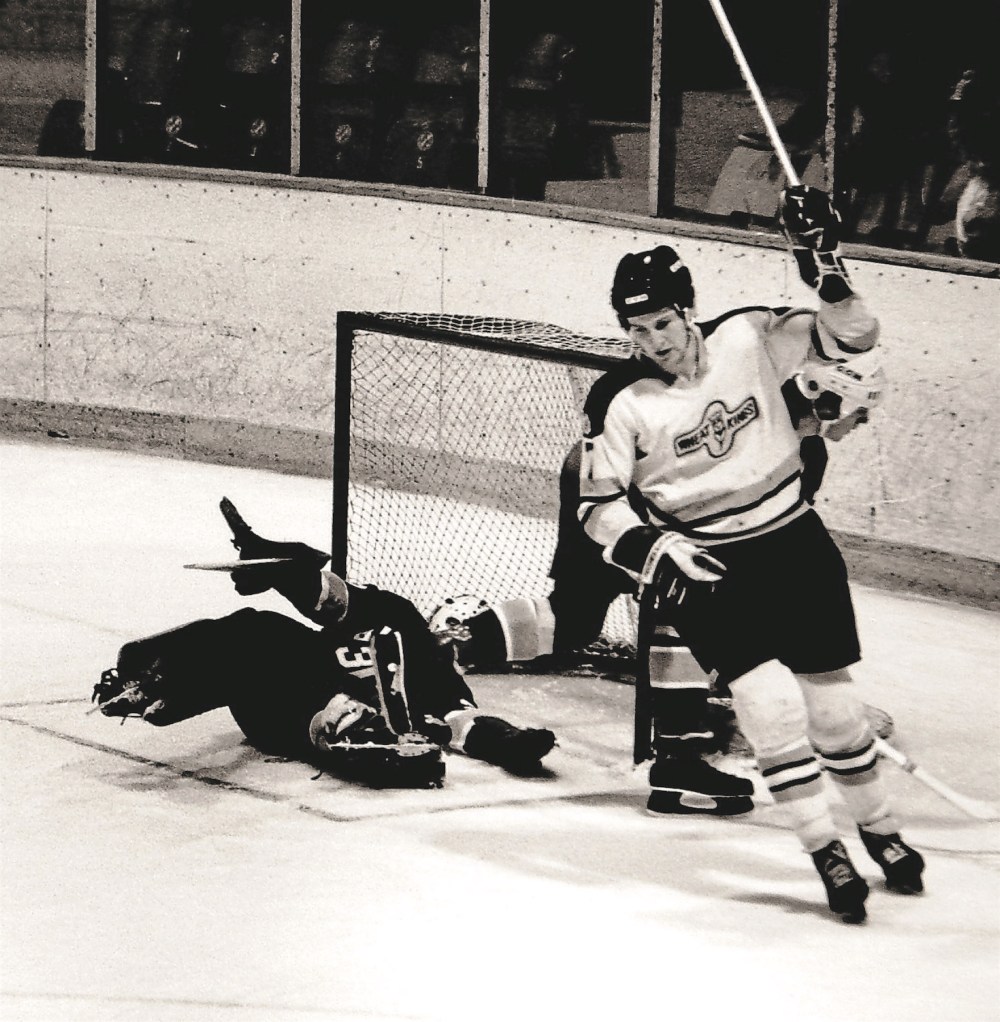
Everything certainly went right for him in the 1979-80 season, his 19-year-old year.
Following the graduation of several of the team’s top players, Gillen’s role expanded and he responded by leading the Wheat Kings in assists (59), points (85) and penalty minutes (372). The latter number remains second in team history behind only his teammate Tim Lockridge’s 392 penalty minutes.
“I was playing more and obviously Propp, Allison and all those guys were graduated and moved on,” Gillen said. “Dunc was good to me and gave me more. Steve Patrick was there, he was a good player and got a lot of ice time, we had some talent. It was a different type of talent than the previous guys but we had a good team as well. It wouldn’t have surprised me to win the league that year. We didn’t have the points but we were capable of beating anyone.”
Brandon won its opening round series and then fell in the divisional semifinal round-robin in the last year that format was used.
In a final nod to his outstanding season, Gillen was named to the league’s second all-star team.
“It was a surprise for starters,” Gillen said. “It was an honour. I didn’t see myself as an all-star. Statistically I was OK but I never thought of myself as that kind of player.”
Other people apparently did.
Gillen played one game with the Flyers in the 1979-80 season — the year Philadelphia went to the league final — getting called up to skate against the host Edmonton Oilers on Jan. 27, 1980.
It was the perfect place for his debut. He was born in Edmonton, his sisters lived there and he played against Wayne Gretzky and the Oilers. His family actually had season tickets one winter when his father worked in Edmonton.
An unexpected twist came 17:02 into the second period when he tipped a shot by veteran defenceman Jack McIlhargey past Edmonton goalie Jim Corsi for his first NHL goal, which came in a 5-3 Philadelphia victory. It was all part of an extremely meaningful night for Gillen.
“Edmonton was a special and being in the NHL, as a kid growing up that was something you always aspired to,” he said. “Hockey was a big thing to me as a kid.”
It was also a moment he was able to share with his Brandon teammate Propp, who had graduated to the Flyers that season.
When he returned to Brandon, however, something had changed. He later learned it was a practical joke organized by Kelly McCrimmon.
“When I scored that goal that goal in Edmonton, he organized the guys not to talk to me,” Gillen said. “So I came in the dressing room and nobody would talk to me. That’s just Kelly. He’s always thinking.”
After his WHL season ended, Gillen joined the American Hockey League’s Maine Mariners for the playoffs, earning three points and 19 penalty minutes in seven games.
He turned pro the next season, skating with the Mariners. Gillen posted 30 goals, 28 assists and 255 penalty minutes in 79 regular season games on a team that reached the Calder Cup final.
In 20 playoff games, he added eight more points.
“At that time, Philadelphia was a good organization and Maine was a good place to play in the American League,” Gillen said. “They made sure they had a good blend of veterans for leadership and they had good drafts that year and the year before.”
The rookies that year included netminder Pelle Lindbergh, who went on to star in the NHL before dying in a car crash in 1985 at age 26.
One of the veterans he had a chance to skate with that year was a former Wheat King from Oak River.
John Paddock, who turned 35 that season and was near the end of his playing career, made a strong impression on the rookie Gillen.
“He was a great teammate,” Gillen said. “He was very serious, very fair, very workmanlike, like an extra coach. It did not surprise me that he got into coaching because he took the game very seriously. He’s a great guy.”
The Mariners made it all the way to the AHL final before falling to the Adirondack Red Wings.
On July 3, 1981, Gillen’s career suddenly veered in a different direction. He, Rick MacLeish and the former Portland defenceman Wesley, plus three draft picks in 1982 — a first-round pick (14th, Paul Lawless), a second-round pick (35th, Mark Paterson) and a third-round pick (56th, Kevin Dineen) — were sent by Philadelphia to the Hartford Whalers for his former Brandon teammate Ray Allison, Fred Arthur and a pair of 1982 draft choices, a first-round pick (4th, Ron Sutter) and a third rounder (46th, Miroslav Dvorak).
Gillen said he was disappointed with the news initially.
“I got comfortable with the surroundings and I understood the organization,” Gillen said of Philadelphia. “I knew my spot there. To get to traded to Hartford, it wasn’t an old established NHL team that as a kid you grow up knowing. It wasn’t like the Boston Bruins or Montreal Canadiens. It was a new organization.”
Gillen was assigned to the Binghamton Whalers, and was called up to Hartford in November, 1981. Even with all the offensive success he had in the AHL, he couldn’t find his way in a 34-game callup, managing one goal, four assists and 22 penalty minutes.

“At the time I was doing the best I knew how but I wasn’t playing well,” Gillen said. “I got overwhelmed and I lost my confidence. The team was struggling, and again, when you’re on a team that’s not winning, it’s not easy to play and it’s not fun to play. It really wasn’t an environment that was easy for me.”
One really memorable moment in Hartford actually came in practice. Gordie Howe had retired two seasons earlier but his sons Mark and Marty were both there. As a result, Gordie would come out to skate at practice on a team that also included the former Toronto Maple Leafs star Dave Keon, the 41-year-old team captain who was in his final season.
“I was doing line rushes and I came around the net — for some reason I was a centre — and I passed the puck to Gordie Howe,” Gillen said with a chuckle. “He passed it back to me and I passed the puck over to Dave Keon. He was on left wing. I remember going down thinking to myself ‘Do you realize you just passed the puck to Gordie Howe and Dave Keon, who I grew up as a kid watching on Hockey Night On Canada.”
The deal to the Hartford organization did have one bright spot he couldn’t have imagined. The future considerations to the deal included the fact he met his wife Amy in Binghamton.
“It really turned out well,” Gillen said.
Gillen never got another shot with the Whalers despite posting 77 points and 245 penalty minutes in 80 games in the 1982-83 season, and 64 points and 140 games in the 1983-84 campaign.
He turned down a trade to another organization, instead opting to call it quits after four pro seasons.
“I was 23 going on 53 in my head,” Gillen said. “I was just thinking that I was tired and moving on. I had made my mind I was going to look for something else.”
Gillen suffered just one injury in his pro career, breaking his leg near the end of the first game of the playoffs in 1983. The leg healed perfectly, and otherwise, he left hockey in remarkably good shape.
He had already been mulling over his options, and was interested in becoming a stock broker due to his longtime interest in the markets. When they thought he was too young, he returned to the farm in Dodsland because there were also some opportunities in the oil industry.
“I said to Amy ‘I can always become a stockbroker but I can’t always get an opportunity go farm and do whatever comes out of this oil sector,’” Gillen said. “I said ‘Why don’t we go try that and see where it is after a few years?’ It was a good decision. We went home, worked hard, got some breaks, some people were good to us and gave us some opportunities and I’m very pleased and thankful for the way things turned out.”
He farmed until 1989 then got into oilfield service and then bought some production. The family moved to Kindersley and operated oil wells until about 2010.
He also invested in some other businesses, and farmed again briefly when he bought some land near Yorkton for the mineral rights and that didn’t work out. He farmed again until he sold the land.
Gillen doesn’t like to use the word “retired.” He remains active in the markets and has made some investments.
The couple moved to Saskatoon in 2001 to enable their youngest son Darren to play hockey there. Darren, who grew up playing with Brayden Schenn, was drafted by the Medicine Hat Tigers in 2006 and tried out with the Blades but decided to keep his college options open. He played junior in the SJHL and BCHL.
Their older boy, Steven, enjoyed a fine WHL career split between the Spokane Chiefs and the Moose Jaw Warriors. He graduated as Moose Jaw’s overage captain following the 2006-07 season.
Don Gillen remains active. He started played tennis eight years ago, and has found the same sense of camaraderie he used to have in hockey rooms.
He misses the time in the dressing room with his teammates, but is thankful for all that hockey gave him.
“A guy once told me that a year of hockey is like four years of life,” Gillen said. “It’s like the army, a year in the army is like four years in life. If you play four or five years, it’s like you’ve experienced what an average guy would in 20 years.
“I met a lot of great guys, very few poor ones actually. The guys who ended up playing through the years for the most part are the same, they enjoy the same things, they’re all there to have fun and enjoy the game for the most part.
“I look back and could I have done things better? Absolutely, but those experiences helped me in my other career and life.”
» pbergson@brandonsun.com
» Twitter: @PerryBergson