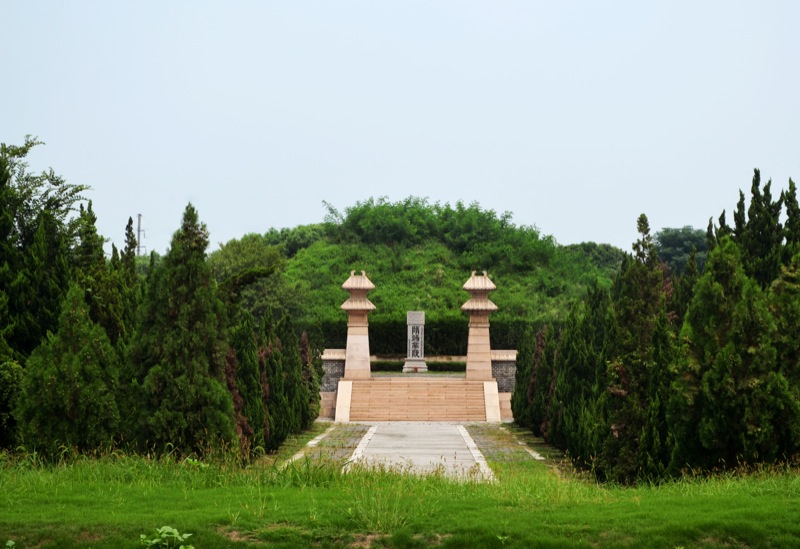
Asian Adventure: The tomb of Emperor Yangdi
Advertisement
Read this article for free:
or
Already have an account? Log in here »
We need your support!
Local journalism needs your support!
As we navigate through unprecedented times, our journalists are working harder than ever to bring you the latest local updates to keep you safe and informed.
Now, more than ever, we need your support.
Starting at $15.99 plus taxes every four weeks you can access your Brandon Sun online and full access to all content as it appears on our website.
Subscribe Nowor call circulation directly at (204) 727-0527.
Your pledge helps to ensure we provide the news that matters most to your community!
To continue reading, please subscribe:
Add Brandon Sun access to your Free Press subscription for only an additional
$1 for the first 4 weeks*
*Your next subscription payment will increase by $1.00 and you will be charged $20.00 plus GST for four weeks. After four weeks, your payment will increase to $24.00 plus GST every four weeks.
Read unlimited articles for free today:
or
Already have an account? Log in here »
Hey there, time traveller!
This article was published 08/09/2012 (4957 days ago), so information in it may no longer be current.
On weekends, the foreign teachers in Yangzhou take their e-bikes out on the road to explore the city. One of our number strayed beyond the usual streets, going far to the north, and accidentally found the tomb of a Chinese emperor.
I could not think of a better way to start the new school year.
The Sui Emperor Yangdi fatally visited Yangzhou in 618 C.E. During this visit he was taken prisoner by some rebel officers, lynched and buried in a remote grave. In 622 his body was found and brought to the mausoleum in Leitang, a district in Northern Yangzhou.

This man was important. It was under him that the Grand Canal was finally finished. The act turned Yangzhou from a small village into a trade and communications hub in central China.
Twelve hundred years pass by.
In 1802 the mausoleum was finally finished and most of it has not changed since then.
Flash forward again 200 years to modern times.
The tomb and grounds are completely overgrown. Not many people can make the hour-long trip to the outskirts of the city, so the district ignores the upkeep of the grounds in favour of more popular places. It created a wild feeling, as if we were in a jungle. I found myself swatting long branches and weeds out of the way so that we could get a better view of the burial mound. That was until I caught a barbed branch to the neck.
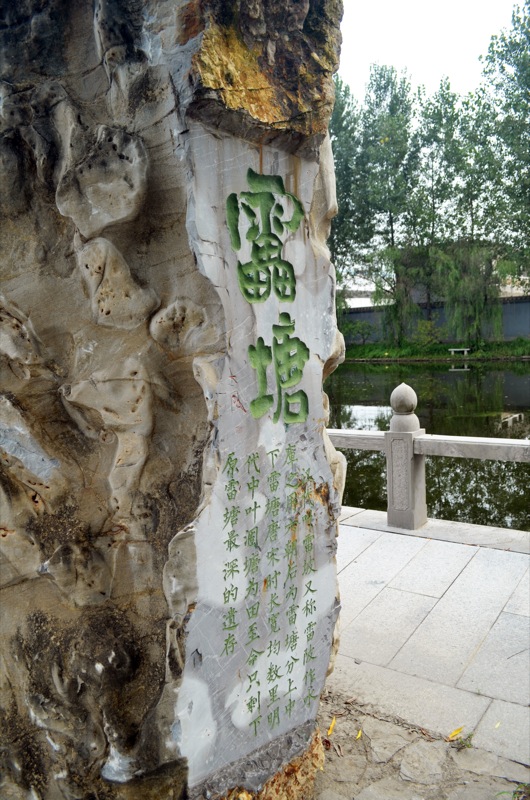
It only bled a little and we continued on, enjoying the peace of the gardens.
Silence is a precious, precious thing in this country. With no traffic and no people we explored at will and looked for the old city wall that was advertised to be nearby. The only thing we found that was remotely wallish was something built too recently to be from the nineteenth century.
However, the fact that the emperor’s tomb has lasted into modern times was good enough for us. The old engravings were barely readable, except for a more recently carved column giving information to tourists. They only looked like rocks from a distance. The mound itself was a foreboding lump so overwhelmed by plant life you could not see the doors to get inside.
Against all reason, the simplicity of the experience somehow added to our trip. Oftentimes in China the touristy places are all façade, no more than 30 years old and filled with people. Seeing a long forgotten emperor’s tomb was a refreshing change.