
20 years of Talent
Advertisement
Read this article for free:
or
Already have an account? Log in here »
We need your support!
Local journalism needs your support!
As we navigate through unprecedented times, our journalists are working harder than ever to bring you the latest local updates to keep you safe and informed.
Now, more than ever, we need your support.
Starting at $15.99 plus taxes every four weeks you can access your Brandon Sun online and full access to all content as it appears on our website.
Subscribe Nowor call circulation directly at (204) 727-0527.
Your pledge helps to ensure we provide the news that matters most to your community!
To continue reading, please subscribe:
Add Brandon Sun access to your Free Press subscription for only an additional
$1 for the first 4 weeks*
- Enjoy unlimited reading on brandonsun.com
- Read the Brandon Sun E-Edition, our digital replica newspaper
*Your next Free Press subscription payment will increase by $1.00 and you will be charged $20.95 plus GST for four weeks. After four weeks, your payment will increase to $24.95 plus GST every four weeks.
Read unlimited articles for free today:
or
Already have an account? Log in here »
Hey there, time traveller!
This article was published 06/11/2010 (5703 days ago), so information in it may no longer be current.
The situation played itself out over and over at The 40.
The band would begin to play and in the middle of the stage in the spotlight, the Orange Crush Talent Search would suddenly become very real for the youngster standing in front of the microphone.
Tentative first words. An awkward sway back and forth.

Gradually the confidence would return and big beautiful singing voices would emerge.
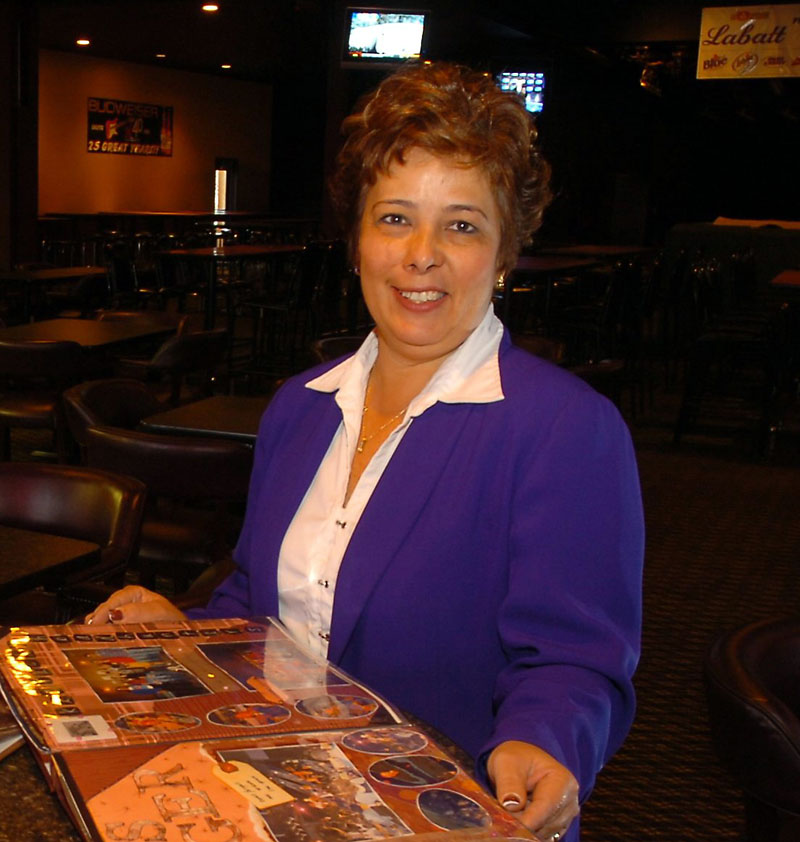
Heidi Howarth, who started the contest in 1990 and has now heard more than 900 young singers, is the owner of Trails West Inn and The 40.
She has seen a lot of nerves.
"Contestants come out, especially in their first year, and they have no idea," she says. "That whole room, the ambience, you can hear a pin drop."
She remembers Mark Smith of the backing band, the Poverty Plainsmen, leaning over and softly singing to help a stage-shy youngster find her way.
Smith says it was the only way he knew to help her.
"I just felt sorry for the little kid because she just froze," he remembers. "The only thing that came to mind was that she probably just couldn’t remember the first few words of the song to get going. I’ve done that many times. Once somebody just tells you the first couple of words you’re away. Then she got going pretty good. It was just a matter of getting her started."
One contestant froze so completely that she couldn’t perform. Two years later, she finished second overall in her age group.
On Thursday, the event will be held for a final time, with seven singers vying in each of the two categories, 13 and under and 14-17.
Some past performers will be back, no doubt in part to honour the event’s impressive legacy.
Tickets are $20. Doors open at 5 p.m., with a supper being served at 5:15. A supper showcase of past talent will sing at 5:30, with the younger contestants starting at 6:30. There will be a 10-minute break between age groups to give the judges a chance to grade the first group.
The winners be announced around 9 p.m.
The idea for the contest came from Howarth’s decade-long participation in the national Bud Country Talent Search for adults, which followed a similar format.
Several preliminaries were held in which the top couple of performers each week would advance to a final. A band would back them and they’d have the experience of performing on a stage with professional lights and sound.
So Howarth had a plan back in 1990, even if she had no idea what a success Orange Crush would become.
"These kids are on stage with no experience. My main thrust in this contest is fun," she told the Brandon Sun prior to the first event back in October of 1990. "I want the kids to come out and enjoy themselves. It’s a competition but we really want to stay away from that aspect of it."
Yet the contest became an amazing proving ground for a generation of young singers.
Chris Thorsteinson, who won the older age group in 1991, is the lead vocalist of Canadian country stars Doc Walker.
Amber Fleury and Amanda Stott have released albums. Katherine Penfold has one of Brandon’s best-known voices. Bryce Pallister recently released his debut CD and is getting airplay.
Miles Perkin, Louise Ponchon, Jessica Loskaluke, Katlin Mathison and Cory Brown are all working musicians.
So does the contest help develop the young singers or does it identify them?
It depends who you talk to.
Howarth says she merely provided an experience.
"When you take lessons, everything is classically oriented," she says.
"It’s only later on that you can branch off … I wanted to do something that was a little different. It’s predominantly country, but we do get some wild rock.
"In my heart I just wanted to give them the opportunity to take the stage and have fun with it. When they go on with their careers … it’s just amazing that they’ve done so well, but I think they would have gotten there anyway."
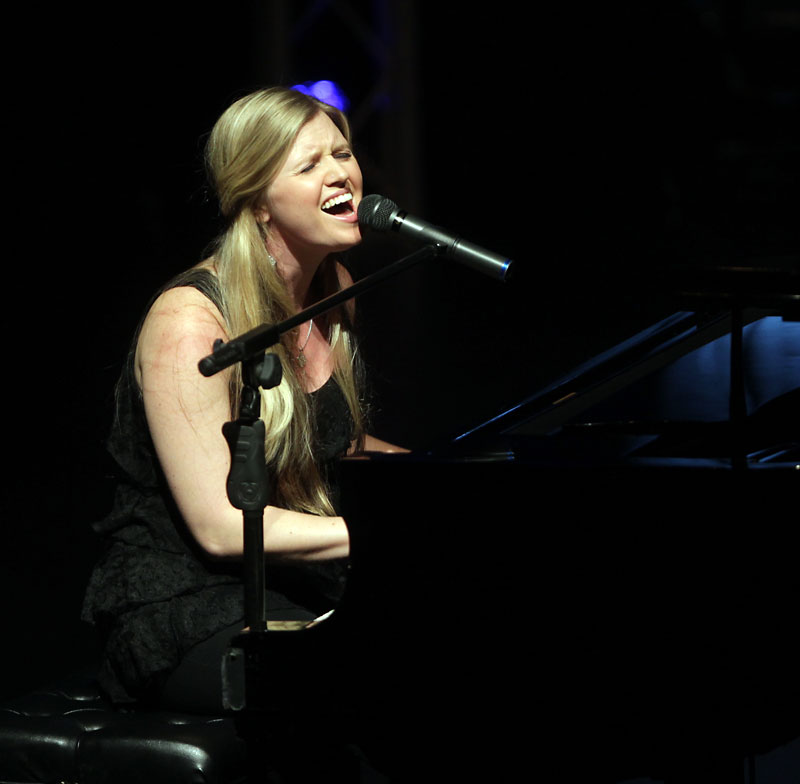
The performers give her a little more credit.
"It was basically the kickoff to my career," Thorsteinson says, adding he had just put an early version of Doc Walker together back then. "It was always a good thing because it didn’t matter if you were good or not. You got on stage and got some exposure and learned how to play with a band.
"(Howarth) was a pretty integral part of me getting comfortable on stage, meeting some people in the industry and then winning the Orange Crush and going to Calgary to play the Country Music Awards dinner. If I didn’t have that, I don’t know if I would have pursued it as much as I did."
Stott agrees that it served as a terrific launch pad.
"I think it definitely helps both develop talent and identify it," Stott says by email. "I learned so much about myself as a performer and about working under pressure. I also felt like it was a great stepping stone for me as far as developing my talent and strengths. Before the Orange Crush I always loved to sing and knew that it was a passion for me, but after performing and being a part of the talent search I realized that music was something beyond just a hobby and that I wanted to do for a living."
Penfold has a unique take on the contest because she both won it and years later sent her vocal students to it.
"This contest develops talent and identifies it," she said in an email. "As soon as I began teaching in Brandon, I was sending my vocal students through the Orange Crush Talent Search because of the raw performing experience that comes from being onstage, no matter what part of the contest you make it to. A child’s ability to be able to rehearse for a couple weeks and then go up in front of a crowd and sing their heart out is a massive achievement towards their confidence in so many aspects of their lives."
Penfold met Gerry Atwell at the contest, who became an invaluable resource to her.
"He saw what I was doing and decided to talk with me and began to work with me so that I could become the artist I am today," Penfold says.
Smith has an interesting take on the question because he now has a 15-year-old musician son of his own. He draws parallels between young musicians and young athletes.
"They take lessons but they never get the chance to be on a real stage in an environment where they’re playing for people," Smith says.
"That’s where the adrenalin rush comes from; that’s where the gratification of playing music comes from.
"If you’re a hockey player, you don’t get gratification from getting on the ice with you and a puck and practising. That’s all that’s available for children who take music lessons unless they do a recital. There needs to be more live playing in front of an audience."
Due to the huge response and noting the big range in ages, Howarth split the kids into two age categories after the first year.
The entire music industry has changed since then. The country boom that Garth Brooks fuelled is long gone.
Bands once played five or six nights a week in a club and then took their bus to the next city in a circuit across Western Canada. They would spend the week learning the songs for the Orange Crush talent search, mastering tunes they might never play again.
Sometimes the kids made it a little easier on them. One year, eight of them picked LeAnn Rime’s huge 1997 hit "How Do I Live."
The Poverty Plainsmen played the first several Orange Crush events.
Smith says it wasn’t an easy job learning the songs but the band enjoyed the chance to back young singers like Thorsteinson.
"It was always a lot of work to learn the songs," Smith says. "Especially for an all-male band because we didn’t do any female songs and if we had any girls we’d have to learn the tunes and back them up. But it was all part of the deal in those days to get a gig at a club. If you bucked up and did those sorts of things, they generally looked after you on the weeks they needed you."
Because the kids would generally be singing what Smith calls "the flavour of the day," the band could sometimes incorporate the material into their own act.
Unfortunately for the young musicians, they lost that stage in 2001.
After 11 years of underage contestants performing in the nightclub, the Manitoba Liquor Commission changed the liquor act and outlawed the practice. Howarth cancelled the contest that year.
In 2002, Howarth held the preliminaries contest in the Trails West banquet room instead of the bar, disappointing the young singers who hoped to perform on the main stage. The Liquor Commission eventually relented, allowing family-oriented events back into beverage rooms in time for the finals of the 2002 contest, but only if they delicensed the nightclub and didn’t serve liquor that day.
The law eventually changed again to allow family-oriented events in clubs with liquor sales.
Now it’s time to wrap up the Orange Crush for good, as Howarth looks to carve out time in her busy schedule for her grandchildren and travel with her husband Scott.
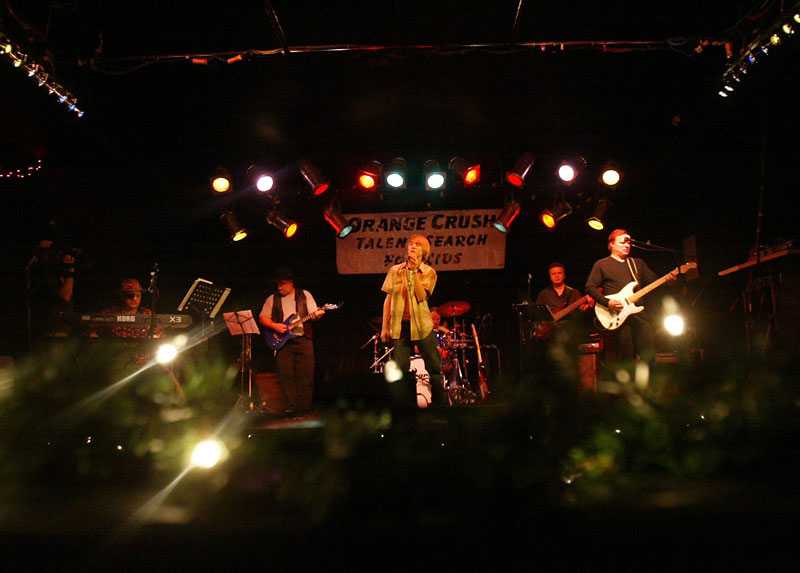
She is quick to say that it has been an enriching 20-year ride.
"You want to go out on a high," Howarth says. "Do you go another five? Another 10? It’s getting more difficult to find the bands and I thought maybe it’s just time … It’s a tough one."
Thorsteinson, who remains friends with some of his fellow contestants, says it will be missed.
"In Orange Crush there was always a winner but there was never really a loser. That was the great thing about Orange Crush; everybody felt like they had accomplished something."
» Brandon Sun copy editor Perry Bergson first wrote about the Orange Crush contest in 1990 as the paper’s music writer. He judged the show many times in the
early years and will be on the judging panel at the final show on Nov. 11.
Sidebar:
The Winners Were …
After 1990, winners were declared in a 13-and-under category and
a 14-17-year-old category. The younger winner is listed first.
1990
Lenette Levereault — Pilot Mound
1991
Amber Fleury — Roblin
Chris Thorsteinson — Westbourne
1992
Ben Wytinck — Cypress River
Mike Sacharko — Brandon
1993
Amanda Stott — Brandon
Chris McIntire — Brandon
1994
Matt Sacharko — Brandon

Jennifer Dekezel — Baldur
1995
David Fenton — Russell
Jennifer Levy — Winnipeg
1996
Louise Ponchon — Fisher Branch
Miles Perkin — Brandon
1997
Amanda Hamm — Brandon
Cory Brown — Waskada
1998
Sarah Thornborough — Brandon
Allison Hawkins — Brandon
1999
Claire Arseneau — Brandon
Melissa Galvin — Elphinstone
2000
Ayla Palmer — Amaranth
Louise Ponchon — Fisher Branch
2001
No contest
2002
Stephanie Bull — Lorette
Katherine Penfold — Austin
2003
Katerina Passas — Winnipeg
Stephanie Bull — Lorette
2004
Andrea Fosseneuve — Brandon
Kimberly Bull — Lorettte
2005
Katlin Mathison — Brandon
Jessica Loskaluke — Langenburg, Sask.
2006
Michelle Struthers — Brandon
Josh Swain — Souris
2007
Tianna Martin — Storthoaks, Sask.
Stephanie Lambkin — Gilbert Plains
2008
Shannon Patterson — Winnipeg
Samantha Moffat — Brandon
2009
Katie MacDonald — Brandon
Shannon Patterson — Winnipeg