
Gone Gardenin’ — A symbol of the season
Advertisement
Read this article for free:
or
Already have an account? Log in here »
We need your support!
Local journalism needs your support!
As we navigate through unprecedented times, our journalists are working harder than ever to bring you the latest local updates to keep you safe and informed.
Now, more than ever, we need your support.
Starting at $15.99 plus taxes every four weeks you can access your Brandon Sun online and full access to all content as it appears on our website.
Subscribe Nowor call circulation directly at (204) 727-0527.
Your pledge helps to ensure we provide the news that matters most to your community!
To continue reading, please subscribe:
Add Brandon Sun access to your Free Press subscription for only an additional
$1 for the first 4 weeks*
- Enjoy unlimited reading on brandonsun.com
- Read the Brandon Sun E-Edition, our digital replica newspaper
*Your next Free Press subscription payment will increase by $1.00 and you will be charged $20.95 plus GST for four weeks. After four weeks, your payment will increase to $24.95 plus GST every four weeks.
Read unlimited articles for free today:
or
Already have an account? Log in here »
Hey there, time traveller!
This article was published 24/12/2010 (5759 days ago), so information in it may no longer be current.
Christmas just would not be Christmas without a brilliant poinsettia gracing our home. These traditional holiday plants have been a symbol of the holiday season for decades, and only increase in popularity as the years go by.
While decades ago the only poinsettia that was available was the traditional red one, gradually we were introduced to white/cream poinsettias and then various shades of pink. Nowadays there are literally hundreds of varieties of poinsettias.
As I strolled through The Green Spot during their open house in late November, I came upon an employee putting poinsettias into decorative sleeves and adding bows to prepare the poinsettias for sale. I asked about the names of the various poinsettias and she was able to name a few, but she stated that they have so many varieties that she cannot keep them all straight!
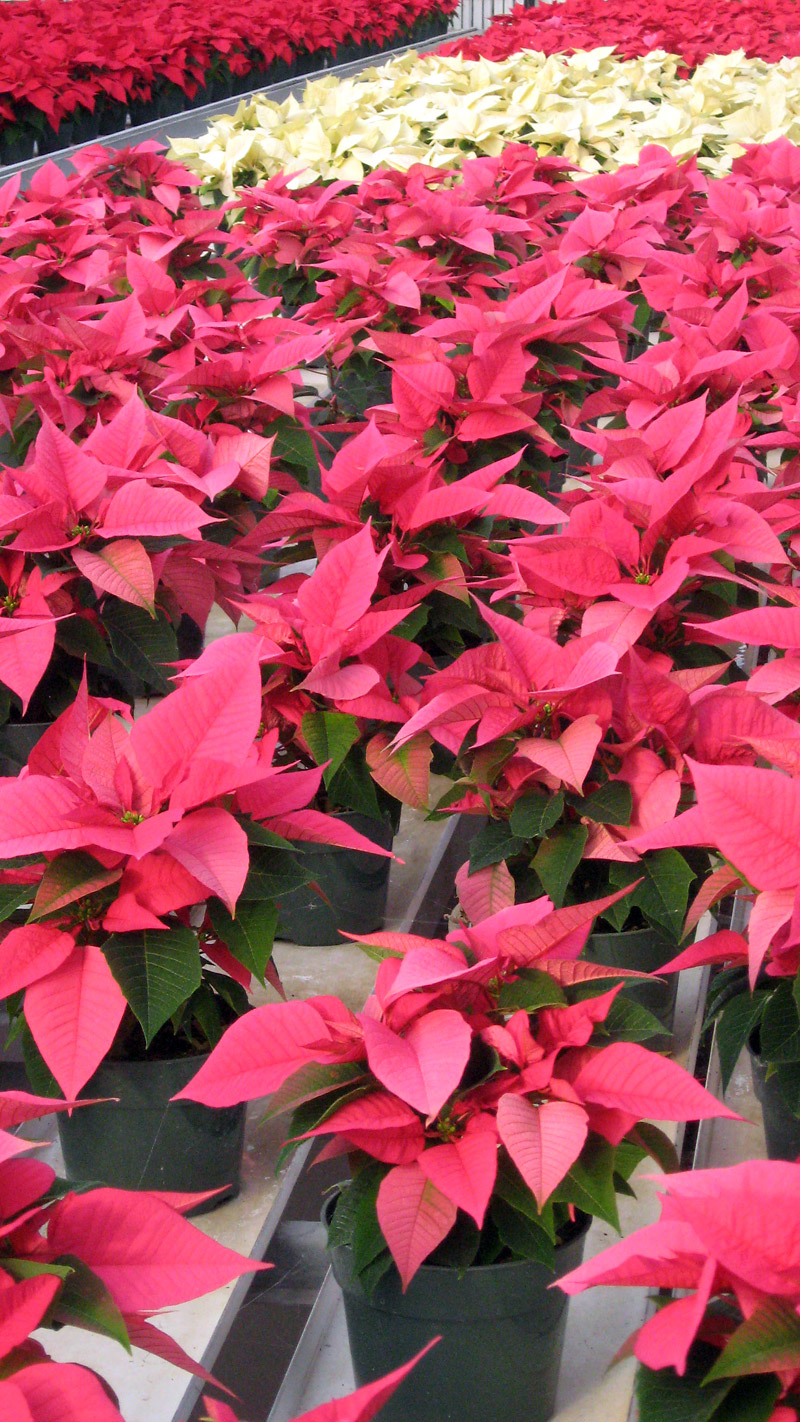
There is, therefore, a poinsettia that will suit everyone and a poinsettia that will fit into any décor. When choosing a poinsettia — either for you or for someone else — the décor of the surroundings in which the plant will be placed should be taken into consideration as poinsettias can be used in the indoor landscape long after the Christmas holiday season has passed.
If, for example, your living room is decorated in pinks and blues, a pink- or cream-coloured poinsettia would coordinate with the décor better than a traditional red one. On the other hand, if the plant is going to be used just during the holiday season and then discarded, you may wish to stay with a more traditional Christmas colour.
The colours — and their names — are intriguing. Picasso (pink), Marble (pink with white marbling), Orion Red, Christmas Angel Pink and Jingle Bells (red with white marbling) are just the tip of the iceberg in terms of poinsettia varieties available. Truly, there is a poinsettia for every taste. There are even poinsettias with double bracts and variegated foliage is beginning to make an appearance.
When purchasing a poinsettia, buy from a reputable retailer whom you trust. It is particularly important to purchase the plant from someone who knows something about plants because if poinsettias have been mistreated during their journey to the retail shelf, you, the customer, will pay for their neglect.
Poinsettias can be injured and may not recover either from cold temperatures and drafts or from improper watering. If you see poinsettias displayed on a store windowsill, for example, you might suspect that they will have been chilled and this will cause the plant to not perform at its best.
Poinsettias that have been chilled or that have been subjected to drafts may very well defoliate and you will end up with a poinsettia with colourful bracts atop gangly leafless stems. Plants that have either been allowed to dry out or that have been overwatered and allowed to sit in saucers of water will also defoliate — after the leaves have yellowed.
Never buy a poinsettia plant whose lower leaves have yellowed; they indicate that the plant has been subjected to improper conditions and care. The leaves should be dark green and not curled or discoloured.
When you get your poinsettia home — after making sure it was well wrapped for the journey — put it in bright light. A poinsettia prefers direct sun as it is a tropical plant, native to Central and South America.
Keep the plant evenly watered, watering it when the soil surface feels dry to the touch. Water it until water runs out of the drainage holes in the bottom of the pot; let all excess water drain away and do not let the plant sit in a saucer of excess water after the plant has been watered.
After Christmas, fertilize your poinsettia with a soluble fertilizer (20-20-20 works well) at half strength and continue to give the plant lots of light. By early April, your poinsettia will probably be past its best and you will have to decide whether to discard it or try to keep it over.
If you do plan to keep it over, in early April cut it right back, repot it and in late May plant it outdoors. Pinch the new branches back in early July and again in mid-August, leaving about three leaves on each stem.
Bring the plant in before frost strikes, and then in early October begin to keep the plant in the dark for at least 12 hours each night. During the day, it will still need sun.
By early December, coloured bracts will have developed and you can discontinue the dark treatment and enjoy you poinsettia for another holiday season.
Merry Christmas!
Albert Parsons is a consultant for garden design and landscaping who lives in Minnedosa.
» communitynews@brandonsun.com