
Gone Gardenin’: Maiden bit high maintenance but her beauty worth the effort
Advertisement
Read this article for free:
or
Already have an account? Log in here »
We need your support!
Local journalism needs your support!
As we navigate through unprecedented times, our journalists are working harder than ever to bring you the latest local updates to keep you safe and informed.
Now, more than ever, we need your support.
Starting at $15.99 plus taxes every four weeks you can access your Brandon Sun online and full access to all content as it appears on our website.
Subscribe Nowor call circulation directly at (204) 727-0527.
Your pledge helps to ensure we provide the news that matters most to your community!
To continue reading, please subscribe:
Add Brandon Sun access to your Free Press subscription for only an additional
$1 for the first 4 weeks*
- Enjoy unlimited reading on brandonsun.com
- Read the Brandon Sun E-Edition, our digital replica newspaper
*Your next Free Press subscription payment will increase by $1.00 and you will be charged $20.95 plus GST for four weeks. After four weeks, your payment will increase to $24.95 plus GST every four weeks.
Read unlimited articles for free today:
or
Already have an account? Log in here »
Hey there, time traveller!
This article was published 08/12/2011 (5435 days ago), so information in it may no longer be current.
The Maidenhair Fern (Adiantum) is a much-admired family of ferns that can be found in many houseplant collections on the prairies.
Some are a bit more temperamental than most other ferns but their beauty makes the extra effort to grow some of the more unique members of this fern family worthwhile.
There are various cultivars of maidenhair fern but all are typically bog plants in that they require lots of water and high humidity. They are native to tropical regions where they grow along riverbanks where they are assured adequate moisture.
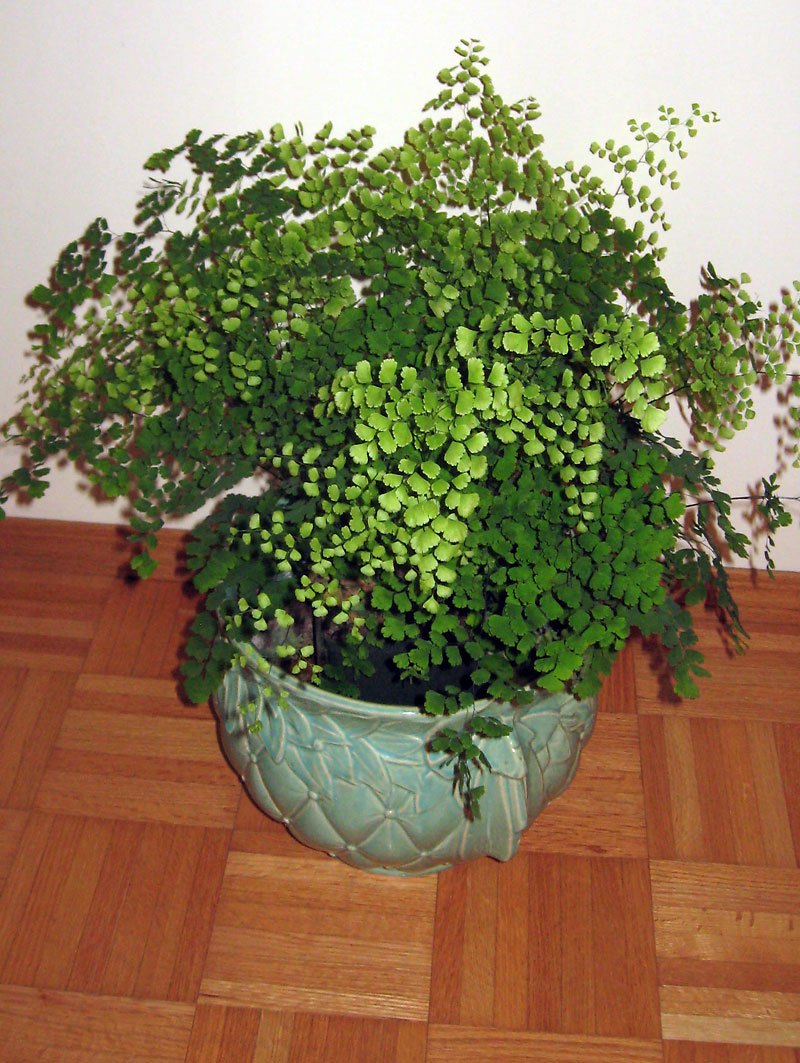
Although some varieties of maidenhair fern have the more common fern-like fronds, the maidenhair fern that is most often grown as a houseplant does not. The Venus fern, Adantum capillus-veneris, does not have the typical long arching fronds characteristic of most ferns, yet it is my favourite.
The small leaves are borne along thin, black, wiry stems, giving the plant a lacy appearance. The small leaves are pale green and fan-shaped; the plant has a delicate, frilly appearance.
Like most ferns, the Venus fern prefers subdued light, so it is well suited to the indoor environment of the typical home. The plant should not be placed in a location where it will receive direct sun; it prefers less intense light levels.
Being a tropical plant, the Venus fern also prefers a warm location — the temperature of the typical home during the winter is just about right. The maidenhair fern does like lots of humidity and placing the pot on a pebble tray full of water will help to increase the humidity around the plant and prevent the leaves from browning around the edges because of dry air.
Venus ferns like lots of water; I think of them as bog plants which are happiest when their soil is kept consistently very moist. This plant will not object to having its pot sitting in water so the pot can be placed inside an attractive jardinière and excess water can simply be allowed to collect in the bottom of the jardinière without harming the plant.
If the planting medium is allowed to dry out to any degree, the plant will often die or at least go into dormancy. This is one plant that cannot be overwatered.
Although the Venus fern loves water, its roots do demand good drainage so the planting medium must be loose, rich and organic. Some gardeners use well-rotted leaf mould in which to grow their maidenhair ferns.
All maidenhair ferns are easily propagated by division. A few of the rhizomes are simply separated from the parent plant and potted up to create a new plant.
As the plant grows the roots will gradually spread throughout the planting medium in the pot and it is only after the plant appears to be root bound that it should be repotted. This will only need to be done infrequently.
Since the maidenhair fern likes high humidity, is a relatively small fern, growing only about 35 centimetres tall, and prefers consistently moist soil, it is an ideal candidate to include in terrariums or large bottle gardens. Such gardens are usually not located in locations where direct sunlight can strike them and overheat the interior of the container, and maidenhair ferns will be happy situated in such lower light environments.
Including maidenhair ferns in dish gardens or in plant groupings where several potted plants are placed close together to create a display is also very possible. Having several plants in close proximity will increase the humidity around all the plants and the maidenhair fern will benefit from the increased humidity level.
If you want a beautiful houseplant that is a little out of the ordinary but that takes a bit more TLC than some other common houseplants, you might like to give the Venus fern a try.
Its delicate appearance will add beauty to your indoor landscape.
Albert Parsons is a consultant for garden design and landscaping who lives in Minnedosa.
» communitynews@brandonsun.com