
Gone Gardenin’ – Enjoy potted daisy inside, then move it to the garden
Advertisement
Read this article for free:
or
Already have an account? Log in here »
We need your support!
Local journalism needs your support!
As we navigate through unprecedented times, our journalists are working harder than ever to bring you the latest local updates to keep you safe and informed.
Now, more than ever, we need your support.
Starting at $15.99 plus taxes every four weeks you can access your Brandon Sun online and full access to all content as it appears on our website.
Subscribe Nowor call circulation directly at (204) 727-0527.
Your pledge helps to ensure we provide the news that matters most to your community!
To continue reading, please subscribe:
Add Brandon Sun access to your Free Press subscription for only an additional
$1 for the first 4 weeks*
- Enjoy unlimited reading on brandonsun.com
- Read the Brandon Sun E-Edition, our digital replica newspaper
*Your next Free Press subscription payment will increase by $1.00 and you will be charged $20.95 plus GST for four weeks. After four weeks, your payment will increase to $24.95 plus GST every four weeks.
Read unlimited articles for free today:
or
Already have an account? Log in here »
Hey there, time traveller!
This article was published 10/05/2012 (5281 days ago), so information in it may no longer be current.
Mother’s Day is the ideal holiday to give a gift that can be enjoyed indoors but that also can be moved into the outdoors a couple of weeks from now to enhance the recipient’s outdoor living space.
Such a potted plant will perform double duty — it will serve as an attractive pot plant, complete with bow and decorative sleeve, for a couple of weeks indoors and then, with plant sleeve and bow removed, be moved into the outdoor garden to be enjoyed for several more weeks.
One plant that would be able to perform this double duty is the gerbera daisy. This member of the daisy family is an attractive pot plant for use indoors, but it will appreciate the additional light that an outdoor environment can provide and will reward such a move into the summer garden by continuing to put forth blooms for several weeks.
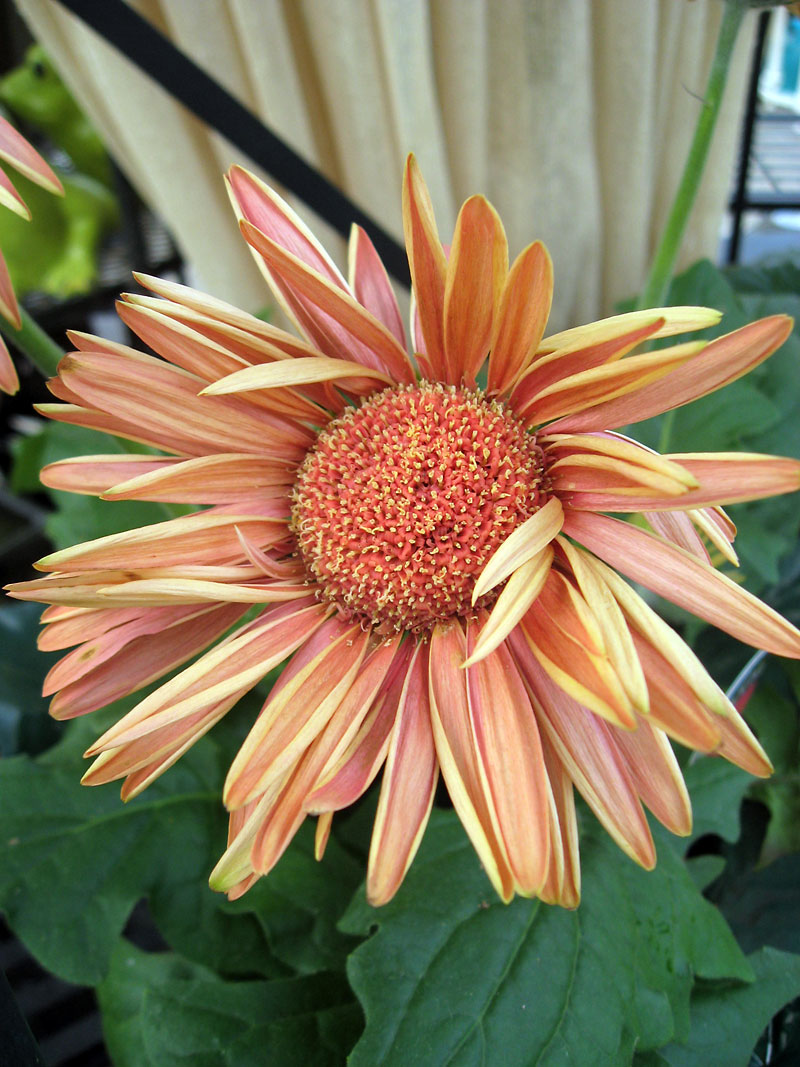
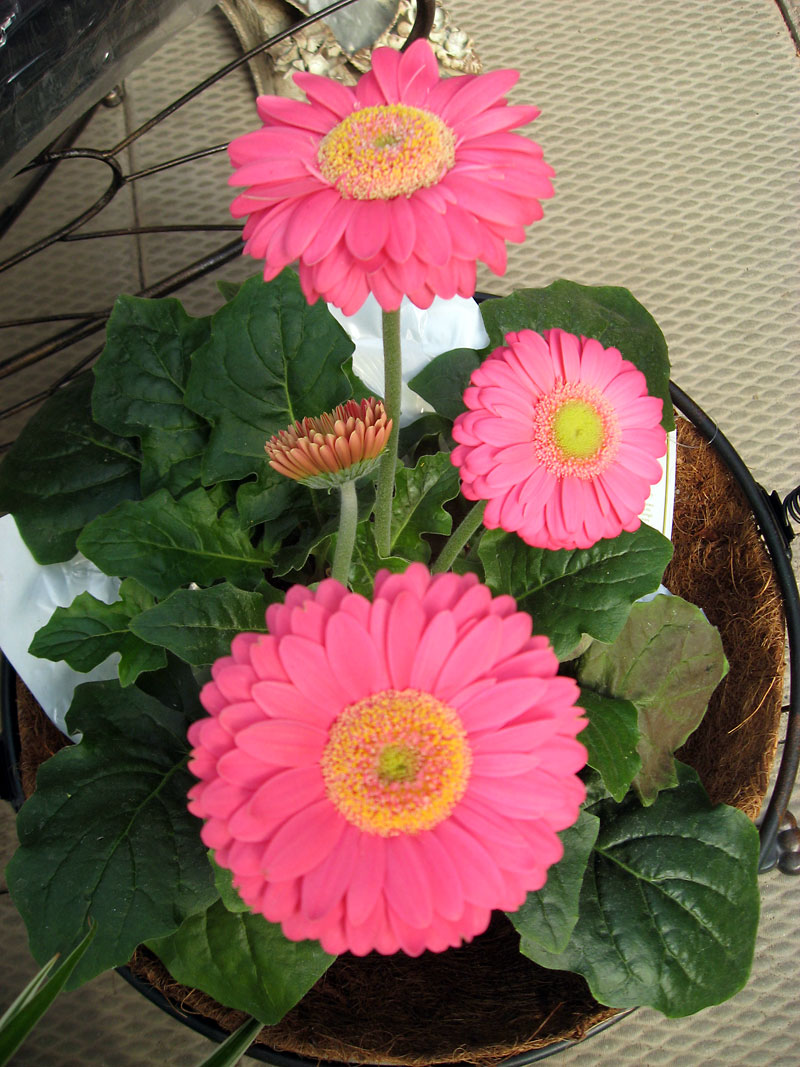
Gerbera daisies have long, dark green leaves which are slightly hairy and which grow in a low mound. The flower stems — each stem holds but one flower — emerge from the centre of this clump of foliage.
The stems are thick and sturdy and the bloom that each stem bears is a beautiful single flower composed of satiny petals surrounding a prominent center that often resembles a pincushion. Blooms are vibrantly coloured, and include red, salmon, pink, yellow, orange and ivory — no blues or purples.
When the time comes to move the gerbera outside, one option is to plant it in the ground, although gerberas are most often used as container plants in our region. If one is incorporated into a larger container with other plants, it should not be crowded as gerberas have extensive root systems and resent being planted too closely to other plants.
A potted gerbera is a great plant to sit on the patio table in an attractive jardinière of some kind where it can be enjoyed while it continues to produce attractive blooms. Prior to its move outdoors would be a good time to repot the plant without disturbing its roots.
Up the pot size by one size and do not plant the gerbera any deeper than it was planted in its original pot – gerberas are prone to crown rot if they are planted too deeply or if they are kept too wet. Simply slip the plant out of its pot and place it into the larger pot, filling in the extra space with a peat-based soilless mix.
It will need to be watered regularly as gerberas like to be kept moist and they are heavy feeders so every two weeks water with a balanced soluble fertilizer solution. Ensure that it has excellent drainage and allow the soil surface to dry out somewhat before it is watered again.
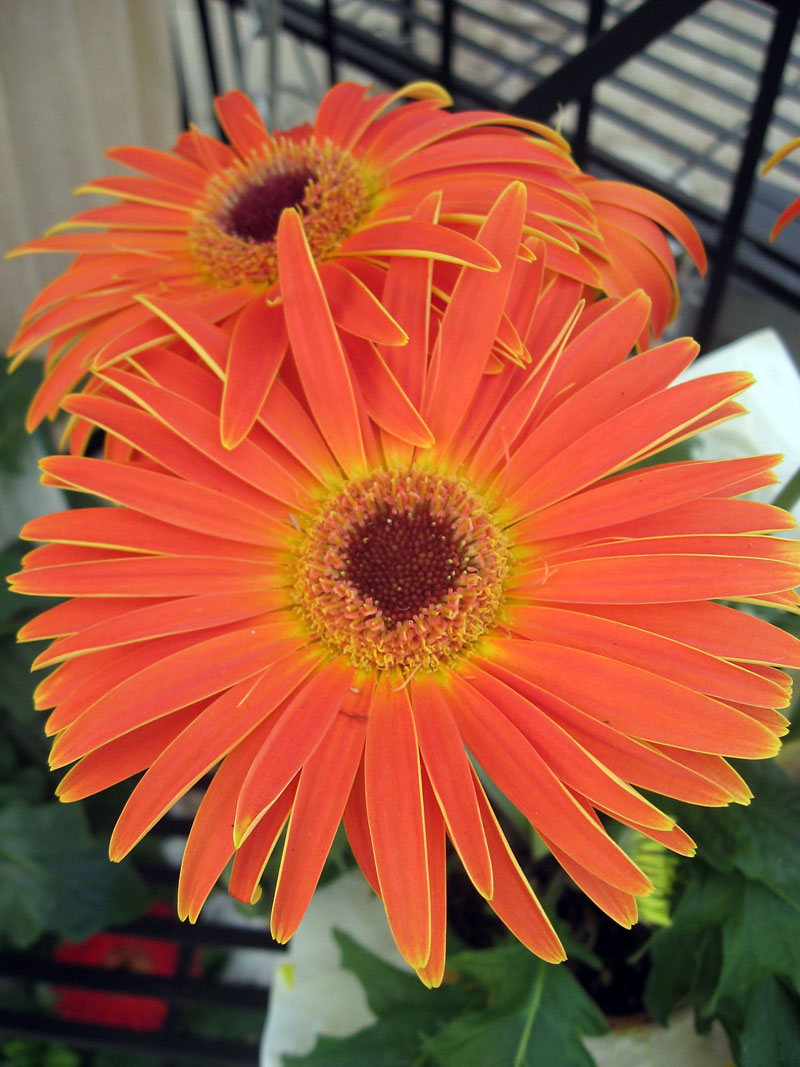
If a gerbera daisy had many buds and few blooms when it was purchased, it should continue to bloom for at least six weeks. If it ceases to put forth buds, the plant can be discarded or grown on until fall when it must be taken indoors.
A native of South Africa, the gerbera daisy is not tolerant of frost. If you are going to keep the plant over — it is a tender perennial, so it is possible to keep it over — take it indoors before frost strikes. The leaves will stay green during the winter.
The plant may very well put forth some bloom in early fall which can be enjoyed before the plant is induced into semi-dormancy. Give the plant as much light as possible and after blooming has ceased, gradually reduce the amount of water the plant gets.
As winter approaches, the gerbera will gradually go into a semi-dormant state, which will last until late winter. Do not fertilize during this time and keep the soil damp but allow it to dry somewhat between waterings. The plant will appreciate cool temperatures during this period.
Keep an eye out for white fly, which sometimes attacks gerberas indoors. As new growth appears in late winter, resume a regular feeding and watering regime and before long flower buds will appear.
The plant should be in bloom by Mother’s Day again, larger and more robust than ever, when it can be moved outdoors when temperatures permit. Whether the plant is enjoyed for only a single season or kept over for a repeat performance next year, a gerbera daisy is a wonderful plant to enjoy both in the interior landscape and outdoors in the summer garden.
Albert Parsons is a consultant for garden design and landscaping who lives in Minnedosa.
» communitynews@brandonsun.com