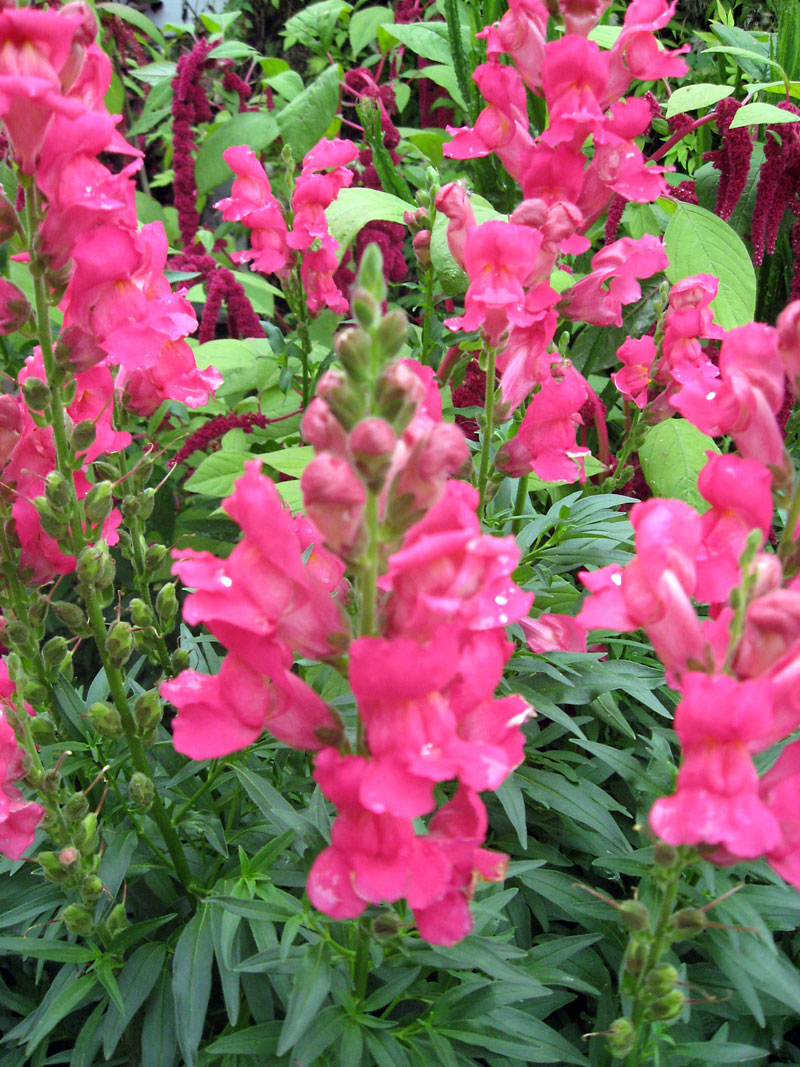
Gone Gardenin’ – Growing this colourful, versatile, hardy annual is a snap
Advertisement
Read this article for free:
or
Already have an account? Log in here »
We need your support!
Local journalism needs your support!
As we navigate through unprecedented times, our journalists are working harder than ever to bring you the latest local updates to keep you safe and informed.
Now, more than ever, we need your support.
Starting at $15.99 plus taxes every four weeks you can access your Brandon Sun online and full access to all content as it appears on our website.
Subscribe Nowor call circulation directly at (204) 727-0527.
Your pledge helps to ensure we provide the news that matters most to your community!
To continue reading, please subscribe:
Add Brandon Sun access to your Free Press subscription for only an additional
$1 for the first 4 weeks*
- Enjoy unlimited reading on brandonsun.com
- Read the Brandon Sun E-Edition, our digital replica newspaper
*Your next Free Press subscription payment will increase by $1.00 and you will be charged $20.95 plus GST for four weeks. After four weeks, your payment will increase to $24.95 plus GST every four weeks.
Read unlimited articles for free today:
or
Already have an account? Log in here »
Hey there, time traveller!
This article was published 07/06/2012 (5110 days ago), so information in it may no longer be current.
Although the recent trend in gardening is to grow perennials, I still include many annuals in my planting designs. There are several annuals that I like to include in my garden, and one of them is the snapdragon.
I used to start my own snapdragons from seed, but in the last few years I have been content to purchase established plants from the local greenhouse. It used to be that greenhouse operators only grew a few varieties of snapdragons and not necessarily the ones that I preferred.
Nowadays garden centres seem to be offering more varieties of snapdragons than in the past so I can usually find the ones I want. Although starting snapdragons from seed is not particularly challenging, I have gotten lazy and find it easier to buy the plants.

Snaps have to be seeded indoors before the end of March if they are to be a decent size when planting out time arrives. I prefer they not be in bloom but just starting to bud when they are planted into the outdoor garden.
The annuals that I like to grow all have one characteristic — they are continuous bloomers and will provide colour throughout the entire growing season. I think one of the great disadvantages of growing nothing but perennials is that each perennial has a distinct bloom period resulting in many inevitable bare spots in the flower borders throughout the summer.
Although snapdragons bloom for most of the summer; they do take short breaks to rebud, but with judicious deadheading, an almost steady supply of bloom can be achieved.
The dwarf “carpet” varieties are perhaps the most difficult to keep blooming as all the stems bloom at the same time, so when these blooms fade the plants must be sheared to initiate further bud development, which takes some time.
The taller types, like ‘Rocket’, “Ribbon’, and ‘Liberty’ will produce a tall central spike but while it is blooming, the plant produces several side branches which will be budding by the time the central spike has finished flowering so the gap in bloom will be brief.
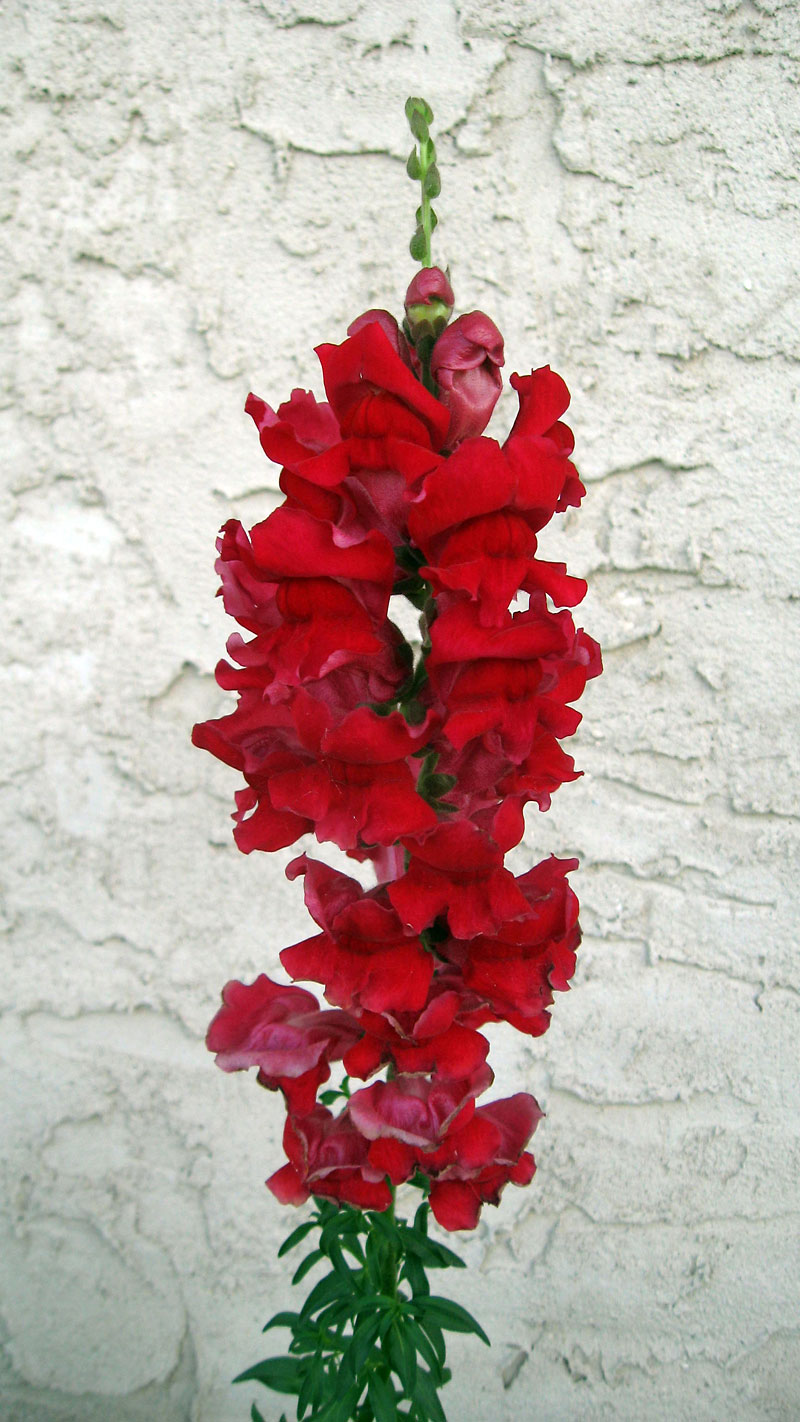
Even the very tall ‘Madame Butterfly’ will put forth side branches when the main spike has been cut off. I particularly like the butterfly varieties of snapdragons as the individual blooms are quite large and showy. Although ‘Madame Butterfly’ is a tall plant (one metre in height), there are shorter varieties that have the same type of flower, such as ‘Bright Butterflies’.
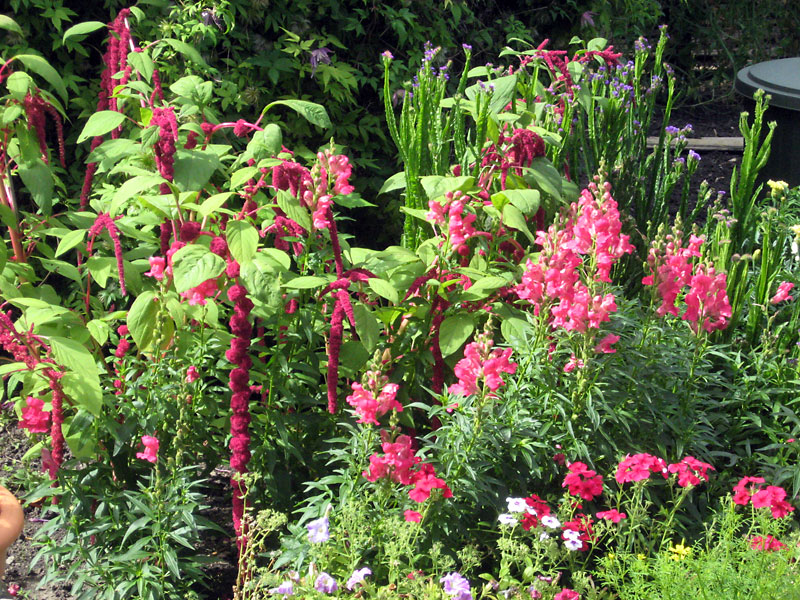
Snapdragons fit into a mixed border very well and combine nicely with other plants, including perennials. Planted in clumps of a half dozen plants each, snaps can add colour to a border whose perennials have pretty much bloomed themselves out by late summer.
Because snaps have an upright growth habit and are quite sturdy plants, they can be used in a row; for example, along the edge of a vegetable garden to create a colourful division between lawn and garden. They also are suitable for mass planting; snapdragons are often planted this way in public plantings.
Snapdragons make wonderful cut flowers, so for those gardeners who like to have cut flowers in the house during the summer, snapdragons are a must-have flower. The erect spikes are also useful in flower arrangements where they provide necessary vertical accents — a few snapdragons also can add vertical accents in an outdoor container and when combined with other plants create a pleasing effect.
I like snapdragons for another reason: they are quite tolerant of light frosts in the spring and will endure quite hard frosts in the autumn before they finally succumb. This is not the case with many salvias and marigolds, for example, which are also popular annuals.
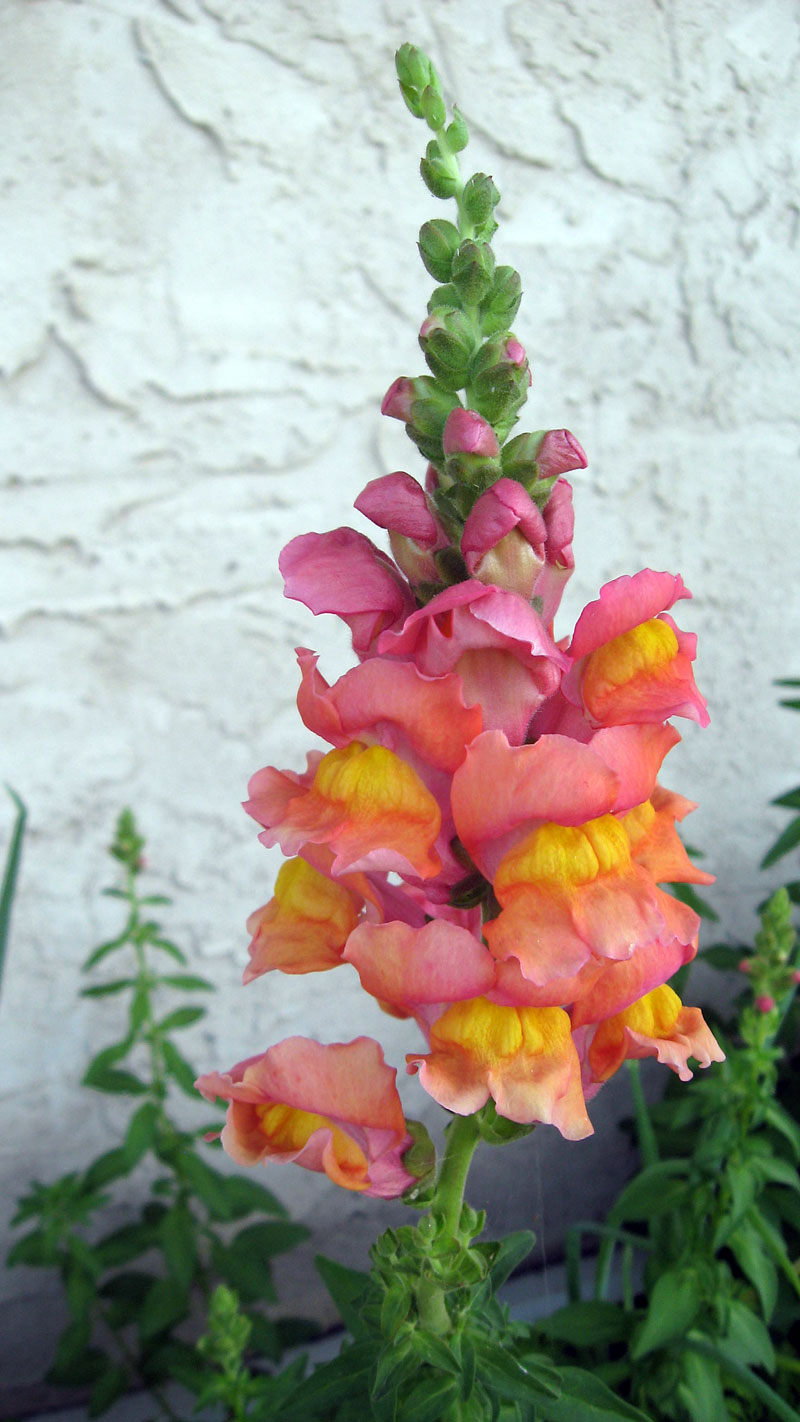
Snapdragons come in a wide range of colours — no blue or purple shades — and I much prefer buying plants in separate colours so that I can better control the colour scheme of my plantings. This way I can create blocks of a particular colour if I so desire.
Snapdragons are useful annuals in the landscape, are readily available in a variety of colours, are easy to grow, and rarely experience disease or insect problems.
Although perhaps considered rather common by some gardeners, snapdragons can provide season-long colour to the landscape.
Albert Parsons is a consultant for garden design and landscaping who lives in Minnedosa.
» communitynews@brandonsun.com