
Gone Gardenin’ – Grape ivy will give you a taste of the mighty oak
Advertisement
Read this article for free:
or
Already have an account? Log in here »
We need your support!
Local journalism needs your support!
As we navigate through unprecedented times, our journalists are working harder than ever to bring you the latest local updates to keep you safe and informed.
Now, more than ever, we need your support.
Starting at $15.99 plus taxes every four weeks you can access your Brandon Sun online and full access to all content as it appears on our website.
Subscribe Nowor call circulation directly at (204) 727-0527.
Your pledge helps to ensure we provide the news that matters most to your community!
To continue reading, please subscribe:
Add Brandon Sun access to your Free Press subscription for only an additional
$1 for the first 4 weeks*
*Your next subscription payment will increase by $1.00 and you will be charged $20.00 plus GST for four weeks. After four weeks, your payment will increase to $24.00 plus GST every four weeks.
Read unlimited articles for free today:
or
Already have an account? Log in here »
Hey there, time traveller!
This article was published 06/02/2014 (4437 days ago), so information in it may no longer be current.
Although it will be some months before we are again able to enjoy the green leaves of our native oaks — oak trees grace many yards in Brandon and surrounding area — we can enjoy some oak-shaped leaves in our indoor gardens as we endure the rest of the winter.
The best-known oak leafed houseplant is the oak-leaf grape ivy; it’s Latin name is Cissius.
The grape ivy has long been a favourite of mine as it is a dependable low light plant for the indoor landscape, and in our north-facing living room, low light plants are a necessity.

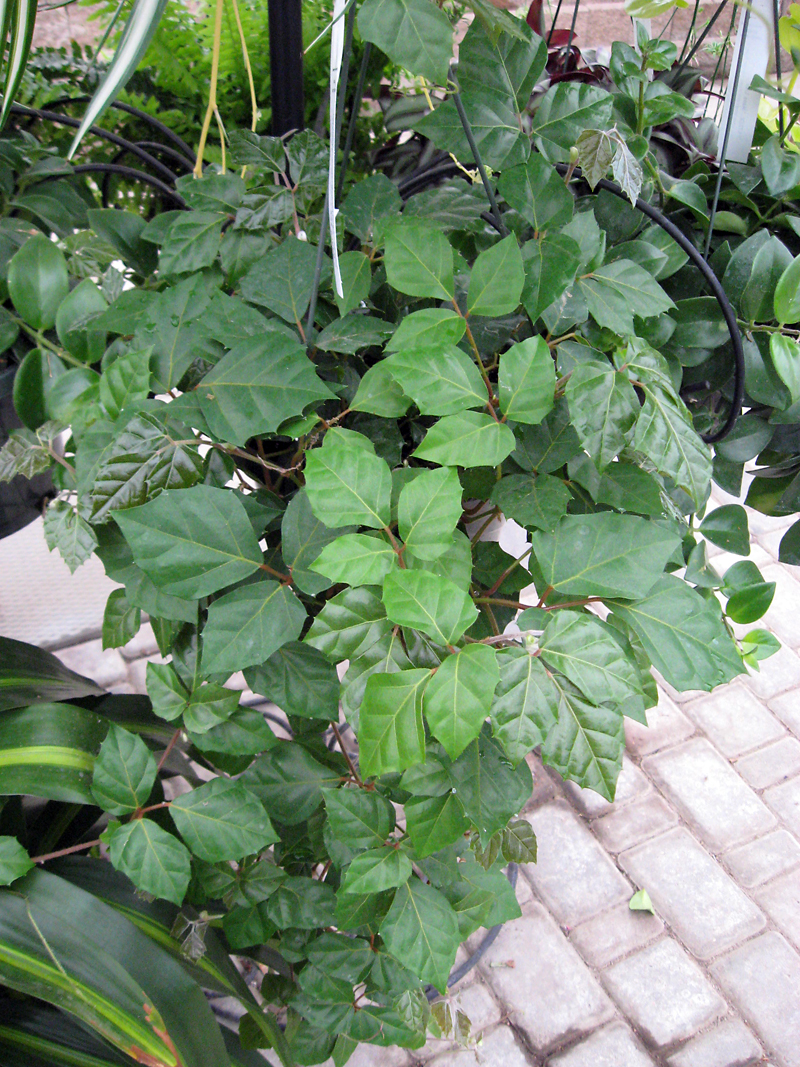
The dark green foliage of grape ivy is produced on rambling stems that cascade attractively, making the plant an excellent hanging plant although it also can be trained on a trellis to fill a dark corner.
I have mine displayed on top of a tall china cabinet where the foliage tumbles down the side of the cabinet, both softening the upper edge of the cabinet and providing a lovely show of foliage. I have chosen the variety that has oak-shaped leaves although the standard form would be just as attractive.
The grape ivy is an easy-care plant, quite happy in the environment found in our interior spaces. It needs well-drained soil and it does not like to be kept constantly wet, so you have to allow the soil to dry out after you water this plant — don’t be in a rush to water it again.
I have my plant in a 10-inch pot as it is a quite large specimen, but if you buy a starter plant, it will no doubt be in a smaller pot, usually a three-inch pot. As the plant grows, every spring transplant your grape ivy into a pot that is one size larger.
I have mine planted in a good quality soilless mix and I make sure when I transplant my grape ivy that I put a bit of newspaper in the bottom of the pot to prevent soil from escaping through the drainage holes — and make sure there are drainage holes in the pot. I try not to pack the planting medium — it will settle on its own.
Do not over pot a grape ivy since this plant does not like “wet feet”; it will not be happy in an overly large pot because the soil will stay too wet for too long after you have watered it.
Make sure you set the pot on an inverted saucer in the jardinière you use to prevent the pot from sitting in any excess water that drains out of the pot when you water it. Empty this water out of the jardinière before you water the plant again.
It is not a heavy feeder — I feed mine just a couple of times a year during the summer when growth is most active. During the winter, the plant is semi-dormant and puts forth little new growth; therefore, it needs little water during the winter.
Grape ivy is not prone to insect attacks; I have never had any problems with insects on my plant. If the plant is placed in a poorly ventilated location, however, it might develop mildew on its leaves.
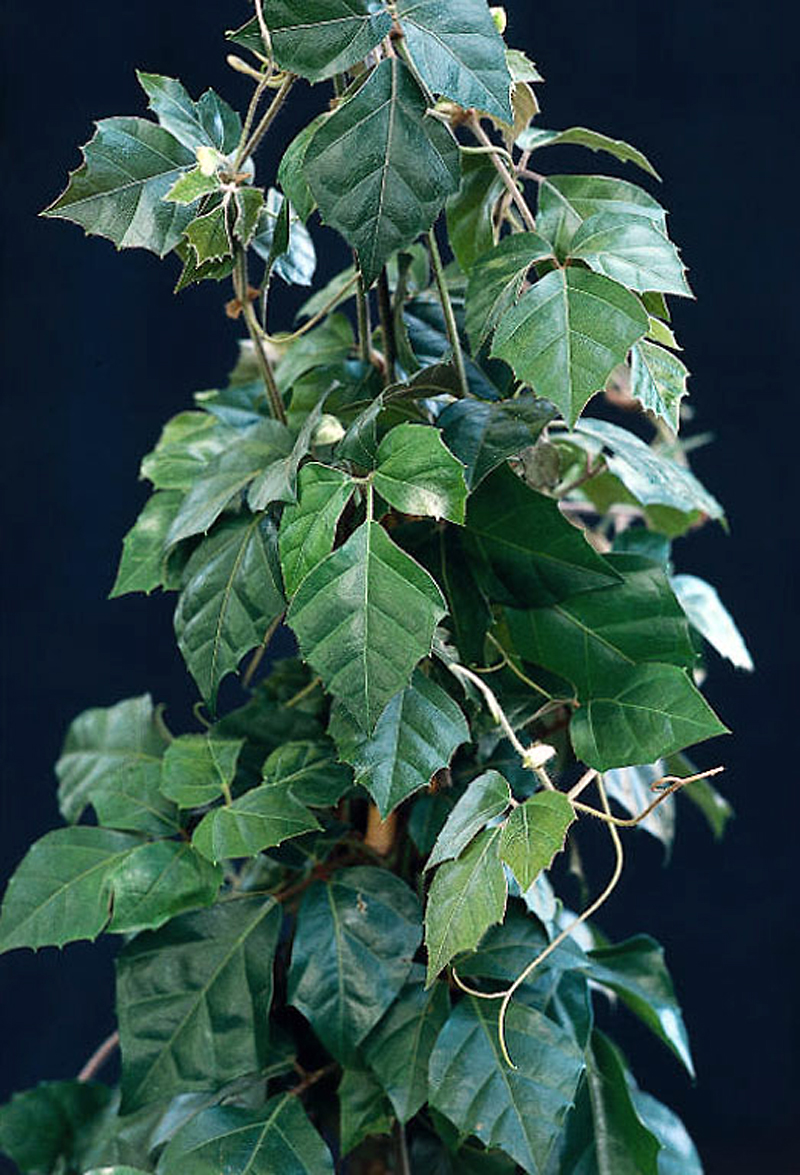
The leaves of oak leaf grape ivy are the exact shape of oak tree leaves while the leaves of the standard form are somewhat triangular and each leaf is comprised of three leaflets.
The leaves of grape ivy are dark green and although new leaves are a bit fuzzy, giving them a silvery sheen, older leaves are not particularly glossy. The leaves are produced on trailing (or climbing) stems that will adhere to a trellis, so the plant can be grown as an upright specimen.
Keeping the plant pinched will create a far more bushy plant than if you simply allow the stems to grow at their own rate. I like to give my grape ivy a periodic shower in the bathroom as the leaves do get dusty and dust seems to be particularly noticeable on grape ivy leaves for some reason.
Besides using your grape ivy as a hanging plant, or placing it on a shelf from which its foliage can tumble down, you might want to use the plant to fill a dark corner by either placing it on a suitable plant stand or having it trained to grow up a trellis or other support.
A small plant is suitable for use as a tabletop plant and also can be incorporated into a display of plants on a tray or a grouping of plants on a mantle.
Wherever it is used, the dark green foliage of a grape ivy will add to the beauty of the indoor landscape. If you want to create just a bit more interest, choose an oak-leaf specimen.
Even if they are not quite comparable to the leaves of the mighty oak tree, the leaves of the grape ivy come close. Let’s face it, they are the only option we have if we want to “enjoy the oaks” at this time of year in Manitoba!
Albert Parsons is a consultant for garden design and landscaping who lives in Minnedosa.
» communitynews@brandonsun.com