Gone Gardenin’ – Dramatic Canna adds plenty of pizzazz to yard
Advertisement
Read this article for free:
or
Already have an account? Log in here »
We need your support!
Local journalism needs your support!
As we navigate through unprecedented times, our journalists are working harder than ever to bring you the latest local updates to keep you safe and informed.
Now, more than ever, we need your support.
Starting at $15.99 plus taxes every four weeks you can access your Brandon Sun online and full access to all content as it appears on our website.
Subscribe Nowor call circulation directly at (204) 727-0527.
Your pledge helps to ensure we provide the news that matters most to your community!
To continue reading, please subscribe:
Add Brandon Sun access to your Free Press subscription for only an additional
$1 for the first 4 weeks*
*Your next subscription payment will increase by $1.00 and you will be charged $20.00 plus GST for four weeks. After four weeks, your payment will increase to $24.00 plus GST every four weeks.
Read unlimited articles for free today:
or
Already have an account? Log in here »
Hey there, time traveller!
This article was published 14/04/2016 (3532 days ago), so information in it may no longer be current.
Cannas are wonderfully useful plants for the landscape and mid-April is a good time to get these plants off to an early start so that they will be a good size come planting out time.
The rhizomes will have been stored away in a dark cool place for the winter — I store mine in cardboard boxes in our heated garage where the temperature is kept just above the freezing mark.
By mid-April, the rhizomes will be showing signs of new growth and can be brought out of storage and encouraged to develop in a well lit, warm environment. I usually leave clumps of cannas intact for storage so they have to be eased apart so that individual rhizomes can be planted.

I use shallow cardboard boxes lined with plastic to start my cannas, but other containers could be used — although it might be handy if they are waterproof and don’t leak. I fill the boxes with damp soilless mix and then I plant the canna rhizomes as close together as possible without their touching, and cover them with five or six centimetres of dampened mix.
I place the boxes in the sunroom but you could do this in the house. Bright light will not be necessary until the top grow emerges and the first leaves start to unfurl.
Then the plants will have to be moved to where they are exposed to lots of direct sun or they will soon get leggy. I put the boxes in my cold frame on the patio, which has a heat source for cold nights.
I leave the cannas in the boxes of soilless mix until I am ready to plant them into containers or beds for the summer. I don’t feed them but I do keep the planting medium moist, but not wet.
I use cannas in large containers, by themselves, or under planted with shorter plants such as vinca, calibrachoa, or lobelia to cover the soil surface and act as spillers. I often plant them in the narrow bed along the house by our back patio where they love the southern exposure and warm micro-climate.
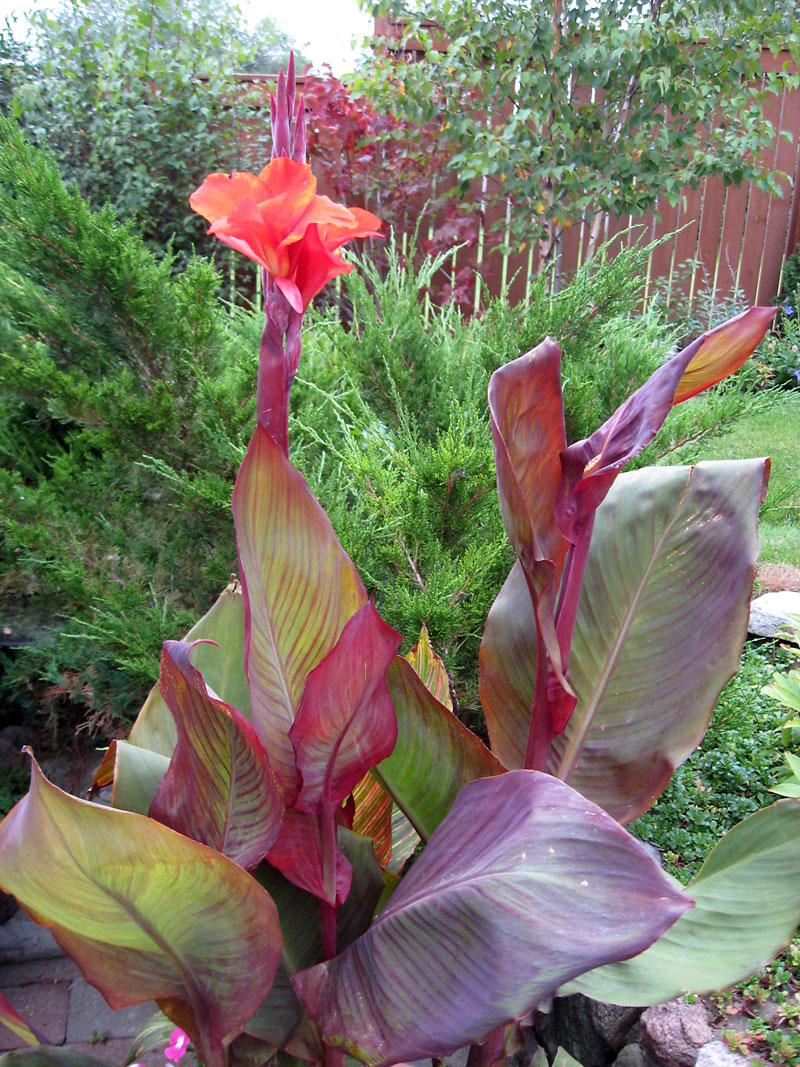
I also use cannas in large mixed containers combined with other large plants, including tall salvia, annual grasses, and even gladioli or acidanthera to provide foliage contrast. Cannas are large plants with big leaves so they require containers and companion plants that are in scale with their size.
Cannas can also be used in beds and borders as background plants or in clumps as accents. They cannot be placed too close to the front of beds or they will hide the plants behind them unless those companion plants are quite tall.
A couple of cannas on either side of an entrance to a garden room serve as gate posts and accent the gateway.
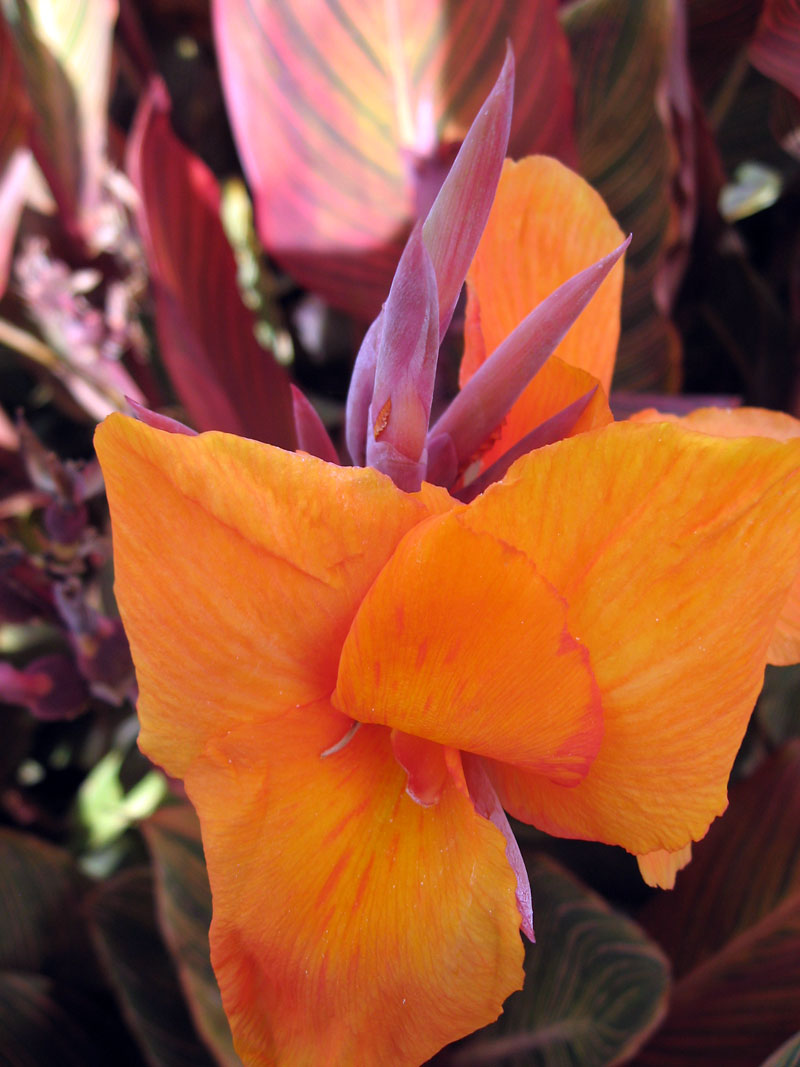
Although years ago cannas were typically green-leafed and had scarlet red flowers, there is now a great variety of both leaf colour and bloom colour. There are cannas with dark burgundy leaves, some with red, bright green and/or gold stripes on their leaves, and a few with green foliage covered with big white blotches.
Bloom colour can range from very dark red to salmon, pink, apricot, and deep orange. Spectacular combinations of colour can be created by echoing the colour of the cannas leaves and/or blooms in the companion plants used with them.
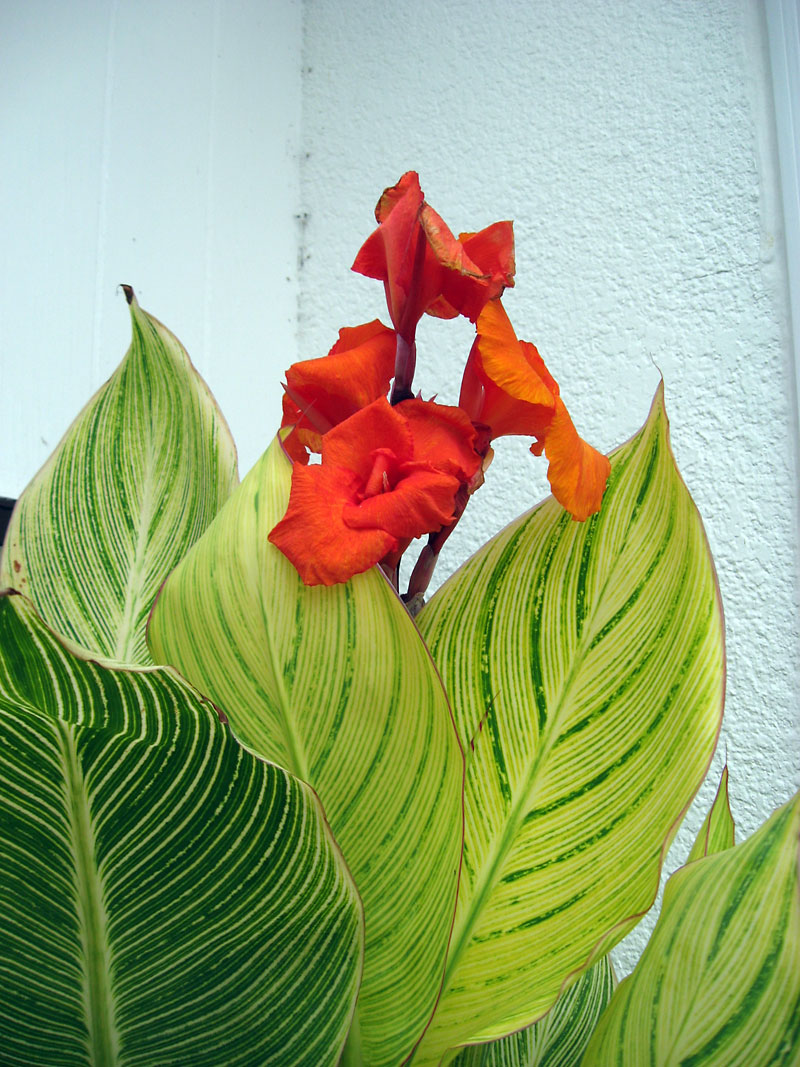
Cannas are undemanding plants; they like adequate water but are remarkably tolerant of having their planting medium become quite dry. They are not heavy feeders and are not prone to insect attacks.
They are sturdy, self-supporting plants even if they are quite large and never need support. They only require the extra step of digging them in the fall, storing them for the winter, and getting them off to an early start in the spring (this is optional but pays big dividends by creating a longer bloom period).
If you have no cannas in storage, be on the lookout for packages of canna rhizomes this spring and treat yourself to a few. Cannas are wonderfully dramatic plants that will add a lot of pizzazz to your landscape.
Albert Parsons lives, writes, and gardens in Minnedosa.
» communitynews@brandonsun.com