
TB testing over after 25 years
Advertisement
Read this article for free:
or
Already have an account? Log in here »
We need your support!
Local journalism needs your support!
As we navigate through unprecedented times, our journalists are working harder than ever to bring you the latest local updates to keep you safe and informed.
Now, more than ever, we need your support.
Starting at $15.99 plus taxes every four weeks you can access your Brandon Sun online and full access to all content as it appears on our website.
Subscribe Nowor call circulation directly at (204) 727-0527.
Your pledge helps to ensure we provide the news that matters most to your community!
To continue reading, please subscribe:
Add Brandon Sun access to your Free Press subscription for only an additional
$1 for the first 4 weeks*
*Your next subscription payment will increase by $1.00 and you will be charged $20.00 plus GST for four weeks. After four weeks, your payment will increase to $24.00 plus GST every four weeks.
Read unlimited articles for free today:
or
Already have an account? Log in here »
Hey there, time traveller!
This article was published 08/12/2016 (3367 days ago), so information in it may no longer be current.
A quarter-century long battle against bovine tuberculosis in Riding Mountain National Park is finally approaching its conclusion — while ranchers in Alberta prepare for a potentially long fight against the contagious bacterial disease themselves.
Quietly, on-farm testing for bovine tuberculosis in what is referred to as the Riding Mountain Eradication Area (RMEA) wrapped up this year. The Westman region has been on high alert since 1991 when the first TB case was confirmed.
Annual testing was recently reduced to biennial assessments. Four small ranches, which did not receive their scheduled tests in 2015, were completed this year. No tests are planned next year.
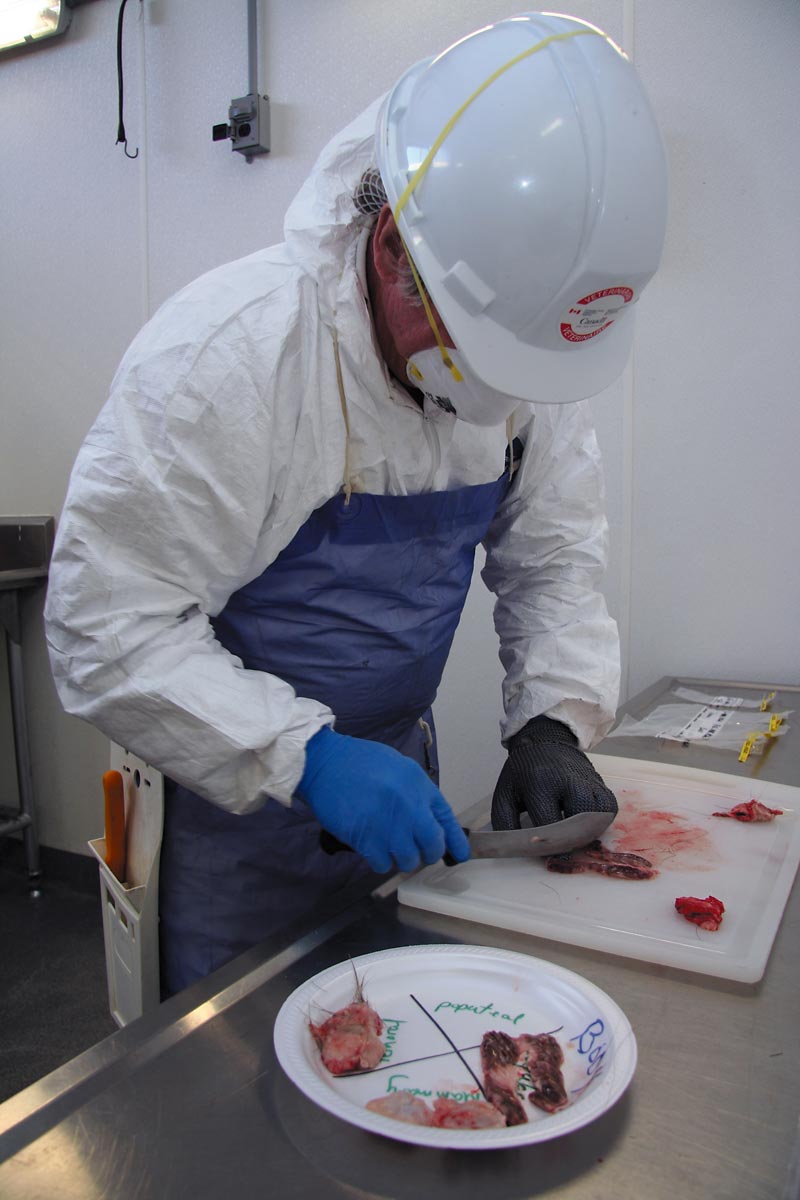
This winter, the capturing of deer and elk to collect additional samples will also cease.
“It’s a huge sigh of relief for everybody involved, and I’ll use that term because it has been a battle,” said Allan Preston, coordinator of the Bovine TB Management Program. “We’ve had tremendous cooperation from everybody to achieve those goals, provided we continue to find negative results on the surveillance tests.”
In total, Preston explained the disease infected 14 Riding Mountain area herds since 1991. There was a major breakout in 1997-2003 and the last positive test was in 2008.
From 2000, when RMEA was established, to 2015, more than 250,000 tuberculin tests of livestock have been performed in the area, according to the Canadian Food Inspection Agency.
Aside from providing stock for regular testing, each ranch took measures to stop the spread of TB.
Barrier fences and guard dogs help keep white-tailed deer and elk away. Bales are better protected since the disease is often spread from wildlife to cattle herds through saliva at areas where bale grazing is common.
Each of these approaches will continue, even while regular TB observation is dialed back, Preston said.
“My biggest fear is that we may relax too soon, we may get complacent too soon.”
Inspections of all slaughtered cattle will continue and hunters will still be asked to submit samples from elk and deer they shoot in the area.
“But the live animal testing will be done,” Preston said. “That was a very significant imposition on farmers in the area.”

Preston is carefully watching what happens in southeastern Alberta where several cases of TB were confirmed this fall, he said.
Albertan ranchers are experiencing what their counterparts in western Manitoba went through in the 1990s. Preston said there is a key similarity, with the first TB case in Manitoba and Alberta part of a herd grazing on a public pasture, which increases the likelihood of infection when herds are not confined to one location.
Preston said the TB case in Alberta worries him about possible repercussions from the American government, especially if another TB case is reported in Canada in the next few years.
“If you find a second case in the country, it can jeopardize our status in regards to trade with the United States,” he said. “We kind of sit on pins and needles, worried that a second case might show up somewhere.”
In Manitoba, Ray Armbruster, a cattle rancher with approximately 250-head north of Rossburn, said it’s a relief to see two decades of exhaustive testing come to a close.
“There were some days where you weren’t sure you were going to see the light at the end of the tunnel but we made it.”
The costly, stressful battle caused area ranchers to pack it in, but not Armbruster, even after his own herd was wiped out in the late 1990s when TB was confirmed.
Armbruster received the Carl Block Award last year from the Canadian Cattlemen’s Association for his dedication to the eradication of bovine tuberculosis. He served on a TB committee involving various government levels and departments until last year.
Though there is solace in finishing on-farm testing, all ranchers understand the long-term repercussions the fight against TB caused, Armbruster said.
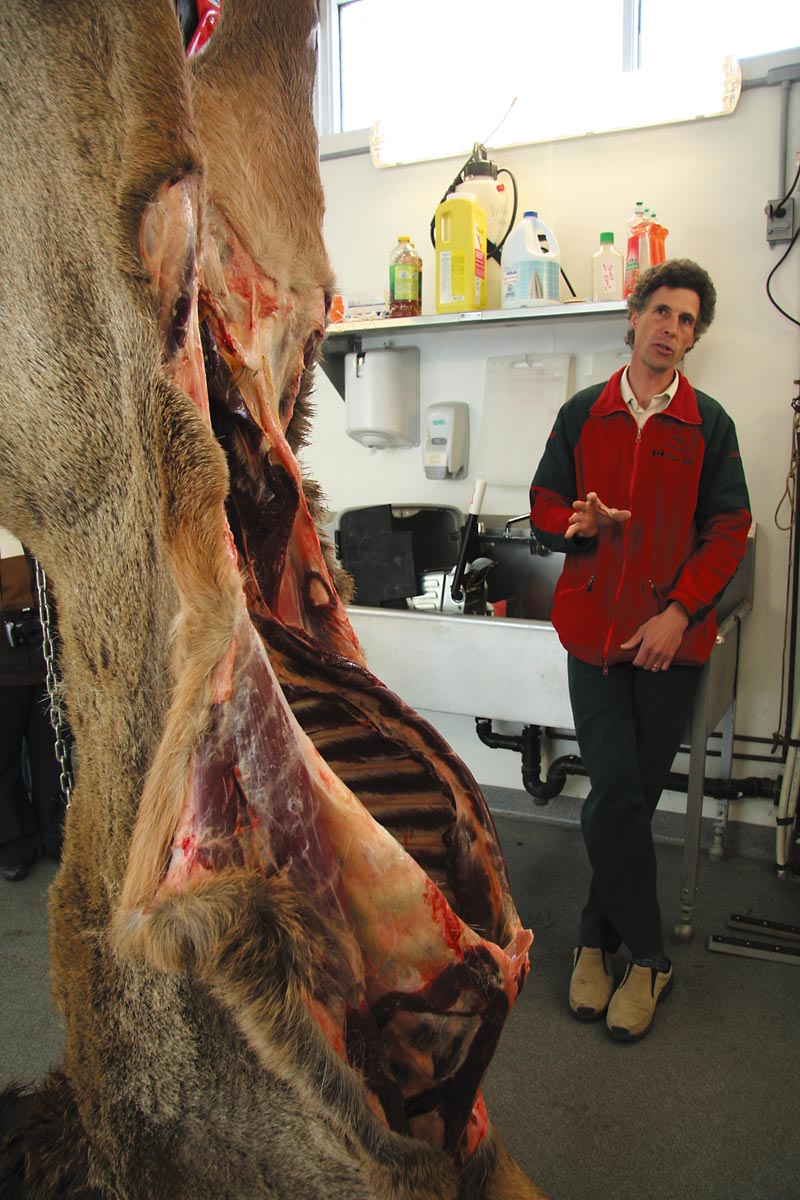
Riding Mountain has lost, in his estimation, a generation of wildlife, as part of a systematic destruction of the region’s wildlife population to ensure livestock safety. Interaction between the remaining wildlife and livestock, once common, is virtually nonexistent.
It is part of a new normal for area ranchers.
“I can’t overemphasize the amount of testing both in livestock and wildlife, how important it was,” Armbruster said. “If we wouldn’t have done the mitigation efforts, we could have probably tested here forever and not finished.”
Preston estimates there are 300-350 herds in the Riding Mountain region.
» ifroese@brandonsun.com
» Twitter: @brandonsun