
Gone Gardenin’ — Bleeding heart a sure sign of spring
Advertisement
Read this article for free:
or
Already have an account? Log in here »
We need your support!
Local journalism needs your support!
As we navigate through unprecedented times, our journalists are working harder than ever to bring you the latest local updates to keep you safe and informed.
Now, more than ever, we need your support.
Starting at $15.99 plus taxes every four weeks you can access your Brandon Sun online and full access to all content as it appears on our website.
Subscribe Nowor call circulation directly at (204) 727-0527.
Your pledge helps to ensure we provide the news that matters most to your community!
To continue reading, please subscribe:
Add Brandon Sun access to your Free Press subscription for only an additional
$1 for the first 4 weeks*
- Enjoy unlimited reading on brandonsun.com
- Read the Brandon Sun E-Edition, our digital replica newspaper
*Your next Free Press subscription payment will increase by $1.00 and you will be charged $20.95 plus GST for four weeks. After four weeks, your payment will increase to $24.95 plus GST every four weeks.
Read unlimited articles for free today:
or
Already have an account? Log in here »
Hey there, time traveller!
This article was published 20/04/2017 (3311 days ago), so information in it may no longer be current.
One of the true joys of the spring garden is the appearance of bleeding heart blooms. For years in Prairie gardens, the common bleeding heart (Dicentra spectabilis) has been a true harbinger of spring.
The lovely pink and white heart-shaped flowers that hang from the undersides of the arching stems in perfect rows create a very appealing picture. The variety ‘Alba’ has pure white blooms, but it is not as commonly seen as it is not as hardy as the old original pink and white variety.
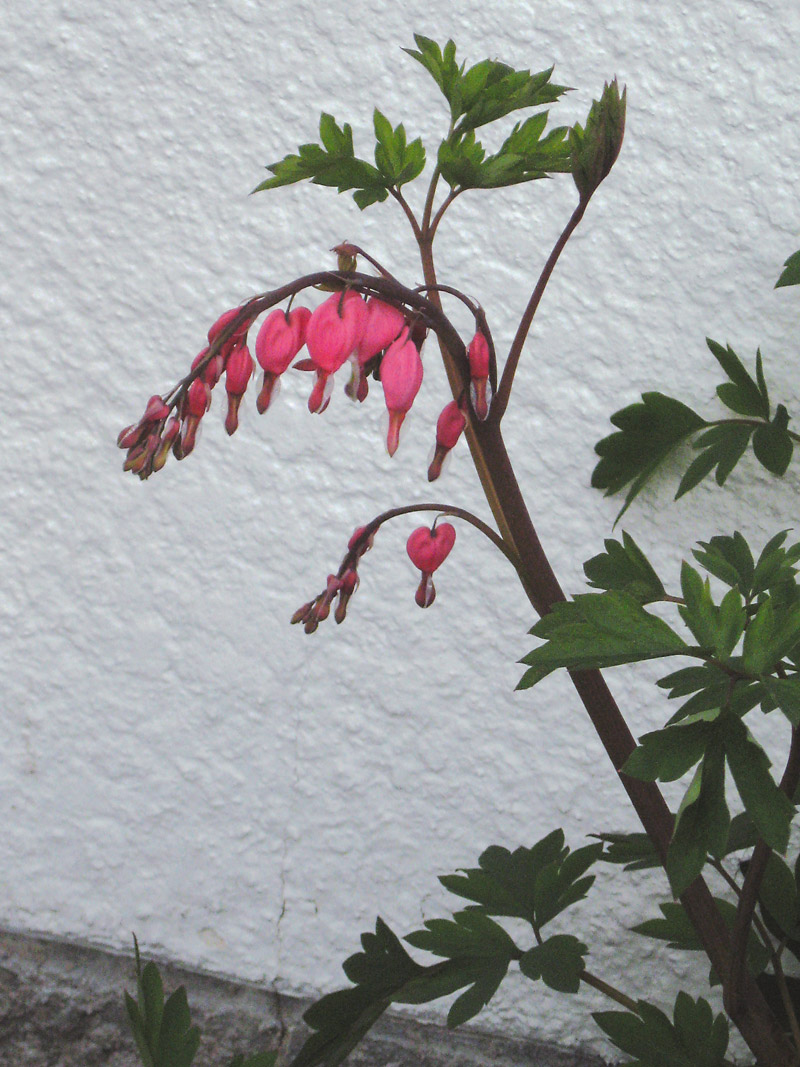
Bleeding heart flowers are quite firm and last for several weeks. The heart-shaped flowers are bright pink and there is a small white tip on the clapper part of the bell.
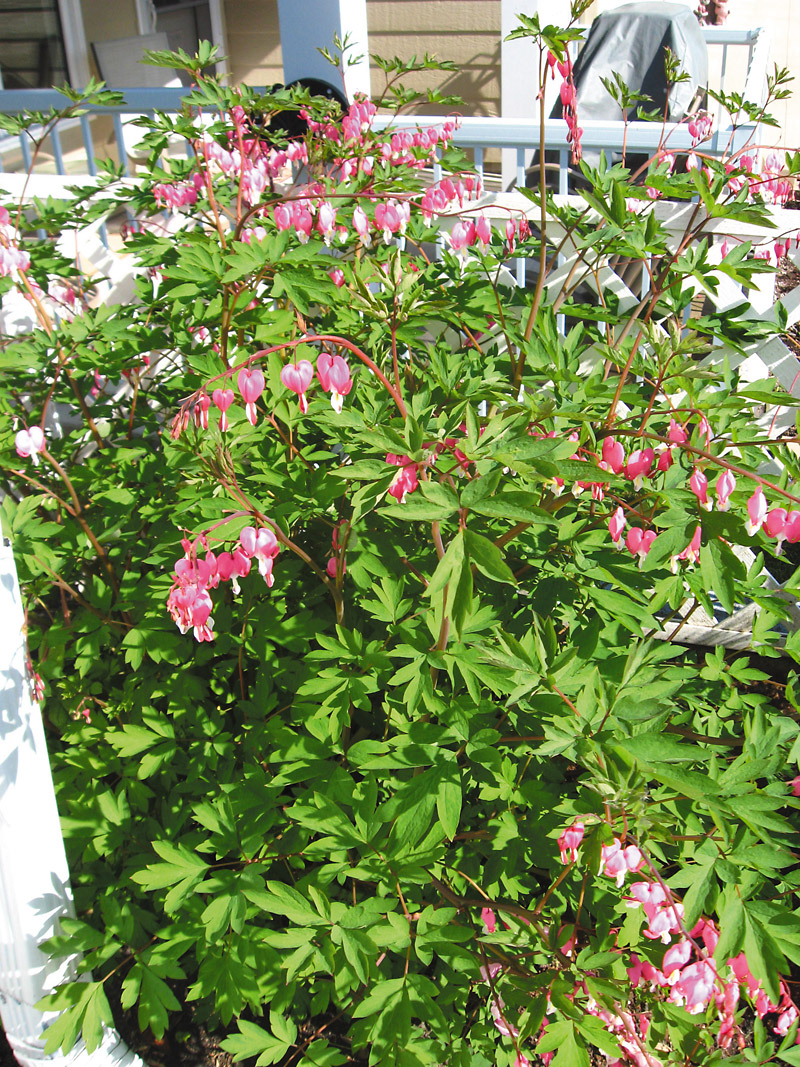
Often the arching branches have a downward arch and then nearer their ends they curve upwards before their tips turn downward again at the very ends of the stems. This peculiar arching habit of the branches makes the pendant heart-like flowers more visible.
Before the last spring frosts have occurred, the first stems of foliage will poke through the ground, apparently impervious to late cold snaps. In the morning, after a frosty spring night, these early shoots will appear slightly wilted, but they soon recover with no noticeable damage.
Recently a pink and white variety with variegated green and gold foliage has appeared on the market; it seems to be quite hardy and robust. No doubt plant breeders will soon perform their miracles and the white variety will be Manitoba-hardy as well.
Bleeding heart is known as a shade plant, and it does perform well in shade or part shade locations. I have mine planted along the foundation on the west side of the garage where it gets midday and evening sun.
Most people plant bleeding hearts in either shade or spots where the plants are protected from strong midday sun, but given consistent moisture, bleeding hearts can be grown in full sun.
The bloom period will be shorter if the plants are exposed to full sun, and the plants will die off earlier in the season. Normally the top growth begins to yellow in July, and by mid-August it has turned brown and withered.
Once the top grown has turned brown, it can be removed. Before that it should be left intact as the leaves will be restoring the nutrient reserves of the plant in readiness for next year’s bloom.
Besides keeping a bleeding heart well watered, it should be given good rich soil containing lots of organic matter. Some gardeners dig in compost around their bleeding hearts each fall when they are doing garden clean up and preparing their gardens for winter.
Although the blue green foliage of bleeding heart is attractive during the bloom period — it is toothed and segmented — its appearance does deteriorate after the bloom period. For this reason, other perennials with foliage that remains attractive until later in the season can be planted in front of bleeding hearts to camouflage the unsightly late season foliage.
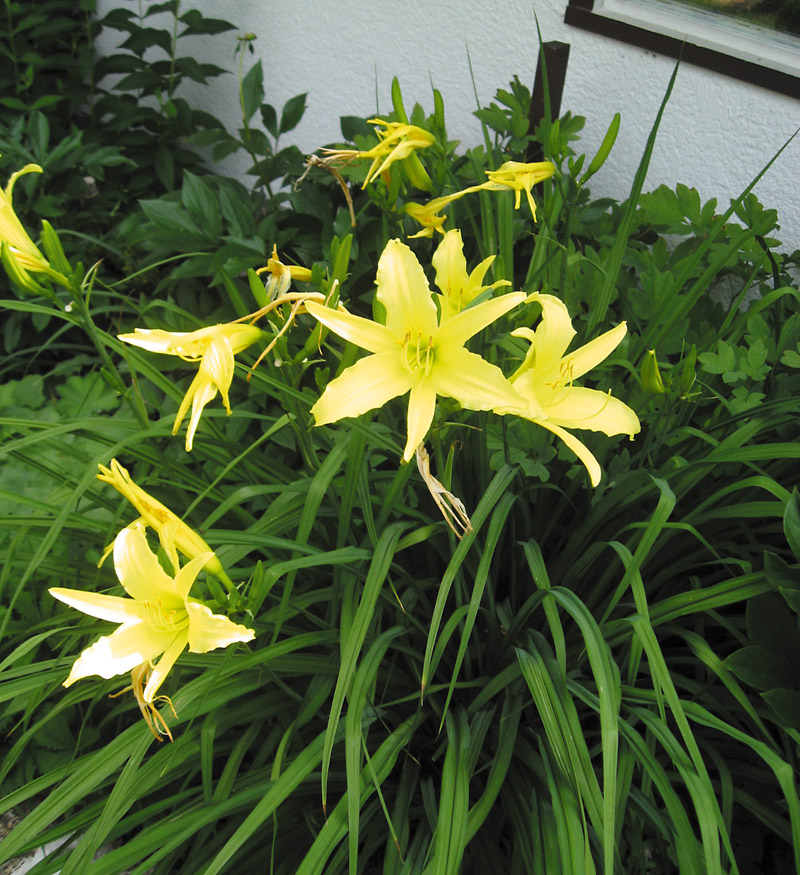
I have a tall yellow day lily planted in front of my bleeding heart, and it does a good job of performing this task. It is late enough to grow to full size that is does not obscure the bleeding heart while it is in bloom, but hides the withering yellow foliage later in the season — and protects it from harsh mid-summer sun.
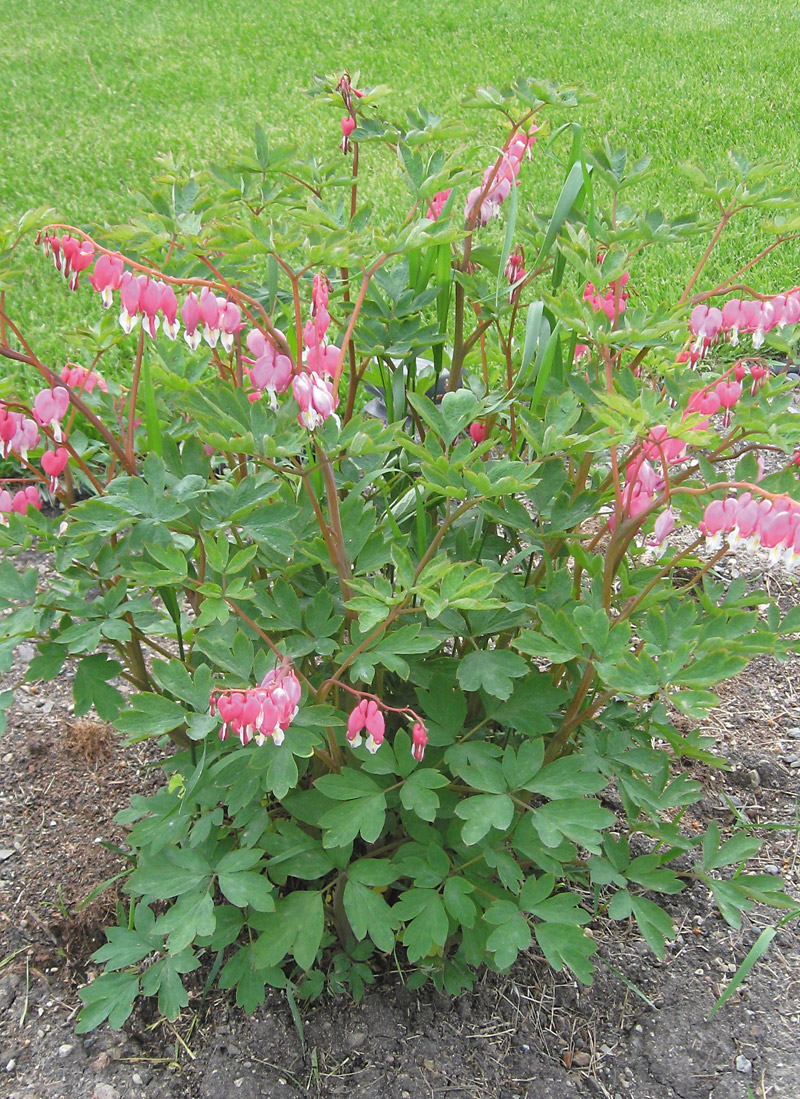
Bleeding hearts do not mind being planted shoulder to shoulder with other plants. In fact, some of their arching branches will often arch over top of neighbouring plants, creating an appealing sight.
Bleeding hearts are at home in mixed perennial borders and are sometimes used as foundation plants. They can be quite spectacular as specimen plants when they are in full bloom, but used in this way, there will be nothing to hide the yellowing mid- summer foliage.
Bleeding hearts are not attacked by insects nor do they seem to have any disease problems. Bees are attracted to the flowers.
They can be propagated by division — simply dig up the plant and divide the fleshy root clump into sections, being sure not to damage any of the roots in the process. Some gardeners’ bleeding hearts also self-seed.
The bleeding heart is an integral member of many shade gardens. Perhaps you will add one to a shady spot in your garden this spring.
Albert Parsons lives, writes, and gardens in Minnedosa.
» wtw@brandonsun.com