
Gone Gardenin’ — Plant garlic in your garden in mid-October
Advertisement
Read this article for free:
or
Already have an account? Log in here »
We need your support!
Local journalism needs your support!
As we navigate through unprecedented times, our journalists are working harder than ever to bring you the latest local updates to keep you safe and informed.
Now, more than ever, we need your support.
Starting at $15.99 plus taxes every four weeks you can access your Brandon Sun online and full access to all content as it appears on our website.
Subscribe Nowor call circulation directly at (204) 727-0527.
Your pledge helps to ensure we provide the news that matters most to your community!
To continue reading, please subscribe:
Add Brandon Sun access to your Free Press subscription for only an additional
$1 for the first 4 weeks*
- Enjoy unlimited reading on brandonsun.com
- Read the Brandon Sun E-Edition, our digital replica newspaper
*Your next Free Press subscription payment will increase by $1.00 and you will be charged $20.95 plus GST for four weeks. After four weeks, your payment will increase to $24.95 plus GST every four weeks.
Read unlimited articles for free today:
or
Already have an account? Log in here »
Hey there, time traveller!
This article was published 28/09/2017 (3152 days ago), so information in it may no longer be current.
Garlic is an essential ingredient in many recipes and because it is so easy to grow I cannot imagine why so many people rely on store-bought garlic, especially when most of it is imported from China or some other far off place. Locally grown garlic is sometime available at local farmers’ markets.
Of course we use the garlic that we grow in our garden but it also serves another purpose. I believe that garlic is one of those companion plants that ward off disease and insect attacks — its strong odor no doubt having something to do with its ability to repel pests.
I plant garlic well actually I no longer plant it as enough volunteer plants come up every year that I just remove the excess and let the rest grow. I have it in my rose bed and in a patch of vegetable garden that is largely dedicated to lilies and tomatoes.
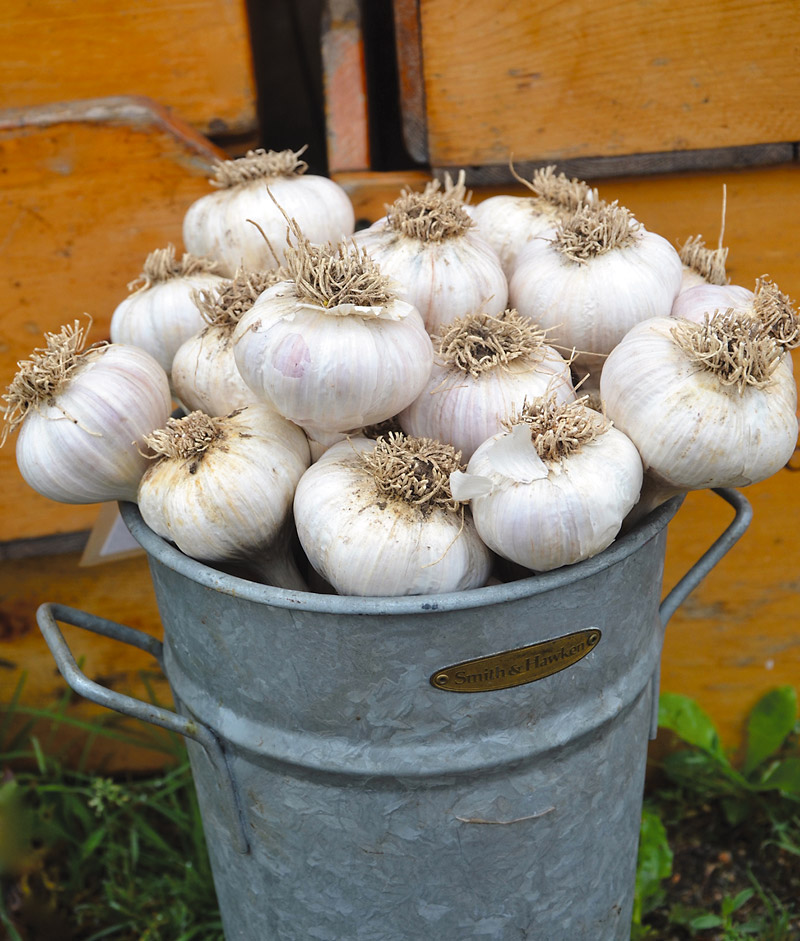
The plants do not take up much space so they do not encroach on the space required by other plants. Also, the garlic is harvested as the other plants, such as tomatoes, reach maturity so that gets the garlic out of the way.
Individual cloves from mature bulbs can be planted but also some clusters of small bulbs that had formed on the tips of the stems of the plants — shall I call them seeds — can also be planted. These “seed heads” are simply clusters of small garlic cloves and they are easily separated and then they can be planted individually.
Garlic is best planted in late fall — early enough to allow the cloves to develop some roots but late enough to prevent the bulbs from sprouting and starting to grow. I plant my garlic in mid-October.
Garlic likes full sun and deeply dug rich soil that is well drained, and contains lots of organic matter. While it is growing, garlic does not like to dry out; some gardeners have told me that if the bulbs dry out while they are growing, that is the size they stay until harvest.
Care must be taken not to damage the bulbs or individual cloves during the “breaking the bulb” process, which is the separating of the bulb into individual cloves, or during the planting process. Separating the bulbs into individual cloves is best done immediately before planting.
The reason for such caution is that the basal plate of each clove must not be damaged or roots will fail to emerge from the bottom of the clove. Also, damaged cloves may very well develop green mould, a fungus disease that attacks injured garlic cloves.
Dusting the detached cloves with a fungicide during the planting process will assist in warding off disease, including green mould. Use gloves to handle cloves dusted with fungicide and be careful not to breathe in any of the dust.
Garlic cloves are planted basal plate down and pointy end up. If you have lots of cloves, plant the biggest ones as the bigger the cloves that are planted the bigger the resultant bulbs will be.
Plant the cloves about five cm deep and about 10 cm apart in an area of the garden where consistent soil moisture can be maintained — or, you might want to simply plant garlic here and there in the garden — even in the flower border to help control disease and deter harmful insects.
Mark where you have planted the garlic so that you will know where it is planted come spring. The varieties of garlic that perform well in our area are different from those imported by grocers, who mostly access garlic from growers in California. It is far better to use your own or procure some locally grown bulbs to plant.
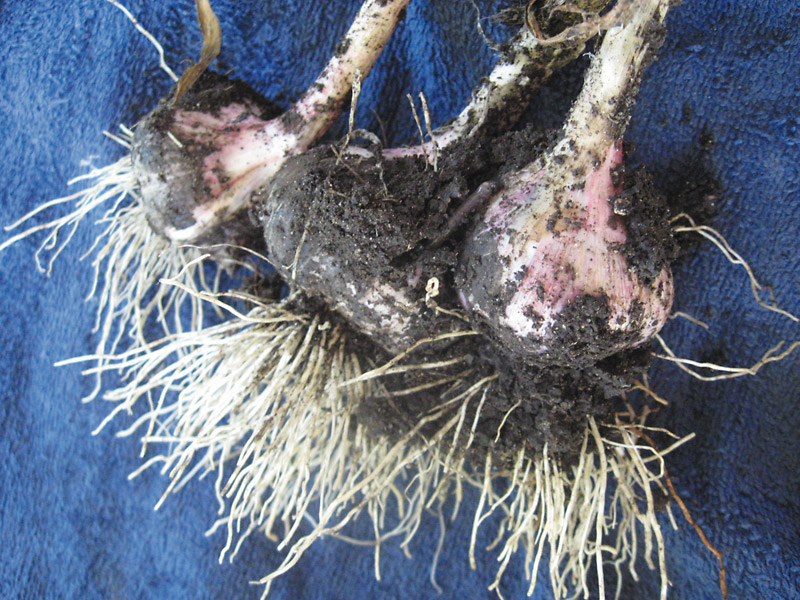
I found that garlic tends to like the same growing conditions and cultivation techniques that onions prefer. The only difference is that garlic objects to being allowed to dry out while onions can withstand a dry spell with no drastic ill effects.
I harvest our garlic in September, I dry the bulbs outdoors in an open tray and then move them into the sunroom to continue the drying process when the weather turns cold — I don’t let the bulbs freeze and I make sure to bring the garlic inside if rain is forecast..
By early October, the bulbs will be complexly dry and their outside and the papery covering on the bulbs will be crisp and crinkled like paper when touched. I leave as much as possible of this papery covering on the bulbs when they are put into storage.
We store our garlic in a kitchen cupboard in a large basket; we seem to have no trouble storing the bulbs and use the garlic all winter and well into the spring and summer. If garlic is properly cured and dried, it is not hard to store — a dry, dark, warm place is best. Perhaps you will plant some garlic this fall in your garden. It is easy to grow and perhaps it will even improve the health of the other plants in your garden.
Albert Parsons lives, writes, and gardens in Minnedosa.
» wtw@brandonsun.com