
Gone Gardenin’ — Not your same old petunia
Advertisement
Read this article for free:
or
Already have an account? Log in here »
We need your support!
Local journalism needs your support!
As we navigate through unprecedented times, our journalists are working harder than ever to bring you the latest local updates to keep you safe and informed.
Now, more than ever, we need your support.
Starting at $15.99 plus taxes every four weeks you can access your Brandon Sun online and full access to all content as it appears on our website.
Subscribe Nowor call circulation directly at (204) 727-0527.
Your pledge helps to ensure we provide the news that matters most to your community!
To continue reading, please subscribe:
Add Brandon Sun access to your Free Press subscription for only an additional
$1 for the first 4 weeks*
- Enjoy unlimited reading on brandonsun.com
- Read the Brandon Sun E-Edition, our digital replica newspaper
*Your next Free Press subscription payment will increase by $1.00 and you will be charged $20.95 plus GST for four weeks. After four weeks, your payment will increase to $24.95 plus GST every four weeks.
Read unlimited articles for free today:
or
Already have an account? Log in here »
Hey there, time traveller!
This article was published 17/05/2018 (2950 days ago), so information in it may no longer be current.
A mainstay of the bedding plant trade for decades, petunias have undergone major changes in the last 15 years. Many new varieties of other plants are now available, but the lowly petunia has kept up to the rest of the pack and new and unique petunia varieties now compete for our attention.
Plant scientists have continued to develop new varieties and types of petunias to meet the demands of gardeners who are always looking for something new and different. Extraordinary bloom colours are now available in petunias, and some of the colour combinations on the petals are remarkable indeed.
The one downside to all of this is that many of these newer petunias cannot be grown from seed and must be purchased as plants already started in a greenhouse. They are patented varieties that are only available to growers as cuttings, making them an expensive purchase for us gardeners.

One trendy colour in gardening circles right now is lime green and plant breeders have incorporated this vibrant colour into some of their petunia varieties. ‘Limelight’ produces magenta rays that are rimmed with a narrow lime green edge.
Almost the same colour is ‘Pretty Much Picasso,’ a Proven Winners introduction, which also uses this colour combo. PanAmerican Seeds has a pure lime green petunia in their Sophistica series, which when paired with another vibrant colour, packs quite an impact in a container or in a border.
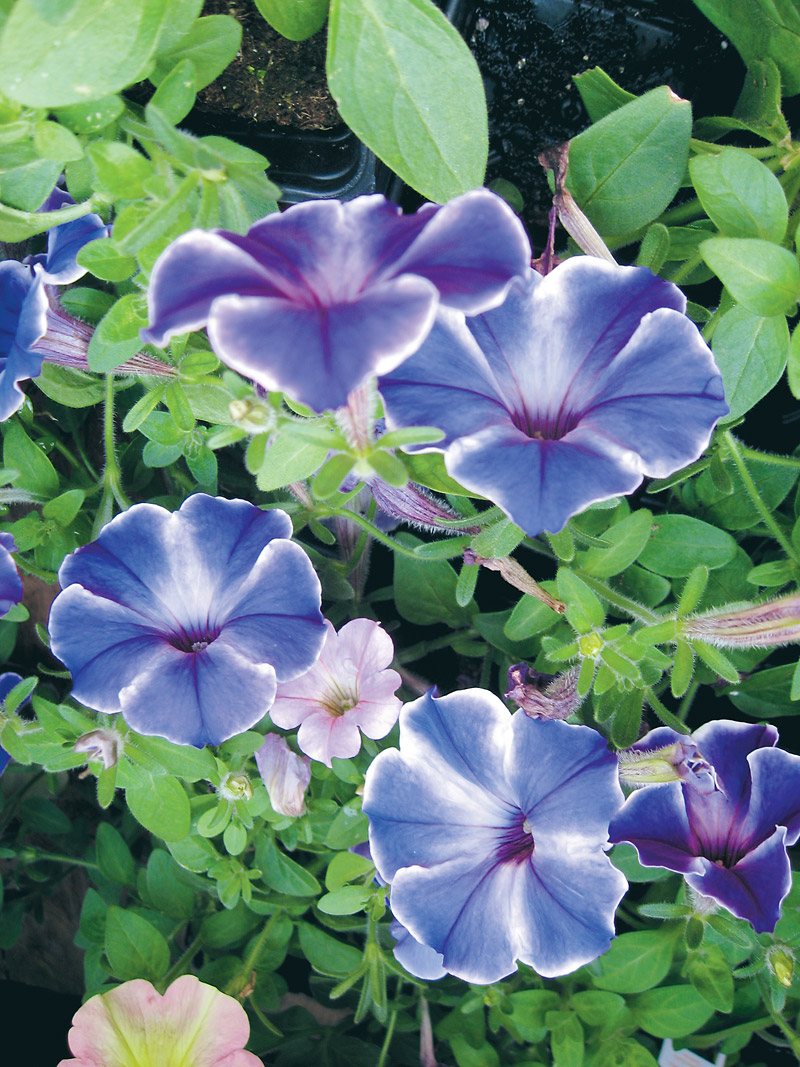
Striped petunias seem to be in fashion and there are several very unique striped petunias on the market. Unlike the striped petunias of old, many of these varieties have stripes which seem to bleed into the surrounding colour so the stripe is more subtle and creates interesting shading where the two colours meet.
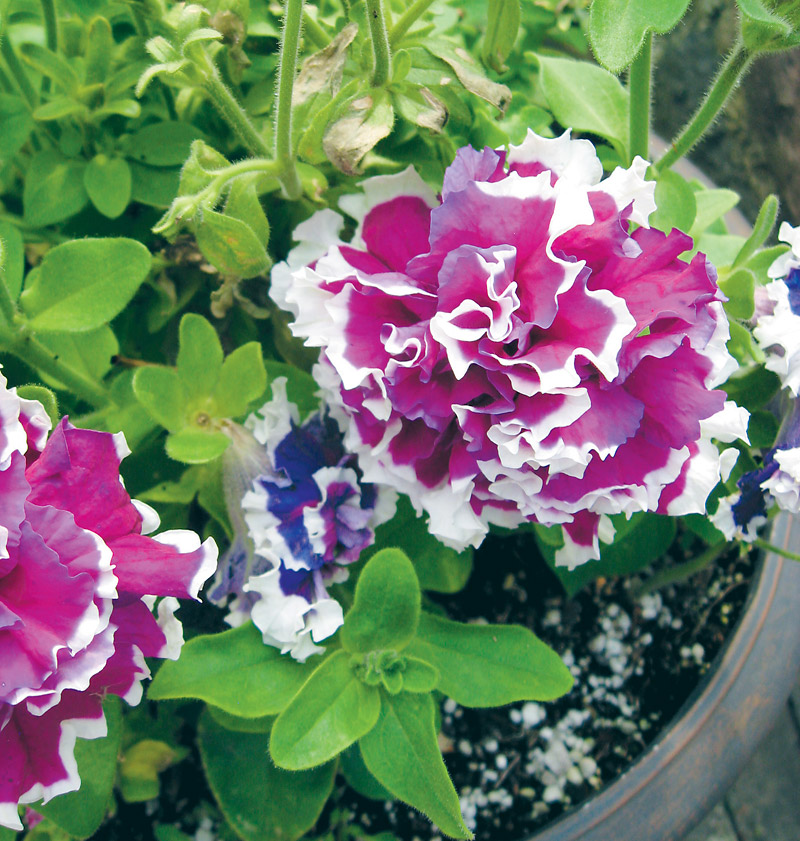
There are several that employ two tones of the same colour to create a red-on-red effect or a purple-on-purple palette that is quite unusual. Of course many of the patent holders have also changed the name “petunia” to some other, more exotic moniker, so we have Cascadias and Fortunias and Sweetunias; ‘Purple Gem’ in the Cascadia series has vibrant purple and white flowers.
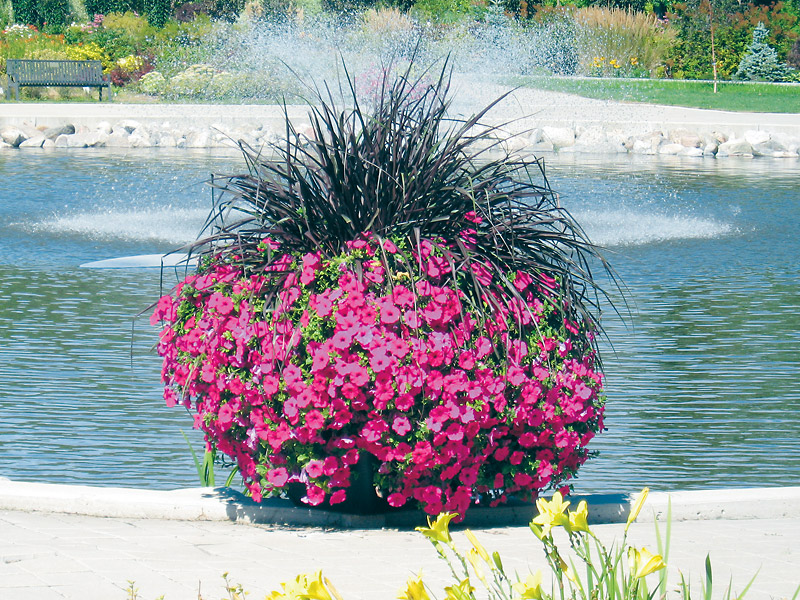
Often the newer petunias have been developed with containers in mind. They have a cascading growth habit and form huge balls of colour when planted in large hanging baskets. These are the petunias used by towns and cities to create the large balls of bloom seen hanging from light standards along the streets of many communities in the summertime.
One of the varieties in the Sweetunia series called ‘White Merlot’ has white blooms with a deep purple centre and when grown in a hanging basket the ball of bloom takes on an almost silvery tone. Combined with silver-leafed plants like licorice vine, the silvery tint of the bloom is echoed to create a stunning effect.
One newer variety of petunia that is quite unique is a member of the Suncatcher series, aptly called ‘Pink Lemonade’ because its flowers have the hints of that delectable summer drink. The overall shade of the petals is yellow but there are undercurrents and shadings of pink that give the flowers a most unusual appearance.
The effect is light and cheerful. Conversely, some of the newer petunia varieties are quite dark, with lots of deep magentas and purples, but many have white or yellow stripes merging with the darker colour on the petals to add a cheerful note to the otherwise sombre petal colours.
Another recent petunia introduction that proved to be very popular and took the gardening world by storm was the ‘Night Sky’ series. These petunias sport petals that appear to have been splattered with white paint. No two flowers are the same and the speckled patterns on the petals will vary with changes in temperature or light. The most popular colour seems to be purple — I assume it was the first one developed hence the name ‘Night Sky’.
Other colours have followed, so now there is a dark pink spattered with white dots and a pale pink one as well. No doubt other colour combos are just over the horizon.
No discussion of new petunia trends is complete without mention of the everincreasing popularity of the miniature petunias. The most common, calibrachoa, have become very popular; their small, colourful blooms literally cover the plants from spring until fall.
Not to be outdone by their larger cousins, they also come in many of the new vibrant colours and colour combinations. Calibrachoa can be used as fillers, as accent plants or they can be used to fill hanging baskets to overflowing with their somewhat cascading growth habit.
These new types and varieties of petunias are just as popular as their ancestors because they have retained the desirable characteristic of their older cousins. They are relatively easy to grow, and tolerate a range of conditions.
Provide petunias with lots of sun, ample water and feed them frequently during the summer and they will reward you with bloom from spring to fall. The newer varieties are somewhat superior to the older types because they tend to be more rain tolerant and are more compact and require less pinching if any at all.
They also tend to be selfcleaning so the tedious job of deadheading is less necessary to keep the plants looking their best. The newer petunias also combine well with other plants in beds, borders and containers. They come in upright, bushy forms as well as cascading types, so they can be both thrillers and spillers in containers. The smaller kinds, such as calibrachoa, are often used as fillers in large containers. Petunias continue to be versatile and attractive plants used by many gardeners.
Albert Parsons lives, writes, and gardens in Minnedosa.
» wtw@brandonsun.com