
Gone Gardenin’ — Battling the maggots that feed on apples
Advertisement
Read this article for free:
or
Already have an account? Log in here »
We need your support!
Local journalism needs your support!
As we navigate through unprecedented times, our journalists are working harder than ever to bring you the latest local updates to keep you safe and informed.
Now, more than ever, we need your support.
Starting at $15.99 plus taxes every four weeks you can access your Brandon Sun online and full access to all content as it appears on our website.
Subscribe Nowor call circulation directly at (204) 727-0527.
Your pledge helps to ensure we provide the news that matters most to your community!
To continue reading, please subscribe:
Add Brandon Sun access to your Free Press subscription for only an additional
$1 for the first 4 weeks*
- Enjoy unlimited reading on brandonsun.com
- Read the Brandon Sun E-Edition, our digital replica newspaper
*Your next Free Press subscription payment will increase by $1.00 and you will be charged $20.95 plus GST for four weeks. After four weeks, your payment will increase to $24.95 plus GST every four weeks.
Read unlimited articles for free today:
or
Already have an account? Log in here »
Hey there, time traveller!
This article was published 14/06/2018 (2903 days ago), so information in it may no longer be current.
Harvesting apples in the fall is one of my favorite things to do. Although I have never owned an apple tree, I have been fortunate over the years to have always been able to get apples from friends and neighbours who have allowed me to pick apples off their trees.
If someone has an apple tree, there are usually more apples than one family can possibly use. Sharing the excess with other people prevents food waste and surely is appreciated by the recipients of the free apples.
We often eat fresh apples I have picked well into November, as they keep well in the fridge. We also make applesauce and slice and freeze apples to make pies and puddings. An easy and inexpensive fundraiser for a charity is to use home grown apples to make pies and puddings for sale. The only expense is the pie crust or pudding topping as the apples are free.
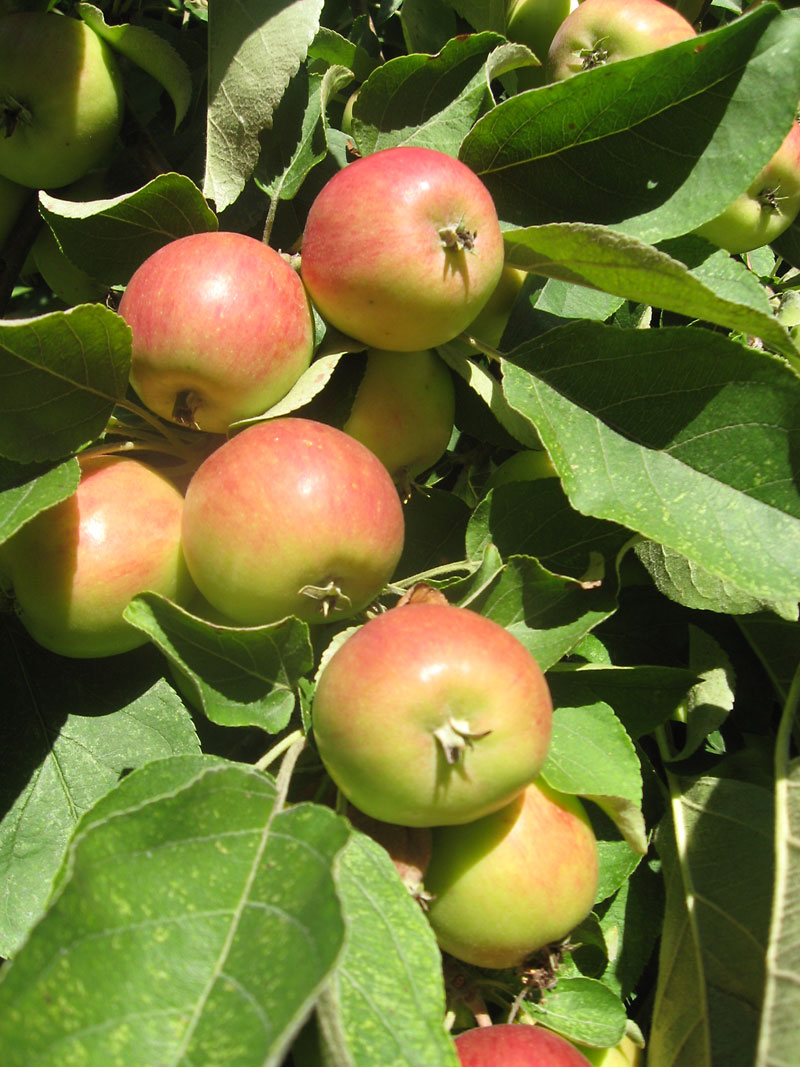
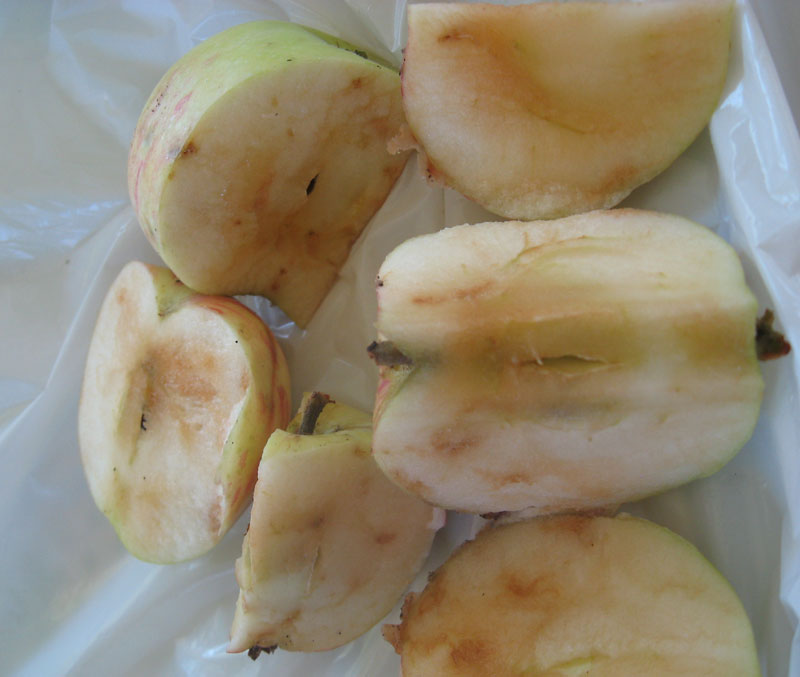
Last summer, friends from Winnipeg brought us two big bags of apples. They were quite large and looked just wonderful. After our friends departed we began to process the apples, and soon discovered that most of them were inedible because they were full of dark brown tunnels, which is a sure sign that they were infested with apples maggots.
Luckily, my usual source of apples in Minnedosa had a good crop and I was able to pick maggot-free apples from his tree. We only found a very few that were infested, which is only determined when you either cut into or bite into the apple.
Our friends’ apples looked perfectly good from the outside. In fact, when I phoned them to tell them of our experience, they had already processed some apples into apple sauce. Because they cooked them whole and didn’t cut into the apples as we do when we make apple sauce, they were unaware of the infestation. I am assuming they threw out the combination apple/worm mash!
The life of the apple maggot begins with the maggot fly laying eggs on the surface of developing apples, usually in June. The eggs soon hatch and the tiny maggots burrow into the apples and feed, creating multiple tunnels in the fruit.
In the fall, as the apples mature they fall to the ground, and that is the message to the maggots that it is time to leave the apples and they do, burrowing about five centimetres into the ground where they go through another stage of development and evolve into pupae which over winter in the soil. The pupae turn into flies in the spring — late spring— and emerge from the soil about mid-June, just when the apples are developing on the tree. The adult flies then begin the process all over again by laying eggs on the fruit.
There are two lines of defence and using both will ensure that the apple maggot problem in your apple tree is kept to a minimum. Firstly, conscientiously pick up apples as soon as they drop to the ground because the maggots do not stay in the fallen apples very long before burrowing into the soil.
The best thing to do if the apples are infested and you are not going to use them is to pick them before they fall and dispose of them (not in the compost bin but in a tightly sealed garbage bag). Even if you have no infestation and are harvesting and using your apples, there are always a few that fall from the tree. Pick these apples up and dispose of them, and don’t let them lie on the ground for any length of time.
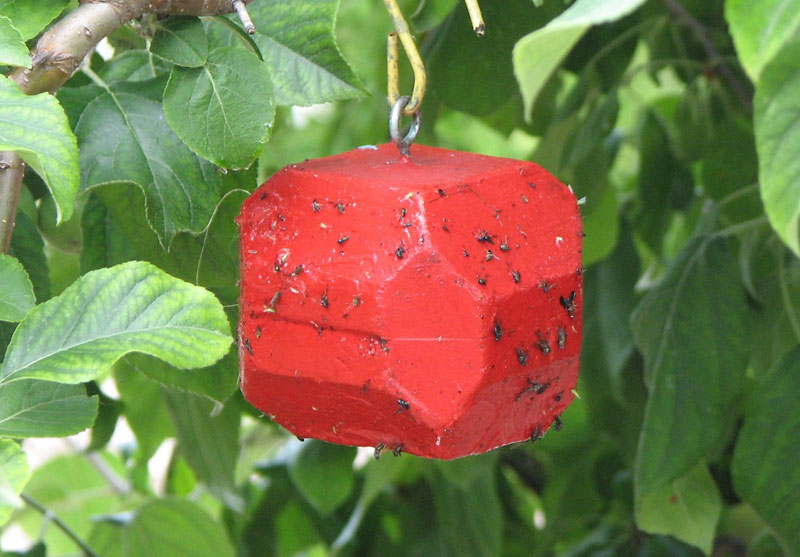
The other line of defence is to prevent the maggot flies from laying their eggs on the apples in the first place. To do this you have to construct decoys so they lay their eggs on the decoys and not on the apples.
The best decoys are round balls that are about the same size as the apples and bright red. The maggot flies are attracted to red since it is the colour of mature apples.
Old red Christmas balls can be used but any balls would do, whether styrofoam, plastic or even wood. If they are not red, paint them red with some shiny red spray paint, and don’tworry if what you are using is not a true apple shape; the flies aren’t fussy.
Coat the decoys with a product called ‘tanglefoot,’ a sticky substance that will trap the flies when they land on the decoys to lay their eggs. This product is the same one that is used to band elm trees to protect them from the insect that causes Dutch elm disease.
Tanglefoot is a very gooey, sticky substance so taking care in handling it will ensure that it doesn’t get all over your clothes and everything else. Finally, tie the decoys individually to the apple tree, concentrating them on the south and west sides which are favoured by the flies and were the reddest apples are likely to be located.
Hang the decoys from branches with wire or string so that when they sway in the wind they will not strike branches or each other. If you have a heavy population of maggot flies the decoys will have to be replaced every so often as they will become too cluttered with dead flies and other debris and will not be attractive to the flies.
Keep the decoys on the tree until the apples have all been picked. Don’t forget to pick up any apples that fall off the tree. If they fall prematurely they might very well be infested with maggots so you want to get rid of them before the maggots migrate into the soil.
Hopefully, by taking preventive measures, your apple crop this year will be a good one, free of the pesky apple maggots that destroyed so many apples last summer. Don’t delay, get those old Christmas decorations out of storage and purchase some Tanglefoot to prevent apple maggots from destroying your apple crop this year.
Albert Parsons lives, writes, and gardens in Minnedosa. » wtw@brandonsun.com