
Geocachers searching for treasures
Advertisement
Read this article for free:
or
Already have an account? Log in here »
We need your support!
Local journalism needs your support!
As we navigate through unprecedented times, our journalists are working harder than ever to bring you the latest local updates to keep you safe and informed.
Now, more than ever, we need your support.
Starting at $15.99 plus taxes every four weeks you can access your Brandon Sun online and full access to all content as it appears on our website.
Subscribe Nowor call circulation directly at (204) 727-0527.
Your pledge helps to ensure we provide the news that matters most to your community!
To continue reading, please subscribe:
Add Brandon Sun access to your Free Press subscription for only an additional
$1 for the first 4 weeks*
- Enjoy unlimited reading on brandonsun.com
- Read the Brandon Sun E-Edition, our digital replica newspaper
*Your next Free Press subscription payment will increase by $1.00 and you will be charged $20.95 plus GST for four weeks. After four weeks, your payment will increase to $24.95 plus GST every four weeks.
Read unlimited articles for free today:
or
Already have an account? Log in here »
Hey there, time traveller!
This article was published 17/01/2019 (2714 days ago), so information in it may no longer be current.
A group of Westman residents is engaged in high-tech game of hide and seek, searching for geocaches hidden around the area.
Tim Rollheiser, aka Myst354, and James Burr, aka MosesRIP, have become icons of the local geocaching scene during the last decade.
Geocaching is an outdoor treasure hunt where people use GPS to navigate toward specific co-ordinates and attempt to find a geocache, a container of sorts, hidden at that location. The container will have a physical log book where the participant can enter the find, along with an online app where they can log their discovery. The website geocaching.com/play and app Geochaching is used as a treasure map to help guide users. There are millions of caches hidden around the world, and thousands in Westman. Caches are rated between one and five based on the terrain and one to five based on the difficulty of the hide.
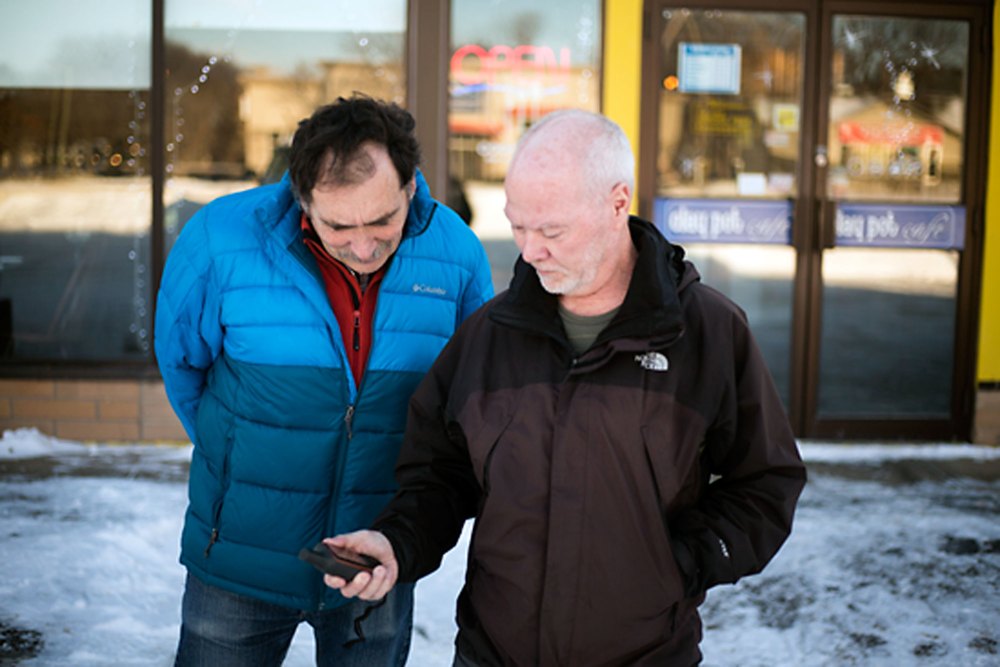
Maps are easy to read, with a green circle indicating treasure for one to find, smiley faces for discovered caches and stars denoting items placed by the geocacher.
Rollheiser has been geocaching for approximately a decade, hiding about 30 different caches and logging 3,670 finds, while Burr has been geocaching since 2006, hiding more than 100 caches and finding 2,600.
Seeking an activity for when he retired, Burr came across a geocaching seminar hosted by Friends of Riding Mountain National Park at the Riverbank Discovery Centre.
An avid walker and hiker, Burr found it to be the perfect hobby for him.
“The two of them just kind of melded together, they can be combined,” Burr said.
Rollheiser found it to be a great activity for getting out while walking his dogs.
The hobby has proven popular with a variety of people, from young families to retired folks, he said. One can see them walking the streets armed with the tools of the trade, including a GPS, magnetics, extendable arms, hooks and extendable mirrors for locating caches.
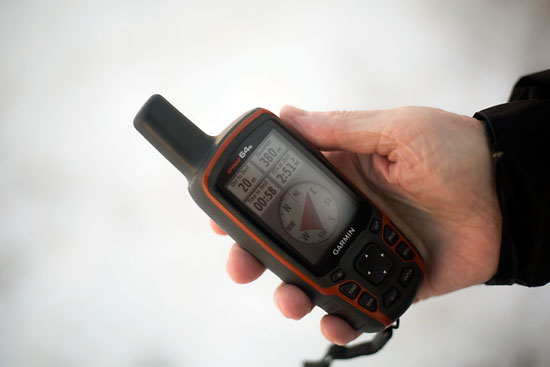
The duo still use GPS when they are on the hunt for hidden geocache treasures. Their GPS units are typically able to get them within approximately three metres of where a cache is hidden, while apps have proven more useful for documenting when a treasure is found.
While they use the app, Geocaching, it is more difficult to find and hide caches because the app has proven elusive in providing precise co-ordinates.
“When you hide something, you want to have very accurate co-ordinates to publish so the next person when they load those co-ordinates aren’t throw off,” Burr said.
Finding it to be a great hobby for travel, hidden caches will often take one to places they might not normally go, Burr said.
“It will take you to little interesting things that you would never see otherwise,” Burr said.
When someone hides and publishes a cache, they will often put up a writeup explaining why the area is interesting and unique.
Citing the Halfway Tree on the Trans-Canada Highway between Winnipeg and Brandon in the Rural Municipality of Portage la Prairie, Rollheiser said it is the perfect example of an interesting and educational cache.
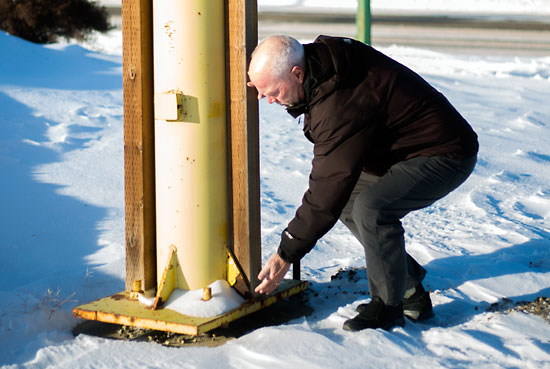
Burr has created a trail along an 11-kilometre walking loop he does every day in Brandon that stretches from 26th and 34th streets to Rosser and Maryland avenues. He has about 30 geocaches hidden along the route.
“It all started with walking the dog on that route,” Burr said.
It is handy having this trail, as he can check on his hidden treasures to make sure they are in place and ready to be found each day.
However, sometimes caches can go missing.
Geocachers will publish a DNF (did not find) if they are unable to locate a hidden cache.
“Next time I walk by and post a note (online about) it,” Burr said, describing how he will check on his stashes if he receives a DNF to make sure the cache is secure. He then leaves a note online informing other treasure hunters if the item is still secure.
This can get complicated during the cold and snowy winter, with about 40 per cent of the caches in Westman hidden beneath the snow, making them more difficult to find.
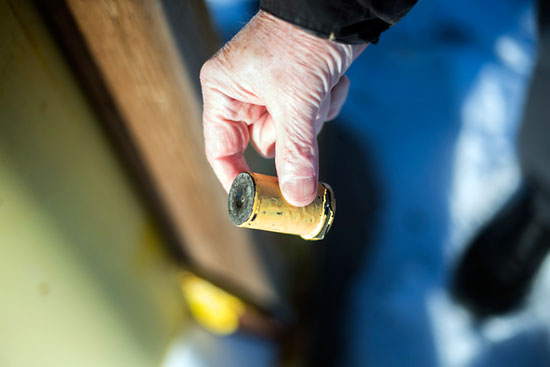
“Winter friendly in Manitoba is anything knee height or higher,” Rollheiser joked.
Caches can be hidden anywhere, but Burr said the goal is to ensure they are out of sight of those people geocachers have deemed “muggles” (non-geocachers).
Caches can be as small as a film canister, while others the size of a sandwich container. Some, such as ammo boxes, are big enough to hold tradable items. At the bare minimum, every cache will have a container with a log sheet.
The important part is that each cache is watertight so the logs do not get destroyed.
“You want to have them hidden so the average Joe … could walk right up and almost be looking at it and not see it,” Burr said. “Someone who is actually looking for it would find it with relative ease.”
Some caches can be puzzles, Rollheiser said, citing a collection of caches hidden in the Morden area as an example. These puzzles caches often involve riddles or challenges to unlock.
“You’ll open a thing up and you’ve got to move a log container through a maze to get it out,” Rollheiser explained.
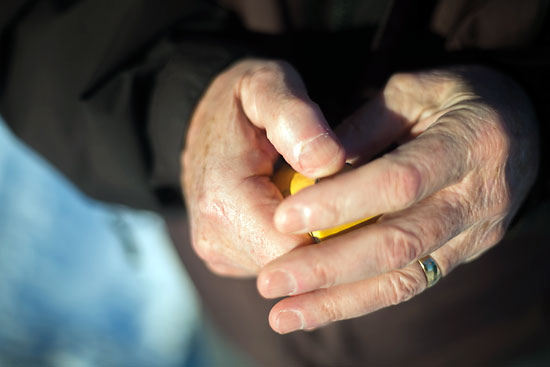
Others involve following a series of clues to locate the prize.
Burr has hidden a few puzzle caches. One involves pouring water down a pipe to raise up the log container.
“I put a stopper down the hole and drop a container that will float down there, so in order for someone to find it they have to pour about two litres of water down there and it will float up,” Burr laughed.
Others will have padlocks where people has to decode the combination to open it, or they discover written in codes that had to be deciphered.
At one time, a cache in Brandon was even written in Klingon.
One can even find multi-caches, where someone is led to the hidden treasure through a series of hints leading them on different stops until making their final discovery.
Burr and Rollheiser did one hunt in this format that started at the Brandon Police Station, led them to a series of stops including the courthouse and jail, and ended up in Justice.
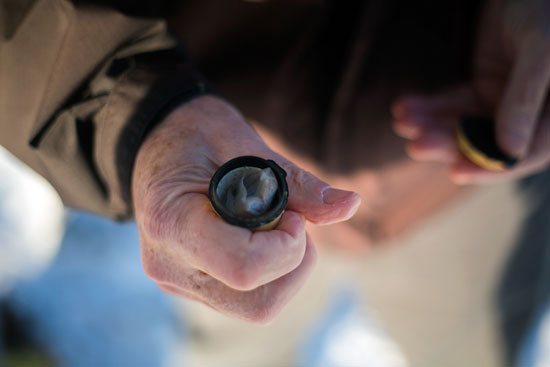
Cache events can be a highlight for participants, as it offers the chance to meet up with fellow treasure hunters and chit-chat sometimes, Burr said.
Dauphin has become an incredibly popular spot for geocacher. The community hosts an annual cache fest in September, where new caches are shared and geocachers meet up.
» ckemp@brandonsun.com
» Twitter: @The_ChelseaKemp