
GONE GARDENIN’ — Silver Queen plants easy to care for
Advertisement
Read this article for free:
or
Already have an account? Log in here »
We need your support!
Local journalism needs your support!
As we navigate through unprecedented times, our journalists are working harder than ever to bring you the latest local updates to keep you safe and informed.
Now, more than ever, we need your support.
Starting at $15.99 plus taxes every four weeks you can access your Brandon Sun online and full access to all content as it appears on our website.
Subscribe Nowor call circulation directly at (204) 727-0527.
Your pledge helps to ensure we provide the news that matters most to your community!
To continue reading, please subscribe:
Add Brandon Sun access to your Free Press subscription for only an additional
$1 for the first 4 weeks*
- Enjoy unlimited reading on brandonsun.com
- Read the Brandon Sun E-Edition, our digital replica newspaper
*Your next Free Press subscription payment will increase by $1.00 and you will be charged $20.95 plus GST for four weeks. After four weeks, your payment will increase to $24.95 plus GST every four weeks.
Read unlimited articles for free today:
or
Already have an account? Log in here »
Hey there, time traveller!
This article was published 21/02/2019 (2678 days ago), so information in it may no longer be current.
Many plants, both house plants and outdoor garden plants, have the name of one of two precious metals — silver and gold — in their names. There are literally dozens of plants that have either the word silver or gold in their names.
I will now single out one of these plants — and indeed zero in on one specific variety of a plant that has the word silver in its name. The plant is Aglaonema “Silver Queen,” by far my most favourite house plant.
Aglaonema plants are often referred to as Chinese evergreens, so it is no surprise to find out that they originated in Asia, where they grow as an understory plant in subtropical forests. There are dozens of cultivars, but one of the best is Silver Queen, and I have three pots of this wonderful plant in our interior landscape.
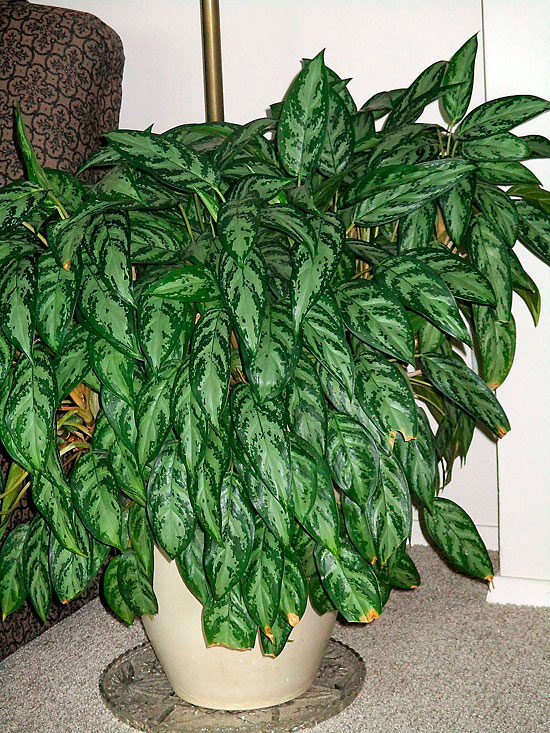
Silver Queen has thick, waxy leaves that are lance-shaped, about 30 centimetres long and six to eight centimetres wide. The leaves are produced on long stems that are attached to the main stems of the plant — Aglaonema are typically grown as multi-stemmed specimens with eight to 12 individual plants in a large pot.
The leaves grow outwards and upwards, creating a lovely display of foliage. Although the attractive foliage is the plant’s main appeal, in the summer the plant often produce white spathes similar to those of the peace lily.
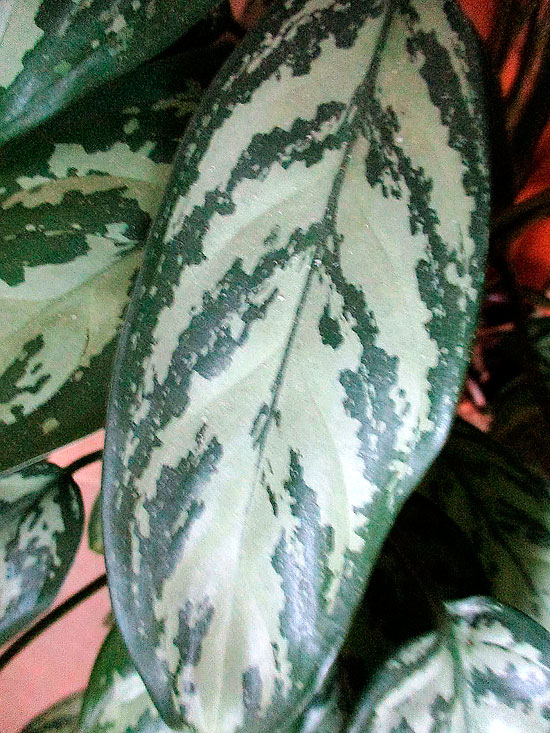
Silver Queen’s leaves are beautifully coloured. They are a rich green with silver patches and blotches. The amount of silver colouration on the leaves depends on how much light the plant is receiving — the more light, the more silver that will be on the leaves.
Even in a low-light environment, there is still quite a lot of silver on the leaf surfaces. Two of my Silver Queen plants sit in our living room, which has a north-facing window, and the plants are several metres from the window, located in the opposite corners of the room from the window.
Silver Queen is often used in offices and other interior commercial spaces because of its tolerance of low light levels. It will even perform well in an environment supplied only with fluorescent light.
My Silver Queen plants are the backbone of the interior landscape in our living room and they do a wonderful job of adding greenery to the surroundings. What makes them so great is that they are so easy to care for and so problem-free.
I have never had an insect problem on my Silver Queen plants in all the years I have had them. They do not demand constant care — the soil can be allowed to almost dry out before it is watered again. In fact, in a low light environment, the plants should not be excessively watered or the soil kept constantly damp because this may well lead to stem/root rot.
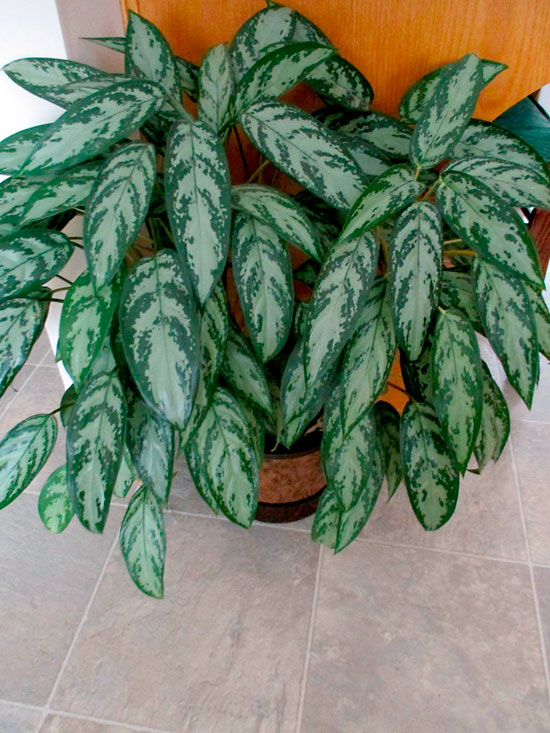
All aglaonema plants prefer a peat-based planting medium with good drainage. I have my plants in black nursery pots that fit into three good sized ceramic containers. The pots are sitting on inverted plastic lids or shallow pots turned upside down inside the jardinières so that excess water has a place to go and the pots aren’t sitting in excess water causing the soil to become water logged.
Because it is a slow-growing plant, the Chinese evergreen is not a heavy feeder. I feed mine a couple of times a year in the summer with a half-strength solution of a 20-20-20 soluble fertilizer. One specific requirement that my Silver Queen plants do have, however, is that they are rather sensitive to cold so I never position them near a door or air conditioning vent.
The silver and green foliage is the main attraction of my Silver Queen plants, so I keep them clean and dust-free, which improves both their appearance and their well being. The best way to clean the leaves is to wipe the leaves individually with a soft, damp cloth — I cup each leaf in my hand as I wipe it to prevent the leaf from being damaged.
One characteristic that makes Chinese evergreens easy care plants is that they are very slow growing. They do not have to be repotted, slipped or refurbished nearly as often as so many other house plants do.
Sometimes a few of the more mature stems in one of the pots will become tall and leggy; I simply cut such stems off about eight centimetres from the soil surface and use them as cuttings. Removing two or three stems like this over a period of time will not detract from the appearance of the specimen and new stems will soon develop to take their place.
When I am watering the pots, I often spread the taller stems apart and look down into the middle of the pot. I see lots of new stems developing which illustrates that the plants are actually self-rejuvenating all the time.
Chinese evergreens are propagated by using terminal stem cuttings. The cuttings should be about 30 centimetres in length and the lower leaves on the cuttings must be removed. I dip the ends of the cuttings in rooting hormone, and plant about a dozen stems in a large pot of damp soilless mix — the stems take a long time to root and the pot should be kept in a warm, low light location and watered sparingly while rooting takes place.
Chinese evergreens are among the plants known for their ability to remove toxins like formaldehyde and benzene from the surrounding air so they make our surroundings both more beautiful and healthier. Our interior landscape of our home would indeed seem barren without pots of lovely, low maintenance Silver Queen.
Albert Parsons lives, writes, and gardens in Minnedosa.
» wtw@brandonsun.com