
CFB Shilo dining hall staff adapt to pandemic
Advertisement
Read this article for free:
or
Already have an account? Log in here »
We need your support!
Local journalism needs your support!
As we navigate through unprecedented times, our journalists are working harder than ever to bring you the latest local updates to keep you safe and informed.
Now, more than ever, we need your support.
Starting at $15.99 plus taxes every four weeks you can access your Brandon Sun online and full access to all content as it appears on our website.
Subscribe Nowor call circulation directly at (204) 727-0527.
Your pledge helps to ensure we provide the news that matters most to your community!
To continue reading, please subscribe:
Add Brandon Sun access to your Free Press subscription for only an additional
$1 for the first 4 weeks*
- Enjoy unlimited reading on brandonsun.com
- Read the Brandon Sun E-Edition, our digital replica newspaper
*Your next Free Press subscription payment will increase by $1.00 and you will be charged $20.95 plus GST for four weeks. After four weeks, your payment will increase to $24.95 plus GST every four weeks.
Read unlimited articles for free today:
or
Already have an account? Log in here »
Hey there, time traveller!
This article was published 05/11/2020 (2117 days ago), so information in it may no longer be current.
During a time in which dining establishments all around them were closing, Flatlands Dining Hall kept its doors open.
It was no simple task, but staff at the Canadian Forces Base Shilo mess hall have continued feeding approximately 150 live-in personnel throughout the pandemic.
“A lot of personnel on base were sent home, and our staff were the continuity on base,” base foods officer OC Lt. Corey Smith said. “They worked 100 per cent, all the time, and they never missed work at all. … They were proactive, they worked hard and they showed up and took it upon themselves to implement any changes that they could come up with.”
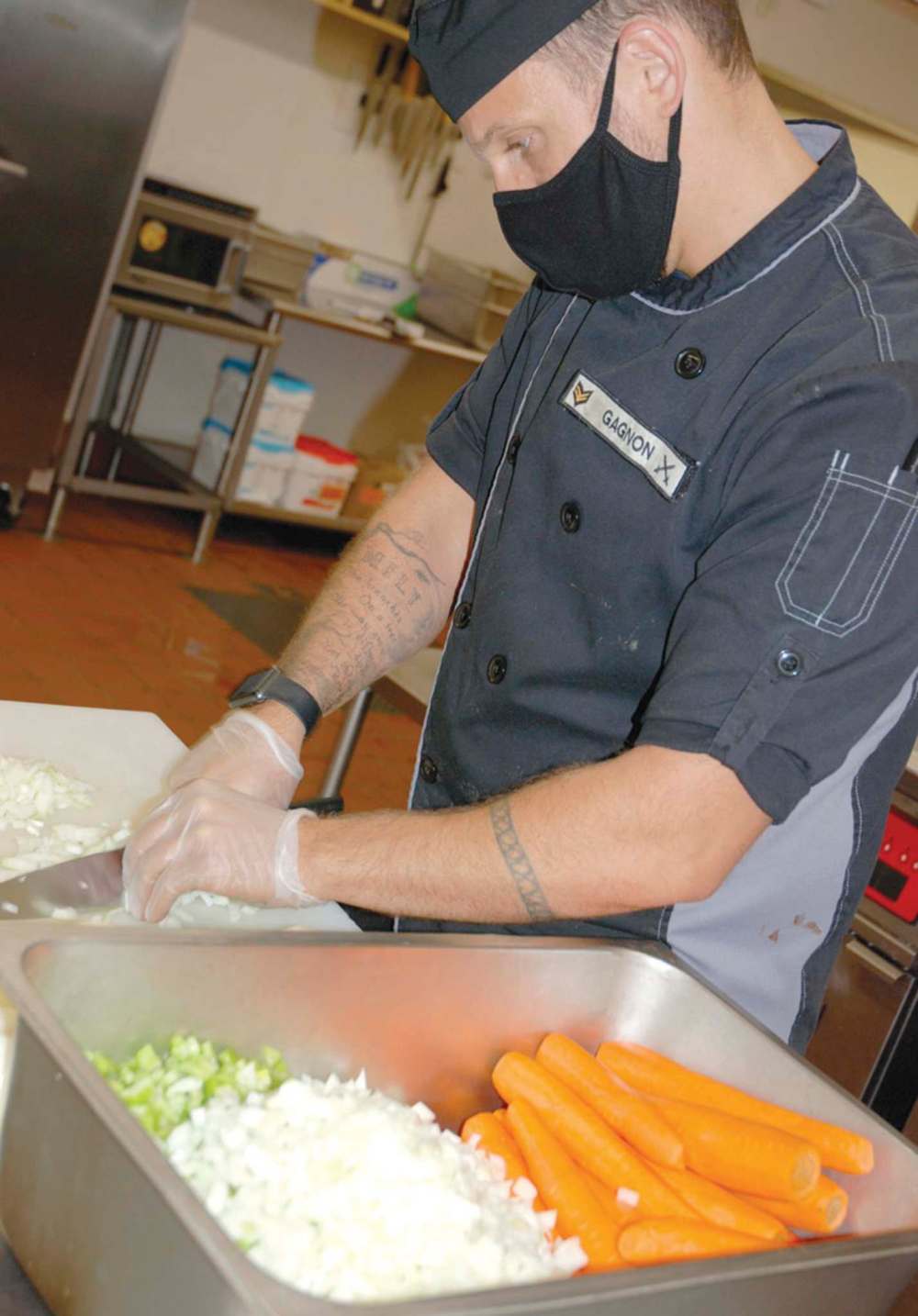
Their efforts recently earned them the prestigious Base Commander’s Team Commendation, and the steps they took have been highlighted in an updated Canadian Forces food services manual that is used nationally.
It all started on March 13, when the base commander met with branch heads to develop a continuity plan in reaction to the new COVID-19 pandemic.
“Our mandate at that point in time was we were to keep the dining room open, but for our living-in personnel only,” CFB Shilo deputy base food services officer MWO Sean Osztian said. “We have people who pay for a room on base and they also pay to have a meal provided for them, so they have no other place to go.”
Smith said that restaurants on base closed down around this time, drastically limiting the dining options of members, many of whom felt isolated on base and without the capacity to keep food fresh in their dormitory-style accommodations.
“We are the ones responsible to feed them, and if they take that food out of the kitchen, we have no control over how they’re keeping it — we don’t have control over their safety,” she said.
Ultimately, they didn’t have much of a choice: Flatlands Dining Hall had to stay open.
Three days after their initial meeting, staff were operating the mess hall under a leaner, more sanitized version of how they’d previously done things.
The personnel of 40, including approximately 15 civilian staff, were quick to adopt various measures, including several things they suggested to leadership.
Washing and sanitizing of high-contact areas was increased, diners were physically distanced, there was a time limit on meals to prevent a congestion of people coming in, and communal-style items like condiment and milk stations were replaced by single-use versions.
At the toaster station, as an example, staff began handing out two slices of bread in ziplock bags instead of allowing them to pick slices themselves.
“Within the Canadian Forces, we have a very strict food defence program that we use, so I think with all our years of experience in food services and using Food Safe as our guideline it was actually really easy to implement,” Osztian said, adding that they just upped these efforts “to a higher degree.”
Alongside masks, gloves and various other measures, he said staff ended up feeling safer at work than they did going into town.
Similar safety measures have been employed throughout the base, which has yet to record a COVID-19 case — an important feat given the communal living situation they operate under.
This, Osztian said, is why staff deserved the Base Commander’s Team Commendation.
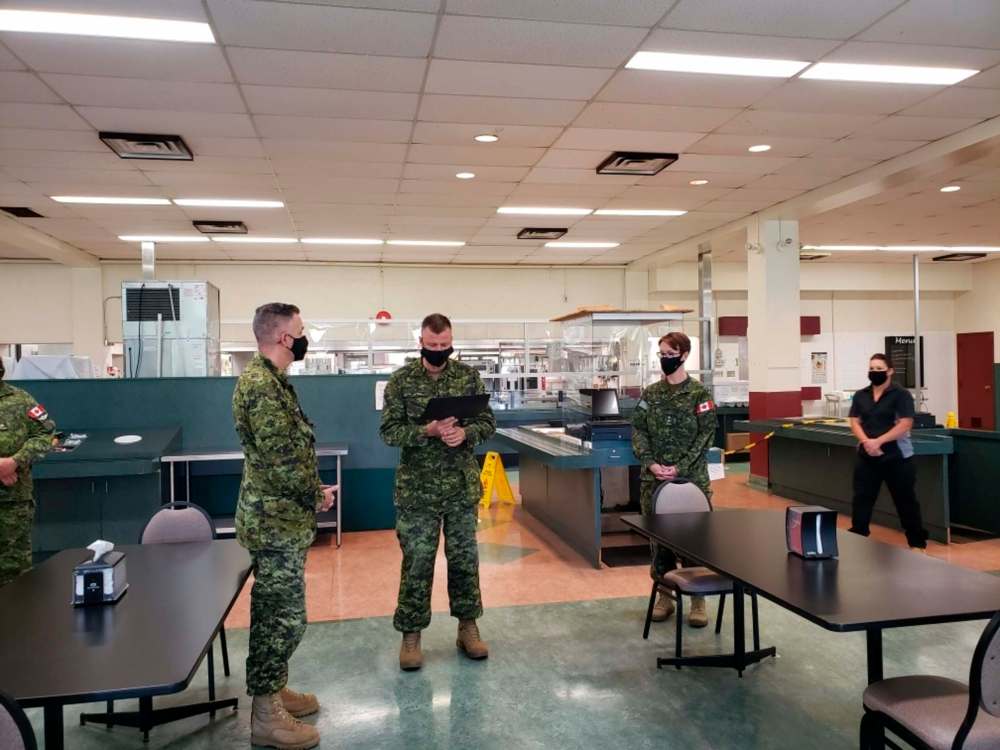
“It recognizes the hard work our staff has done,” he said. “When this all started, the rest of the base was sent home … until they were told to come back, and for us that was never an option.”
“The biggest key here is that, yes, we came up with some ideas, but had we not had our staff and there perseverance through such a stressful time for them — had they not continued to show up for work and put in their effort the whole system could have failed,” Smith added.
The food service manual update that followed came in recognition that a pandemic could very well happen again and that they’d best be prepared.
A chapter was added to highlight pandemic safety measures, which Osztian weighed in on using examples from Shilo, including their efforts to separate staff in unique shift schedules and their creation of a COVID meal policy on washing hands, using gloves, masks and other safety measures.
Although these are a couple significant feathers in their collective cap, he said they’re not resting on their laurels.
Staff still meet once per week to talk about health and safety.
“Yes, we understand that this has been on going for six, seven months, but we can’t get complacent,” Osztian said.
“Right now, the plan is to move forward and continue with the precautionary measures that we’ve put in place.”
That is, until they’re told otherwise by those in command.
» tclarke@brandonsun.com
» Twitter: @TylerClarkeMB