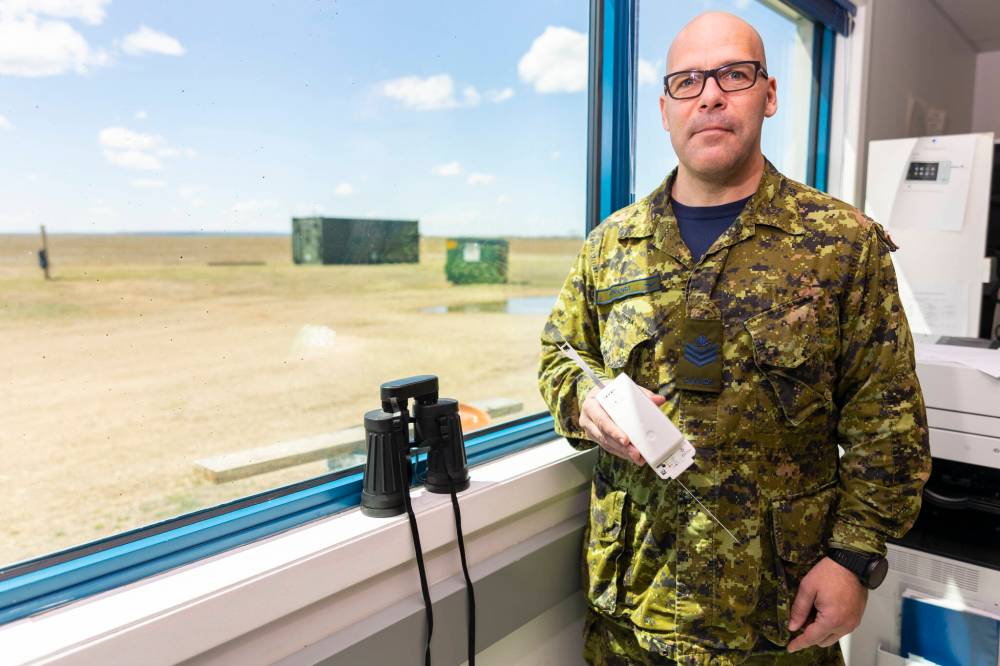
Shilo met techs have eyes on the skies
Advertisement
Read this article for free:
or
Already have an account? Log in here »
We need your support!
Local journalism needs your support!
As we navigate through unprecedented times, our journalists are working harder than ever to bring you the latest local updates to keep you safe and informed.
Now, more than ever, we need your support.
Starting at $15.99 plus taxes every four weeks you can access your Brandon Sun online and full access to all content as it appears on our website.
Subscribe Nowor call circulation directly at (204) 727-0527.
Your pledge helps to ensure we provide the news that matters most to your community!
To continue reading, please subscribe:
Add Brandon Sun access to your Free Press subscription for only an additional
$1 for the first 4 weeks*
*Your next subscription payment will increase by $1.00 and you will be charged $20.00 plus GST for four weeks. After four weeks, your payment will increase to $24.00 plus GST every four weeks.
Read unlimited articles for free today:
or
Already have an account? Log in here »
Hey there, time traveller!
This article was published 26/05/2022 (1409 days ago), so information in it may no longer be current.
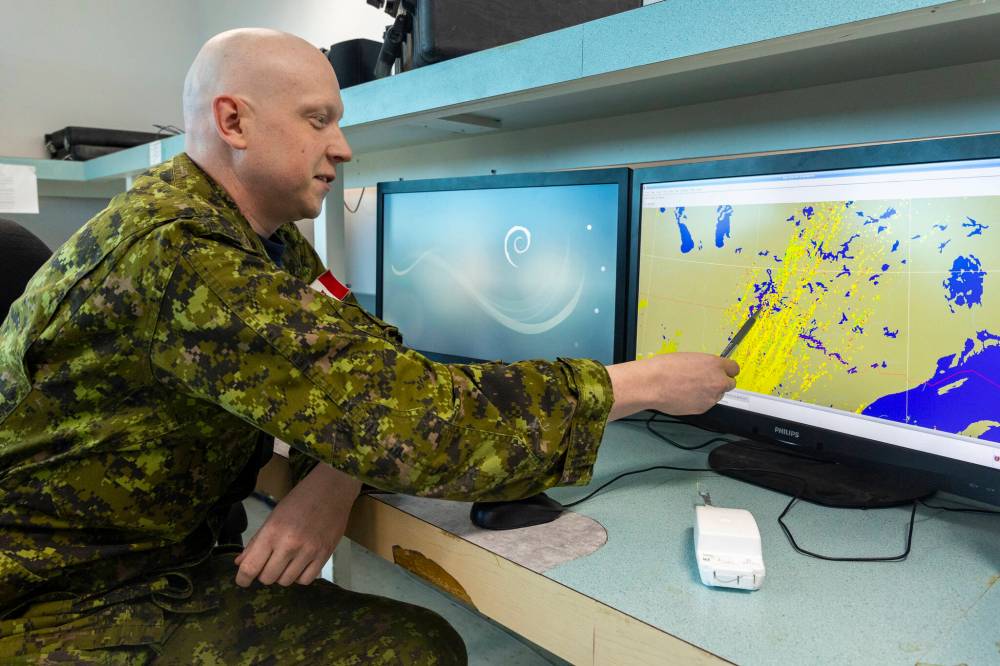
CFB SHILO — Carefully studying the skies to understand and predict weather events, a group of five meteorological technicians are a silent guiding hand for the 1st Regiment Royal Canadian Horse Artillery at CFB Shilo.
Sgt. Gilles Szikora, Cpl. Mitchell Read and Master Cpl. Ryan Halmich have diligently trained to become military meteorological technicians. There are about 240 technicians in the Canadian Armed Forces (CAF) posted across the country in all three elements of the military — navy, air force and artillery.
Szikora has always loved anything related to the weather, he said, and as a teenager, he was glued to the Weather Network.

“Every hour, I would check the Weather Network and see what was going [on], what the changes going on in the atmosphere were. I was just absolutely obsessed,” Szikora said. “I just think weather is fascinating.”
He initially looked to join the military as an air force member, but soon learned about the meteorological technician position, colloquially known as “met techs,” after looking at a wall of pamphlets.
He was excited to discover there was a job available for his two passions — military and weather.
In the artillery unit, met techs are soldiers first, Halmich said. All technicians have soldier qualifications and weapons training to ensure they are ready for deployment.
“If we’re out in the field and we don’t know how to defend the position that we are at, then we are just a bunch of sitting ducks with a bunch of other guys that have to take care of us,” Halmich said.
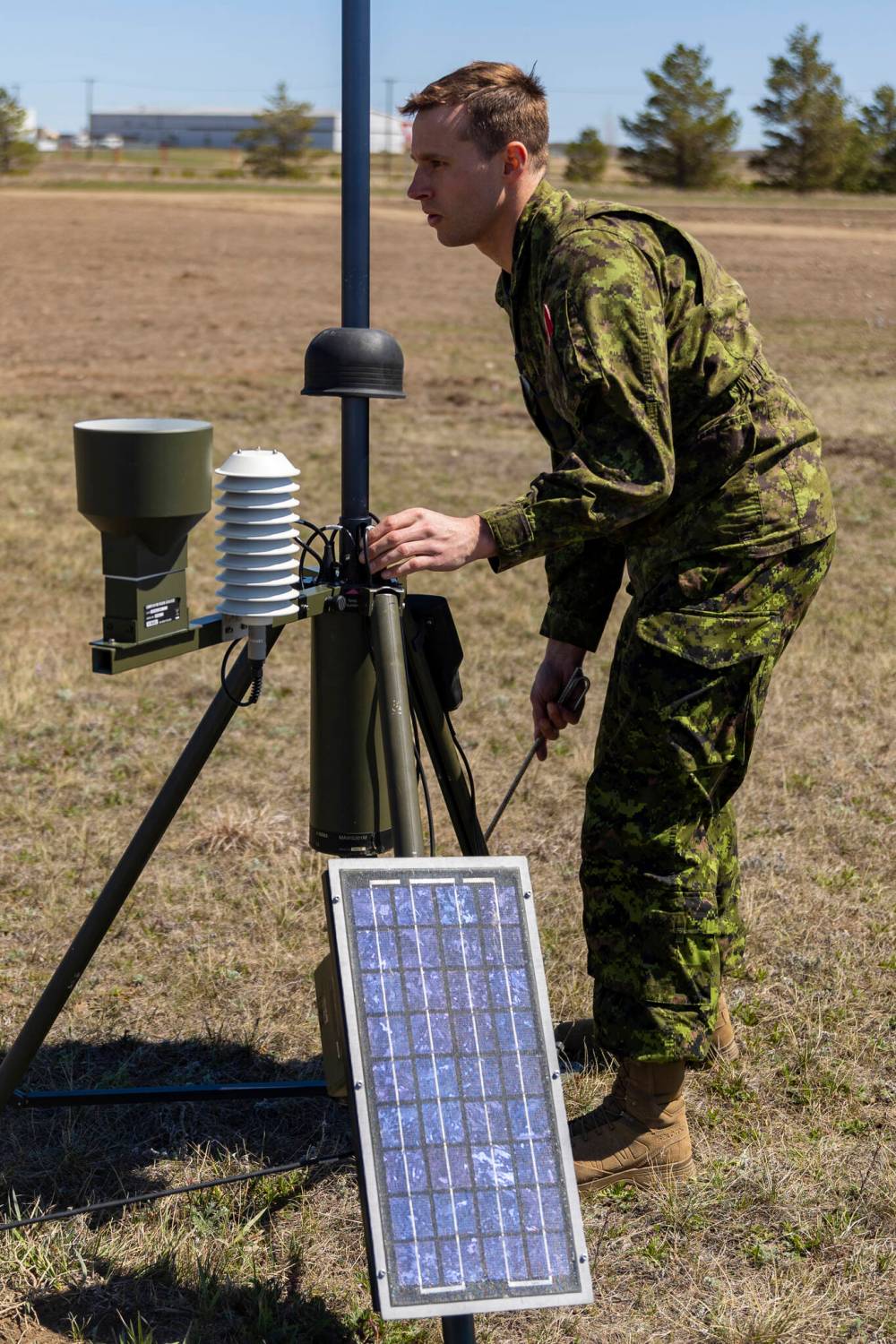
After basic training, met techs complete a six-month course in Winnipeg at the CAF School of Meteorology. During the course, they learn basic weather theory, and how to brief and observe the data they receive.
Once their training in Winnipeg is completed, they are sent to Gagetown, N.B., for on-the-job training in ballistic meteorology, including how to use weather balloons to gather data.
Halmich completed his course last year and described it as the most challenging thing he has ever done academically.
Met techs engage in purple training, meaning they can be stationed in the army, navy or air force.
“These guys are basically going to be meteorologists except … without the degree. They’re going to be able to do almost everything that a meteorologist can do,” Szikora said.

Once these training landmarks are completed, the met techs are stationed on bases across Canada. Halmich said as a trade, technicians will typically be posted at a base for three to five years.
The roles taken on by meteorological technicians are diverse and centred on the base they are stationed at, Szikora said.
At CFB Shilo, the focus is placed on ballistic meteorology.
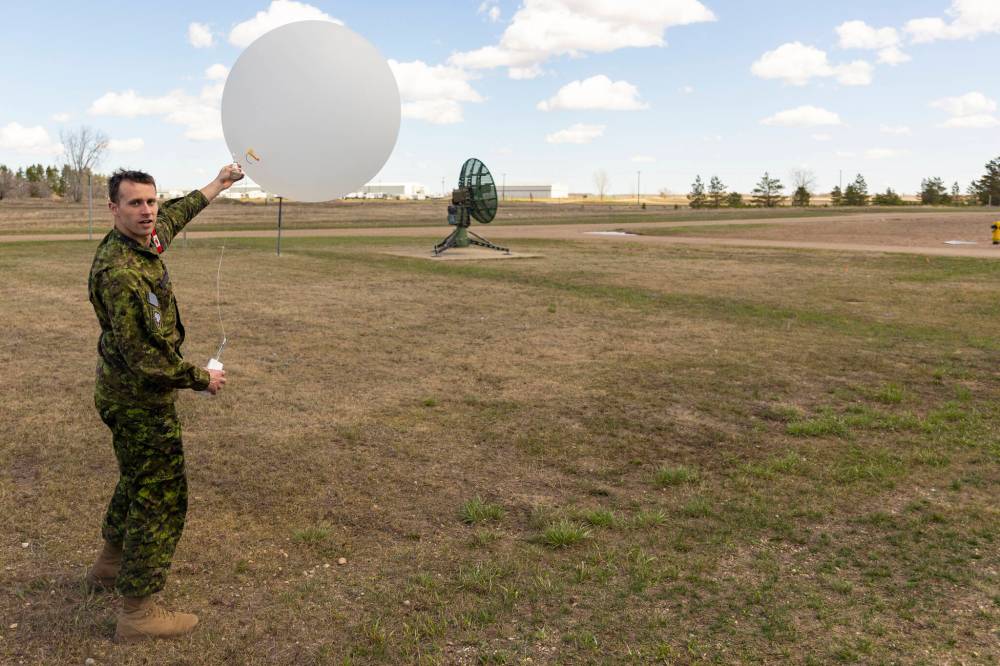
Ballistic meteorology is used by the gun line in 1RCHA. Met techs will launch weather balloons with a small radiosonde attached. As the radiosonde travels across the atmosphere, it will collect data and send it back to the met tech’s computers every two seconds.
The radiosonde measures temperature, wind speed and direction, humidity, altitude barometric pressure, and its directional position sends the data back to the met techs. The information is analyzed on the computer and shared with commanding officers for use in military operations.
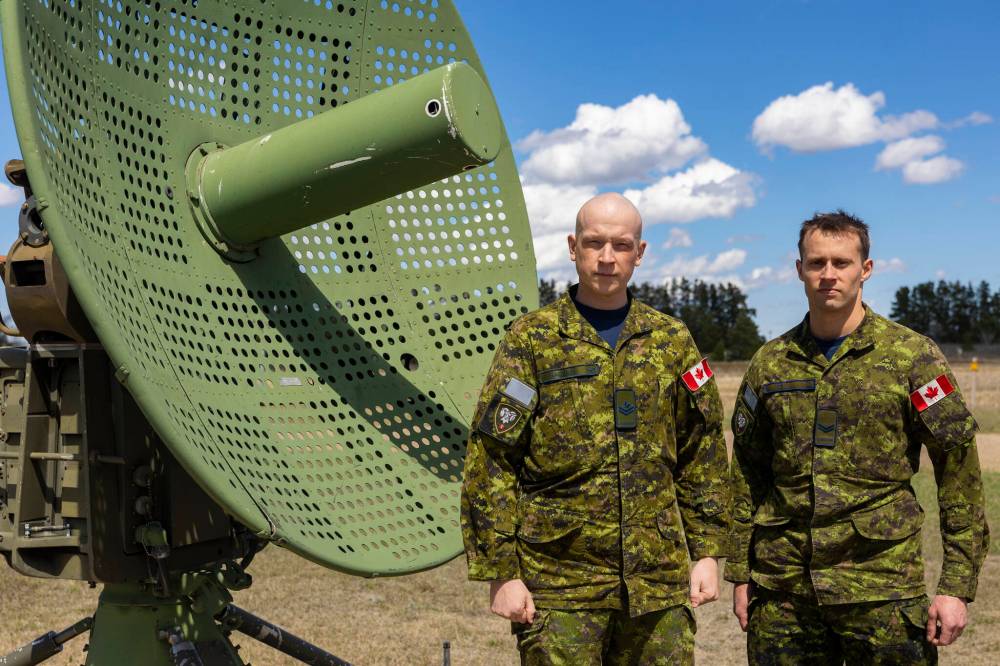
“What those do is basically, they just show the gun line when they put that into their computer at the CP or at the actual gun itself, it will give basically an elevation and angle that they have to put the gun at in order to be able to reach their targets dead-on, hopefully,” Halmich said. “We’re like the Amazon Prime. We try and deliver the package right onto target [using our data].”
Other met techs will do weather observations on the hour if at an air force base to share with the world and for forecasters to use along with doing briefings for pilots.
Briefs are centred on planning and operational purposes, Read said. For example, if an exercise is planned for troops in Shilo, the met tech team will provide insights into what weather to expect and how it could impact an operation.
Met techs have been critical in the history of the military, he added, citing the storming of the beaches during Normandy on D-Day in June 1944.
“It got delayed a day because of the weather, and the met tech … briefed the commander, and said, ‘this is a bad day for the weather, we should postpone an extra day,’” Read said. “That was a piece of history in our trade.”
The Shilo team does not undertake much forecasting, Szikora said, but is steeped in research each week. The data gathered allows them to create packages for the base’s commanding officer.
For example, when a Colorado low brought in a big snowstorm at the end of April, the met techs provided insights on the potential impacts to troop training. In the end, based on extreme weather conditions, the base was closed for a couple of days with only essential personnel on hand.
Szikora said that for the last couple of weeks, a focus has been placed on flooding due to excess moisture in the province. Understanding the potential of flooding is critical because troops need to know if they will be called upon by the province if an emergency happens.
Szikora said serving as a met tech has been an incredible position as it has opened the doors to unique and memorable opportunities. Read spent time at the northern tip of Nunavut and Szikora has been to Latvia and Afghanistan.
Read and Szikora will be deployed to Latvia in June for six months as part of Operation REASSURANCE, a deterrent mission with NATO. Halmich was recently posted to CFB Esquimalt on a Navy frigate in mid-May.
“The artillery wouldn’t be anywhere without us [in the] support trades,” Szikora said. “At the artillery, probably half the people that work at that building are not artillery; you have cooks, maintenance people, electricians, padres, medics, a lot of everything.”
» ckemp@brandonsun.com
» Twitter: @The_ChelseaKemp