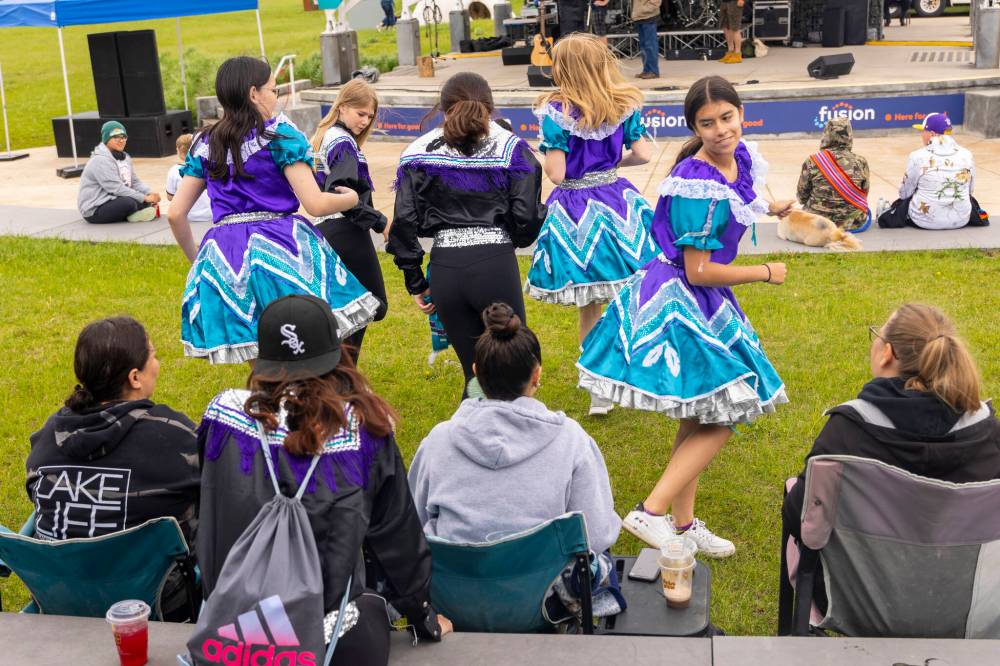
D-Town Steppers back dancing the Red River Jig
Advertisement
Read this article for free:
or
Already have an account? Log in here »
We need your support!
Local journalism needs your support!
As we navigate through unprecedented times, our journalists are working harder than ever to bring you the latest local updates to keep you safe and informed.
Now, more than ever, we need your support.
Starting at $15.99 plus taxes every four weeks you can access your Brandon Sun online and full access to all content as it appears on our website.
Subscribe Nowor call circulation directly at (204) 727-0527.
Your pledge helps to ensure we provide the news that matters most to your community!
To continue reading, please subscribe:
Add Brandon Sun access to your Free Press subscription for only an additional
$1 for the first 4 weeks*
- Enjoy unlimited reading on brandonsun.com
- Read the Brandon Sun E-Edition, our digital replica newspaper
*Your next Free Press subscription payment will increase by $1.00 and you will be charged $20.95 plus GST for four weeks. After four weeks, your payment will increase to $24.95 plus GST every four weeks.
Read unlimited articles for free today:
or
Already have an account? Log in here »
Hey there, time traveller!
This article was published 30/06/2022 (1419 days ago), so information in it may no longer be current.
Dancing on stage to the Red River Jig has been a welcomed return to normal life for Dauphin’s D-Town Steppers.
Coaches Kristy Chartrand and Amanda Chartrand co-founded the Métis dance crew with other parents from the Dauphin area in 2013. The team is centred on passing on the art of Métis jigging while fostering friendships between the dancers.
“We really wanted our kids to be dancing together and the little ones learning from the older ones,” Kristy said.
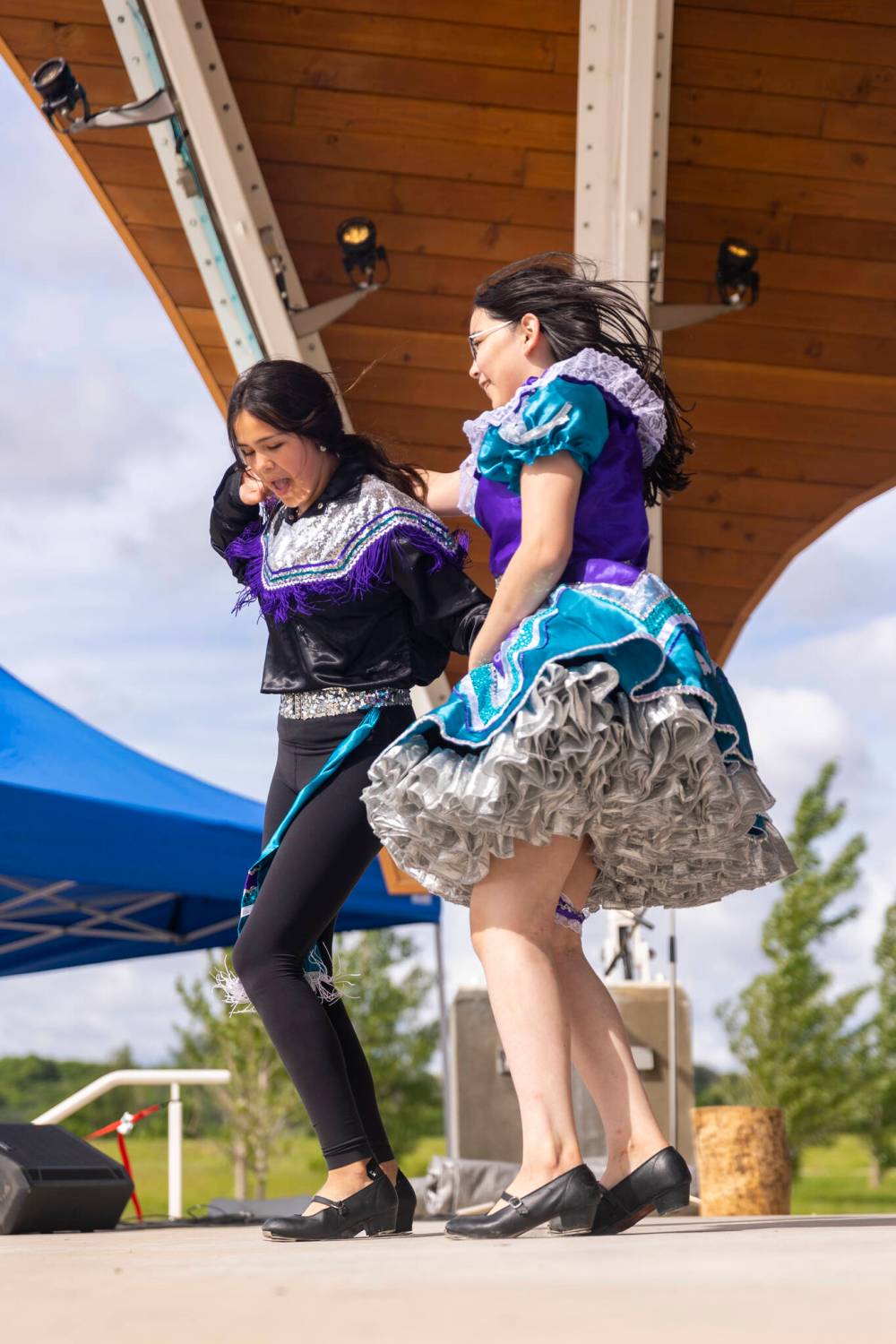
The group has grown over the years to include a junior group, intermediate group and little ones, known as Half-Steppers.
The team has evolved over the years, finding their footing on stage and building the confidence of the steppers. The young steppers have taken the reins and have honed their jigging skills.
“These girls are very adaptable. They’ll come up with things on the fly. They come up with a lot of their own routines,” Amanda said. “They can put their own unique spin on things.”
She said D-Town is unique because the club has constantly been almost all girls. To adapt, the girls will dance all parts of the jig.
Kristy described jigging as a song. The dance has a chorus and a verse that can be heard in the taps of the steppers’ feet.

“The chorus is all the same and then the verses are all different. It’s like a step and a change,” Kristy said. “The step, which is like the basic step, that is what the chorus is and then the change is the kids do all kinds of different fancy steps and they switch it up. It’s just like a song.”
Each jig requires the full attention of the steppers as their feet move at a fast fluid pace to keep time with the traditional Métis fiddle music.
The steppers love the art of jigging, Amanda said. The tiny dancers have been able to travel across North America and the Prairies showcasing their skills.
Performances keep the D-Town crew busy. Over the summer, they will be on the road almost every weekend. Jigging has been a great opportunity for the dancers because they get to share what they love with communities across the Prairies.
“They’re happy to be out in person and interacting with the people,” Amanda said.

Dancing with D-Town instills a sense of Métis pride in the dancers, Kristy added.
“It shows other kids that it’s OK to be Indigenous. It’s OK to be who you are and be proud of who you are,” Kristy said.
The outfits worn by the dancers are a modern design but reflect the history of the Red River Métis steppers.
The famous Red River jig originated at the conjunction of the Assiniboine and Red rivers, Kristy said. Steppers used their skills to attract fur traders into the Red River colonies — the sound of the fiddles and the dancers’ steps would flow over the water, drawing traders in.
“It would be like a party,” Kristy said. “Dancers would switch off constantly coming in, when somebody got exhausted somebody was right there to take their place.”
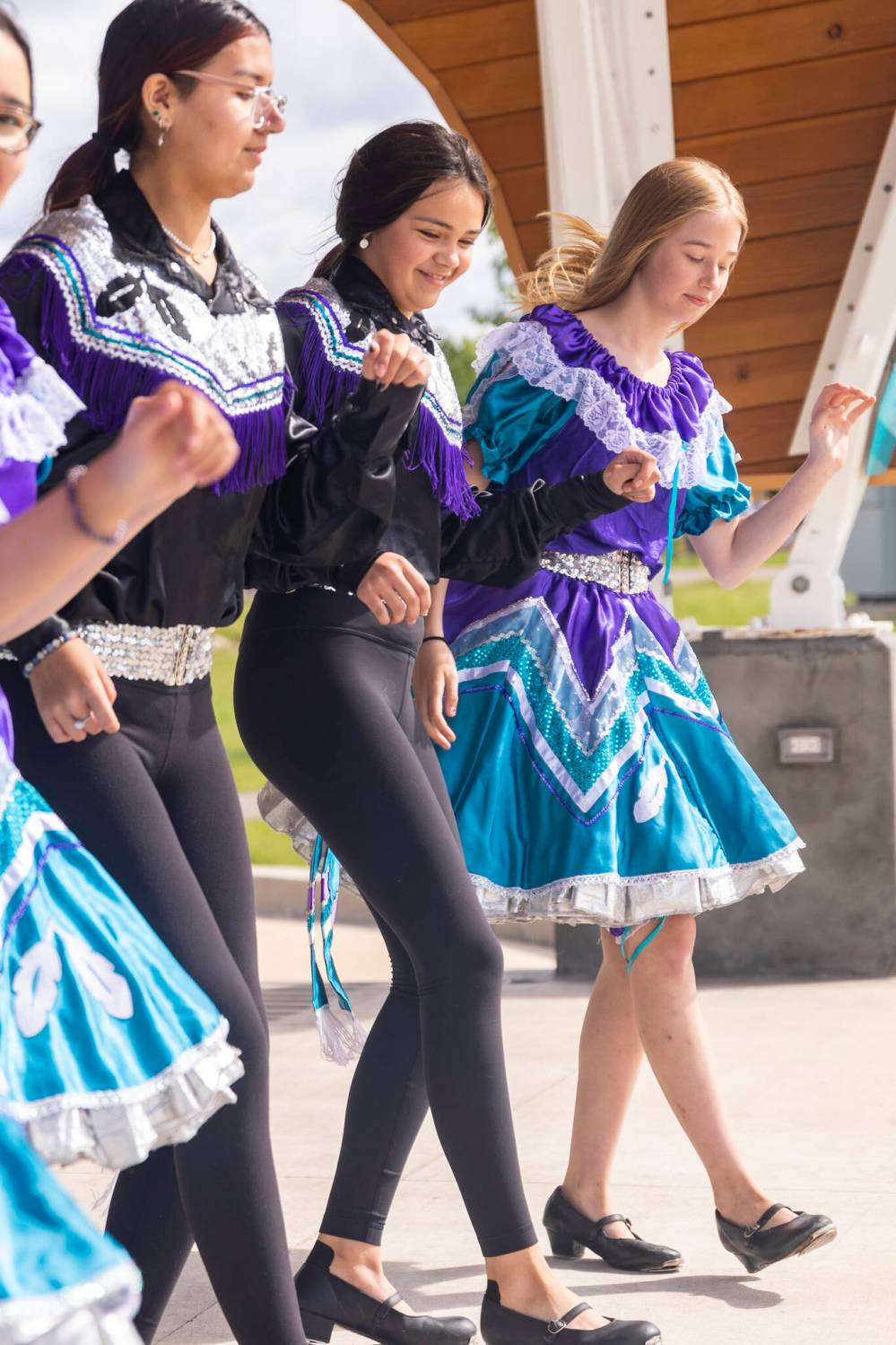
Through the years the jig has changed to incorporate aspects of square dancing, including the crinoline, a petticoat designed to hold out a skirt. The theme through the ages has been the outfits becoming increasingly fancy, Amanda said.
The outfits are typically made by parents, although D-Town has fancy teal and purple outfits created by an artist out of Winnipeg for special performances.
The fancy outfits include a feather design representing the D-Town Steppers’ Indigenous pride. Kristy added not all team members are Métis; some are First Nations and the feathers help capture this unity.
“That’s what square dancing is and the Red River jig is — it’s a blending of two cultures,” Kristy said.
One of the most important aspects of D-Town performances is ensuring it is an interactive experience for audiences and sharing Métis culture, Amanda said. Dancers will teach guests some of the easier jig steps. If they have more time, they will also host workshops to share more challenging choreography.

“The kids do all the teaching themselves, so it’s a good opportunity for them to take the pride in what they do and pass it on to other people,” Amanda said.
Mckenlie Berlind, 11, described the D-Town crew as a big family united in being proud Métis jig steppers. The group of steppers have become a tight group of friends after dancing together — in some cases for more than a decade.
Every Sunday they can be found dancing in Dauphin at Parkland Crossing. The sounds of their tap shoes fill the facility during practices, although they also play fun games like musical chairs or freeze dancing, Berlind said.
“It’s a little chaotic but it’s a lot of fun,” said Kylynn Forsyth, 15. “We all take off each other’s energy.”
Hannah Chartrand, 13, has been dancing since she was three, growing up immersed in Métis culture. She has also learned to fiddle. When she and her best friend Hailey Forsyth, 12, have sleepovers, they will often jam with their fiddles for fun.
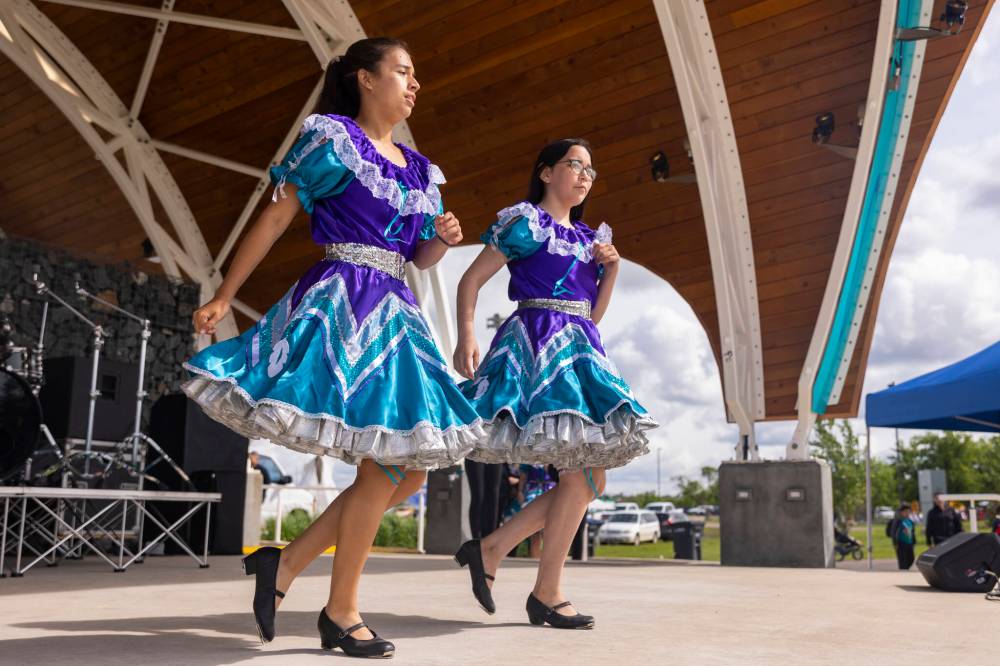
The other members of the crew also learned to dance young, Kylynn Forsyth said. Most of the D-Town dancers have been jigging longer than they remember to the point the dance is just a part of who they are.
The fun they have together keeps them motivated to keep dancing, Hannah Chartrand said, along with their shared love of the jig.
Their opportunities to dance and share the jig with others have been limited during the COVID-19 pandemic, Kylynn Forsyth said. The majority of competitions they would normally visit were cancelled or postponed.
They were thrilled to be back on stage and this excitement exploded at their first post-lockdown competition at Norway House. The speed and grace of their jigging feet landed the crew a first-place title and $16,000 in prize money. The funds were placed in a dance bank account to fund future travels.
It is exciting being able to showcase their culture across the country, especially because they know dancing the jig was not always possible for their ancestors, Berlind said.

“It’s important for us to keep dancing because before it wasn’t really allowed,” Hailey Forsyth said.
The D-Town Steppers can feel a little nervous in the lead-up to a performance because they do not want to mess up a dance, she said, but as soon as their toes hit the stage, that feeling evaporates.
“You’re body just kind of knows,” Berlind said.
» ckemp@brandonsun.com
» Twitter: @The_ChelseaKemp