Beekeeping bug spans generations
Advertisement
Read this article for free:
or
Already have an account? Log in here »
We need your support!
Local journalism needs your support!
As we navigate through unprecedented times, our journalists are working harder than ever to bring you the latest local updates to keep you safe and informed.
Now, more than ever, we need your support.
Starting at $15.99 plus taxes every four weeks you can access your Brandon Sun online and full access to all content as it appears on our website.
Subscribe Nowor call circulation directly at (204) 727-0527.
Your pledge helps to ensure we provide the news that matters most to your community!
To continue reading, please subscribe:
Add Brandon Sun access to your Free Press subscription for only an additional
$1 for the first 4 weeks*
*Your next subscription payment will increase by $1.00 and you will be charged $20.00 plus GST for four weeks. After four weeks, your payment will increase to $24.00 plus GST every four weeks.
Read unlimited articles for free today:
or
Already have an account? Log in here »
Hey there, time traveller!
This article was published 14/07/2022 (1388 days ago), so information in it may no longer be current.
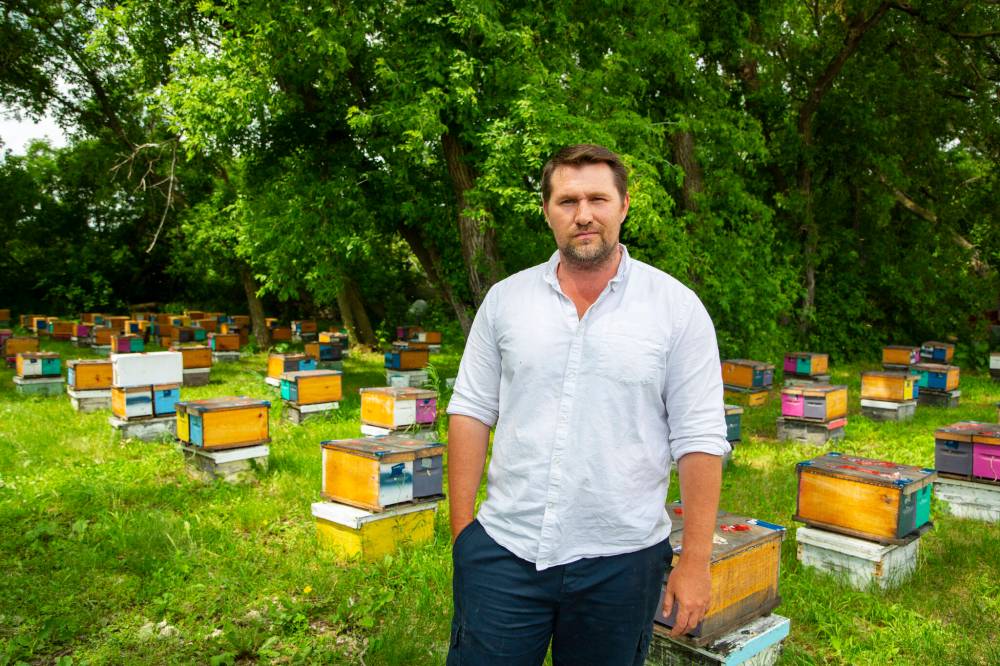
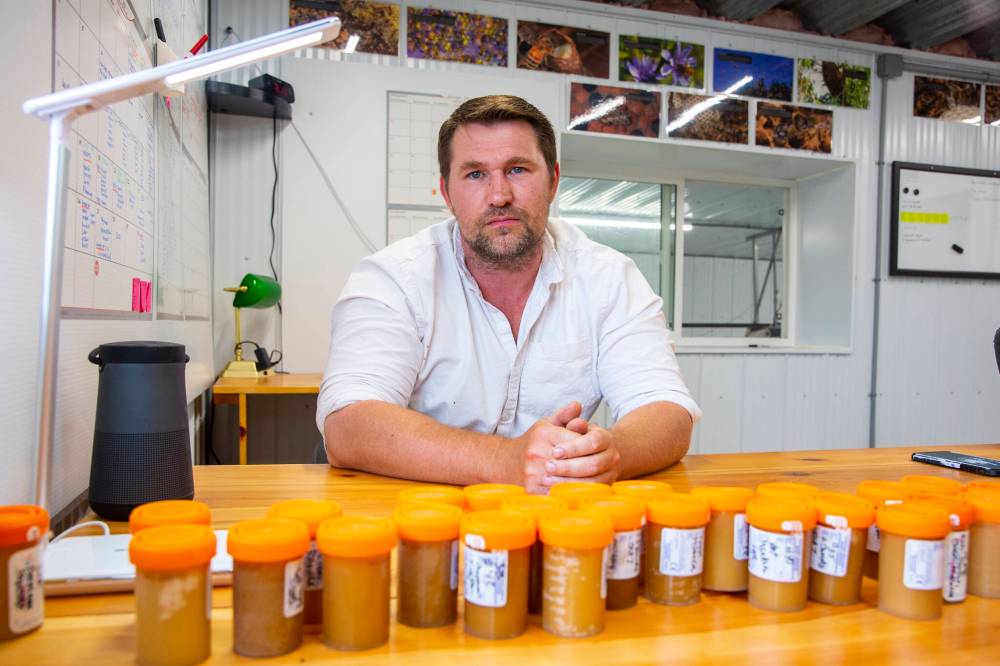
TREESBANK — From the end of April to early July, the crew at Clark Apiaries are typically busy as bees working from sunrise to sunset.
The long hours have been a way of life at the family bee farm since it was first founded in the early 1910s, said beekeeper Mike Clark. However, like many beekeepers in the province, 2022 is proving to be a challenging season.
The Canadian Association of Professional Apiculturists reported in June Manitoba had an estimated loss of 65,687 colonies over the winter, accounting for about a 60 per cent loss of bees. Canada-wide, colony deaths account for about 45 per cent of hives.
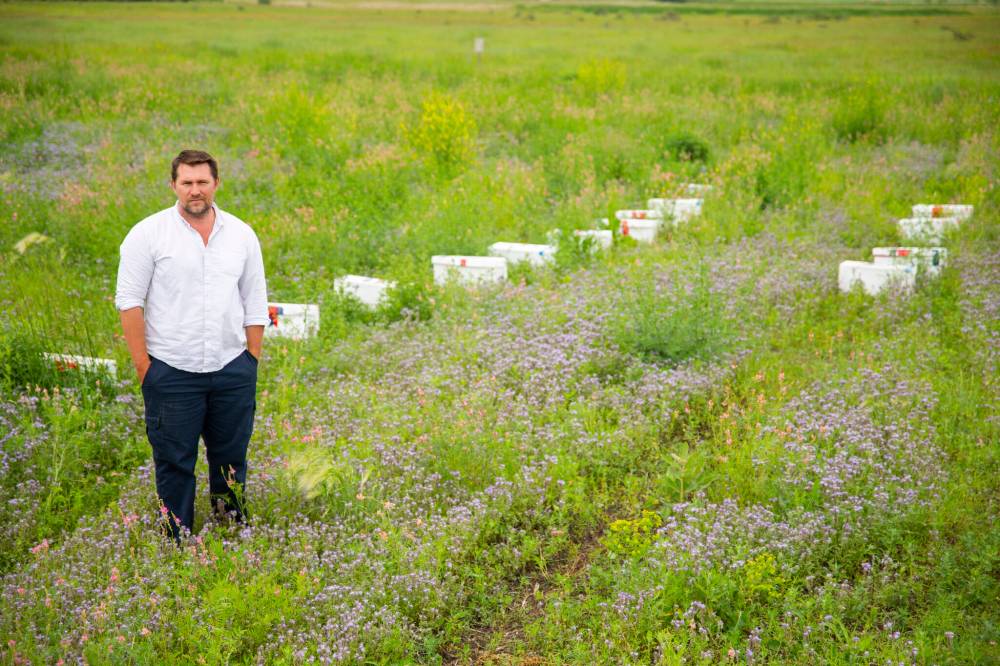
Manitoba is one of the worst-hit provinces in the country.
Clark Apiaries currently has 230 active hives — they went into the winter with 1,160 hives. Clark is uncertain about the future of the apiary given the bleak honey harvest they face in 2022.
The situation is not completely hopeless, he said, but the feeling is in the air.
Several factors have led to colony collapses; a late fall frost in October left bees under-prepared for the winter, the dry spring in 2021 impacted bees’ health because there were overworked colonies and the varroa destructor parasite is killing bees.
“It is the worst bee year for bees. It is the worst loss in Canadian history for bees,” Clark said.
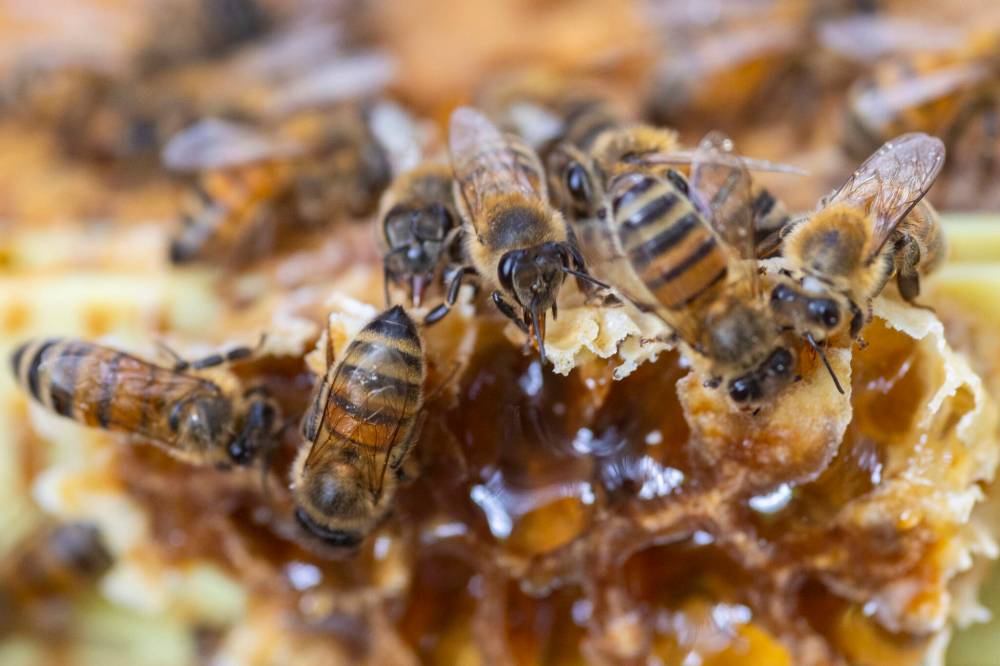
He expects production to continue facing adversity in the coming years. In the past, Clark Apiaries ran 3,500 hives. They now run around 1,600 in a good year.
They are trying to slowly build up their colonies, Clark said, but the viability of honey as a commercial industry is challenging to sustain in Canada.
“You want to be commercial to export honey to the world because Canadian honey is a premium product.”
Despite the challenges, he cannot imagine doing anything else because beekeeping is a valued family legacy.
“It’s us versus nature. There are not many things where it’s you battling nature to survive, and this is one of the last frontiers,” Clark said. “It’s history and legacy and it needs to be done.”
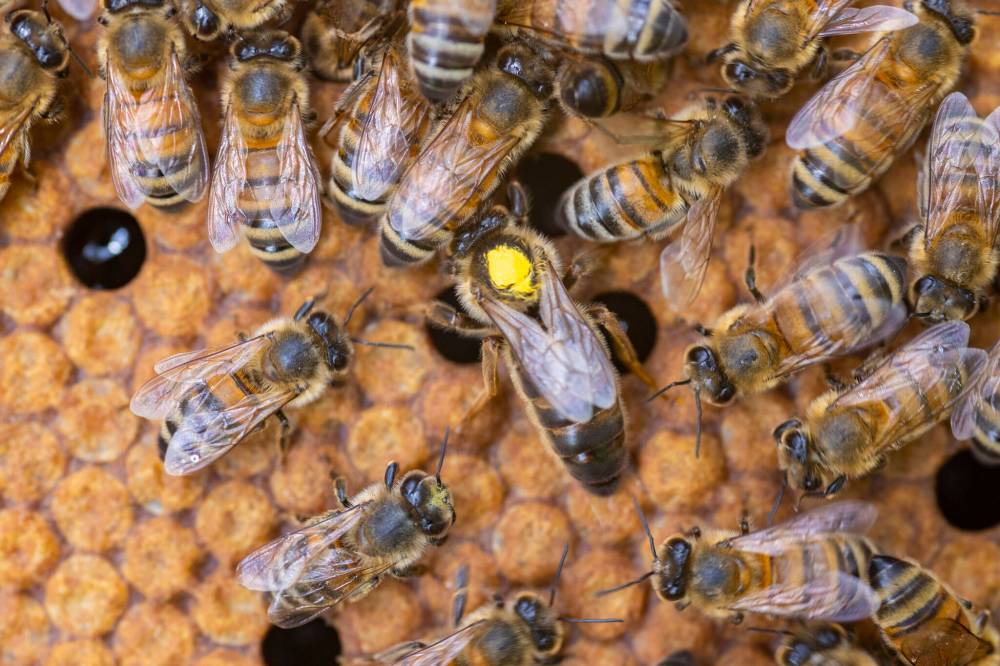
The apiary got its start at the junction of the Souris and Assiniboine rivers through his grandfather Carol Clark’s younger sister Ruth. Family folklore tells the tale of how Ruth volunteered to watch over a neighbour’s beehives during the First World War. His grandfather claimed that in the end he was roped into caring for the bees as the older brother. The experience led to a passion for pollinators and the founding of Clark Apiaries. His sister also worked with bees her entire life as a hobbyist.
Beekeeping proved to be a bug caught by the Clark family for generations. Clark and his sister Dawn Clark are the third generation to mind the hives.
Clark has been a beekeeper “from birth,” like his father before him.
“I would walk in the honey house in my bare feet when I was seven,” Clark said with a grin. “That’s my earliest memories.”
When he is out with the bees, Clark does not wear a beekeeper’s suit. His philosophy is beekeeping should be treated as a lifestyle and not a job.
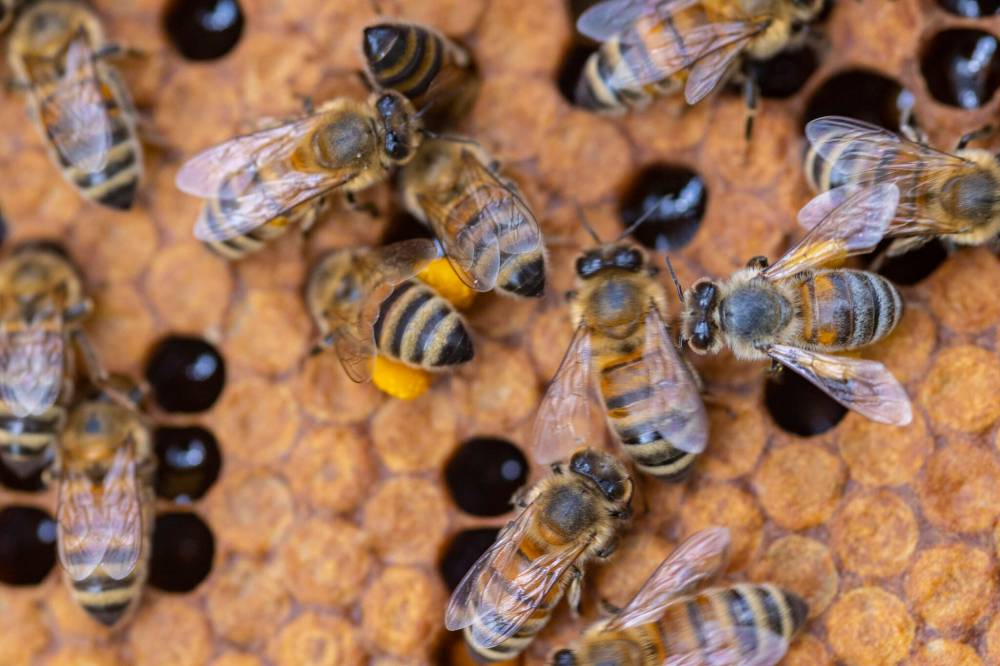
As part of this lifestyle, he works at a slower pace, upsetting the bees less. Aggressive hives are also culled from the apiary in an effort to keep the hives as tame as possible.
“I want to be able to take my shirt off, get a tan and wear shorts and hang out with my bees. There’s nothing better,” Clark said. “It’s like being at the beach, but I’m in the bee yard.”
There is no typical day at the apiary, Clark said, and that is his favourite part of the job.
“I think it’s probably one of the best jobs in the world, because there is no monotony. It is constantly evolving.”
The hives he works with are like their own little cities, so there is no one-size-fits-all approach to caring for them.
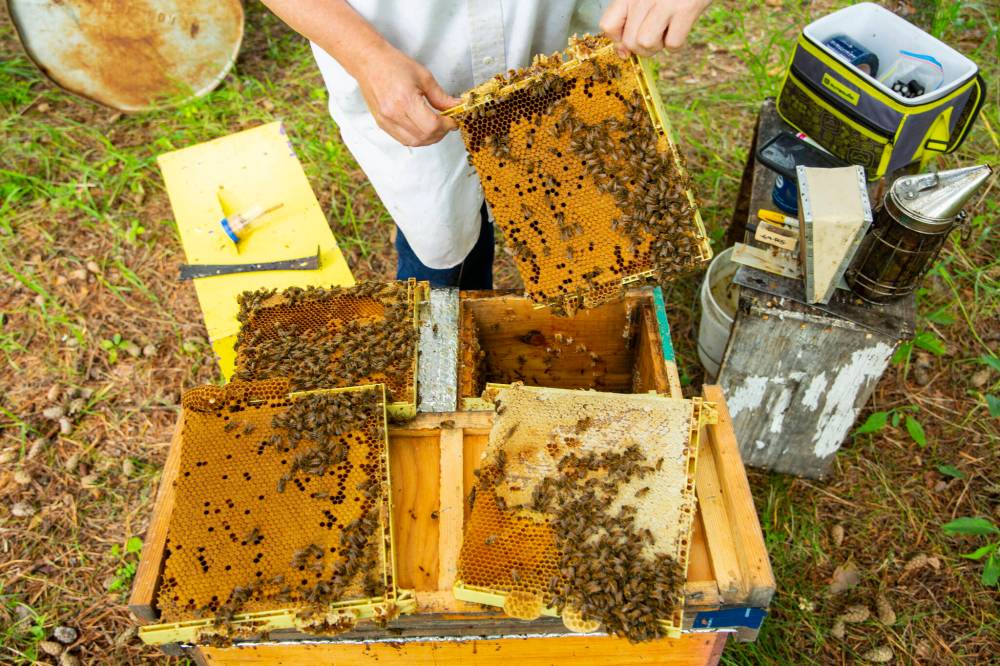
The apiary crew is always shifting gears every two to three weeks to adapt to the changing seasons, the needs of the bees and the apiary. They are constantly monitoring for disease, the age of queens and other factors.
“You have to have a lot of critical thought. You have to be able to look at something and see what they need and see what they’ll need in the future and then provide that for them,” Clark said. “A hive has a personality … you change your practice. There is nothing you can do that will work with every hive — if you want to be a healthy and successful apiary, you have to be able to adapt to work with the small number of bees that are not in the general flow.”
One of the most misunderstood aspects of beekeeping is how backbreaking the work is, Clark said. A honey box can weigh up to 120 pounds, making for intense manual labour.
“For the five minutes I spend in the hive, there are 20 minutes of picking up equipment and putting down equipment,” Clark said. “The actual setting up for the hive work is the majority of the job.”
Last year, Clark Apiaries produced more than 400 barrels, accounting for about a quarter-million pounds of honey.
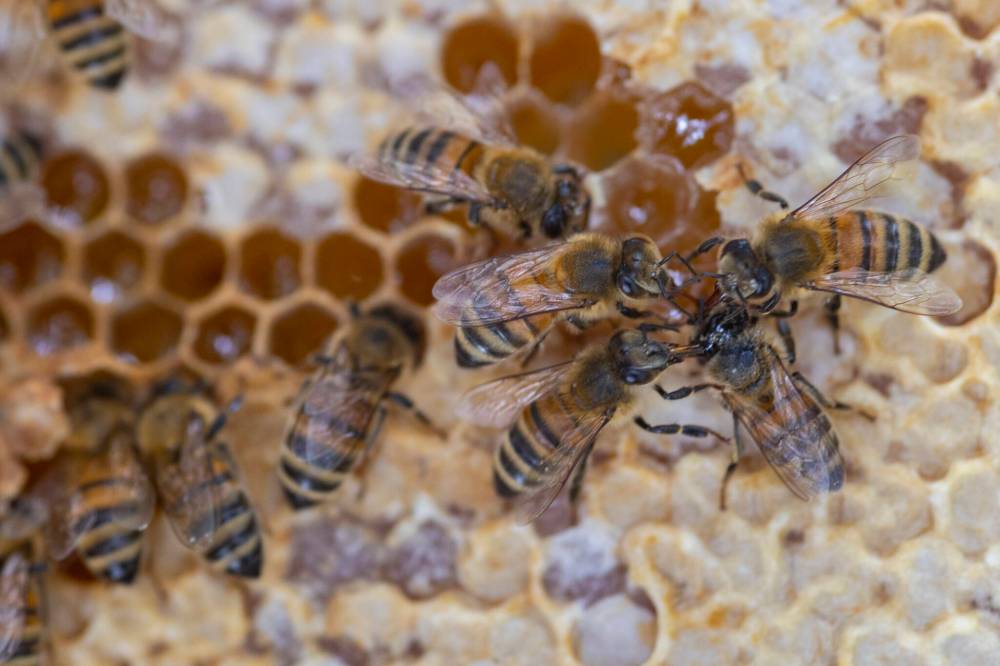
Barrels of honey are transported from the apiary to Winnipeg to Bee Maid Honey. Bee Maid, the largest packer in Canada, packages and sells honey across the country.
Manitoba produces more than 8,500 metric-tonnes of high-quality honey, according to the provincial government. Currently, Manitoba has approximately 900 beekeepers, of which 25 per cent are commercial beekeepers with 50 or more colonies.
Less than 20 per cent of the honey produced in Manitoba will stay in the province, with the majority being exported overseas including to the United States.
Beekeeping is valued at $30 million annually for honey, and an additional $120 million for added value to crops that benefit from honey bee pollination.
Clark Apiaries also has a breeding program in which they breed and produce queen bees for other beekeepers.
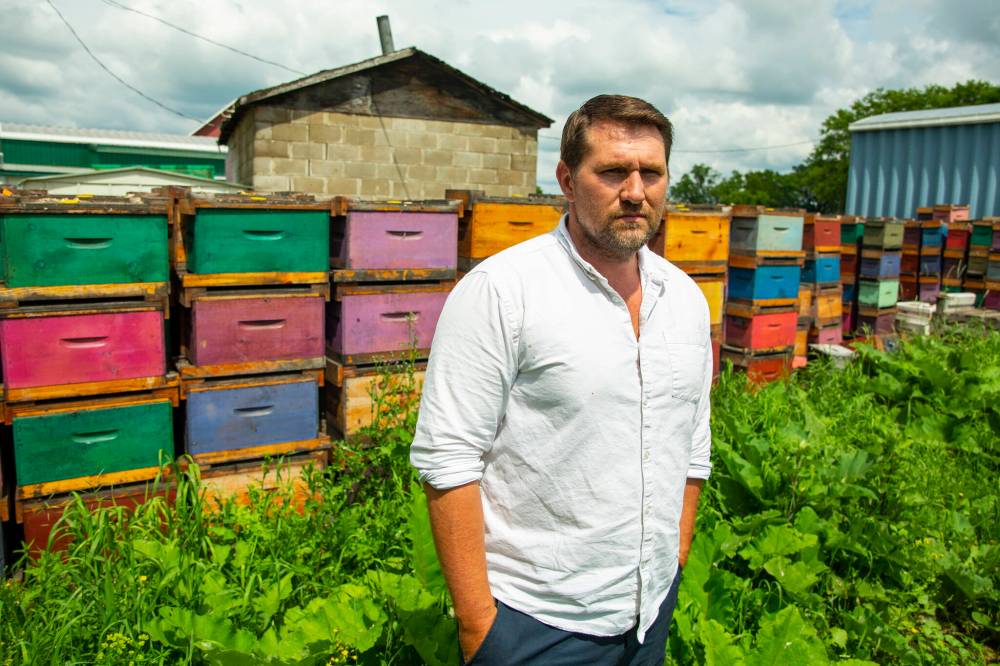
The bees are only reared by Clark and his sister for quality control. Queen rearing is difficult in Manitoba because it is not geared toward the Prairie climate — this means they can only produce a finite amount of queens with the season typically ending by July.
“Bees don’t survive in our climate without us,” Clark said. “Manitoba, Saskatchewan, we have a harsh environment. Bee-keeping in our provinces is not like any other province.”
The 2022 summer season is unique as they expect to be breeding into late July or early August and the honey flow is expected to be non-existent.
For the beekeeping industry to survive, apiaries can make incremental changes over time, he said, but government support also remains essential in terms of pollinator support and funding for colony recovery.
The worst-case scenario for Clark Apiaries would be being forced to sell the homestead land that has been in the family for five generations to stay in the business of bees. This is a difficult prospect to face, Clark said, because they could sacrifice everything and see the bees continue to die.
“It seems like there’s one hit after another.”
» ckemp@brandonsun.com
» Twitter: @The_ChelseaKemp