
Birds of a feather smell together
Advertisement
Read this article for free:
or
Already have an account? Log in here »
We need your support!
Local journalism needs your support!
As we navigate through unprecedented times, our journalists are working harder than ever to bring you the latest local updates to keep you safe and informed.
Now, more than ever, we need your support.
Starting at $15.99 plus taxes every four weeks you can access your Brandon Sun online and full access to all content as it appears on our website.
Subscribe Nowor call circulation directly at (204) 727-0527.
Your pledge helps to ensure we provide the news that matters most to your community!
To continue reading, please subscribe:
Add Brandon Sun access to your Free Press subscription for only an additional
$1 for the first 4 weeks*
- Enjoy unlimited reading on brandonsun.com
- Read the Brandon Sun E-Edition, our digital replica newspaper
*Your next Free Press subscription payment will increase by $1.00 and you will be charged $20.95 plus GST for four weeks. After four weeks, your payment will increase to $24.95 plus GST every four weeks.
Read unlimited articles for free today:
or
Already have an account? Log in here »
Hey there, time traveller!
This article was published 23/03/2023 (1308 days ago), so information in it may no longer be current.
A Brandon-raised bird researcher will virtually return to the Wheat City next month with a presentation on a surprising aspect of avian behaviour — their scent, and how they use it to gain insight into their fellow feathered friends.
Leanne Grieves, who is originally from the Brandon area, is a postdoctoral researcher at McMaster University in Hamilton, Ont., studying animal behaviour and communication.
Every year, the Society of Canadian Ornithologists — of which Grieves is a member — hosts an annual fundraising campaign to support its various projects and events. During a silent auction fundraiser, Grieves volunteered to give a talk on birds to a group chosen by the winning bidder, which turned out to be Westman Naturalists, a Brandon-based group that focuses on the natural history of southwestern Manitoba and often hosts talks in the community.
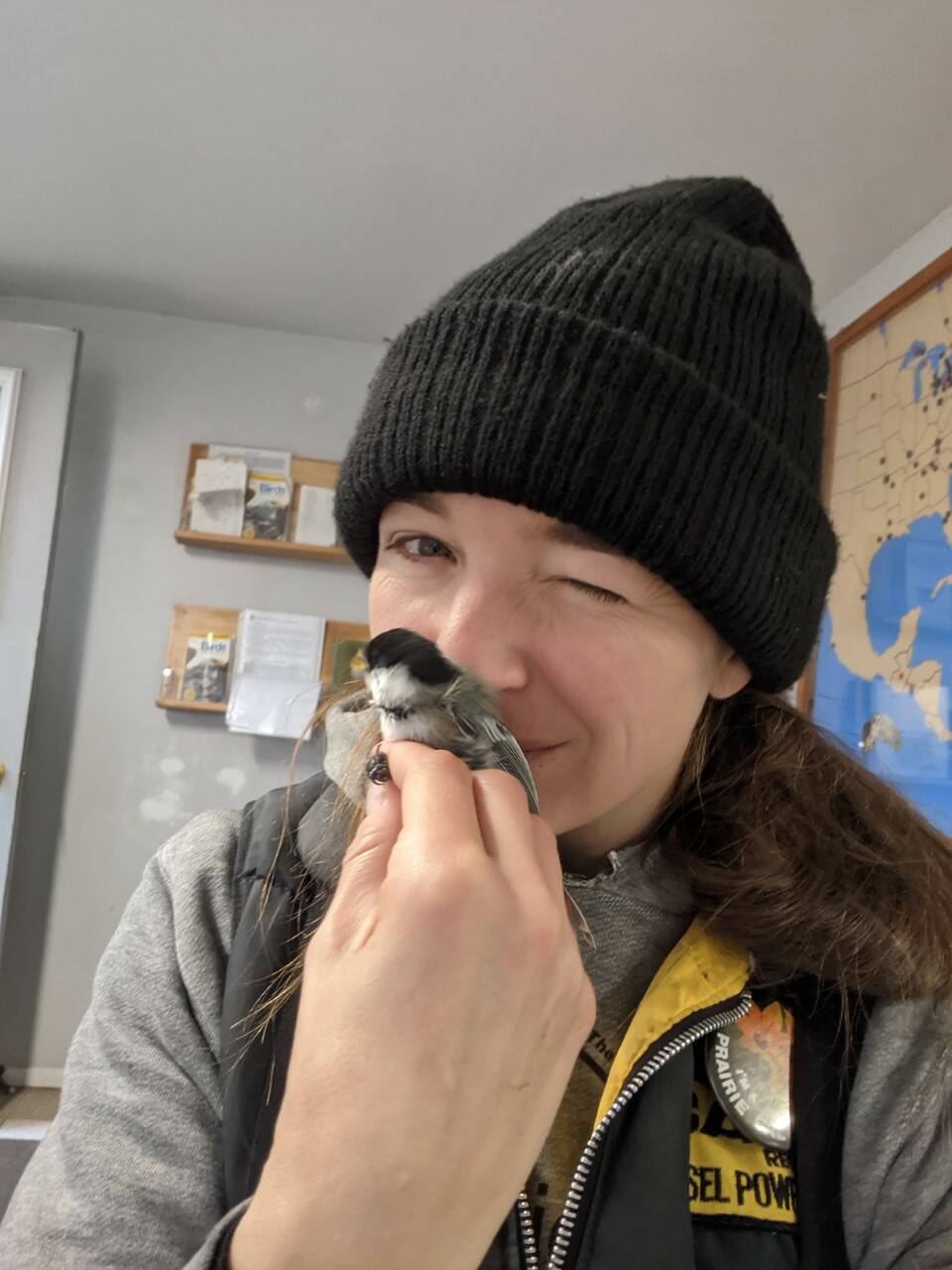
Grieves will present to the group virtually on April 14 at 7 p.m. at Brandon University’s Brodie building.
“I’ll be talking to the Westman Naturalists club about my research on how birds use their sense of smell to gain information about one another in social contexts and in breeding contexts,” Grieves said.
Passionate about this oft-overlooked form of bird communication, Grieves began to study how birds use smells to communicate because of how little is known about this pattern of behaviour.
Part of Grieves’ research has been to establish that so far, the scientific community has been wrong to assume that birds don’t use their sense of smell very often or in meaningful ways.
In reality, Greives has found this to be the opposite, although the strength of bird scent varies across species.
“There are some birds that are notably very stinky, and there’s other birds that we really don’t think of as having a smell.”
One of the bird species that Grieves’ research focuses on is song sparrows, which are commonly found throughout North America. The brown and grey birds are common in Manitoba, especially in wet, shrubby and open areas.
Unlike other birds that nest in trees, song sparrows primarily nest in weeds and grasses, and are even known to nest directly on the ground.
Their songs vary depending on their location and each individual bird.
“They’re quite abundant in most of Canada, and they don’t have a strong odour if you were to hold one and smell it. Nevertheless, I found that they do have different odours that the birds themselves can detect.”
Their odours are used by others of their kind to differentiate between sex and to signal whether they are healthy or sick.
“There’s some signal of that in their odour, and they can also learn some information about one another’s genotype, specifically with respect to their immune system.”
Based on some experiments she conducted, Grieves discovered song sparrows are guided by smell during the mating process, using it to understand how healthy their potential mates are and what their immunity to disease is like.
“They are actually able to smell something about the immune genotype of potential mates who might be genetically different from them, which might help their offspring be healthier.”
Grieves is looking forward to discovering whether other birds use scent in the same ways. Song sparrows are not uncommon birds, so she reasons that if they have this ability, other birds have the same potential. Song sparrows aren’t really known for their sense of smell, and nor do they have large areas in their brain that are devoted to their olfactory processing, she said.
“The fact that they use sense of smell suggests that, presumably, other birds can too, but we don’t know that for certain yet.”
Grieves’ own postdoctoral study will be part of the presentation to Westman Naturalists. She is currently researching the smooth-billed ani, a bird in the cuckoo family found in southern Florida, the Caribbean, parts of Central America, western Ecuador, Brazil, northern Argentina and southern Chile.
Smooth-billed anis have strong social network and breed co-operatively. These types of birds share a nest and lay all their eggs together, breeding in large groups. It’s now the focus of Grieves’ work to discover how those bird species might use their sense of smell to co-ordinate social behaviours.
“I love talking about my research, and so I’d be happy to share with as many people that want to come as possible,” Grieves said. “The goal is for it to be as accessible and to as broad an audience as possible.”
Grieves hopes anyone with even a sprinkling of interest in birds will show up to the event. To learn more, email westman.naturalists@gmail.com.
» mleybourne@brandonsun.com
» Twitter: @miraleybourne