
Prairie entomologist helps producers’ pest problems
Advertisement
Read this article for free:
or
Already have an account? Log in here »
We need your support!
Local journalism needs your support!
As we navigate through unprecedented times, our journalists are working harder than ever to bring you the latest local updates to keep you safe and informed.
Now, more than ever, we need your support.
Starting at $15.99 plus taxes every four weeks you can access your Brandon Sun online and full access to all content as it appears on our website.
Subscribe Nowor call circulation directly at (204) 727-0527.
Your pledge helps to ensure we provide the news that matters most to your community!
To continue reading, please subscribe:
Add Brandon Sun access to your Free Press subscription for only an additional
$1 for the first 4 weeks*
- Enjoy unlimited reading on brandonsun.com
- Read the Brandon Sun E-Edition, our digital replica newspaper
*Your next Free Press subscription payment will increase by $1.00 and you will be charged $20.95 plus GST for four weeks. After four weeks, your payment will increase to $24.95 plus GST every four weeks.
Read unlimited articles for free today:
or
Already have an account? Log in here »
Hey there, time traveller!
This article was published 29/06/2023 (1173 days ago), so information in it may no longer be current.
Climate change is creating new environments for opportunistic insect pests like grasshoppers, army worms and certain species of moths to thrive and cause more damage to crops across the Prairies.
Meghan Vankosky and her team of research scientists at the Saskatoon Research and Development Centre are using historic and current pest monitoring data to help farmers get ahead of their pest problems.
Vankosky, a field crop entomologist, is using historic and current pest monitoring data to model the impacts of climate change on insect pest species in the Prairies. The information her team gathers is then distributed to farmers in the form of high-quality insect distribution maps.
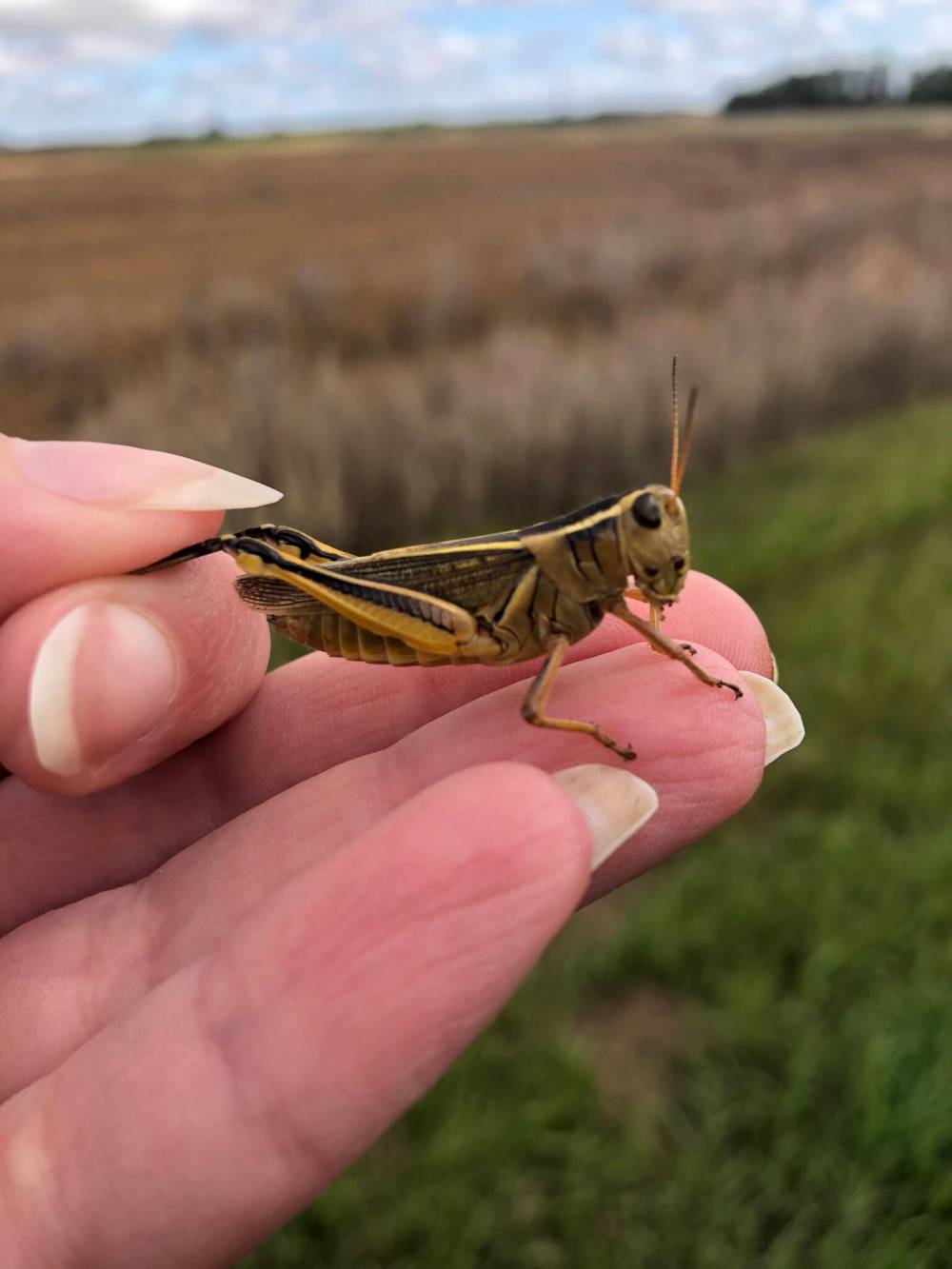
“As we continue to see changes in the climate, we can also see very important changes in the pests that we’re dealing with,” Vankosky said.
The data generated by the project can also validate new models and project areas that are at risk of pest damage between 50 and 100 years into the future.
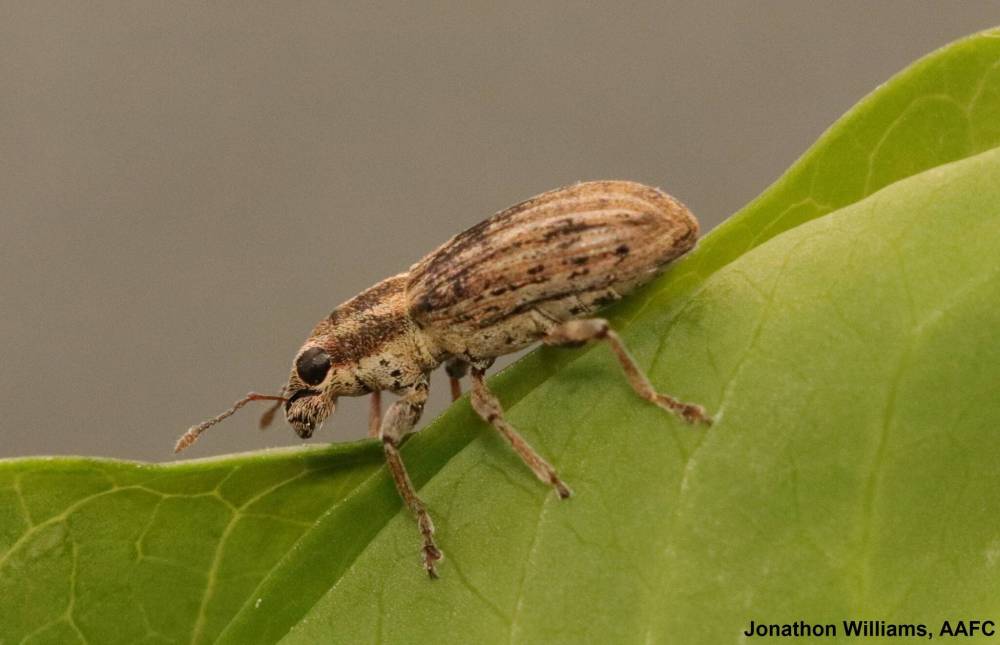
From grasshoppers, and bertha armyworms to diamondback moths and cabbage seedpod weevil, pest insects across the Prairies can cause devastating damage to field crops by feeding on leaves, flowers and seeds, and are also expensive enemies. Managing an infestation comes with significant costs, and damage also impacts a producer’s bottom line through reduced crop yields.
The flea beetle, a notorious canola pest, can cause crop losses in North America that are likely to exceed $300 million annually, Agriculture & Agri-Food Canada’s (AAFC) website says. Another offender, the wheat stem sawfly, can cause up to $450 million in economic losses in grain crops in the same region.
Field crops are highly dependent on weather and climate, and so are pest insects. Increased temperatures, longer growing seasons, shifting rainfall patterns and increased extreme weather — all hallmarks of climate change — create new environments for opportunistic pests in Western Canada, AAFC says. Longer, warmer summers and milder winters will result in greater overwinter survival of pests as well as a northward expansion of pests not currently found in Canada.
“Different insects that we work with respond differently to temperature and precipitation. They have different requirements for temperature and for soil moisture, and so we see some insects responding in a very positive way to dry conditions, like grasshoppers, while we see other insects that are responding negatively to drought conditions with their populations decreasing,” Vankosky said.
While farmers and agronomists can manage pest insects using a variety of controls, such as pesticides, weed management, irrigation practices or natural enemies, early detection of climate change impacts and risks to field crops is critical in making informed decisions. That’s why Vankosky, who is also the Chair of the Prairie Pest Monitoring Network (PPMN), is investigating both current and historical data to find out how climate change impacts Prairie pest populations.
Vankosky’s research draws from decades of work by the PPMN and builds on its legacy, she said.
The network, a group of field crop entomologists who conduct research and actively monitor insect pest populations to support crop protection programs on the Canadian Prairies, was established in 1997. Since then, it has developed a vast database of pest insect activities in the region with contributions from volunteers, including agronomists, researchers, industry commissions and provincial experts.
The network also uses models to predict when insect pests will be active and to help farmers time their own on-farm scouting during the growing season. New models for other pest insects that require more investigation are currently in development.
Vankosky and her team are conducting field and lab experiments to create detailed profiles of the cabbage seedpod weevil, the pea leaf weevil and other pests. Even though species like the grasshopper are more well-documented, lesser-known pests can also make a big impact on farmers’ bottom lines, she says.
“Our goal is to provide as much information as we can about the biology of the pest, how the insect responds to the different conditions, and to put all that together into an information package that farmers can use to manage the pests that they have,” Vankosky said.
The information Vankosky and her team collect includes examining pest behaviour, growth and population dynamics as well as how the pests interact with other insects and factors in their surroundings, such as temperature and rainfall. These clues are necessary to identify the cycles and patterns of pest species and to create models that predict their next moves.
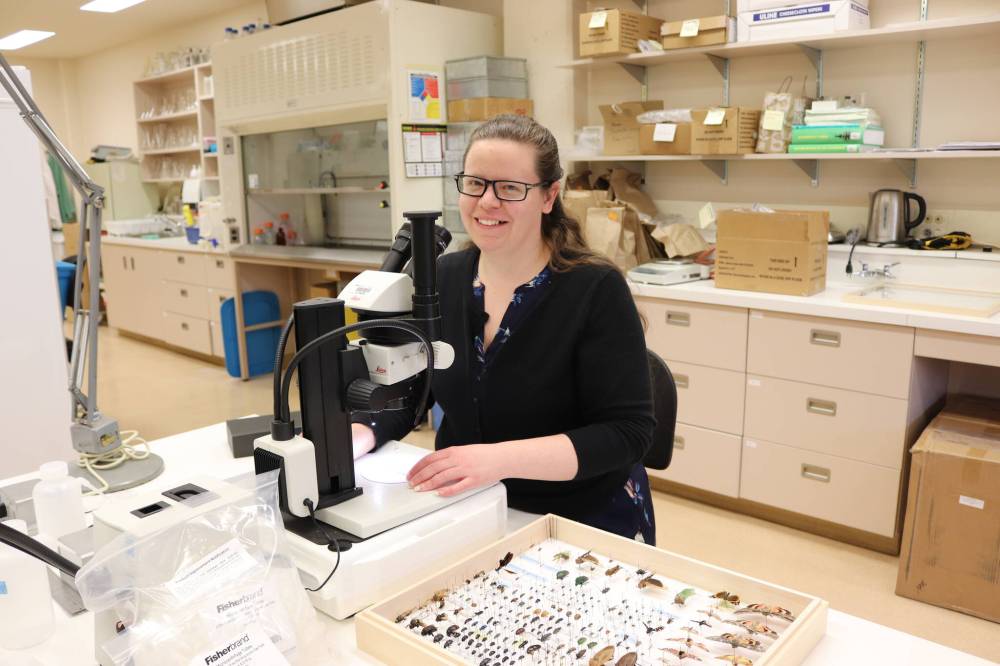
“Annual in-field insect monitoring and research to understand pest biology and population dynamics is necessary to forecast insect outbreaks from year to year and into the future,” Vankosky said. “Our goal is to conduct research that can be used to help farmers and agronomists stay a step ahead of insect pests on the Prairies.”
» mleybourne@brandonsun.com
» Twitter: @miraleybourne