
Fall boating presents unique hazards
Advertisement
Read this article for free:
or
Already have an account? Log in here »
We need your support!
Local journalism needs your support!
As we navigate through unprecedented times, our journalists are working harder than ever to bring you the latest local updates to keep you safe and informed.
Now, more than ever, we need your support.
Starting at $15.99 plus taxes every four weeks you can access your Brandon Sun online and full access to all content as it appears on our website.
Subscribe Nowor call circulation directly at (204) 727-0527.
Your pledge helps to ensure we provide the news that matters most to your community!
To continue reading, please subscribe:
Add Brandon Sun access to your Free Press subscription for only an additional
$1 for the first 4 weeks*
- Enjoy unlimited reading on brandonsun.com
- Read the Brandon Sun E-Edition, our digital replica newspaper
*Your next Free Press subscription payment will increase by $1.00 and you will be charged $20.95 plus GST for four weeks. After four weeks, your payment will increase to $24.95 plus GST every four weeks.
Read unlimited articles for free today:
or
Already have an account? Log in here »
Hey there, time traveller!
This article was published 19/10/2023 (1134 days ago), so information in it may no longer be current.
Even though summer has departed the shores of Manitoba lakes, rivers and streams, drowning can occur any time of the year, with one-third of fatal drownings in Manitoba happening during the colder months between October and April.
“Quite a few of those happen during the shoulder seasons where it’s chilly, but there’s still open water, so this time of year — October, November — before freeze up and once it thaws in March or April,” said Christopher Love, Water Smart and Safety Management Co-ordinator with Lifesaving Society Manitoba.
Warm weather during the day often allows people to extend cottage and boating season well into the fall, sometimes even until the end of October. However, during this time, the weather fluctuates, and cooler nights result in colder water, which is why Lifesaving Society Manitoba is reminding all Manitobans that fall boating presents different challenges and risks.
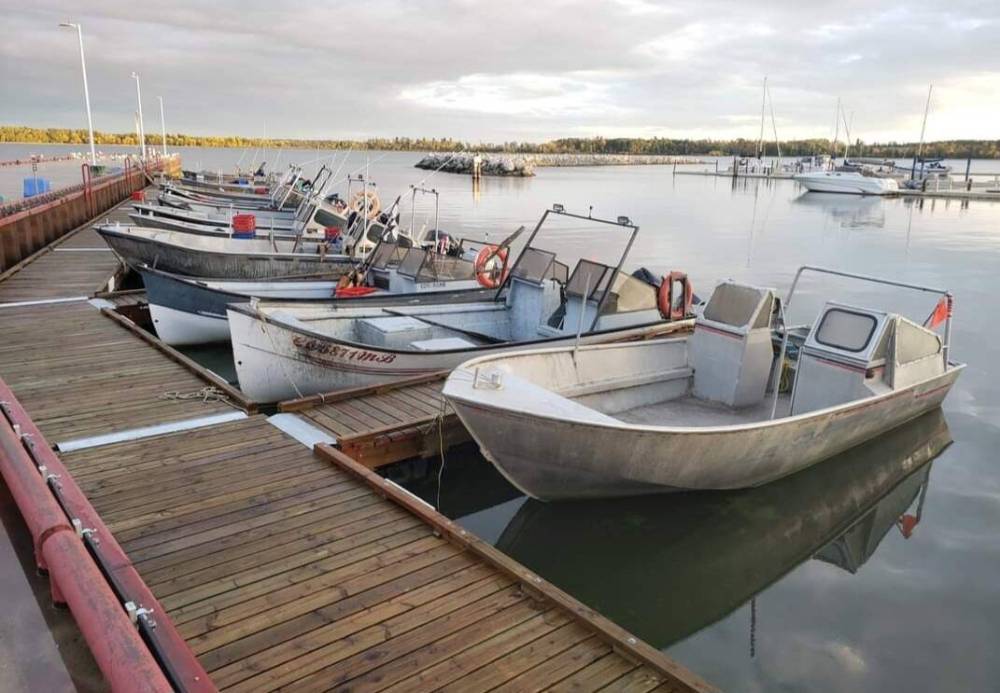
Lifesaving Society Manitoba is reminding boaters to prepare to boat safely by visiting coldwaterkills.ca. (Submitted)
Cold shock is a real concern for anyone who unexpectedly finds themselves in the water, says Stacey Grocholski, executive director of Lifesaving Society Manitoba.
“You can drown in seconds. Please wear your lifejacket or personal floatation device. Just having it in the boat often won’t help in a sudden emergency,” she said.
Cold shock can even happen year round, because most lakes in Canada don’t warm up above 25 degrees Celsius even during the hottest of summers, Love says.
“Occasionally, you’ll get lucky and maybe [the temperature] will spike a little bit, but generally speaking, all of our water in Canada is considered cold water year round.”
The problem is, in summer people don’t often realize how cold the water is because when they enter it, it’s refreshing after a hot, sunny day. Breathing warm air helps fend off cold shock, but that doesn’t happen in the shoulder seasons, Love said.
“Cold shock is going to happen, and it’s still going to be chilly when you surface,” he said.
Soon after, hyperventilation sets in, and that is not something that can be controlled, he added.
“It’s an automatic thing that happens to your body — you’re always going to gasp, you’re always going to have trouble controlling your breathing when you have such an extreme temperature difference between body temperature and wherever you’re being exposed to,” Love said.
If that happens and someone isn’t wearing a lifejacket or personal floatation device, drowning can happen in less than 30 seconds, because gasping rapidly brings water into the lungs, he added.
Even if people believe they are strong swimmers, they are by no means immune to cold shock and drowning, Love said.
University of Manitoba Professor Gordon Giesbrecht developed the 1/10/1 Principle to explain the three stages of cold water immersion. Initially, there is one minute of cold shock, which looks like the gasping Love explained. It’s important at this time to get breathing back under control.
Following that, there is 10 minutes of meaningful movement before the body starts to lose effective use of fingers, arms, and legs. Then, there’s one hour before hypothermia causes unconsciousness to set it.
Wearing lifejackets and personal floatation devices can help reduce the effects of cold water immersion drastically and can keep people afloat while they control their breathing in the critical first stage of cold shock. It’s important to stay calm so that the boater can focus on getting out of the water as soon as possible before they lose mobility and hypothermia takes effect.
It’s also important to check the forecast before heading out on the water, as a mix of warm and cold air can result in strong wind and waves, making open water treacherous for small boats. Fog can also be an issue. And while daytime temperatures can still be warm, dressing for the water temperature can slow the onset of hypothermia if the unexpected happens and a boater falls in the water. Wearing an approved lifejacket or personal floatation device is essential to staying afloat.
“You have to dress for all circumstances, because you could get a rainstorm or a snow squall, depending on where you happen to be,” Love said. “It’s really being ready for that accidental fall into the water when you’re not actually expecting it.”
Lifejackets and personal floatation devices should be checked frequently to make sure they’re appropriately sized and fitting well, Love said, especially since people will be dressing in more layers as the days get shorter and colder. Readjusting straps and checking buoyancy is important, too.
In the fall, there are fewer boats on the water to help. Boaters should leave a float plan with someone on shore who can act if they’re overdue. Boaters are recommended to have a marine radio or cellphone available to call for help, and to be sure that the cellphone is stored in a waterproof case.
All boaters should carry small tools and parts to fix minor problems to prevent being stranded. Boats and engines should be checked for mechanical soundness before setting out, and the use of a fuel additive will prevent water in the fuel line from freezing. If the boat has portable fuel tanks, it’s a good idea to have a spare on board.
“If you go into the water in summer, somebody might notice and you might get help in 20 or 30 minutes,” Love said. “In the fall, early winter season, you may not have anyone else on the same lake as you are, and if you do, it might be an hour or two before somebody notices that something is wrong and comes looking for you to provide assistance.”
After a long, hot, and dry summer, boaters should be aware of reduced water levels, and should watch for debris and chunks of ice that could penetrate a boat’s hull at high speed.
For more tips on how to stretch the boating season safely, visit coldwaterkills.ca.
» mleybourne@brandonsun.com
» X: @miraleybourne