
Canada leading the way in oat research
Advertisement
Read this article for free:
or
Already have an account? Log in here »
We need your support!
Local journalism needs your support!
As we navigate through unprecedented times, our journalists are working harder than ever to bring you the latest local updates to keep you safe and informed.
Now, more than ever, we need your support.
Starting at $15.99 plus taxes every four weeks you can access your Brandon Sun online and full access to all content as it appears on our website.
Subscribe Nowor call circulation directly at (204) 727-0527.
Your pledge helps to ensure we provide the news that matters most to your community!
To continue reading, please subscribe:
Add Brandon Sun access to your Free Press subscription for only an additional
$1 for the first 4 weeks*
- Enjoy unlimited reading on brandonsun.com
- Read the Brandon Sun E-Edition, our digital replica newspaper
*Your next Free Press subscription payment will increase by $1.00 and you will be charged $20.95 plus GST for four weeks. After four weeks, your payment will increase to $24.95 plus GST every four weeks.
Read unlimited articles for free today:
or
Already have an account? Log in here »
Hey there, time traveller!
This article was published 02/11/2023 (937 days ago), so information in it may no longer be current.
Known for its starring role in lattes and porridge, Scientists at research centres in Brandon, Saskatoon and Ottawa have been hard at work studying oats, creating the world’s first reference genome for the crop.
Oats are an ancient and important cereal crop, Agriculture and Agri-Food Canada (AAFC) says. Along with wheat, barley and rice, they make up a key group of staple foods that are essential to global food security. In recent years, oats have seen an increase in popularity and are poised to become even more important to the global effort to feed a growing world population with sustainable and healthy food.
Beta-glucan, a unique compound found in oats, is a type of soluble fibre that has been shown to manage cholesterol, improve heart health and avoid causing a large spike in blood sugar levels when eaten. Oats are also high in protein, gluten-free and keep people feeling full for a longer time.
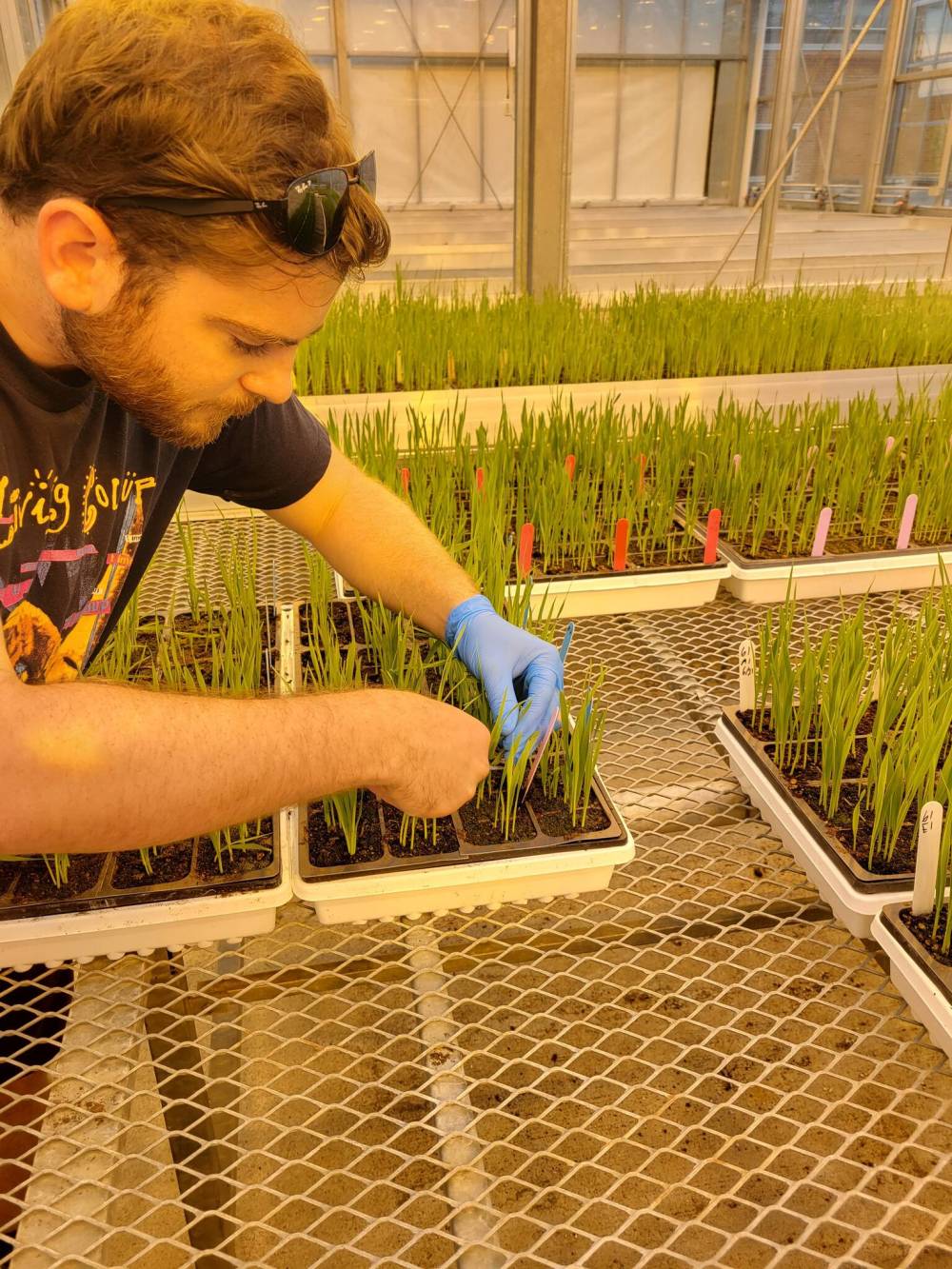
For centuries, oats were grown mainly as fodder for animals, and only rarely as human food. Now, “overnight oats” have become famous on social media, and baristas often turn to oat milk to create vegan drinks.
Research scientists Nicholas Tinker, Wubishet Bekele, Yong-Bi Fu, and their research partners have successfully sequenced and characterized the entire oat genome. Tinke rand Bekele also led an AAFC team in demonstrating some of the implications of the new reference genome in oat improvement. Tinker says this will be of tremendous value to plant breeders who can use this genomic map to improve their breeding programs.
“I have spent most of my career studying genetic variation in oats, but the level of genome diversity that we can now see in cultivated and wild oat is beyond what we expected,” Tinker said. “Together with an international team of scientists, we are now knee-deep in analyzing 30 wild and cultivated oat genomes from around the globe.”
Plant breeders, who save seeds from the best-performing plants in the hopes of increasing the quality of the next harvest, rely on complex genetics work that allows them to speed the process up drastically. Researchers can take a tissue sample from a plant and test its DNA to measure with a “point system” that shows how likely the offspring from that plant can meet the high standards required for a new plant variety. Desired traits include better yields, higher protein content, or the ability to withstand drought and disease.
In addition to its speed, this method of genomic selection is also more reliable than using only the physical appearance of the plant to judge its quality. To achieve marker-assisted selection, researchers must first be able to create genetic profiles using genome-wide snippets of DNA. Tinker and Bekele’s worked with their counterparts across the country, as well as oat researchers around the world, for years, testing and evaluating thousands of oat varieties and cataloguing their genetic profiles.
Using powerful sequence analysis software, they developed a consensus linkage map for oats — a blueprint of the 21 oat linkage groups — also known as chromosomes. This map was instrumental in assembling and ordering the sequences into 21 oat chromosomes of the cultivar “Sang.”
The discovery will be helpful to oat breeders, Tinker says, because it will speed up the development of new and improved oat varieties. The average breeding cycle for cereal crops lasts up to 12 years and involves a process of evaluation that slowly refines each generation of plants until only the best-performing variety is left.
Researchers will now be able to test for the DNA for these markers in each variety at the outset of the process, returning the best candidates to the top of the breeding pipeline while the variety continues in the process of being developed for use by farmers. This can shorten the breeding process by a year or more and can allow breeders to reliably select for specific and future climate environments.
The whole experience of working on the research has been an incredible one, Bekele said.
“I am excited by the opportunity opened up by the availability of the reference genome sequence to understand the level of large-scale chromosomal variations in oat germplasm. Such information will guide our future genomics-assisted optimum parental selection procedures.”
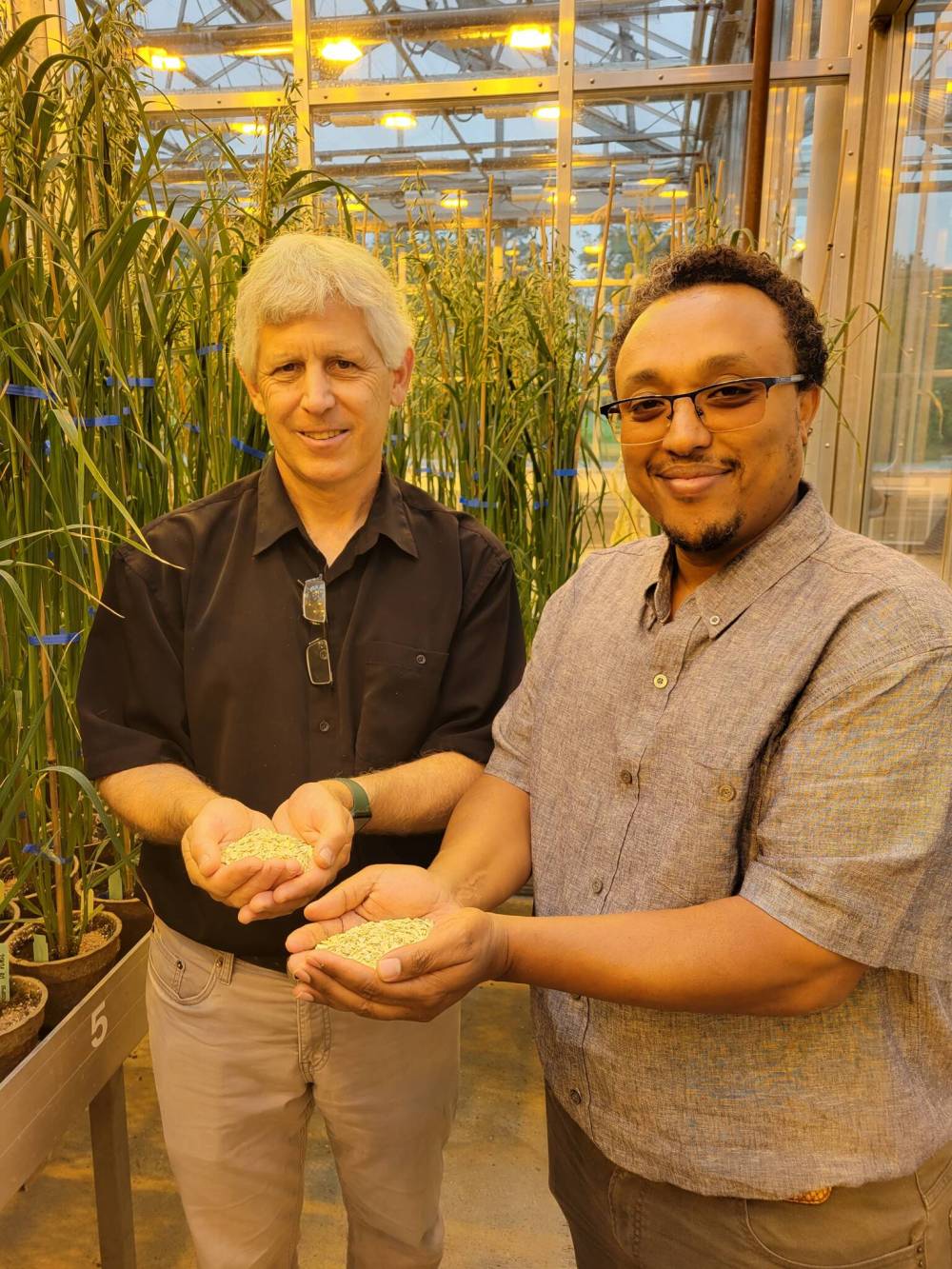
The achievement at the AAFC Ottawa Research and Development Centre is even more significant because the oat genome is extremely complicated, and nearly four times as large as the human genome, Tinker says.
It is also a rare example of a “triple genome” that evolved from multiple wild relatives combining to form a massive genetic string. This means the sequencing process is like doing three large, complicated jigsaw puzzles at the same time with the pieces from all three boxes mixed together.
The oat genome also has an unusually high degree of genetic variability, meaning that it easily tolerates rearrangements of genetic material among its chromosomes, again a result of oats crossing naturally in the wild for millennia.
The AAFC says the discovery represents an opportunity for Canadian agriculture to become an even bigger driver of the nation’s economy. Canada is the world’s leading exporter of oats, with most of that production coming from the Prairies.
» mleybourne@brandonsun.com
» X: @miraleybourne