
Manitoba salamander considered special concern
Advertisement
Read this article for free:
or
Already have an account? Log in here »
We need your support!
Local journalism needs your support!
As we navigate through unprecedented times, our journalists are working harder than ever to bring you the latest local updates to keep you safe and informed.
Now, more than ever, we need your support.
Starting at $15.99 plus taxes every four weeks you can access your Brandon Sun online and full access to all content as it appears on our website.
Subscribe Nowor call circulation directly at (204) 727-0527.
Your pledge helps to ensure we provide the news that matters most to your community!
To continue reading, please subscribe:
Add Brandon Sun access to your Free Press subscription for only an additional
$1 for the first 4 weeks*
*Your next subscription payment will increase by $1.00 and you will be charged $20.00 plus GST for four weeks. After four weeks, your payment will increase to $24.00 plus GST every four weeks.
Read unlimited articles for free today:
or
Already have an account? Log in here »
Hey there, time traveller!
This article was published 14/12/2023 (868 days ago), so information in it may no longer be current.
The Manitoba mudpuppy, Manitoba’s biggest salamander and amphibian, has been listed as threatened by the Committee on the Status of Endangered Wildlife in Canada at their semi-annual meeting, held earlier this month.
The Committee on the Status of Endangered Wildlife in Canada (COSEWIC) assessed 30 different wildlife species across Canada, including the Ivory Gull in the Arctic, which has been assessed as endangered, and the Great Lakes/St. Lawrence River mudpuppy, which has been assessed as special concern.
“Our committee tries to identify all wildlife species that might be at risk, from the majestic to the minute,” said David Lee, chair of the committee in a press release sent out on Dec. 6. “Science and Indigenous knowledge are an integral part of society’s commitment to safeguard Canadian biodiversity.”
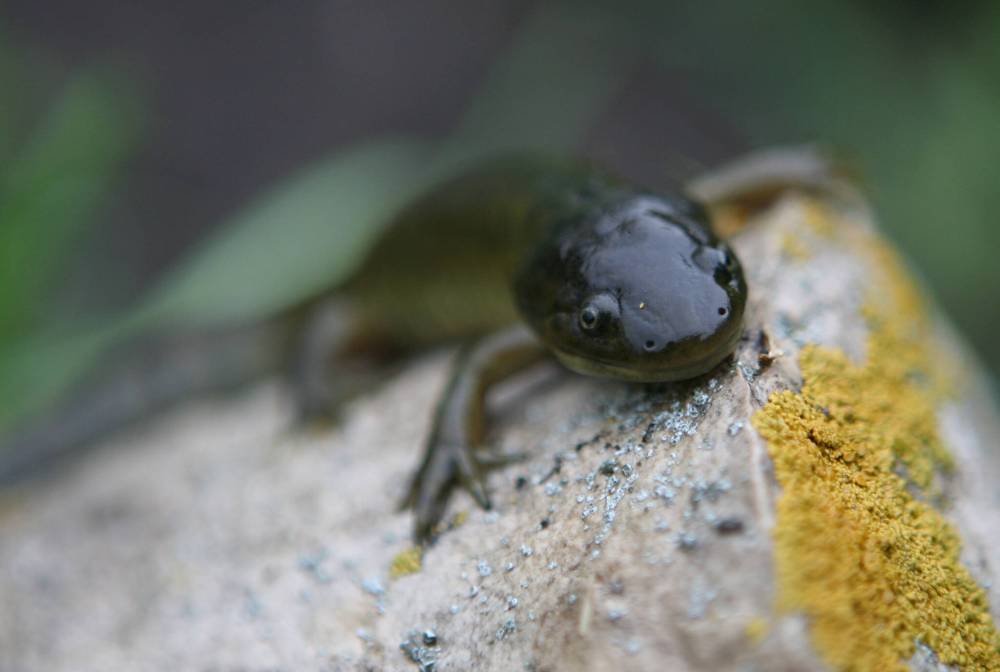
According to naturenorth.com, the Manitoba mudpuppy can be as long as 49 centimetres, although most adults will only grow to 20 or 30 centimetres. They are brown or grey with dark spots and light grey bellies. They have three pairs of gills that look like red fathers on the side of their head, and adults keep their gills for their entire life. Manitoba mudpuppies also have a fin on their tail like other young salamanders.
Manitoba mudpuppies live in rivers and lakes, and never come out onto land. They enjoy rocky river bottoms over muddy ones, and outside of the province they can also be found in eastern central North America.
During the day, Manitoba mudpuppies hide under rocks or sticks in the water, and are more active at night, during which time they walk along the bottom of lakes or rivers hunting for food. They stay active during the winter, searching for food, and are often caught by ice-fishers, the website states.
COSEWIC also assessed Hibberson’s Trillium flower, which they now consider threatened, and Macoun’s Meadowfoam flower, which they now consider special concern.
The most notable decision made by the committee at the meeting was that all five populations of Killer Whales in Canada are at varying levels of risk.
Killer whales are predators found in every ocean in the world, and many of their populations have distinct cultures, dialects and diets. On the west coast, southern resident killer whales eat mostly Chinook salmon. There are currently 75 of those whales in the area, but decreasing Chinook salmon numbers, pollution, increased ship strikes, underwater noise pollution, and inbreeding threaten the population. As a result, the committee has labeled them as endangered.
“These whales usually don’t have their first calf until they’re 14, and only produce a surviving calf every five years on average,” said John Ford, committee member and killer whale expert. “So even if all threats stopped tomorrow, this orca population would be slow to recover.”
Thankfully, while still at risk, other killer whale populations on Canada’s Pacific coast are faring better than the southern resident killer whales. Despite numbering fewer than 350 individuals each, both the fish-eating northern resident population and the transient population, who eat seals, are growing. The latter are currently benefitting from growing sea lion and seal populations.
However, the offshore population of killer whales, which eat sharks, currently only occur in small numbers and may be especially threatened by contaminants, the committee said. All three populations were assessed as threatened.
Killer whales that live in the waters of the eastern Arctic and off the Atlantic coast of Canada aren’t as well-studied or as well-documented as Pacific species, the committee says. These whales likely number in the hundreds and live in a large range. More Inuit are reporting seeing killer whales in the Arctic, which the committee said is the result of climate change causing increased environmental shifts in the region. This group of whales was assessed as special concern.
“For us, Kakaw’in [killer whales] are the wolf of the sea — wolves ensure there is balance on the land, and the killer whales ensure there is balance in the ocean,” said Larry Johnson of the Maa-nulth First Nation on the West Coast of Canada. “Killer Whales are messengers, they are the guardians of the sea. They protect those who travel away from home and lead them back when it is time.”
The committee’s next scheduled wildlife species assessment meeting will happen in April of next year.
» mleybourne@brandonsun.com
» X: @miraleybourne