
Shaping the next generation of Indigenous storytellers
Advertisement
Read this article for free:
or
Already have an account? Log in here »
We need your support!
Local journalism needs your support!
As we navigate through unprecedented times, our journalists are working harder than ever to bring you the latest local updates to keep you safe and informed.
Now, more than ever, we need your support.
Starting at $15.99 plus taxes every four weeks you can access your Brandon Sun online and full access to all content as it appears on our website.
Subscribe Nowor call circulation directly at (204) 727-0527.
Your pledge helps to ensure we provide the news that matters most to your community!
To continue reading, please subscribe:
Add Brandon Sun access to your Free Press subscription for only an additional
$1 for the first 4 weeks*
- Enjoy unlimited reading on brandonsun.com
- Read the Brandon Sun E-Edition, our digital replica newspaper
*Your next Free Press subscription payment will increase by $1.00 and you will be charged $20.95 plus GST for four weeks. After four weeks, your payment will increase to $24.95 plus GST every four weeks.
Read unlimited articles for free today:
or
Already have an account? Log in here »
Hey there, time traveller!
This article was published 14/03/2024 (800 days ago), so information in it may no longer be current.
Joshua Whitehead, a celebrated Indigenous author who grew up in Manitoba, is hoping to help shape the next generation of Indigenous storytellers and help them find their voices through this year’s Audible Indigneous Writers’ Circle.
This is the fourth year of the mentorship and workshop program from Audible, an onlie audiobook and podcast service. The program aims to help emerging Indigenous writers who seek to elevate and develop their stories. In the past three years, over 55 emerging Indigenous writers have been supported by the program. They’ve gone on to publish books, secure book deals and agents.
The program is six months and is open to people who self-identify as First Nations, Inuit and Métis emerging writers. This year, seven mentors will take part in the program and 21 emerging writers will be chosen from the applicants to participate.
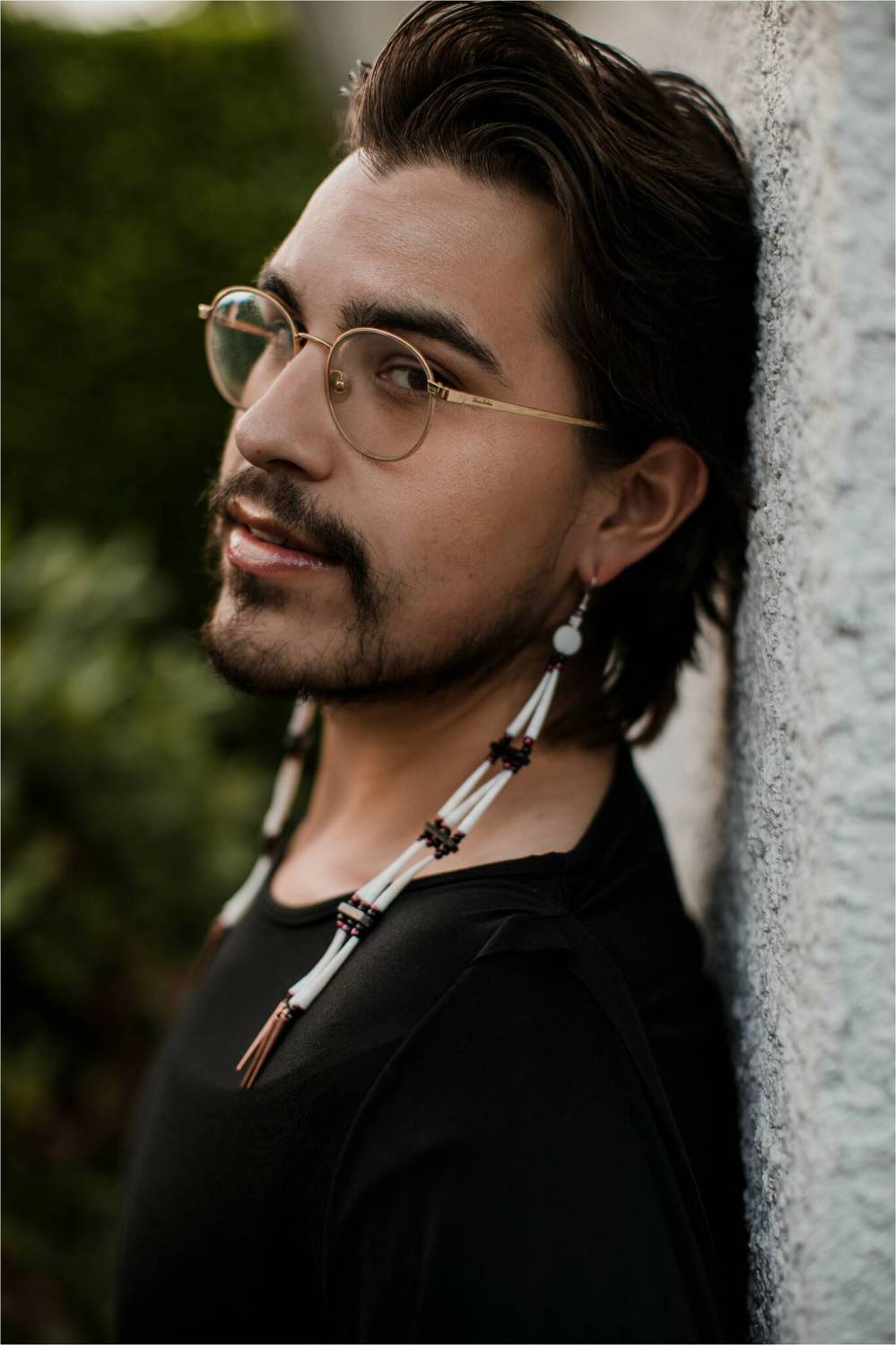
The writers who are chosen will be paired up with Indigenous mentors who will coach and guide them through the creative process, helping them to identify and pursue opportunities in line with their goals as writers.
When Whitehead had the chance to give back to the writing community as a mentor through the Audible Indigenous Writers’ Program, he knew it was the right thing to do. Having been guided by mentors along his own journey, becoming one felt like a natural step for him, he said.
“I take that as my role, to help bring up the next generation of Indigenous writers, and I try to specifically focus on queer, trans and women … I think those communities have the spirits and the voices that fundamentally need to be there.”
Whitehead is a two-spirit Oji-nêhiyaw member of Peguis First Nation (Treaty 1), located 348 kilometres northeast of Brandon. His works include “Full-Metal Indigiqueer,” “Johnny Appleseed” and “Making Love with the Land.” He also teaches English and International Indigenous Studies full time at the University of Calgary.
“I’ve always been kind of a creative storyteller,” Whitehead told the Sun. “I think it just kind of comes from being around very vocal, boisterous, hilarious, sexy, powerful Indigenous women.”
Whitehead has fond memories of sitting with the women in his family and listening to the stories they told each other, always trying good-naturedly to one-up the rest. Some of the stories spoke of romance, and some were darker, but it all rubbed off on him, Whitehead said.
“I guess it just came natural to me, being with women for all my life, but childhood especially, and from that I was telling stories in the oral fashion and written fashion as long as I can remember.”
Growing up in Selkirk, Man., located 253 km northeast of Brandon, Whitehead noticed a lot of subtle segregation as a child and a youth, with many Indigenous students being put into “easier” classes. There was also segregation in the city itself, depending on the area of the community.
“I always talked about not being Indigenous enough, not being white enough,” he said. “And so, storytelling and writing became a way for me to validate myself and discover myself.”
Reading literature also gave Whitehead the language he needed to vocalize his own story, both as an Indigenous person and a gender-diverse one.
“I owe everything to writing and literature,” he said. “I think it’s incredibly important, and it saved me and gave me all of the language and terminology and empowerment that I needed.”
Writing is also a powerful tool of reconciliation and a way to dismantle toxic social systems, Whitehead said. As the son of a ’60s Scoop survivor, returning to his true self as an Indigenous and two-spirit person has been very healing.
“These stories are just rejuvenating what has been forgotten,” he said.
Whitehead hopes to instill confidence in the writers he mentors, so they can go on to sweep away the vestiges of white supremacy and colonization that still exist in society.
“That’s the real work,” he said. “I’m trying to bring them into a space where they feel comfortable to tell a story that they want to tell.”
In addition to offering a supportive environment, Whitehead and the other mentors will help them hone their writing skills. This year’s mentors also include Waubeshig Rice, Richard Van Caamp, January Rogers, Tanya Talaga, Reneltta Arluk and Warren Cariou this.
Audible will provide additional support to participants through the program and guide them on promoting their work. Once the program ends, depending on what stage each writer has progressed to, participants will have the chance to explore opportunities with Audible.
The field of Indigenous literature is ever changing, Whitehead said, and it will continue to evolve as stories are passed down from generation to generation, from mentor to writers who then become mentors to others.
“I want the next storytellers to be able to imagine even brighter horizons and better futures for us,” he said.
Applications for the program are open until April. There is no cost to apply. To learn more about the program, eligibility and more, visit audible.ca.
» mleybourne@brandonsun.com
» X: @miraleybourne