Province helps farmers remedy vet shortage
Advertisement
Read this article for free:
or
Already have an account? Log in here »
We need your support!
Local journalism needs your support!
As we navigate through unprecedented times, our journalists are working harder than ever to bring you the latest local updates to keep you safe and informed.
Now, more than ever, we need your support.
Starting at $15.99 plus taxes every four weeks you can access your Brandon Sun online and full access to all content as it appears on our website.
Subscribe Nowor call circulation directly at (204) 727-0527.
Your pledge helps to ensure we provide the news that matters most to your community!
To continue reading, please subscribe:
Add Brandon Sun access to your Free Press subscription for only an additional
$1 for the first 4 weeks*
- Enjoy unlimited reading on brandonsun.com
- Read the Brandon Sun E-Edition, our digital replica newspaper
*Your next Free Press subscription payment will increase by $1.00 and you will be charged $20.95 plus GST for four weeks. After four weeks, your payment will increase to $24.95 plus GST every four weeks.
Read unlimited articles for free today:
or
Already have an account? Log in here »
Hey there, time traveller!
This article was published 16/05/2024 (786 days ago), so information in it may no longer be current.
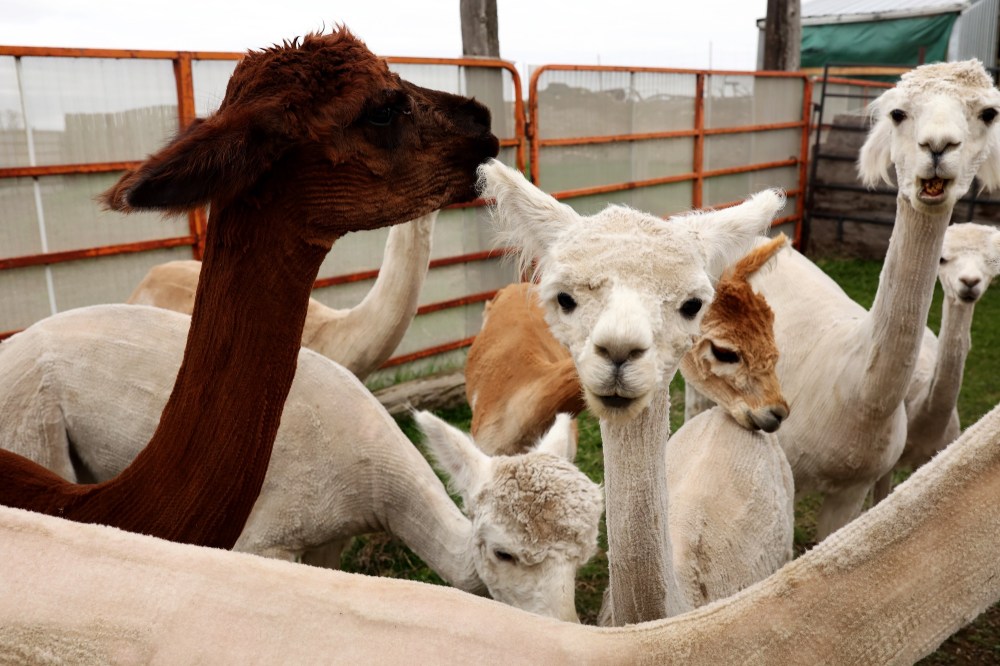
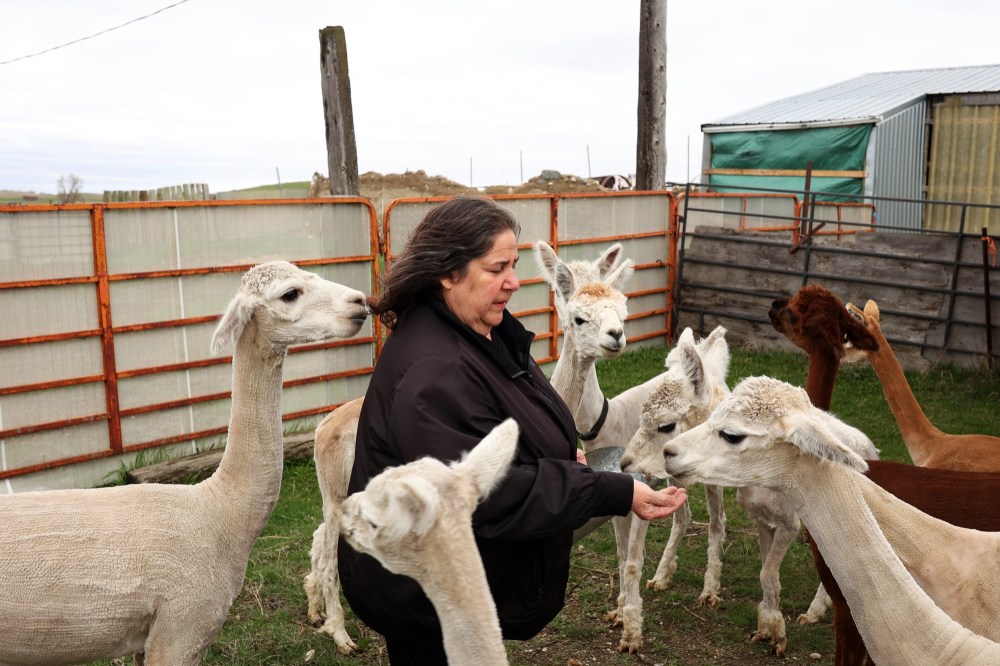
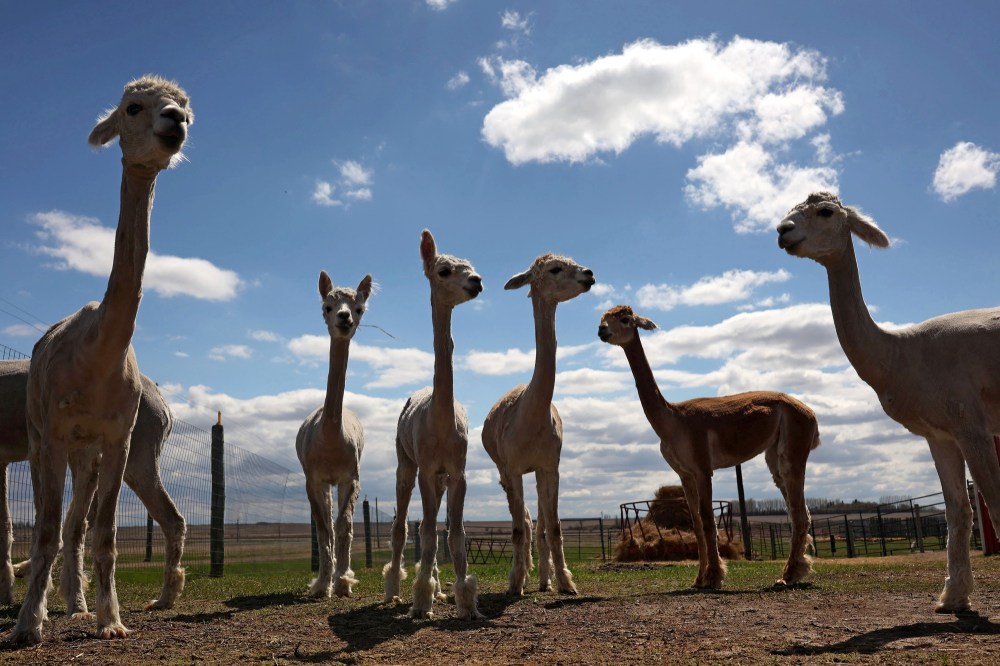
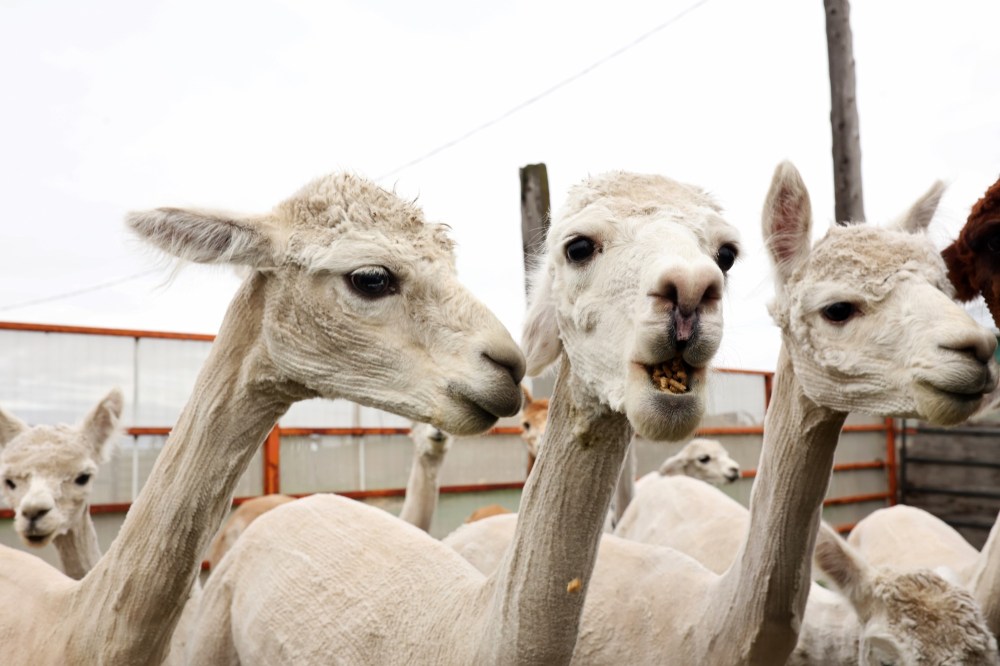
Last summer, a baby alpaca from Circle O farms was having trouble gaining weight and keeping it on.
Owner and producer Laurie Owens, whose farm Circle O is located in Alexander, called a veterinarian in Virden to try to get the cria looked after. The soonest appointment Owens could get was two weeks out. Knowing the animal needed to be seen sooner, she kept calling around. A vet in Souris could offer a slightly better appointment in 10 days. By some miracle, the vet from Souris was able to see the cria after two days.
“I lucked out big time with that,” Owens said. “It’s hard because of course, there’s nobody in Brandon that does large animals.”
Other producers and pet owners aren’t so lucky. On May 2, the Brandon Sun reported on an unfortunate situation where a dog owner was unable to have their pet seen on a Saturday in Brandon, and the dog ended up passing away in the owner’s truck on the way to an emergency veterinarian in Winnipeg. The Manitoba Veterinary Medical Association told the Brandon Sun that there are only two 24/7 veterinary offices in the province, both of which are in Winnipeg.
General manager of Keystone Agricultural Producers Brenna Mahoney said that there is a global shortage of vets. Labour shortages are not limited solely to veterinarians, but inludes technicians and administrative support as well.
Another issue is presented when an animal needs care and does have a regular vet but has not been seen for an extended period. In those cases, producers are unable to get access to medicines and vaccines that they could administer themselves. That is why Matthew Atkinson, a cattle producer and president of Manitoba Beef Producers, said the relationships between producers and vets are so important.
“It’s a challenge because not only do we need vet care, we are also reliant upon having that client, patient relationships with a clinic in order to be prescribed medications … That really heightens the need for having a vet covering your area.”
Chair of Manitoba Pork Rick Prejet reiterated the importance of a vet-client relationship.
“You can imagine if somebody calls out of the blue to a vet, he says, ‘I got this going on in my barn, I want this kind of medication,’ he’s going to go, ‘Well, I don’t know, the same signs and symptoms you’re telling me could be like five different things’… So they just wouldn’t do it.”
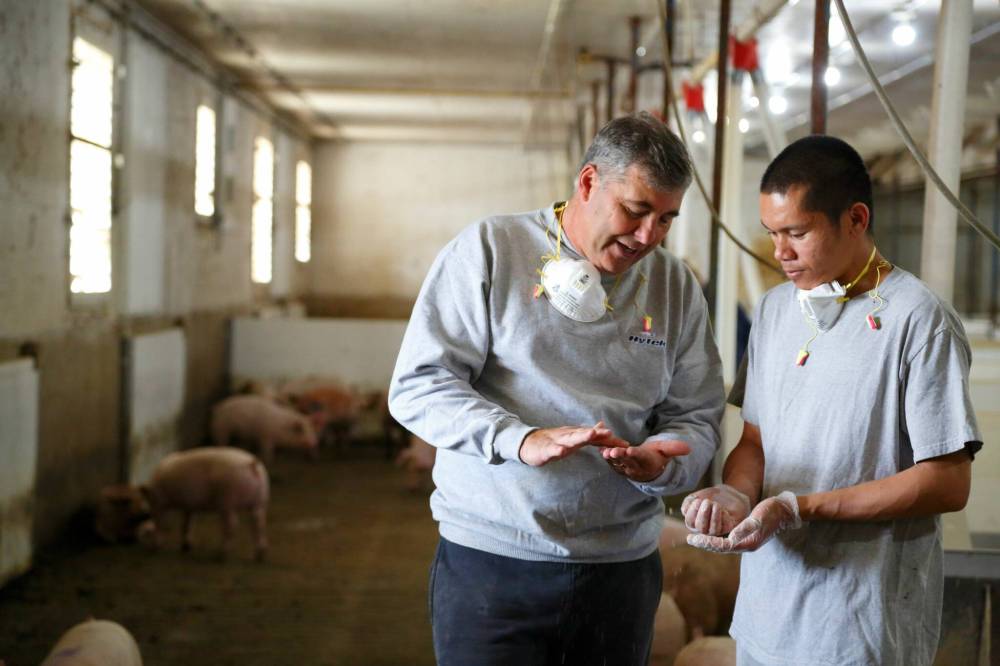
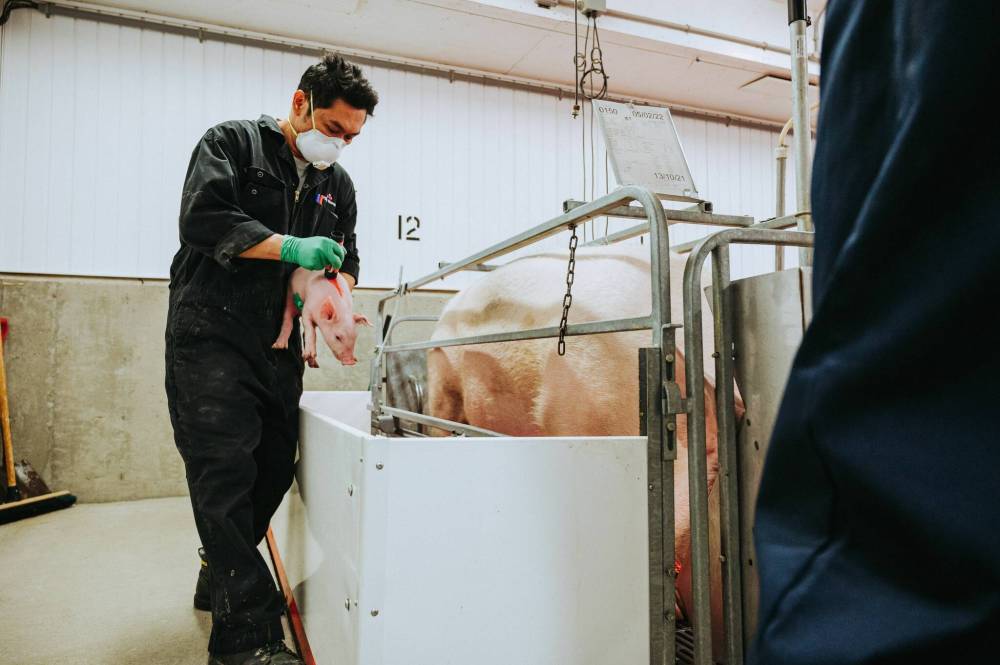
Prejet also pointed out that pork vets are often specialized, but there are plenty of things that veterinarians aren’t necessarily required for. The example he provided was of pigs coughing in the barn. A vet does not need to be the one to take blood samples from the hogs to test for illnesses, a trained veterinary technician or assistant could also do that job.
“In the pig industry, that could take a lot of pressure off the existing specialized vets and make things a little bit easier for everybody,” Prejet said.
At the November 2023 Association of Manitoba Municipalities three resolutions were introduced and passed to try to address the vet shortage. One, introduced by the Municipality of Harrison Park, was aimed at lobbying the government to increase funding to local veterinarian service districts to update equipment and make facility upgrades.
Harrison Park and Rural Municipality of Coldwell also introduced a resolution to lobby the province to create a veterinary medicine college within one of Manitoba’s existing post-secondary institutions with seats specifically for those studying large animal veterinary medicine.
The final vet-related resolution was sponsored by the RM of Armstrong, which resolved to lobby the province to relax immigration requirements to allow more vets to practice in Manitoba. It also aimed to lobby the province to implement a strategy that would ensure veterinary medicine graduates be required to return to practice in Manitoba for a three-year period, including large animal practices.
Reeve of Harrison Park Ian Drul said of the resolutions: “The big thing is the province and the AMM and the municipalities need to figure out a plan for what’s best for Manitoba right now … as far as sponsoring people to go to school, looking at forgivable loans, and we also need to look at foreign vets, similar to the doctor shortage.”
The province listened. Manitoba Budget 2024 addressed a number of the issues laid out in the AMM resolutions through the development of the Veterinary Medical Services Strategy and $135,000 in new funding to implement it. The collaborative, multi-year strategy seeks to attract and retain more veterinary professionals to the province. Industry professionals, agricultural producers and the government are all working together to implement the strategy.
Before the provincial budget was announced, an additional five seats were added to the number of subsidized seats available to Manitoban students at the Western College of Veterinary Medicine at the University of Saskatchewan. There are now 20 total seats, with the additional five being specifically for students pursuing large animal veterinary care.
Mahoney said she is “really grateful to the supportive government for that because without them, we wouldn’t have been able to do that.”
Although not listed in the official budget document, Mahoney said the province had committed to providing $165,000 in tuition rebates to be paid over three years to students who return to Manitoba to practice out of school.
The province also added five seats to the VetSTEP program and $25,000 in additional funding. VetSTEP helps connect veterinary students to employers in Manitoba for summer jobs while they are on break.
The AMM resolution on veterinary service districts was also addressed in the province’s budget. An additional $15,000 has been provided to the Veterinary Services Districts program, which provides the districts with a grant of up to $19,000 per year based on a matching requirement from municipalities in the district’s area, according to a provincial spokesperson.
While progress is slow, Mahoney is optimistic about the new measures being taken by the government.
» cmcconkey@brandonsun.com