
Sweet taste of success at Vermillion Growers
Advertisement
Read this article for free:
or
Already have an account? Log in here »
We need your support!
Local journalism needs your support!
As we navigate through unprecedented times, our journalists are working harder than ever to bring you the latest local updates to keep you safe and informed.
Now, more than ever, we need your support.
Starting at $15.99 plus taxes every four weeks you can access your Brandon Sun online and full access to all content as it appears on our website.
Subscribe Nowor call circulation directly at (204) 727-0527.
Your pledge helps to ensure we provide the news that matters most to your community!
To continue reading, please subscribe:
Add Brandon Sun access to your Free Press subscription for only an additional
$1 for the first 4 weeks*
*Your next subscription payment will increase by $1.00 and you will be charged $20.00 plus GST for four weeks. After four weeks, your payment will increase to $24.00 plus GST every four weeks.
Read unlimited articles for free today:
or
Already have an account? Log in here »
Hey there, time traveller!
This article was published 01/08/2024 (610 days ago), so information in it may no longer be current.
DAUPHIN — An agricultural revolution is quietly taking root in the heart of Manitoba. Dauphin-based Vermillion Growers is focusing on innovation and community impact, to spearhead a movement toward sustainable and locally sourced produce with their gigantic state-of-the-art tomato greenhouse, packaging and technical facilities projected to cover 70 acres in total.
Founded by siblings Lucky and Maria Deschauer, who were originally from Steinbach, Vermillion Growers was born out of a passion for sustainable agriculture and a commitment to local community development.
The Deschauers embarked on building a greenhouse in Dauphin with local property developer and fellow co-founder Mark Kohan, who’s now Vermillion Growers’ chief financial officer. They began greenhouse research more than six years ago.
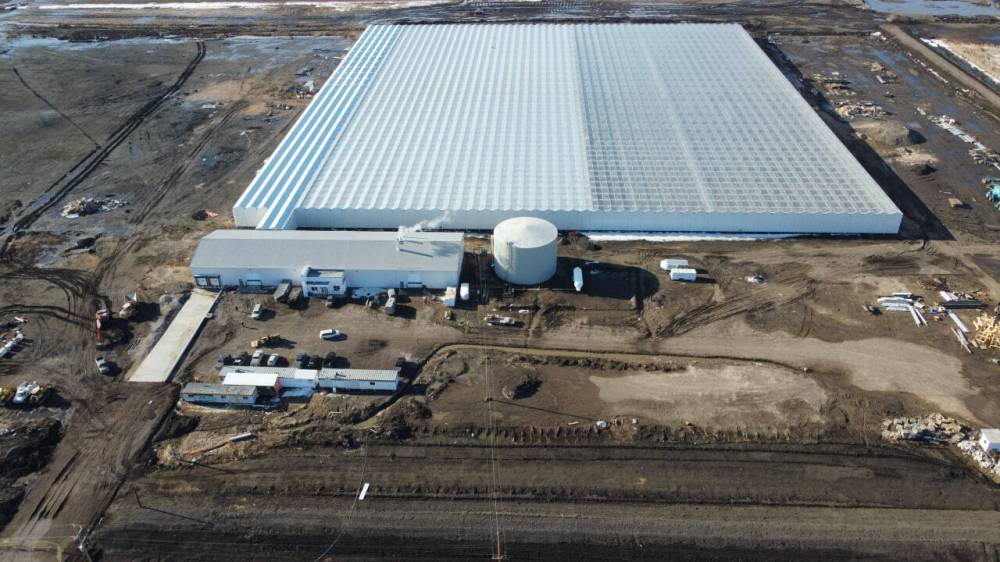
Vermillion Growers’ gigantic state-of-the-art tomato greenhouse, packaging and technical facilities projected to cover 70 acres in total. (File)
“The idea was to create something that not only provides fresh, locally-grown produce but also supports the community and promotes sustainability,” said Lucky, who has witnessed the conception and growth of the company firsthand.
“When you see the actual scale of our greenhouse project and how consistently clean and beautiful the acres of tomatoes are, it is going to put a big smile on your face. We have already surpassed the million tomato production mark, and this first year is not even over yet.”
Construction on the greenhouse started in June 2018, before the COVID-19 pandemic. Vermillion Growers later opened the large-scale greenhouse project in summer 2023 on a project budget of $32 million.
From the beginning, Lucky and Maria envisioned a greenhouse facility that could operate year-round even through a harsh Manitoba winter, using advanced technologies to ensure the best growing conditions for their produce. This vision became a reality with the establishment of their greenhouse, which uses cutting-edge hydroponic systems and climate control technologies to cultivate high-quality tomatoes regardless of external weather conditions.
But the journey to success was not without its challenges.
“One of the biggest hurdles we faced was the initial skepticism from the community and potential investors,” Lucky said. “People were unsure if a year-round greenhouse could be viable in Manitoba’s harsh climate.”
However, the Deschauers’ commitment to the idea and their innovative approach soon began to change minds. One challenge that remains is to take advantage of the thermal heat potential that is already detected in the ground, using the example of Iceland’s geothermal process as a benchmark. Another challenge being explored is turning the biowaste from tomato leaf trimming into fuel or compost.
Vermillion Grower’s state-of-the-art facility, equipped with pollinating bees, growth-enhancing HPS lighting, shading materials, humidity and heat-sensitive ventilation, and complex proprietary water-saving irrigation systems, is an effort to show that sustainable agriculture is not only possible but also profitable.
“Seeing the first harvest of our tomatoes was a moment of exhilarating triumph,” Maria said. “It was delicious proof that our hard work and dedication had paid off.”
Beyond their technological advancements, Vermillion Growers has made a significant impact on the local community.
“We’ve always believed in giving back,” Maria said. “Whether it’s through job creation — 50 employees to date — educational programs, cooperation with Parkland Assiniboine Community College or donating fresh produce to local food banks, we’re dedicated to making a positive difference.”
One such initiative is their partnership with the Food Rescue in Brandon, a program that redistributes surplus food to those in need at a price much lower than supermarkets.
“The donations of fresh, tasty tomatoes have greatly improved the quality and variety of food we can feed our families, and the quality is fantastic,” said a regular patron of Food Rescue in Brandon, who wished not to be named.
The company’s outreach programs have also fostered strong personal connections within the community, by hosting tours for local schools and community groups, showing them how the greenhouse operates and teaching them about sustainable agriculture.
Cormac Foster, currently the vice-president of engineering and development for the company, had an interesting journey to Vermillion Growers. Born and raised in Winnipeg, Cormac graduated as a biosystems engineer with a specialization in environmental engineering. He also holds a LEED Green Associate credential.
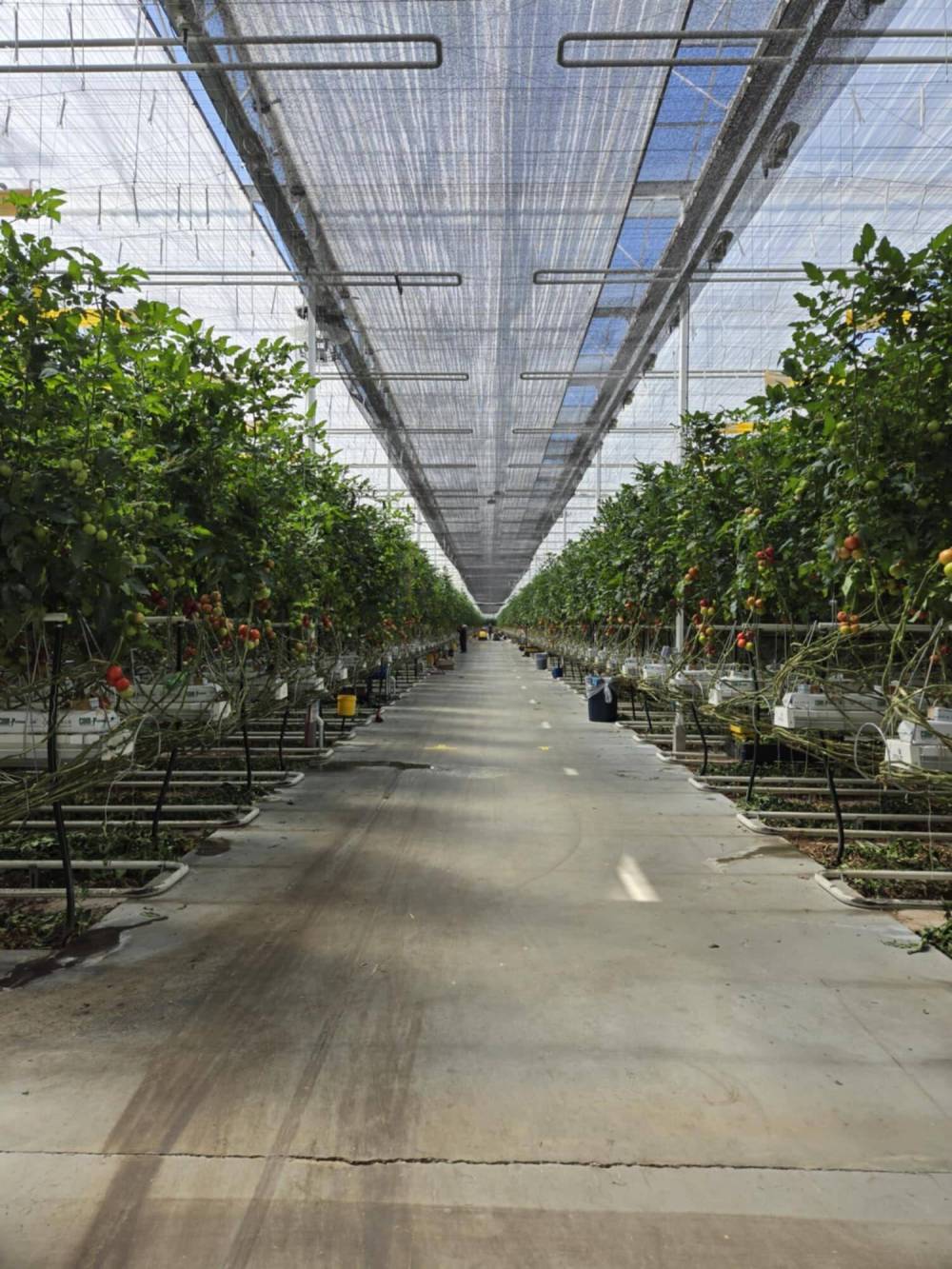
Rows of tomato plants line the Vermillion Growers greenhouse in Dauphin, Manitoba, now well into its first year of production. (Don Berger/For The Brandon Sun)
He says joining Vermillion Growers has given him an opportunity to contribute to the local community, while promoting sustainable agriculture, something that aligns with his professional and personal values.
“At Vermillion Growers, we are constantly exploring new technologies to improve our sustainability and production efficiency. Our goal is to remain at the forefront of innovation in the greenhouse industry,” Cormac said. “With a background in environmental engineering, he emphasizes the importance of sustainable practices. “We utilize advanced hydroponic systems and energy-efficient technologies to minimize our environmental footprint while maximizing yield.”
As a motivational speaker and former Amazing Race Canada participant, Cormac uses his communication skills to influence his team and the broader community, in a positive way.
“In my role, I emphasize the importance of the triple bottom line — people, planet, and profit, drawing from my experiences to educate and motivate others to achieve their best,” he said.
During a tour of the facilities last month, Cormac said that the company has been able to minimize product wastage in tomato production, and has been able to use a significant amount of water collected from the roof of the greenhouse for irrigation.
“But we’re still looking for ways to improve by exploring new technology,” Cormac said. “The crop was planted in September last year and the vines are now around 40 feet long, the tomatoes are kept at harvest height by regularly lowering the vines, there are innovative overhead screens that can trap energy in the greenhouse, shade from the sun, and minimize light pollution from inside the facility.”
The facility has three levels of heating pipes — ground level, within the crop and overhead — that distribute water that is heated by natural gas boilers and stored in a three-million-litre water tank. Condensation from inside of the glass and rain and snow from the roof is collected and used for production purposes.
“We can produce a higher yield of tomatoes in the greenhouse than traditional field-growing methods, that and reducing the carbon footprint associated with our food production because of the reduction in transport distance to our markets means that by lowering the carbon footprint we are helping the planet and improving the sustainability of our operation,” Cormac said. “We are very proud of this.”
A significant part of Vermillion Growers’ success can be attributed to their partnership with Red Sun Farms, which handles marketing and distribution. David Bell, the business development director of Red Sun Farms, says he is thrilled that the greenhouse operation is up and running, and that the tomato plants are growing so well.
“Our commitment to cleanliness and sterilization ensures that you’ll be enjoying the freshest, tastiest tomatoes around, you’ll be able to savour the goodness of our delicious tomatoes at a store near you, as long as you’re relatively local,” David said.
Consumers can find Vermillion Growers’ tomatoes in local grocers, packaged under the Red Sun brand with “Grown in Manitoba” stickers.
» donstayho1@gmail.com