
Coaches help farmers make succession smooth
Advertisement
Read this article for free:
or
Already have an account? Log in here »
We need your support!
Local journalism needs your support!
As we navigate through unprecedented times, our journalists are working harder than ever to bring you the latest local updates to keep you safe and informed.
Now, more than ever, we need your support.
Starting at $15.99 plus taxes every four weeks you can access your Brandon Sun online and full access to all content as it appears on our website.
Subscribe Nowor call circulation directly at (204) 727-0527.
Your pledge helps to ensure we provide the news that matters most to your community!
To continue reading, please subscribe:
Add Brandon Sun access to your Free Press subscription for only an additional
$1 for the first 4 weeks*
- Enjoy unlimited reading on brandonsun.com
- Read the Brandon Sun E-Edition, our digital replica newspaper
*Your next Free Press subscription payment will increase by $1.00 and you will be charged $20.95 plus GST for four weeks. After four weeks, your payment will increase to $24.95 plus GST every four weeks.
Read unlimited articles for free today:
or
Already have an account? Log in here »
Hey there, time traveller!
This article was published 05/06/2025 (384 days ago), so information in it may no longer be current.
Of all the challenges farm families have to face, navigating the pathway to a successful generational transition might be the toughest. With farm family transition, there’s more to succession than legal and financial hoops to jump through. Planning and implementing succession can be fraught with intense emotion, taking a heavy toll on family relationships.
Described as a “go-to expert for farm families who want better communication and conflict resolution to secure a successful farm transition,” Elaine Froese (elainefroese.com) is a coach, author and certified speaking professional who, along with her team of coaches, offers guidance and encouragement to farm families who are finding the succession pathway is rocky.
“So many farm families are stuck right now because they’ve been procrastinating and they’re avoiding conflict,” says Froese, who has decades of experience on her family farm near Boissevain, Manitoba.
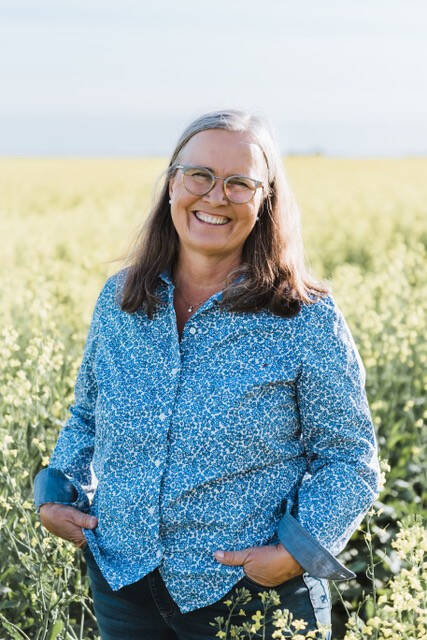
“For people considering succession planning — which we now call transition planning — the work we do helps farm families find harmony through understanding.”
A transition plan is a transfer of labour management and ownership during the lifetime of the founding farm couple. It is different from estate planning which defines what will be done after someone dies.
Family members can be deeply invested in the future of the farm, both financially and emotionally. That intensity, combined with different personalities and desires, can quickly lead to conflict.
“What we do in our process is we first help farm families communicate and resolve conflicts so that they can get clarity about everybody’s expectations for the future of the farm. This includes the farm heirs, the successors and the non-farm children,” says Froese.
From there, timelines for agreements can be developed and help is given to take action and move forward.
“The best case scenario is for families to be proactive rather than reactive. The sooner families plan, the better,” she says.
How does a family know they need some help?
“They’re feeling anxious and overwhelmed and their accountants or their lawyers are not giving them facilitation to have the hard conversations, or they’re not even asking yet for help,” she says.
“A lot of farmers are solo entrepreneurs and very independent people, so they’re used to fixing their own problems. But this is not do-it-yourself.”
Conflict might come in the form of disagreement over management plans or style, a family member who is threatening to leave because equity has been promised but no action has been taken, lack of clarity on the financial status of the farm (especially if there is significant debt), personality differences (especially among in-laws who are new to the family), lack of clarity on the rationale for decision-making, disagreement over housing — and more. The financial issues can be exacerbated by lack of professional financial advice.
“A lot of families come to us because they want an objective third party to help them navigate difficult circumstances, because sometimes they’ve tried to do it themselves and it’s turned into a bomb,” she says.
“They need a process that’s safe, where people don’t emotionally attack each other. You attack the problem, not the person. It’s safe and respectful and it’s been done before. It’s a process that works to help people come to understanding and to build on their common interests.”
The first step is to reach out for help.
Froese says that once contact is made through her website (elainefroese.com), clients are given a half-hour long “discovery call,” typically with the farm couple, although it could be another family member or even the whole family.
“Then we do a confidential one-to-one coaching call on Zoom with each family member and spouse. The goal is to bring them together for a two-hour family meeting and that’s the starting point of developing the road map for that particular family,” she says.
Even at the beginning, some families may already have sound legal and accounting advice in place but find they still need some help, Froese says.
“With our coaching, we first deal with laying a good foundation for communication and conflict resolution so that the family then can clearly communicate to the lawyer or the accountant or the financial planner, or the investment broker — whoever their team of advisors is — what it is they truly want, because they will have already sorted it out with their family,” she says.
For those families who may not have financial and legal assistance in place or may not be sure how to find the right help, Froese’s team and contacts include financial planners, farm management advisors and others. Like Froese herself, her team of coaches all have connections to farms with a strong grasp of farm culture. They all have different skill sets, so some families might receive help from more than one coach as needed.
Additionally, Froese and her team offer an online subscription membership where online meetings provide support and information.
“It helps people also understand that they’re not alone and it also helps them see confidentially what other farm families are doing to create solutions,” she says.
She also recommends her Farm Family Coach YouTube channel, and in particular the video “Finding Fairness in Farm Transition.”
Froese says there are too many unhappy stories out there. She wants farm families to know that it’s a good thing to ask for help and facilitation.
“Conflict is a normal part of life. But conflict that’s resolved quickly and has solutions that are the right thing, that’s how you have success.”
“What we have in agriculture now — when plans are not made or when plans implode — is estrangement. We have family trees that are totally broken forever. And that’s just not good.
“We need strong farms and strong families for strong agriculture.”
» wendyjbking@gmail.com