
Wildlife from sea to sea to sea
Advertisement
Read this article for free:
or
Already have an account? Log in here »
We need your support!
Local journalism needs your support!
As we navigate through unprecedented times, our journalists are working harder than ever to bring you the latest local updates to keep you safe and informed.
Now, more than ever, we need your support.
Starting at $15.99 plus taxes every four weeks you can access your Brandon Sun online and full access to all content as it appears on our website.
Subscribe Nowor call circulation directly at (204) 727-0527.
Your pledge helps to ensure we provide the news that matters most to your community!
To continue reading, please subscribe:
Add Brandon Sun access to your Free Press subscription for only an additional
$1 for the first 4 weeks*
*Your next subscription payment will increase by $1.00 and you will be charged $20.00 plus GST for four weeks. After four weeks, your payment will increase to $24.00 plus GST every four weeks.
Read unlimited articles for free today:
or
Already have an account? Log in here »
We knew that we were about to be exposed to something entirely different when we arrived at Port Hope Simpson, Labrador. To begin with, we were the only ones booked in our hotel for the night. And if you have ever seen the movie “The Shining,” you can guess how it felt walking the cold, echoing hallways. Nothing defines creepiness like an empty hotel.
The good news is that the eerie feeling was entirely overshadowed by the best part of our hotel experience. The owner was a lovely woman who made us feel entirely welcome, including allowing us to order supper despite the kitchen shutting down for the evening.
Adding to the experience, there was a trio of traditional musicians set up in the dining room, rolling out an apparently endless supply of Newfoundland and Labrador-based tunes. The impromptu concert was a rehearsal for an upcoming community kitchen party cum benefit evening.
Rae and I looked at each other and nodded, wordlessly agreeing that this was exactly what we expected for Labrador. And this was only one of many experiences on our epic journey across this huge country.
Don’t be alarmed dear reader if you are thinking you’re about to be forced to endure endless stories about our Most Excellent Family Vacation. Suffice it to say that we travelled. A lot. By car. In fact, between two separate trips, we visited nine provinces and two territories, driving almost 20,000 km.
Our voyage allowed us to dip a toe into the Pacific, Arctic, and Atlantic oceans while not straying from Canada’s borders. We travelled some of the remotest routes in Canada including the Dempster Highway that stretches from the Dawson Highway to Tuktoyaktuk NWT, as well as the Trans-Quebec Highway that runs through the interior of Quebec from Baie Comeau on the north shore of the Gulf of Ste Lawrence up to Labrador City, Labrador. Hooking a right, we then travelled the equally isolated Trans-Labrador Highway from Labrador City down to the Strait of Belle Island, passing such notable places as Churchill Falls and Happy Valley-Goose Bay.
When you see that much of the country through a car’s windscreen, you might be struck by the differences. But then again, maybe not. There were ample times when, in the fugue of the ninth hour of driving, I had a sense of déjà vu. Didn’t I just pass that same town four days ago? Wasn’t that patch of bush outside our Newfoundland motel the same one as in the Yukon?
And no matter where you go, you know you will be accompanied by some old friends. From the rain forests of BC to the tundra of Tuktoyaktuk and the Barrenlands of Newfoundland, you could always depend on seeing a raven soaring past.
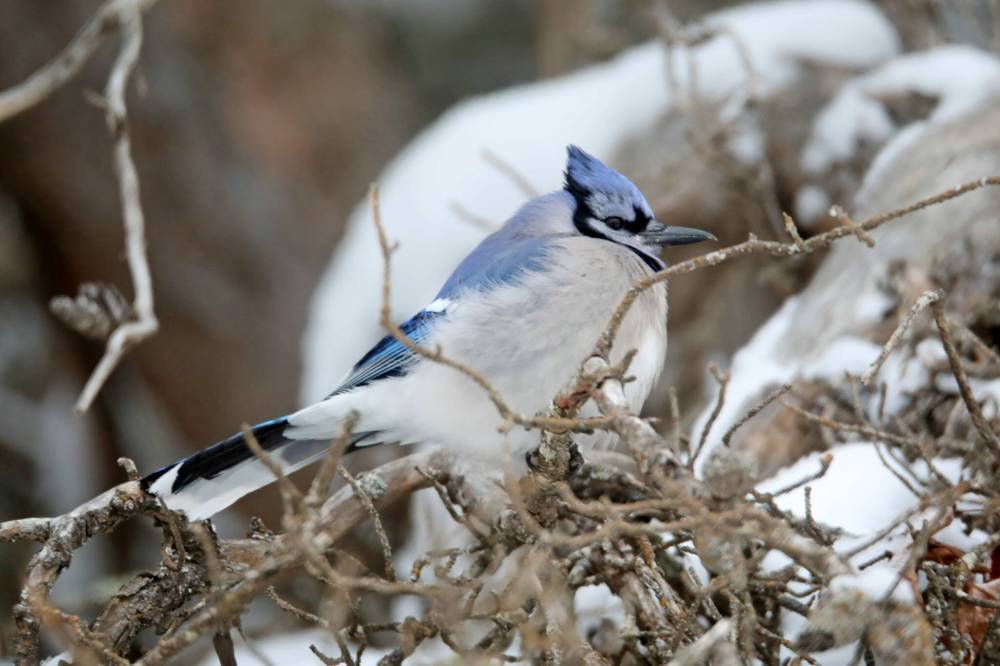
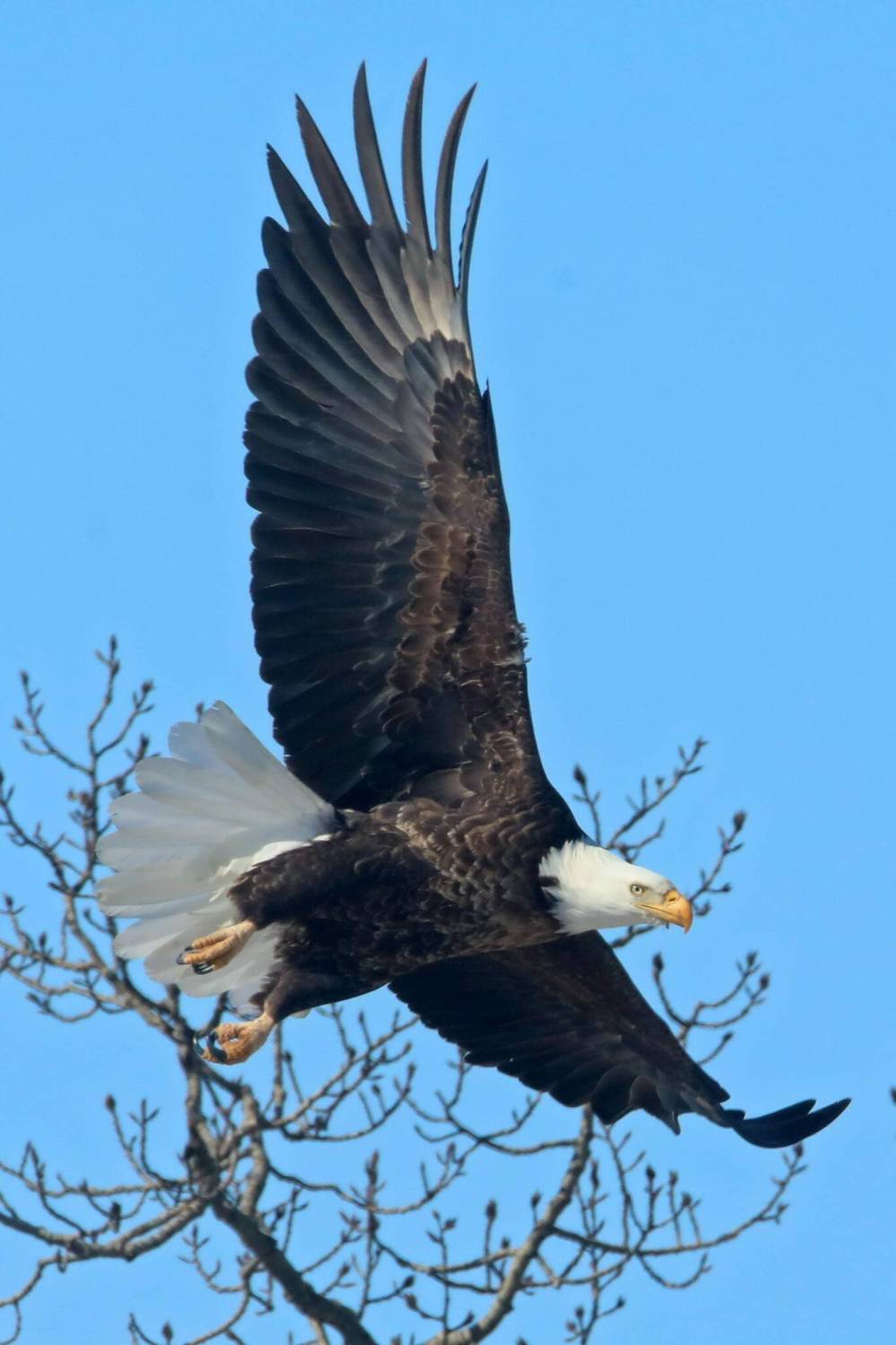
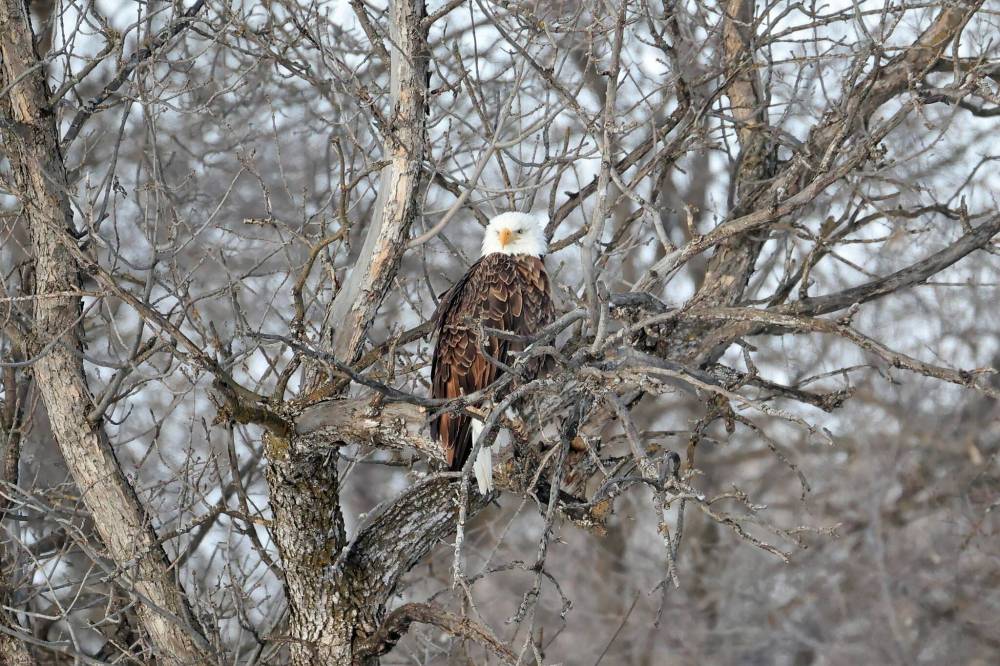
Surprisingly, bald eagles were spotted throughout our travels, but less commonly. And since 95 per cent of our trip went through at least some type of forest, you could always depend on seeing a friendly chickadee, the raucous call of a blue jay, a ruffed grouse beside the road, and a downy or hairy woodpecker tapping away at a dead tree.
Trees were also a common denominator over most of the country. White and black spruce, tamarack, birch, and aspen trees could be found in almost every locale.
There were differences, of course. Looping in a large clockwise circle, we visited almost every major biome in Canada, starting with the prairies, followed in succession by the Rocky Mountains and their western kin, west coast rainforest and the Gulf Islands, the beautiful glacier-scarred landscape along the drive to Stewart B.C., and the near-contiguous boreal forest of northern B.C. and the Yukon.
Then it was on to the tundra of northern Yukon and the Northwest Territories. The trip home was like running a film in reverse as we retraced our route through boreal forest, aspen parkland, and prairie.
Two months later, we decided we hadn’t punished our bodies enough and headed to Newfoundland. Once again, we encountered the endless boreal forest of Ontario, Quebec, and Labrador, then soaked up the beautiful fall colours of the Acadian mixed-wood forests of Nova Scotia, and the quasi-Carolinian forest of southern Ontario and Quebec.
Along the way, we encountered special landscapes such as the stark beauty of the Tombstone Mountains of the Yukon, the permafrost-created Pingos of Tuktoyaktuk, the wind-beaten fir trees that form the famed tuckamore of Newfoundland, and the beauty of the Gaspe shoreline.
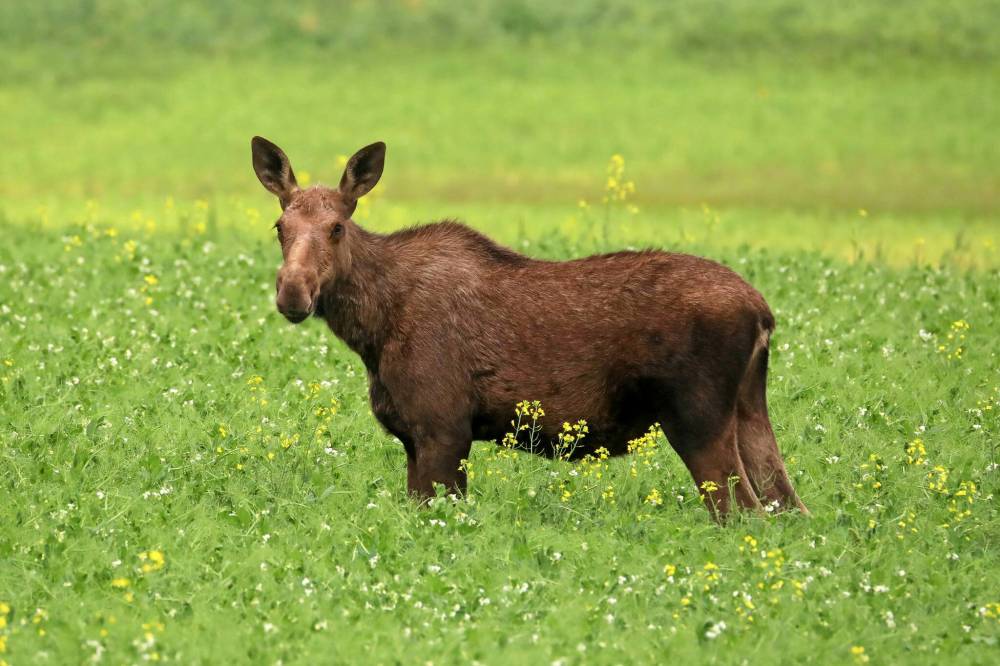
We saw wildlife. In particular, western Canada didn’t disappoint. The Yukon and northern British Columbia were the highlights of wildlife viewing, with caribou (both woodland and Barrenland), elk, moose, thin-horned sheep, bison, as well as the ubiquitous white-tailed and mule deer. We spotted a lynx, several black bears, and a total of five grizzly bears.
According to many accounts, Canada appears to be a divided nation. Yet we do share some common traits. Apparently, whether you are from Alberta or Quebec, the Yukon or Newfoundland and Labrador, we all fear running into a moose at night, with “Caution – Moose in Area” signs being the most common wildlife sign no matter where we travelled.
Where there was some disagreement among locales, though, was in the depiction of moose on the signs. Every jurisdiction appeared to have a different opinion on what a moose should look like. Some images of moose wouldn’t have been out of place on a Rorschach inkblot test, while others appeared to be drawn by a committee of 4th graders.
The good news is that, despite the artwork, the warnings worked, and Rae and I kept the nighttime driving to a minimum. And made it home alive to tell the tale.
» Ken Kingdon lives in the heart of the Riding Mountain Biosphere Reserve. Send him a text at 204-848-5020 if you have stories to share.