
Westman This Week stories of the year 2025
Advertisement
Read this article for free:
or
Already have an account? Log in here »
We need your support!
Local journalism needs your support!
As we navigate through unprecedented times, our journalists are working harder than ever to bring you the latest local updates to keep you safe and informed.
Now, more than ever, we need your support.
Starting at $15.99 plus taxes every four weeks you can access your Brandon Sun online and full access to all content as it appears on our website.
Subscribe Nowor call circulation directly at (204) 727-0527.
Your pledge helps to ensure we provide the news that matters most to your community!
To continue reading, please subscribe:
Add Brandon Sun access to your Free Press subscription for only an additional
$1 for the first 4 weeks*
- Enjoy unlimited reading on brandonsun.com
- Read the Brandon Sun E-Edition, our digital replica newspaper
*Your next Free Press subscription payment will increase by $1.00 and you will be charged $20.95 plus GST for four weeks. After four weeks, your payment will increase to $24.95 plus GST every four weeks.
Read unlimited articles for free today:
or
Already have an account? Log in here »
The people of Westman continued to restore their rural communities this year with projects that sustain the rural life against the pressures of time and decay.
In Minnedosa, council backed a project to bring their clock tower back to life. The town paid to house a clock worker who repaired the clock and helped prepare it for a long future. The community meant to take advantage of his history and use it as an asset, according to a councillor.
The mayor of Carberry pushed for increased security presence, and made headway on a coalition of rural communities to share safety officers. The effort brought forward bylaws to support the program, and attracted the community of Souris, however the project was put on pause until the new year.
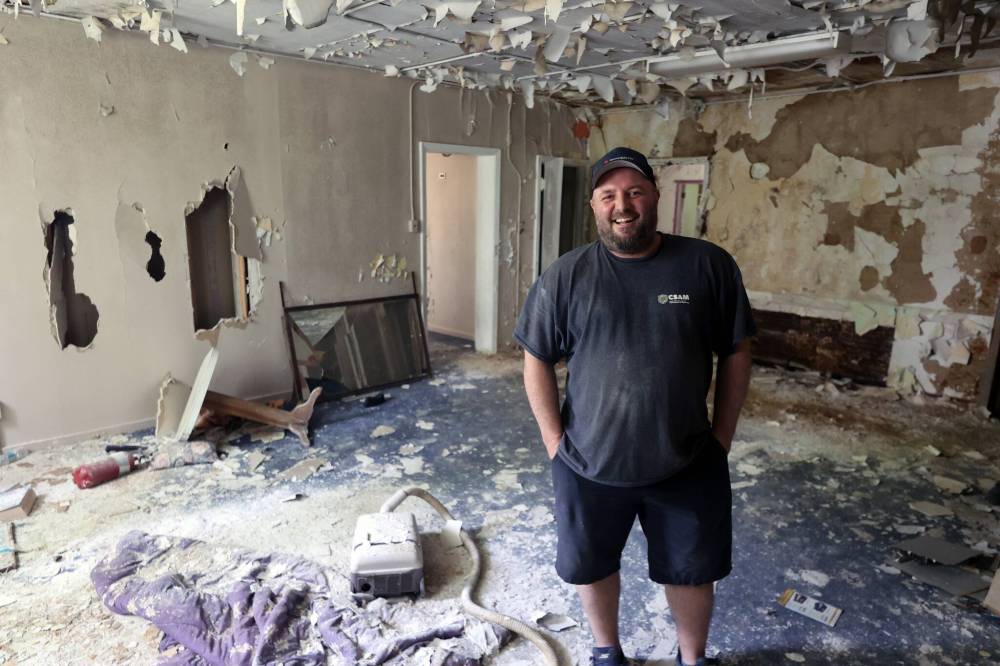
Geoff Gregoire smiles as he sees the interior of a former sanitorium, which has been vacant for decades. Gregoire and his team of tradesmen will completely gut the building, taking out everything except the bones, and then leave it to air dry for months before refurbishing the structure as apartments. (Connor McDowell/The Brandon Sun)
In Sioux Valley, the community yielded its first harvest from an indoor hydroponics program, expanding its greenhouse operations. The greenhouse manager brought the skills into motion using an education at Assiniboine College, and with the help of volunteers.
Ninette saw leaps of progress towards the renovation of the Ninette Sanatorium. Project lead Geoff Gregoire brought the project across a milestone in transforming the abandoned site into a project of housing, a museum, and several commercial projects. A tenant was already renting a condo in July, in a building that had previously been decorated with humid, drooping, decades old ceiling fans, rot and mould.
Wawanesa welcomed news that the community’s dam would be replaced in the coming years. The head of council said it was a sigh of relief that the province put forth a project design, and construction timelines, because it meant the project had momentum after many years of having it in the back of the community’s mind.
Here’s a look back at the best of 2025 in Westman This Week.
.
April 10: Countryfest struggles to recover from COVID
By Connor McDowell
Dauphin’s Countryfest is pushing to get ticket sales back to pre-COVID levels because the future of the event is at stake, its vice-president said.
Countryfest vice-president Bob Gilroy told the Sun in March that the non-profit is encouraging support for the festival. Organizers are calling on locals to consider the festival this year as ticket sales pose a threat to the festival as a result of the COVID pandemic.
“We need to get back to the days prior to COVID,” said Gilroy. “Each year, the ticket sales have gone up but they are still not at a point for long-term viability of the festival.”
Southern Manitoba, such as areas like Brandon and Winnipeg, are some areas that have not been coming out as much in recent years, Gilroy said.
Ticket sales are the main source of income for the non-profit. As people changed their habits following lockdowns in 2019, many local events have faced existential threats in lower turnouts.
“Edmonton and Regina are two examples of places that lost festivals recently,” said Gilroy in a phone call with the Sun. “Ticket sales (for many things) have not been there since COVID.”
To combat this struggle locally, the City of Dauphin recently signed an agreement with Countryfest. The city signed a five-year sponsorship that totals $100,000, as a way to support the festival as it recovers its numbers.
.

May 8: Sioux Valley hydroponics program has its first harvest
By Matt Goerzen
SIOUX VALLEY DAKOTA NATION — Jennifer McIvor doesn’t think of herself as a farmer, necessarily.
“I feel like a farmer is more agriculture-based, where we’re kind of different here,” McIvor says from her desk in a recently constructed hydroponics facility.
“I guess we grow food and we produce food, but with different methods. We’re not trying to mass produce, just trying to grow healthy, organic-type food.”
A 2017 alumnus of the Assiniboine College horticultural production program in Brandon, McIvor has been working to improve food production and quality at Sioux Valley ever since taking on her role with the community as the Greenhouse, Gardens and Grasslands manager.
McIvor, along with members of her team and with the help of community volunteers, have expanded the community greenhouse operations, grown the local community garden project and seed reserves, and started down the road to restoring community-owned prairie lands for Sioux Valley’s bison pasture.
But the community’s latest innovation — a hydroponics food production program they’re temporarily calling Sioux Valley Grocer — promises to improve food production on the reserve by addressing food insecurity and providing residents with healthier food options.
“It’s just called Sioux Valley Grocer right now, but we’re going to come up with a name, because it’s going to be a business,” McIvor said.
Thanks to their efforts, Sioux Valley was approved funding for a hydroponics growing unit and storefront. Sioux Valley’s hydroponics facility is a large L-shaped building situated only a few dozen metres away from the original greenhouse and the community gardens to the east of it.
.
June 5: Carberry to add safety officers
By Connor McDowell
The Town of Carberry is hoping to hire its first community safety officer this year in a bid to increase the presence of law enforcement.
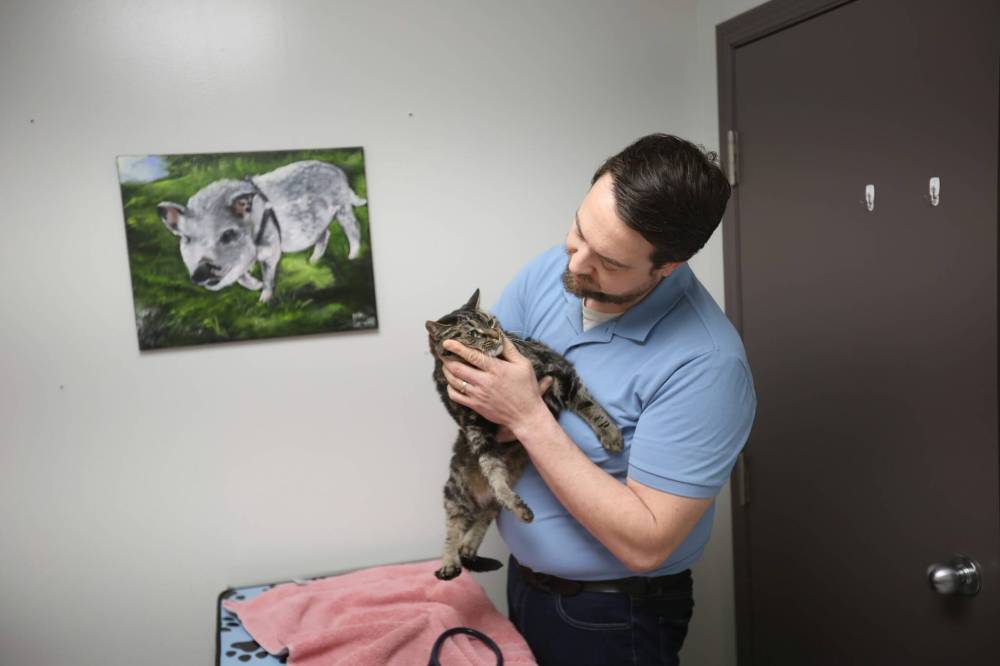
Veterinarian Troy Gowan with Minnedosa Veterinary Clinic, examines a cat named Daisy. (Tim Smith/The Brandon Sun files)
Carberry council passed a bylaw in May, allowing the town to set aside money for the launch of a community safety officer program. Mayor Ray Muirhead told the Sun council is considering the project a high priority.
“We’ve instructed our chief administrative officer to go forward and really put the heat on this,” said Muirhead. “I said let’s get moving on this, and move fast.”
Muirhead said an aggressive estimate is to have the program up and running by the end of summer. Carberry is looking to bring in nearby municipalities such as Oakland-Wawanesa, Riverdale and Souris-Glenwood to share the program and split the costs.
The town would need to pay for startup costs like the uniform, equipment, training, vehicle, office space and salary of a community safety officer. The cost would be somewhere up to $150,000, said the mayor.
Deterring crime and having someone nearby to call are the two main reasons to start the program, Muirhead said.
“We just want their visibility and their presence in town,” said Muirhead. “That’s all we need, just to know that somebody is in town, driving around, that they’re visible.”
Carberry is encouraging several nearby municipalities to join in on the program, and share the officers and the cost of the program.
.
June 12: Canada on track to lose access to Peace Garden airport
By Connor McDowell
The future of the International Peace Garden Airport relationship is in jeopardy. Canada will lose access to the airport in next eight to 15 years unless some department in the country partners with North Dakota on a rebuild.
Due to federal regulations, North Dakota will need to reconstruct some of its tarmac and that will directly cut off access to Canada’s slab of pavement. The Americans are looking for someone to deal with in Canada to build a new access, however they’ve failed to connect with a single agency willing to partner on the project.
The regulation failure is that the taxiway that gives access to Canada is not at a 90-degree angle to the landing strip, according to Kyle Wanner, director of aeronautics for North Dakota, who added that Canada’s pavement is too close to part of the airstrip. As a result, Canada’s slab of pavement at the airport needs to move, or it won’t be connected in the future.
“What will happen here is, during the short term, we’ll still have access to Canadians on that taxiway moving forward,” Wanner said. “But eventually that taxiway is going to need a reconstruct, and when it does, if Canada does not step up, or any organization, to fund any improvements on the Canadian side, the taxiway going to the Canadian apron will just be removed, and all access to Canada will cease.”

Greenhouse Gardens and Grasslands manager for Sioux Valley Dakota Nation, Jennifer McIvor, cuts heads of lettuce during a harvest of hydroponically grown leafy vegetables on April 30. It’s the first harvest for the new facility, which was purchased last year from a company in Ontario. (Photos by Matt Goerzen/The Brandon Sun files)
The problem is that nobody has been able to identify who in Canada is responsible to green light the project. And so while the United States prepares to reconstruct the airport, it has no confirmation that Canada will actually join in on the program and build its side of the border.
“Almost every group that we had reached out to didn’t feel it was their problem, if you will, or there was something that they needed to further discuss. And so we kind of just kept going round in circles,” Wanner said. “Does Canada want their apron or not? Do they want to continue this partnership or not? We just don’t quite have an answer to that yet.”
.
June 26: Westman taxpayers footing the bill for spring floods
By Connor Mcdowell
RUSSELL – A group of Westman mayors, reeves and councillors say their concerns have been overlooked along the border with Saskatchewan as massive amounts of water rolls through to Manitoba every spring and destroys infrastructure.
Representatives from the Rural Municipality of Sifton, Municipality of Russell Binscarth, and the RM of Riding Mountain West told the Sun this month that water from Saskatchewan causes damage in the hundreds of thousands of dollars year over year. Grant Boryskavich, reeve of Riding Mountain West, described the issue as a reoccurring, unfair burden to taxpayers.
“What happens consistently along the Manitoba-Saskatchewan border is, there’s a big flush of water coming and roads are getting washed out,” Boryskavich said. “The municipalities continually have to pay, and have their taxpayers pay for that.”
The state of emergency this April in Russell Binscarth was due to water from Saskatchewan, mayor Judy Snitynsky told the Sun. The surge of water partially collapsed a culvert 12 feet in diametre, which she said will cost more than $350,000 to repair. Staff were also forced to excavate another road so that water could flow past.
“We are left on our own, repairing roads and bridges and culverts at hundreds of thousands of dollars year over year,” Snitynsky said. “It’s our local taxpayers who end up paying for all of that, right? That’s our issue.”
The locals from western Manitoba said the province does not provide enough support to fix the damage the water causes, and they feel the province should be more involved as it ultimately makes the decision about waterflows through Manitoba.
When asked about a meeting with the Saskatchewan Water Security Agency last month, which they did not attend but were briefed on, Boryskavich and RM of Sifton Coun. Scott Phillips said that a major takeaway was discovering a discrepancy between Manitoba’s and Saskatchewan’s policies around culverts.
“The one thing that really surprised the municipalities and the people that were there is that the RMs in Saskatchewan can put in any size culvert that they want,” said Boryskavich. “They don’t need a permit, whereas in Manitoba, you have to get a permit application. The (provincial staff) have to come out and size them for you and tell you what could be put in.”
The policy in Saskatchewan is to keep water flowing at its natural rate, said Krystal Tendler, executive director of agricultural water management at the Saskatchewan Water Security Agency. She said RMs cannot intentionally speed up the flow of water, but recent years still have seen a surge due to mother nature.
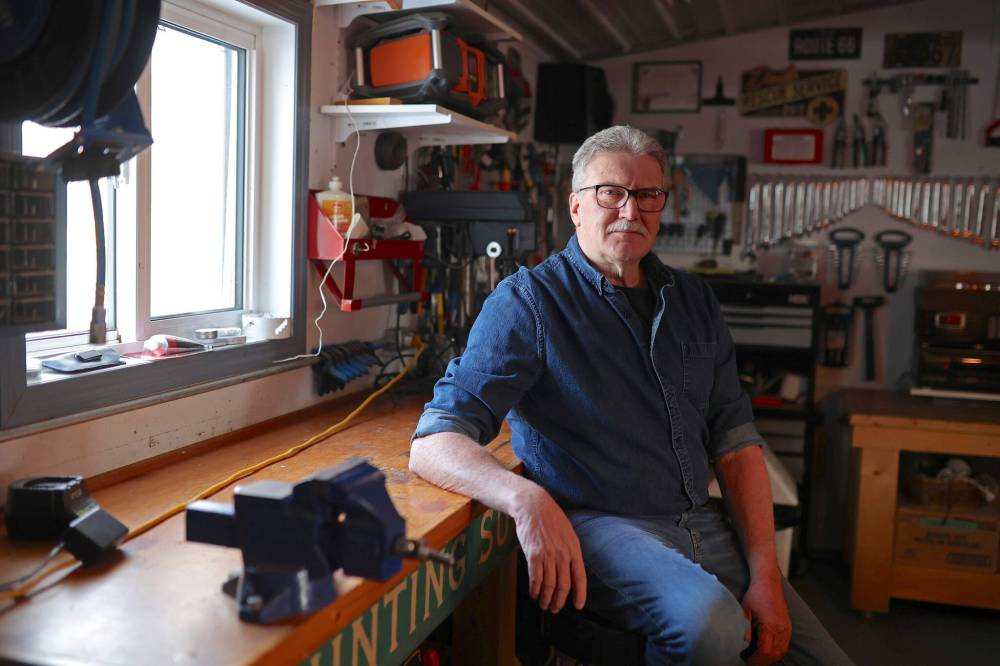
Carberry Mayor Ray Muirhead in the garage of his home in Carberry. (Tim Smith/The Brandon Sun files)
“The last two years, the melt has been very fast on the east side,” said Tendler. “That means runoff comes hard and heavy through the east side of Saskatchewan and into Manitoba, and I’m sure that they experienced impacts, just as we did.”
.
July 10: Ninette Sanatorium making a recovery
By Connor McDowell
A team of three construction workers are gutting the Ninette Sanatorium and refurbishing it to house apartments and commercial projects. The 10-year vision is underway, with the hope one apartment building will be completed this winter, having rented a suite already, and a museum is planned for the end of summer.
The final project will encompass roughly three dozen housing units next to a new museum of the sanatorium, an event venue for weddings and banquets, a childcare facility, office space and a culinary arts program with some accommodation, if all goes according to plan. Geoff Gregoire is leading the work.
The renewed vision for the property spans four buildings that still stand at the Ninette Sanatorium from its history as a fresh-air getaway to recover from tuberculosis. There’s an administration building, two identical residential buildings, and another that was used to house on-site nurses.
To transform the building, the process begins with a complete demolition of everything except the bones of the structure, Gregoire said. The building is cleared out, and then left to sit empty for four months to air dry. When it is dry, reconstruction can start without the risk of problems like dampness and deterioration continuing.
RM of Prairie Lakes Coun. Glen Johnston told the Sun the project would help bring people through the community and drive tourism to the town. He said he supports the reconstruction as the history there was important, and he is happy to see the work to keep it alive.
Plans for the museum include six rooms showcasing old medical equipment, clothing, memorabilia, machinery and photographs of the sanatorium when it was running in the 20th century.
.
July 17: Daycare shortages make it harder to hire nurses
By Connor McDowell
The Town of Minnedosa’s struggle with daycare shortages has begun to repel healthcare professionals from the community, a councillor and staff have told the Sun.
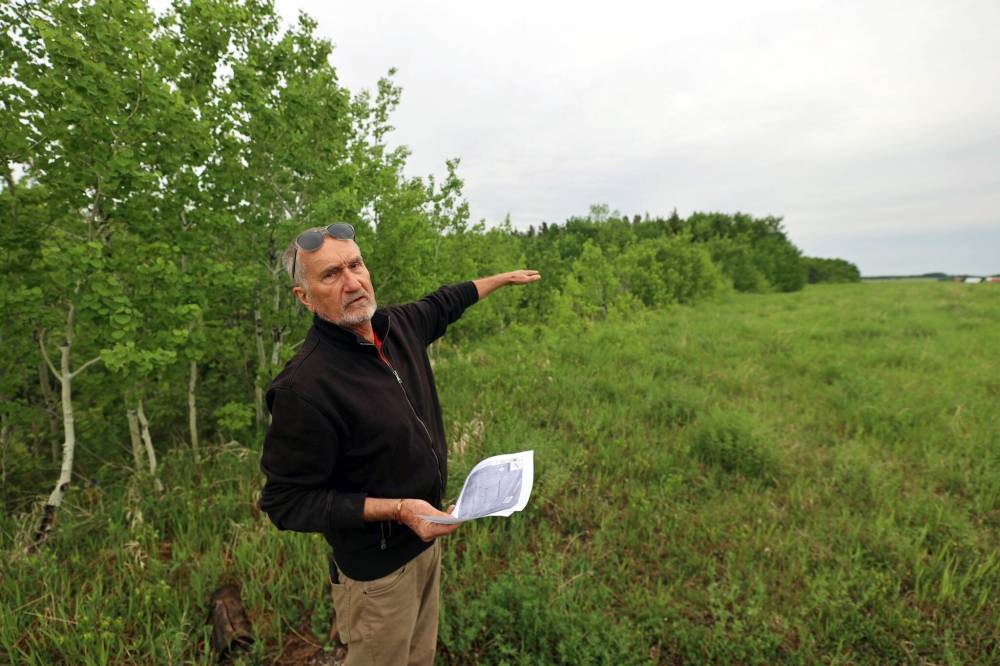
David Pedersen, a pilot who advocates for airports in the southern prairies, stands at the International Peace Garden Airport on the border with the United States. He points to an area that is proposed for a new development at the airport. While the United States performs work on its side of the airport, Pedersen wants the province to strike a deal to expand the Canadian side into surrounding grass and bush area. Without investment, the Canadian side will be decommissioned in eight to 15 years. (Connor McDowell/Brandon Sun)
Coun. Grant Butler put a call out for an “aggressive” plan to address shortages in the community at a council meeting in late June. When contacted by the Sun, he said that he has heard from nurses, doctors and the community’s economic development team that recruitment is hindered by daycare shortages.
“A nurse that was coming from out of country to Minnedosa was having trouble getting daycare, and so she was actually looking somewhere else,” Butler said. “Even one of our doctors said they went for other training in Winnipeg, and they were thinking about not coming back to Minnedosa, even though they had a home here, because they couldn’t find daycare.”
Families have chosen to live and work in other communities due to the daycare shortages, Minnedosa’s city manager Danniele Carriere wrote in an email to the Sun. The community has put out requests to meet with provincial staff as a result.
The issue comes two years after the former Progressive Conservative government announced the creation of a 74-space day care for Minnedosa. The NDP government has now taken up the project, which spans 2,600 child care spaces across the province for children under the age of seven.
Details are scant about the progress of the Minnedosa facility as of early July. The Province of Manitoba was unable to provide an update when reached by email, but a spokesperson said the department looks forward to next steps.
“We’re just in limbo,” Butler said.
The last update about the province’s project came in November 2024, and a new request for a meeting had not received a response from the Minister of Education about a month after the letter, which was dated June 3. The Sun’s request for a comment from the minister was not granted.
Recruitment can sometimes depend on child care and it is well known in the province, said Kevin Carter, regional lead in Human Resources at Prairie Mountain Health.
In an email to the Sun, Carter said that the availability of childcare spaces can be a significant factor.
“This can be particularly challenging in rural areas,” he said.
.
Aug. 28: Minnedosa’s antique clocktower fixed
By Connor McDowell
MINNEDOSA — An antique clock worker has restarted the hands of time above Main Street Minnedosa with a little help from the local government.

Les Shuttleworth, a trained clock restorer, flew from Mexico as part of an effort to restore the clock tower on Minnedosa Town Hall. Shuttleworth told the Sun he landed in Winnipeg and road-tripped to Minnedosa, spending three days repairing the clock and teaching locals to continue in his absence.
He said fondness of the area contributed to his decision to help out. He said his family has history in the area that dates back more than 100 years.
“I love old clocks, and it’s pretty exceptional that Minnedosa has one of the very, very few functioning town clocks in Canada,” he said. “Minnedosa is a wonderful town and my long family connection there made me want to help out in any way I could.”
After travelling to diagnose the issue, what Shuttleworth found was that the system of intertwined mechanical gears had stopped for a simple reason. It took a few hours to sort out, he said.
“Nothing was broken or worn, just misaligned,” he told the Sun in August. “Over time, more than a hundred years I’d say, the screws had loosened due to vibrations of the clock ticking.”
The issue was simple, but “There was just no one who knew enough” to solve the problem, said Minnedosa CAO Danniele Carriere.
Now that he has returned to Mexico, the responsibility for the clock falls on local government. A councillor has volunteered to take the helm for now.
Grant Butler, a councillor at the Town of Minnedosa, tagged along for the restoration project to learn. He said Shuttleworth trained him to maintain the clock going forward, and he will pass along what he learned.
The culture and the history are important to keep alive, he said, that’s why he made an effort to get it going again.
“I think it’s unique to the community. And I think it’s something we can utilize,” Butler told the Sun. “It’s an attraction and it’s part of the history of the town. And it’s a shame to see this type of technology go away and not be utilized.”
.
Sep. 25: Eviction comes in Boissevain trailer court land deal
By Connor McDowell
BOISSEVAIN — Residents are vacating a Boissevain trailer park this week to clear the way for an expansion of a manufacturing business.

The clock tower in Minnedosa. (Connor McDowell/The Brandon Sun)
Four households in the Buckingham East Trailer Court have reached their eviction dates after more than a year of talk and warning. The Municipality of Boissevain-Morton is helping residents move, as it intends to sell the land to Western Archrib for an industrial expansion.
Resident Cheryl Nelson told the Sun that she and her husband are moving to Brandon as a result of the eviction. The couple was looking at more than $10,000 in costs to move, so they decided to spend that to get to Brandon, where they planned on moving eventually.
Nelson and her husband said they would have stayed in Boissevain had there been more support through the move, but they felt they weren’t shown enough respect during the process. Nelson said a downside for the community is that her husband, a working nurse, something rare in small communities, will be leaving Boissevain because of the eviction.
The trailer court residents who are being evicted were renting land owned by the municipality; however, in the last two years the land has been eyed for the business expansion. The municipality warned the residents more than a year ago, and is now assisting three households to move to Buckingham West Trailer Court, which is about 200 metres down the road.
The evictions come after a formal letter was issued this spring.
Head of Council Judy Swanson told the Sun the municipality is supporting residents in the move because it’s understandable that it is an inconvenience.
“People that have been asked to move, they’re not going to be happy,” Swanson said. “But we’ve done everything we could.”
The Municipality of Boissevain-Morton is providing a two-day hotel stay, a small cash sum, and a complimentary moving company to assist with the relocation for residents that are moving from the east to the west trailer court, Swanson said. The residents were also given first choice at the new trailer court plots that the municipality built at the west end.
.
Oct. 16: Provincial funds sought for Carberry daycare
By Connor McDowell
A committee in Carberry has drawn up blueprints for a new daycare to house 55 kids and is applying to the province for grant funding.
Tiny Taters Childcare Co-operative is readying to submit its grant application to the Province of Manitoba for help with a 5,400-square-foot facility that would create space for infants, preschool aged children, and before and after school programs, committee chair Krista Plaisier said.
The facility is planned to be built on land sold for $1 by the Town of Carberry and the Rural Municipality of North Cypress-Langford.
The blueprints for the facility have been drawn up to visualize a completely accessible building with a space that can house eight infants, two preschool rooms that can hold 16 kids each, a before-and-after-school program room that has space for 15 kids, a commercial kitchen, an office for the director, storage space, a janitor’s closet and bathrooms with “tiny toilets.”

Jack Kirk is catapulted into the air above Minnedosa Lake while playing with family and friends at the Splish Splash Water Park on the lake recently. (Tim Smith/The Brandon Sun files)
The building plan has not been approved by the province, and will be submitted as part of the committee’s upcoming grant application.
Plaisier said there is a huge need for daycare in the community. The existing licensed daycare is full, with a waitlist of about 120 people.
Compounding problems can pop up because of this, she said. If there is no room for the next generation, the community might deteriorate.
The total cost for the facility would be roughly $4 million.
The co-operative plans to ask the Province of Manitoba for 60 per cent funding for the daycare project. The remainder of costs would be paid by the co-operative through a mortgage. Costs would be met by fundraising and an ongoing operating fund that the Province of Manitoba supplies to daycares, Plaisier said.
.
Oct. 23: Algae left its mark on Minnedosa water park
By Connor McDowell
The inflatable water park at Minnedosa Lake suffered financially this year because of algae, the business owner said.
Splish Splash Water Park saw a significant drop in sales starting early August and lingering until the end of summer, Gerry Champagne, owner, told the Sun in October. The drop came after an algae alert warned people to stay away from blooms on the lake.
“There’s a couple of days shortly after the warning hit the internet, where it was 25 degrees and there was nobody there, like, literally nobody,” Champagne told the Sun. “We opened that (next) weekend, and we’re lucky if we saw 10 people.”
The remainder of the season was stained with that perception of toxic algae, he said. Almost a month passed before people returned to the water park, but customers never returned in full.
“The sales didn’t bounce back — let’s say they dropped 90 per cent. Well, it probably got back to about 50 per cent,” Champagne said. “We probably broke even or lost money this year.”
The water park had to lay off all four part-time staff to cope with the change in business, he said. The park was never able to hire the staff back for the season, however the team hopes some of the local lifeguard staff will return for 2026.

Stephanie Schoenrock, executive director of Visit Minot is seen outside the Minot Visitors Center at the Scandinavian Heritage Park in March. (Tim Smith/The Brandon Sun files)
“I feel bad for those kids, like I said, they were looking forward to earning summer money and that kind of stuff, but it’s out of our hands at that point.”
At the end of July, the Province of Manitoba put out blue-green algae advisories for several lakes in Manitoba, including Minnedosa Lake. Staff collected water for testing, and staff at the Town of Minnedosa also put out a public warning to residents to avoid contact with large green scums of algae.
.
Nov. 6: Minot optimistic despite drop in Canadian visitors
By Connor McDowell
The tourism department in Minot, N.D. is reporting a roughly 20 per cent decrease in Canadian tourism at the end of the year that was branded by “elbows up” messaging and anti-United States rhetoric.
Minot definitely saw impacts to tourism compared to a normal year, said Visit Minot executive director Stephanie Schoenrock. The impacts are seen through a variety of data, including border crossings, web traffic, visitation, hotel data and some cellphone metrics that the team tracks.
The tourism director said there is a major reason that Minot was expected to be resilient this year. The city, which is southwest of Brandon, has decades of relationships built with Canadians in the area, and that seems to have played a role in keeping things level, she said.
“I do think that those ties have helped us navigate these new waters,” Schoenrock said. “We have a long-standing relationship with Canadians. Decades. And we haven’t lost sight of that. Politics change, people’s opinions change, everything changes. But, you know, hopefully long-standing relationships can mean something.”
In adjusting to the current climate, the tourism department has changed its advertising a little, she said. The invitation to Canadians has remained, but in a tone that acknowledges what is going on, and respects people’s decision not to come, she said.
Since U.S. President Donald Trump announced tariffs on Canada, there has been about a 22 per cent decrease in traveller land crossings at the International Peace Garden port of entry, according to data from U.S. Customs and Border Protection. The drop is seen when comparing data from February to September between 2024 and 2025.
It comes after Prime Minister Mark Carney adopted a slogan of “elbows up” in dealing with the United States and encouraged the sentiment for many Canadians.
Looking back at the year now, tourism director Schoenrock said she saw the most severe impacts early in 2025, but they tapered off and averaged about 20 per cent by the end of the season.
Minot Mayor Mark Jantzer said the reality has turned out to be less frightening than what it seemed earlier in the season.

Mark Lowdon (right) is seen with volunteers at Oak Lake during an installation day for aeration technology in November. The system is expected to help fish survive winters, prevent algae blooms, and improve the health of the lake. (Submitted)
“I think it’s maybe less dramatic,” he told the Sun. “Back then, it was like, ‘Oh my gosh, oh my gosh, we are never going to see another Canadian down here.’ … It sure hasn’t turned out that way.”
Jantzer said he believes the impact may be less pronounced in Minot than other parts of the country. People in this region seem to be more resistant to political impacts, he said.
“The tariffs, the politics, the words back and fourth, are not as impactful out here on the Great Plains, with our neighbours, as maybe, it sounds like, in the capitals,” he said.
.
Nov. 20: Bubblers in Oak Lake expected to grow tourism
By Connor McDowell
A new aeration system at Oak Lake has been installed and the technology will start pumping oxygen into the lake this winter.
A technical team early this month spent three days at the lake laying the system, fisheries biologist Mark Lowdon told the Sun in an interview. There are now 108 oxygen bubblers on the floor of the lake, serviced by pump lines that are drilled underneath the lakebed.
“We have lines that are going from our shack 500 feet out into the lake, underneath the lake bed, and then they pop up right around five feet of water depth,” Lowdon said.
The infrastructure stretches from a shoreline shack out into the lake, where it releases oxygen bubbles as a way to improve the health of the lake.
Roughly a dozen volunteers helped install the equipment when AAE Tech Services visited for three 12-hour days this month, Lowdon said.
The project is expected to increase tourism in the area, generate economic benefits, and support the health of fish in Oak Lake.
The technology is lined far into the lake, where it will bubble oxygen into the water for dispersal. The oxygen will change the conditions of the lake, helping fish to survive.
For the winter, this bubbling will also prevent ice from forming on a large part of the surface of the lake.

Jon Friesen, an engineer working on the Wawanesa Dam, and Laura Robson, an engineer with Manitoba Transportation and Infrastructure, visited Wawanesa last week. The open house meeting was held to inform the public that engineers have chosen a design plan for the next Wawanesa dam. The bulk of construction is expected in fall of 2027. (Connor McDowell/The Brandon Sun)
“I’m not going to say the entire lake, because we don’t know that yet, but we’re going to be basically opening up an area that is bigger than three football fields,” Lowdon said.
The improvement will translate into better fishing — which has been shown to economically benefit communities in Westman, he said, citing a report from Rossburn.
“It’s huge, because everyone that comes, they’re buying fishing licenses, they’re staying in hotels, they’re paying for gas, they’re paying for food, they’re paying for liquor and everything like that.”
RM of Sifton Coun. Scott Phillips has said the project is expected to have massive impacts for the region.
“If we can have a cleaner lake, people will come back to the lake to swim, they’ll golf, they’ll camp,” Phillips said. “It’s a benefit to everyone, from recreation to water species.”
.
Nov. 27: Wawanesa dam design will be replaced
By Connor McDowell
WAWANESA — The new Wawanesa dam design was announced this month, along with a construction timeline that will see the previous 1939-built dam destroyed in the next three years.
Engineers from the Province of Manitoba and a private company, KGS Group, were in Wawanesa for a council meeting and open house meeting last week to inform residents. The province announced that it has chosen the design to be a new concrete structure downstream from the existing dam, and said the bulk of construction is expected to take place in the fall of 2027.
The news comes as a milestone for the community of Wawanesa, which has been on the radar for a dam repair with discussions going back to 2018, Municipality of Oakland-Wawanesa head of council Dave Kreklewich said.
“For me, it’s peace of mind knowing that it’s going to get done,” Kreklewich said. “It’s there now, it’s cast on paper … it’s going to start.”
The primary motivation for addressing the dam is to protect the community’s drinking water, Province of Manitoba project engineer Laura Robson told the Sun last year. If the dam were to fail, it could jeopardize the Wawanesa reservoir upstream.
Representatives from the Province of Manitoba at the November open house said construction may begin as early as January 2027 if all goes according to plan.
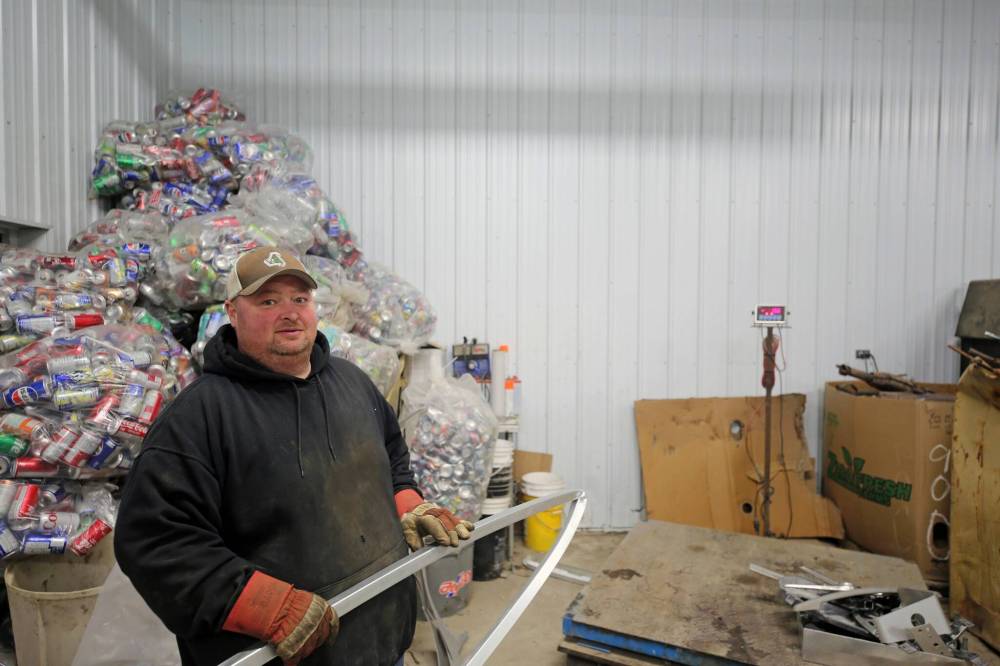
Joe Russell, purchasing manager at 2&10 Metal Recycling, stands infront of the scale where customers weigh their material before selling it to the yard. (Connor McDowell/The Brandon Sun)
The construction may finish in late 2028 or extend into 2029, depending on several factors such as the weather, staff said. Dry weather would be best for fast construction.
The dam design beat out four other models because it prioritized cost and public safety, engineers told the Sun. The five factors that were weighed against each other to decide on the dam model were: constructability, life cycle maintenance, environmental impacts, public safety and cost.
Robson, the province’s project engineer, told the Sun that safety came up as the most-cited factor that the public wanted to be prioritized by the new dam design.
“I would say public safety was something that came up over and over again,” she said. “It was a major factor.”
Mavis Brown, a longtime resident, said she was happy with the province’s process.
“It sounds like they are really listening, and taking the community’s comments,” Brown said.
.
Dec. 4: Brandon scrap yard part of global supply chain
By Connor McDowell
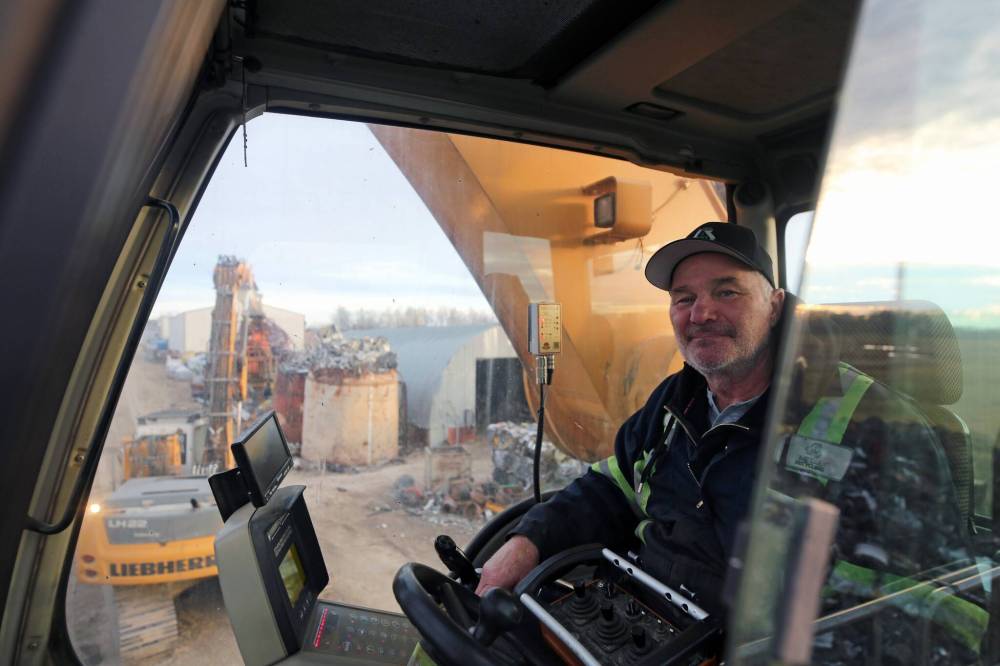
RM OF OAKLAND-WAWANESA — Local scrap metal from Westman finds its way around the world in a fascinating process that begins with about 100,000 pounds of material shipped on an average business day from a scrap metal yard south of Brandon.
The yard, called 2 & 10 Metal Recycling, is in the business of recycling junk. The business depends on a constant stream of material rolling in and out its doors, the owner said.
“You got to ship a certain amount every day to keep the bills paid,” owner Jason Flikweert said. “And the yard would fill up pretty quick if you didn’t ship stuff out.”
The scrap yard is constantly in flux. It diminishes and replenishes its piles as it does business. The public brings in about 33,000 pounds of scrap metal on the average day, and the business searches Westman for even more, Flikweert said.
Metal that moves through 2 & 10 Metal Recycling is on its way to be reborn, despite the appearance of a junk graveyard. The local scrap yard is a part of a production chain where old metal is recycled.

The scrap yard prepares metal and ships it to a steel mill in Selkirk, called the Gerdau Steel Mill. The junk metal is melted down into molten steel, and then recast as new products that wind up in projects all over the world — most notably perhaps, in Paris and New York City.
“You can find Gerdau Manitoba elevator guide rails in iconic structures such as the Eiffel Tower and many of the tallest buildings in the world, including One World Trade Center,” said Bryce Riou, marketing manager at Gerdau North America, in an emailed statement to the Sun. “Our steel uses 96 per cent recycled content from supplier partners like 2 & 10.”
The neat fact behind this is that steel and aluminum metals are, in effect, endlessly recyclable. They can be melted down and recast as new items over and over again without losing strength. As a result, it is highly recyclable.
That’s why people are willing to pay for it. That is also why the province supports recycling as a form of environmental stewardship, Manitoba’s environment minister told the Sun.
.
Dec. 11: Local business leads fight against food waste
By Connor McDowell
The strategy of a Brandon business has inspired food rescue efforts in a Winnipeg charity which is hoping to spread the concept across the province.
The Brandon Food Rescue Store’s strategy to use refrigerated storage containers to house food at a low cost were adopted by the Climate Change Connection out of Winnipeg. Jennifer MacRae, food rescue and emissions reduction project manager at Climate Connections Canada, said she hoped to get the containers in rural communities.
“We sort of looked into that and realized the feasibility of it and and thought it was a good option, not just for Winnipeg, but could become a very good option for other rural communities and/or smaller municipalities, as well as potentially northern and remote communities.”
“Our province should be looking at this as an innovative way to increase food rescue, a means to address food insecurity, but also to reduce waste and combat pollution and climate change,” she said.
Ted Dzogan, of the Brandon Food Rescue Store, initiated these efforts in Brandon. He works to identify failures in the food supply chain, and capture food that would otherwise be thrown out.
A recent example in November saw the store identify 1,500 kilograms of Montreal smoked meat – the weight of five average grizzly bears — to rescue from Winnipeg, he said.
The meat was headed for the landfill, as it was a week from its best-before date, he said. The restaurant that owned the meat expected it could not ship the meat from the warehouse and serve it to customers on time.
Through deals with businesses, Dzogan arranges for the food to be transported out to Brandon and stored in containers. From there, he partners with local food banks in the Westman area in order to divide out food, while selling most in the discount grocery store.
.
Dec. 18: Minnedosa vet clinic expanding
By Connor McDowell
The Minnedosa Vet Clinic is moving forward with a project to double the size of its office, which has become too small to serve the community.
The Westman animal clinic aims to upsize its office from roughly 1,300 square feet to about 2,800 square feet, veterinarian Troy Gowan told the Sun in a recent interview. The clinic is currently accepting proposals for the expansion that would consist of adding a new building, and renovating the existing building to reorganize space.
If all goes according to plan, the clinic is hoping to break ground on the project in the spring of 2026 and operate from its new office by the winter.
The expansion would increase the number of rooms in the clinic from three to five, would create space for storing inventory, give employees a room for their breaks and expand surgical space, among other things, Gowan said. The upgrade would make room for hiring another veterinarian and potentially one to two extra support staff, which the clinic is also looking for.
“It’s been that growth over time that’s really stimulated the need,” Gowan said. “We kind of hit that point in 2022, early 2021, where we were like, ‘We really could use more space to do the work that we’re doing.’”
Gowan said the Minnedosa Vet Clinic grew from roughly 125 new clients per year to over 400 during the pandemic. The clinic restricted new client intake, and limited the area to the Minnedosa and District Veterinary Services coverage area to cope with demand. It now receives around 200 new clients per year.
Balancing space for emergencies, routine care and everything in between can be difficult in the current 1,300-square-foot office, he said. The team consists of three vets, four registered veterinarian technicians, an assistant and two receptionists.