
Hydro warns Manitoba will need new electricity by 2030
Advertisement
Read this article for free:
or
Already have an account? Log in here »
We need your support!
Local journalism needs your support!
As we navigate through unprecedented times, our journalists are working harder than ever to bring you the latest local updates to keep you safe and informed.
Now, more than ever, we need your support.
Starting at $15.99 plus taxes every four weeks you can access your Brandon Sun online and full access to all content as it appears on our website.
Subscribe Nowor call circulation directly at (204) 727-0527.
Your pledge helps to ensure we provide the news that matters most to your community!
To continue reading, please subscribe:
Add Brandon Sun access to your Free Press subscription for only an additional
$1 for the first 4 weeks*
*Your next subscription payment will increase by $1.00 and you will be charged $20.00 plus GST for four weeks. After four weeks, your payment will increase to $24.00 plus GST every four weeks.
Read unlimited articles for free today:
or
Already have an account? Log in here »
Manitoba Hydro is signalling a significant shift in how the province will generate, conserve and manage electricity over the next decade, releasing a 2025 Integrated Resource Plan (IRP) Road Map that warns new, dependable power supply will be required within five years.
The road map confirms that Manitoba’s electricity demand is rising faster than previously projected, driven by population growth, economic expansion and the accelerating shift toward low-carbon energy. Hydro says new capacity will be needed by 2030, and potentially sooner, to maintain grid reliability during peak demand periods.
The 2025 IRP Road Map outlines a recommended development plan extending to 2035, aligned with a net-zero electricity grid by that date and a net-zero provincial economy by 2050. It builds on concerns first raised in Hydro’s 2023 Integrated Resource Plan and reflects updated modelling and public engagement.
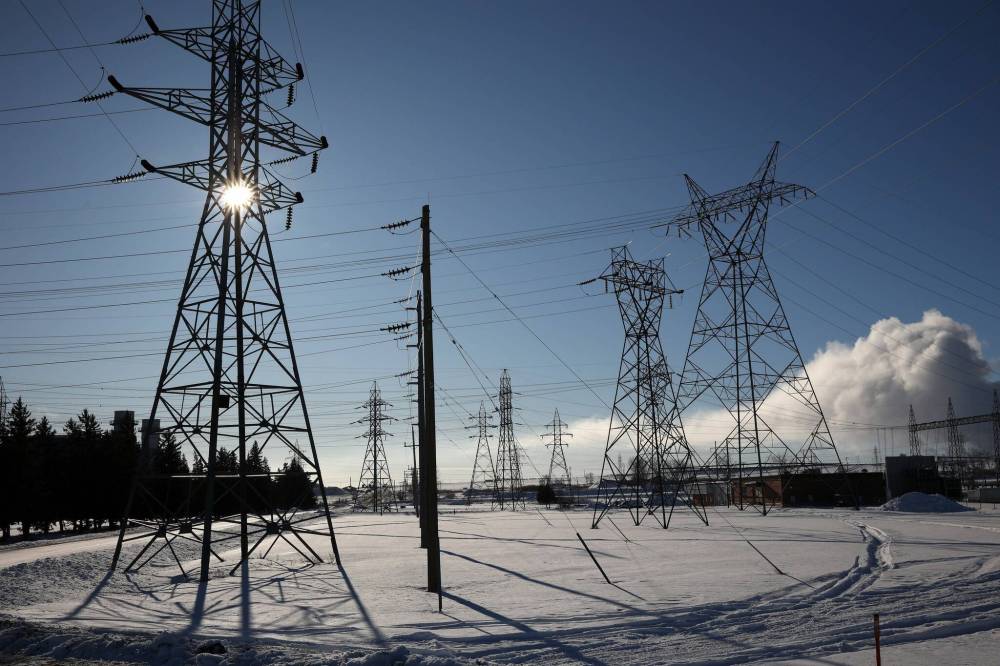
Hydro lines lead away from the Manitoba Hydro Brandon Generating Station. (Tim Smith/The Brandon Sun files)
“This plan reflects the best available information and analysis of how Manitoba Hydro can meet growing energy demand while managing risk and continuing to provide Energy for Life,” Hydro president and CEO Allan Danroth said in a statement accompanying the road map. He added the plan is intended to support net-zero goals while boosting the provincial economy, including opportunities for economic reconciliation.
Peter Chura, media relations officer for Hydro, said the drivers behind rising electricity demand are broad and accelerating.
“Demand for electricity is growing as the provincial population and economy grows, and customers and businesses shift to low-carbon energy,” Chura said. “The load projections considered in the 2025 IRP capture an energy transition that is happening around the world, reshaping how electricity is produced, delivered and consumed.”
Hydro’s updated projections suggest that without new generation coming online, Manitoba could face a substantial supply gap during peak demand periods.
“By 2030, we could face a 600-megawatt shortfall during peak load periods, typically the coldest days of winter when demand for energy is greatest,” he said. “Meeting peak winter demand is critical to keep the lights and heat on.”
To put that figure into context, Chura noted that 600 megawatts is nearly equivalent to the full generating capacity of Keeyask Generating Station, Manitoba’s newest hydroelectric facility.
“We’re very confident we can meet the need date for new capacity,” he added. “We’ve already started preparatory steps, like reserving combustion turbine manufacturing slots and starting procurement for majority Indigenous-owned wind power, so we can move quickly once approvals are in place.”
Rather than relying on a single solution, the recommended development plan calls for a portfolio approach that balances reliability, affordability, environmental impacts and socio-economic benefits.
At the top of the list are customer-side solutions, including expanded Efficiency Manitoba programs, demand-response initiatives and curtailable-rate incentives aimed at reducing peak load and delaying the need for new generation.
On the supply side, Hydro identifies six resource options that it considers feasible within the next decade. These include majority Indigenous-owned wind projects, battery energy storage systems, and enhancements to existing hydroelectric generation to increase capacity and efficiency.
The plan also calls for the development of new combustion turbines powered by natural gas, which would be designed to integrate renewable fuels such as hydrogen or renewable natural gas as those markets mature. In addition, Hydro is proposing strategic upgrades to transmission and distribution infrastructure, along with select investments in the natural-gas system to address aging assets and maintain reliability.
Hydro says natural gas combustion turbines remain a necessary reliability tool today, particularly for meeting peak demand, but are being designed to transition toward cleaner fuels as markets mature, including hydrogen blends and renewable natural gas.
Planning for uncertainty
The road map emphasizes that the IRP is not a one-time document but a repeatable planning process meant to adapt as technology, policy and customer behaviour evolve. Hydro says it modelled more than 50 scenarios and sensitivities using industry-leading software, supported by a Technical Advisory Committee and input from thousands of Manitobans during the first round of public engagement.
The plan also includes an “alternative development plan,” a second-best pathway that could be implemented if assumptions around electrification, costs or technology adoption change. In addition, Hydro has identified key “signposts” it will monitor, effectively early warning indicators that demand or technology trends are accelerating faster than expected.
Why Hydro is seeking public input now
Hydro says long lead times for wind farms, transmission lines, storage projects and efficiency programs mean the province cannot afford to wait until peak demand arrives. Early planning, the utility argues, is critical to avoiding supply shortages and sharp future rate increases.
Two rounds of public engagement are planned between fall 2024 and fall 2025, alongside ongoing input from industry, utilities, municipalities and community organizations through the Technical Advisory Committee.
The full 2025 Integrated Resource Plan scheduled for release in early 2026.
For everyday Manitobans, Chura said Hydro hopes the message is both serious and reassuring.
“The growing need for energy is a real challenge for the province,” he said.
“But we can meet it by making the necessary investments in new resources, energy efficiency and upgrading and rehabilitating aging infrastructure as required.”
» Winnipeg Sun