
Master gardeners celebrate Seedy Saturday
Advertisement
Read this article for free:
or
Already have an account? Log in here »
We need your support!
Local journalism needs your support!
As we navigate through unprecedented times, our journalists are working harder than ever to bring you the latest local updates to keep you safe and informed.
Now, more than ever, we need your support.
Starting at $15.99 plus taxes every four weeks you can access your Brandon Sun online and full access to all content as it appears on our website.
Subscribe Nowor call circulation directly at (204) 727-0527.
Your pledge helps to ensure we provide the news that matters most to your community!
To continue reading, please subscribe:
Add Brandon Sun access to your Free Press subscription for only an additional
$1 for the first 4 weeks*
*Your next subscription payment will increase by $1.00 and you will be charged $20.00 plus GST for four weeks. After four weeks, your payment will increase to $24.00 plus GST every four weeks.
Read unlimited articles for free today:
or
Already have an account? Log in here »
Days are growing longer and there are signs of melting snow here and there. That can only mean spring is somewhere in the offing. Another sure sign is Seedy Saturday, coming up on Feb. 21, 11 a.m. to 4 p.m. at the Ukrainian Reading Association Hall at 1005 Assiniboine Ave. in Brandon, organized by the Assiniboine Food Forest.
Master gardeners Sheryl Normandeau and Janet Melrose say Seedy Saturdays, which take place all across Canada, are the very best.
“Janet and I go to a lot of Seedy Saturday events and we look so forward to it,” Normandeau said. “It’s almost like Christmas for gardeners!”
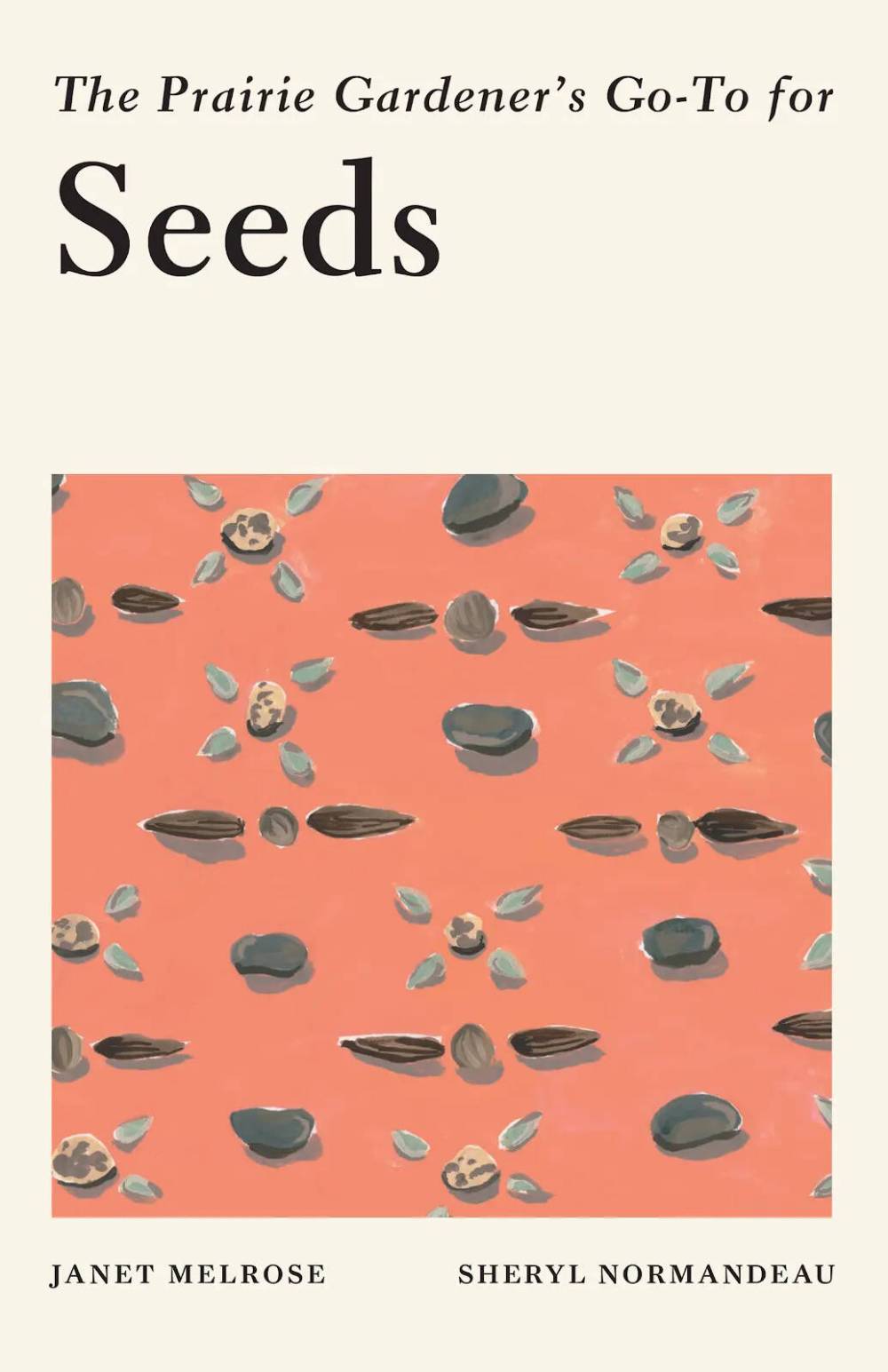
“The Prairie Gardener’s Go-To for Seeds” by Sheryl Normandeau and Janet Melrose is available from Touchwood Editions. (Supplied)
To help Westman readers make the best of Seedy Saturday, Normandeau and Melrose share tips from “The Prairie Gardener’s Go-To for Seeds” which they co-authored. The book is from their 10-volume reference series “The Prairie Gardener’s Go-To,” inspired by questions posed by gardeners.
The two connected through the Horticultural Society in Calgary, where they live, through community gardening. They’ve seen first-hand the benefits of growing locally sourced seeds. Janet Melrose said the closer to home you can source your seeds, the more successful you will be.
“Seeds adapt over time to the conditions they’re growing in, right down to the DNA level. Seeds adapt to the soils, the climate, just about everything,” Melrose said.
Local sourcing is key to Seedy Saturday. It’s an opportunity to support local producers and vendors, folks who can offer lots of helpful information.
“Talk to the growers. Find out what they recommend. Any of their favourite varieties might just become yours. Talk to other gardeners. Often there’s a seed swap area, so maybe get some new varieties for your garden,” Normandeau said.
Both authors strongly encourage having a plan that takes into account garden space, a written list of seeds and where they will go.
“I know when I go to Seedy Saturday, I have this terrible habit. I love growing tomatoes, so I want every tomato seed in the place. And I know I cannot do this. I know I only have a small space. But I am so tempted. So try to tell yourself, ‘Look, I have a budget. I have a plan. I’m only going to be able to grow eight containers of tomatoes. So I’m not going to buy 30 different packages of seeds. I can do a few more next year,’” said Normandeau.
Properly stored seeds, which have been kept dry in a cool but not cold space, should have a good germination rate. Purchased seed packets will have a best-before date and a percentage of viability. Seeds which look smashed, discoloured, deformed or mouldy, or markedly different from others in the package, are unlikely to be viable.
Melrose suggests a germination test, which consists of taking 10 seeds and sandwiching them in a row between two wet paper towels. Place them in a plastic bag and check every day for sprouting.
“If I get seven out of 10 seeds germinating, that tells me I’ve got fresh seeds. You’ll never get 100 per cent germination,” Melrose said.
Seeds have simple needs for germination: oxygen, water and an optimal temperature. When a warm day hits in spring, the temptation to dig and scatter can be irresistible to gardeners.
“The thing that always hooks everybody is that optimum temperature. Each has one that is specific to that type of seed: We have cool season crops, we have warm season crops. Some seeds need light to germinate, some need dark. The seed package is going to tell you all of those specific things,” Normandeau said.
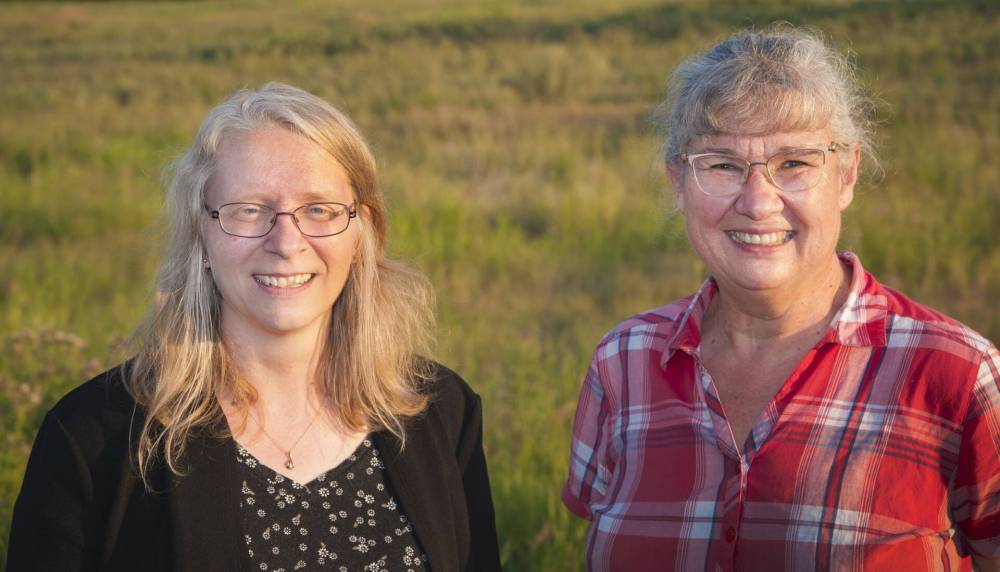
Certified Master Gardeners Sheryl Normandeau and Janet Melrose give two green thumbs up for Seedy Saturdays. (Supplied)
Reading seed packets is absolutely essential, whether your thumb is full-on green or just starting to take on a tinge. Melrose said a careful read will tell you depth to plant, spacing, light requirements and more.
“For spacing, the trick is if I’ve got a row of, say, four feet, if I’m in a raised bed, for instance, and I’m supposed to have one seed every inch, I’ll actually count out the seeds so that I don’t over sow,” Melrose said.
Over-sowing creates more work because once seeds sprout, extras must be very carefully removed to prevent overcrowding.
Melrose also recommends moistening the soil in the ground or containers about two days ahead of sowing so the soil can absorb the water. Sowing seeds onto dry soil can cause them to “float off” when they are watered and dry soil is a common factor in failure to germinate.
“I like to cover my seeds so that the wind doesn’t rip away the soil moisture. One of the best tools in our garden toolbox is ‘floating row cover,’ spun polyester you lay right over top of the seeds to help retain moisture in the soil. If it’s something that takes a long time to germinate, like carrots, I put planks of wood right over top the rows and to keep that moisture in the soil,” said Melrose.
Once seeds are sown and watered, nature and time, with a little help from the gardener, will have to do their thing. But while you’re at Seedy Saturday, have fun. Gardening, and getting ready to garden, should be a pleasure. It’s also a time to pause and appreciate.
“Quite literally, seeds are valuable,” Melrose said.
“They’re not a commodity. They are living embryo plants, and we should honour them and just marvel at the fantastic numbers that are out there, and that out of one little seed will come a whole great big plant.”
» wendyjbking@gmail.com