
More canola in Manitoba this year following China deal
Advertisement
Read this article for free:
or
Already have an account? Log in here »
We need your support!
Local journalism needs your support!
As we navigate through unprecedented times, our journalists are working harder than ever to bring you the latest local updates to keep you safe and informed.
Now, more than ever, we need your support.
Starting at $15.99 plus taxes every four weeks you can access your Brandon Sun online and full access to all content as it appears on our website.
Subscribe Nowor call circulation directly at (204) 727-0527.
Your pledge helps to ensure we provide the news that matters most to your community!
To continue reading, please subscribe:
Add Brandon Sun access to your Free Press subscription for only an additional
$1 for the first 4 weeks*
- Enjoy unlimited reading on brandonsun.com
- Read the Brandon Sun E-Edition, our digital replica newspaper
*Your next Free Press subscription payment will increase by $1.00 and you will be charged $20.95 plus GST for four weeks. After four weeks, your payment will increase to $24.95 plus GST every four weeks.
Read unlimited articles for free today:
or
Already have an account? Log in here »
The rising price of canola this spring has prompted some Manitoba producers to dedicate more land to the crop this growing season.
Farm Credit Canada data shows that canola prices grew from roughly $625 to $738 per metric tonne between January and May this year, following an announcement of lower Chinese tariffs on Canadian canola.
At the same time, Manitoban farmers are expected to dedicate 4.7 per cent more land to canola this year, said Keystone Agricultural Producers president Jill Verwey. Verwey cited data from Statistics Canada that projected a total of 3.2 million acres of canola in the province for the 2026 season.

Ross Prusakowski, deputy economist of Export Development Canada. Prusakowski said that EDC expects canola prices to increase due to sustained demand for the commodity. This follows a new trade agreement with China that saw the country lower its tariffs on Canadian canola, as well as improved export possibilities with other areas such as Europe and Japan. (Photo courtesy of EDC)
The projected growth is explained partially by the trade deal struck with China, as farmers “pulled back” on canola last year during political tension, Verwey said. But farmers’s decision making factors in several other things as well, she said.
In March 2025, China applied retaliatory tarrifs to Canadian canola to protest Canada’s imposition of a 100 per cent tariff on Chinese electric vehicles, steel and aluminum the previous year. The measures — which included a 100 per cent tariff on canola oil/meal and then a 75.8 per cent anti-dumping duty on seeds — led to a roughly nine per cent decrease in Saskatchewan’s benchmark canola price.
These stiff Chinese tariffs were lowered in March following a trade arrangement struck by Prime Minister Mark Carney earlier this year. The prime minister agreed to allow 49,000 Chinese eletric vehicles to be imported into Canada per year at a “most-favoured-nation” tariff rate of 6.1 per cent, rather than the previous 100 per cent tariff that former prime minister Justin Trudeau imposed in 2024.
The deal outlined that China would lower tariffs on Canadian canola seed to 15 per cent, from what was effectively 84 per cent, among other items.
Verwey said that while farmers factor in this updated market, shocks to price are generally less important to farmers than crop rotation, which balances the health of soil over time by growing a variety of crops.
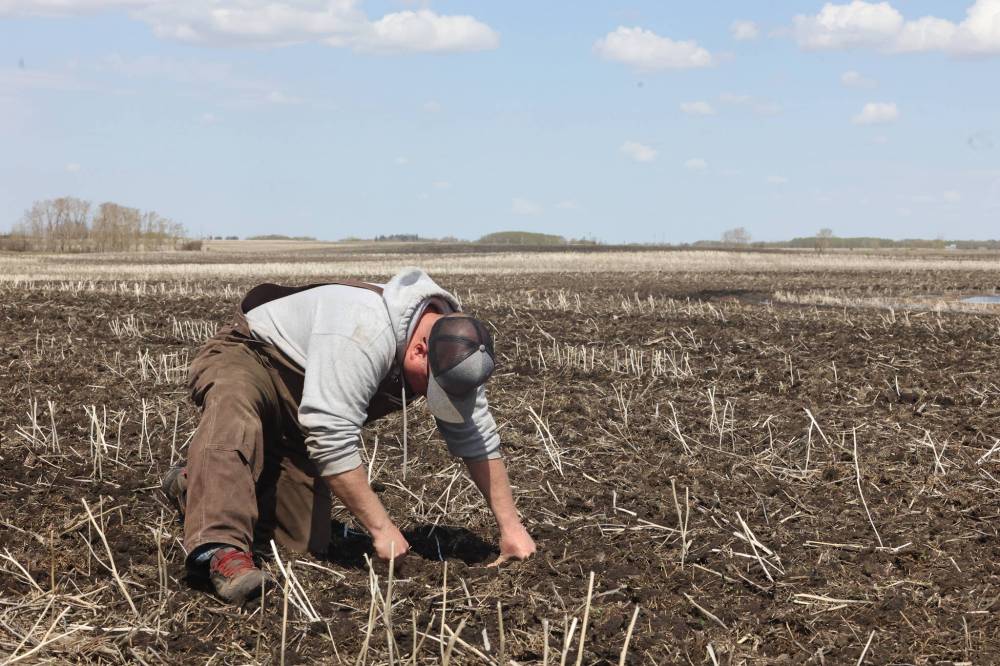
Grain producer Ron Krahn in his field north of Rivers in 2022. The farmer said he dedicated one extra field to canola this year while he was making decisions about what to plant because the market was improving. (File)
“You can make some short term decisions, but ultimately, you have to look at the what your long term plan is on your farm,” Verwey said. “It’s certainly a balance with what you need for good agronomy on your farm. So you have to look at both sides.”
Long-term profitabilility relies on healthy soil, so it can be costly to invest heavily into canola when the market rises, she said.
“Any short term gain that you might get, well, then you’re faced with, ‘What do you do next year?’”
According to a spokesperson for Export Development Canada, the impacts of lower Chinese tariffs, which took effect in March 2026, have begun to show in weekly trade data.
Export Development Canada deputy economist Ross Prusakowski cited trade statistics from May that marked a record for the last 12 months. In the week ending May 3, Canada exported more than 300,000 tonnes of canola for the first time in a single week since April 2025.
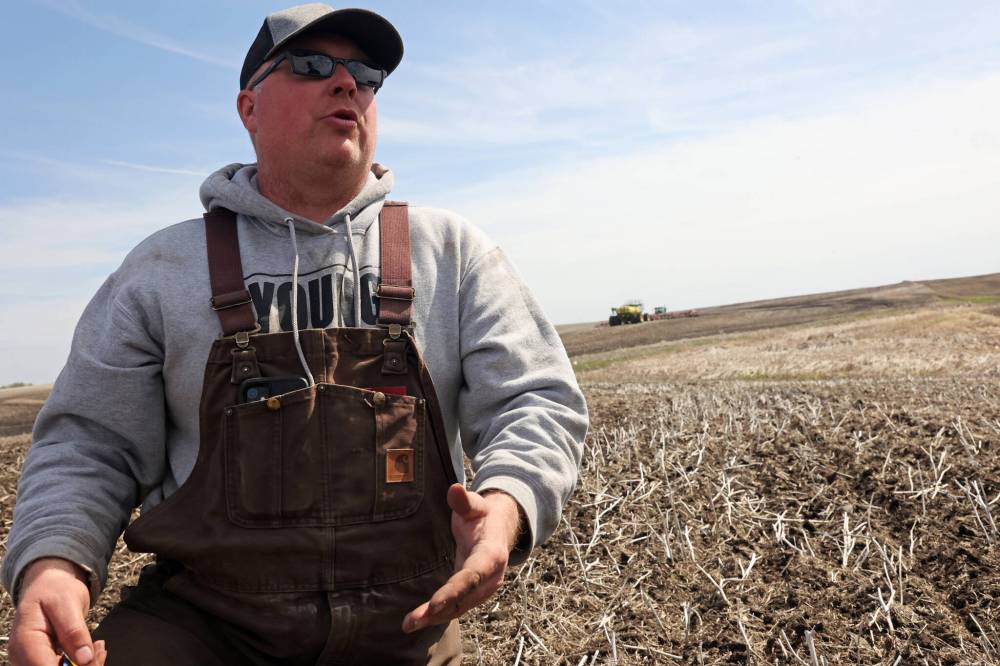
Grain producer Ron Krahn in his field north of Rivers in 2022. The farmer said he dedicated one extra field to canola this year while he was making decisions about what to plant because the market was improving. (Matt Goerzen/The Brandon Sun files)
Prusakowski said this reflects the market adjusting to lower Chinese tariffs — but that it is too soon to say it’s the cause. Going forward, however, he predicts that Canada’s exports will continue improving under the new trade agreement.
“We should see some some improvement in price going forward as demand remains strong,” Prusakowski said. “We’ll see more receipts, more income flow to Canadian farmers as we export more canola globally.”
Rivers-area producer Ron Krahn said the improved canola market and rising prices prompted his decision to plant an extra field of canola this year.
“We had one field that we were waffling between two different crops, and we chose canola because prices had been rebounding,” Krahn said. “So that was a positive. It looked more profitable now than peas did.”
Krahn also said that the most important piece for his business decision making is sustainability. Even though canola is rebounding, he said there are specific issues that prevent going all-in.
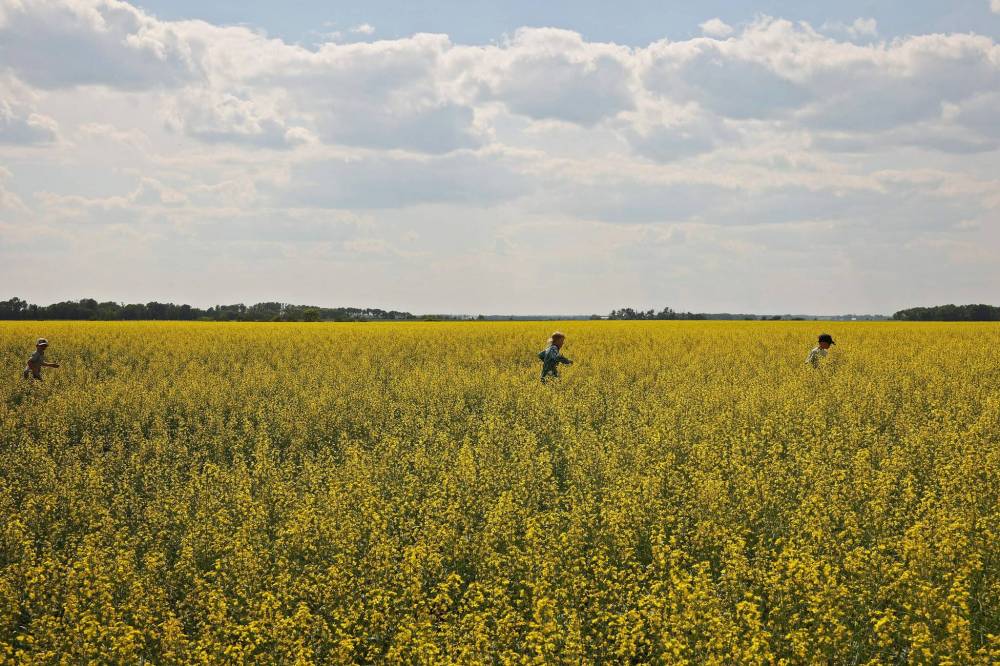
Boys play in a crop of canola in 2025. Chinese tariffs on Canadian canola were reduced in March, leading to optimism among farmers for the crop year. (Tim Smith/The Brandon Sun files)
“You wouldn’t want to just grow your whole farm as canola every year, because that’s not a good rotation from a disease perspective, and insects, and that kind of thing,” Krahn said. “You can’t just always chase whatever looks like it’s going to be the most profitable crop.”
The fewer market influences from the political world, the better, he said.
Canadian canola is attractive and valuable to China, according to Manitoba’s Agriculture Minister Ron Kostyshyn — and the provincial government wants to keep that trading partnership going.
“China definitely needs our canola. And hopefully we’ve come to an understanding, we’ve got a great working relationship,” Kostyshyn said. “We want to continue to network with China and have a market for canola for the farmers.”
Kostyshyn said that in an upcoming meeting with agriculture ministers in Canada, he believes a topic of discussion will be domestic use of agricultural products like canola. The more Canada can process its own product inside its own borders he said, the more secure and insulated the market will be against trade shocks.
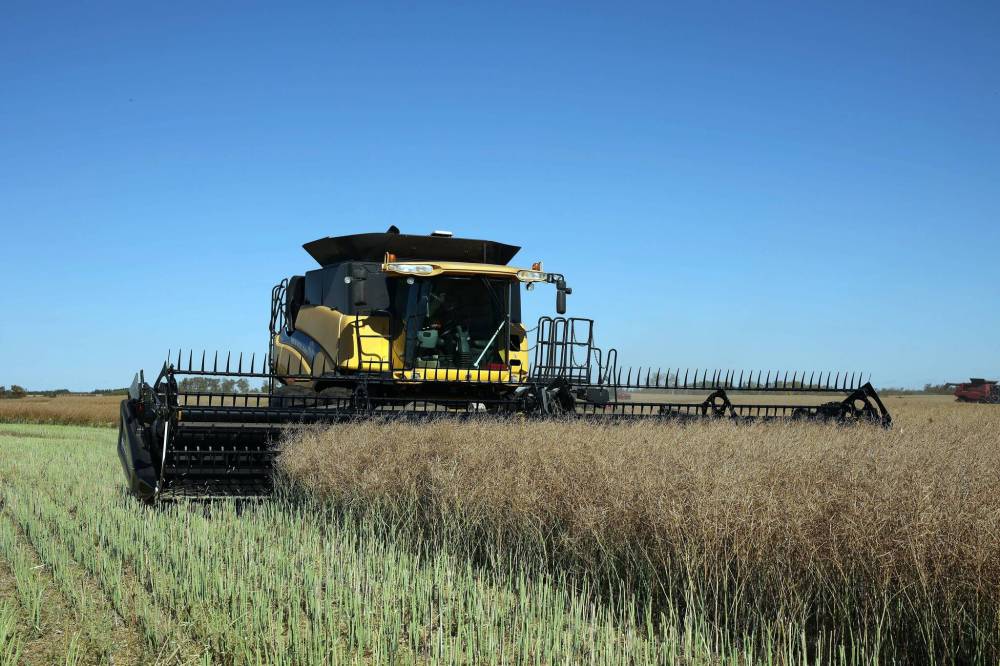
One of four combines works to harvest 125 acres of canola near Oakden in 2024. The sales price of canola is expected to go up this year with sustained demand from several trading partners, including China, which lowered its tariffs on canola in March. (Photo by Tim Smith/The Brandon Sun files)
The tariffs levied against Canada in 2025 acted as a catalyst for some forward thinking, he said — regarding the United States as well.
“The tariffs kind of woke us up,” he said. “Complacency sometimes needs to have a ‘reset’ button, and that’s exactly where we are.”
Canada’s canola exports to China fell 62 per cent last year and exports to the United States fell nine per cent when faced with tariffs, according to an article from Export Development Canada. At the same time, Canada increased its exports to other countries by 161 per cent.
The pivot was helpful but did not cover the complete loss, as at the end of the 2025 year, Canada’s total canola exports were down 7.4 per cent.
Prusakowski said the 2025 trade pivot strengthened Canada’s export options, and opens Canada to more sustained, diverse demand going forward. China is a leading export destination for Canadian canola.
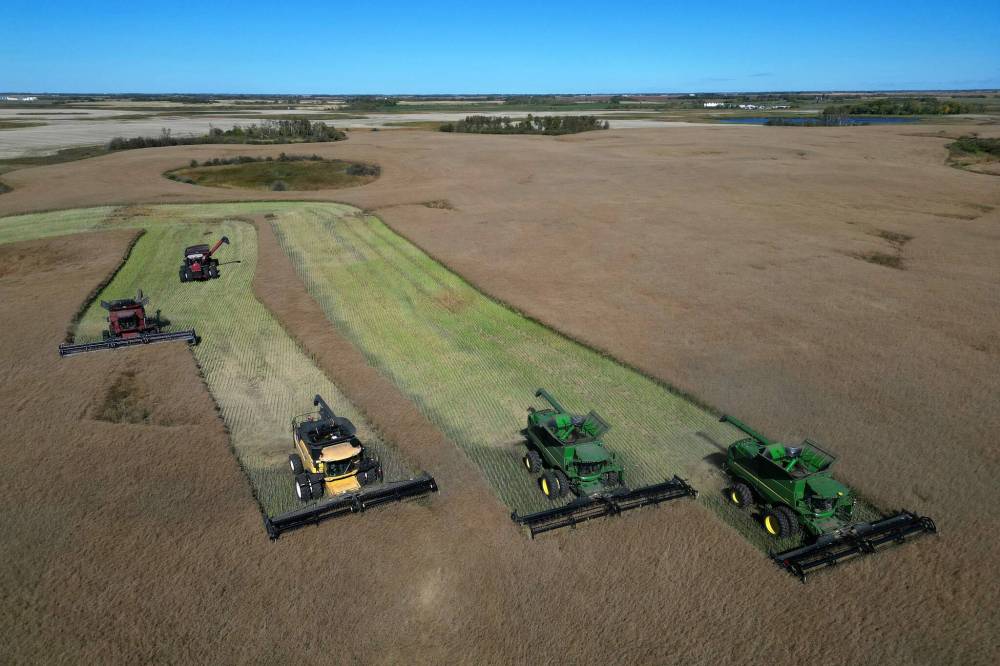
Four combines and a grain cart work to harvest 125 acres of canola near Oakden in 2024. The sales price of canola is expected to go up this year with sustained demand from several trading partners, including China, which lowered its tariffs on canola in March. (Tim Smith/The Brandon Sun files)
»cmcdowell@brandonsun.com

Keystone Agricultural Producers president Jill Verwey says more acres of canola are expected to be seeded this year following China lowering its tariffs on the commodity, but farmers consider their crop rotation as more important than market fluctuations. (File photo)