
Southern Manitoba’s population growth puts new pressure on health system, report finds
Advertisement
Read this article for free:
or
Already have an account? Log in here »
We need your support!
Local journalism needs your support!
As we navigate through unprecedented times, our journalists are working harder than ever to bring you the latest local updates to keep you safe and informed.
Now, more than ever, we need your support.
Starting at $15.99 plus taxes every four weeks you can access your Brandon Sun online and full access to all content as it appears on our website.
Subscribe Nowor call circulation directly at (204) 727-0527.
Your pledge helps to ensure we provide the news that matters most to your community!
To continue reading, please subscribe:
Add Brandon Sun access to your Free Press subscription for only an additional
$1 for the first 4 weeks*
- Enjoy unlimited reading on brandonsun.com
- Read the Brandon Sun E-Edition, our digital replica newspaper
*Your next Free Press subscription payment will increase by $1.00 and you will be charged $20.95 plus GST for four weeks. After four weeks, your payment will increase to $24.95 plus GST every four weeks.
Read unlimited articles for free today:
or
Already have an account? Log in here »
Southern Manitoba’s population is growing rapidly, creating new demands on a health-care system already seeing increased use of services, according to a new report from Southern Health-Santé Sud.
The health region had nearly 238,000 residents in 2025, up 12 per cent from 2020. That population is projected to increase by another 19 per cent by 2035, or roughly 45,000 people, the largest projected increase among Manitoba’s health regions.
The growth is already being reflected in the volume of health services being delivered, according to Southern Health’s 2026 Population Health Assessment.
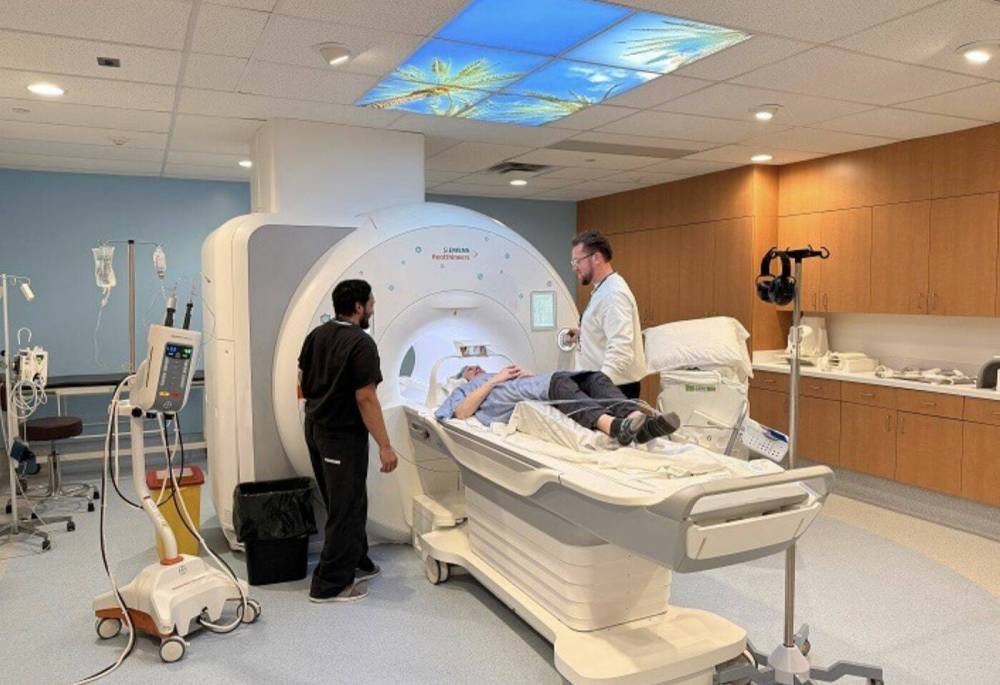
Southern Manitoba’s projected 19 per cent population growth by 2035 is expected to increase pressure on health-care services while existing disparities in access and health outcomes persist. Pictured above are recent upgrades to the MRI suite at Boundary Trails Health Centre. (Photo courtesy Boundary Trails Health Centre Foundation)
The report points to increases in primary-care visits, diagnostic testing, surgical services and the number of residents living in personal-care homes.
Even when service-use rates remain relatively stable, the report says population growth means more people will be accessing the health-care system, potentially putting additional pressure on existing services.
Southern Health said it regularly reviews population data alongside information about health-care providers and facilities to determine where additional staffing or infrastructure may be needed.
“The team regularly meets with regional planning advisors to review population statistics in correlation with health provider and facility statistics,” the health region said in a written response.
The findings are presented to Southern Health’s board of directors annually and are used to inform operational planning.
The region pointed to recent and planned infrastructure projects as part of its response to population growth, including expansions at its three regional centres and additional personal-care-home capacity at Boyne Lodge and Rest Haven.
Southern Health also said technology and new models of care could help create efficiencies and accommodate increased demand.
But the region’s growth is not occurring evenly, and neither are its health outcomes.
The assessment identifies significant differences between Southern Health districts in health outcomes, health-care use and the social and economic factors that influence health.
Residents in the lowest-income rural areas generally have poorer health outcomes and higher health-care use than those in the highest-income areas. The report also found that the gap between the lowest- and highest-performing districts widened for most of the indicators examined.
The report emphasizes that health outcomes are influenced by more than access to medical care, including the social, economic and environmental conditions in which people live.
Despite those disparities, Southern Manitoba performs better than the provincial average on several measures. Residents have higher life expectancy, while the region has lower rates of cancer and diabetes, along with lower rates of arthritis, osteoporosis, injury hospitalizations, mood and anxiety disorders and substance-use disorders.
The report cautions, however, that lower rates of some conditions do not necessarily mean residents are healthier. Fewer diagnoses could, in some cases, reflect reduced access to health services rather than a lower underlying burden of disease, it says.
That makes access to care an important consideration as the region’s population continues to expand.
Southern Health said the Population Health Assessment provides an evidence base for monitoring population changes and planning services. The findings will be considered alongside other plans and reports as the health region prepares for the needs of a growing population.
» Winnipeg Sun