
How about them apples? They’re now in season
Advertisement
Read this article for free:
or
Already have an account? Log in here »
We need your support!
Local journalism needs your support!
As we navigate through unprecedented times, our journalists are working harder than ever to bring you the latest local updates to keep you safe and informed.
Now, more than ever, we need your support.
Starting at $15.99 plus taxes every four weeks you can access your Brandon Sun online and full access to all content as it appears on our website.
Subscribe Nowor call circulation directly at (204) 727-0527.
Your pledge helps to ensure we provide the news that matters most to your community!
To continue reading, please subscribe:
Add Brandon Sun access to your Free Press subscription for only an additional
$1 for the first 4 weeks*
- Enjoy unlimited reading on brandonsun.com
- Read the Brandon Sun E-Edition, our digital replica newspaper
*Your next Free Press subscription payment will increase by $1.00 and you will be charged $20.95 plus GST for four weeks. After four weeks, your payment will increase to $24.95 plus GST every four weeks.
Read unlimited articles for free today:
or
Already have an account? Log in here »
Fall has rolled in with sweaters on pegs, autumn leaves and air as crisp as fresh apples. And that means apples are in season, ready to be enjoyed fresh, baked into goodies or even cooked up with savoury main and side dishes.
For apples to grow out here on the Manitoba prairies, they must be cold-hardy cultivars that will survive and thrive in spite of our cold winters. The two best known are the Manitoba apple, which was first developed at the Morden Experimental Station in 1931 and the goodland, developed in 1925.
A powerful nutritional punch comes with the apple’s sweet crunch with the red delicious coming in first with its dark skin boasting disease-fighting antioxidants. Honeycrisp and Fuji are close behind in health-protecting plant compounds.
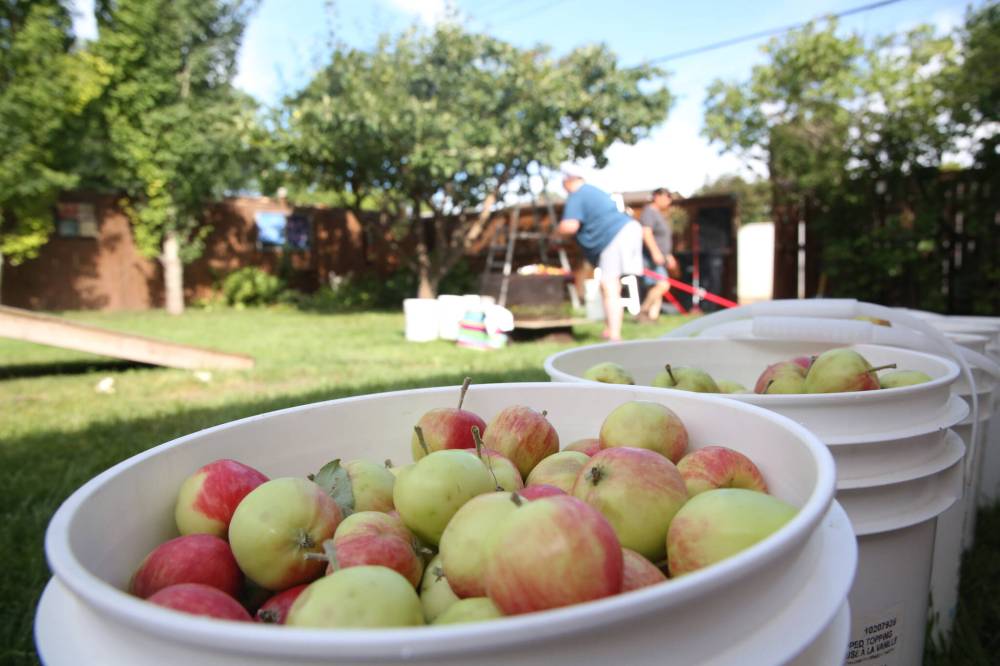
Fuji and red delicious are especially high in fibre (about four grams per apple) and pectin, a soluble dietary fibre. Pectin helps promote gut flora in the digestive tract. Fibre also promotes fullness and having a small serving of cheese or chopping an apple into some cottage cheese is a tasty and nutritionally sound snack.
Granny Smiths have less sugar and a lower glycemic index (meaning blood sugar increase is not steep), which makes them a good choice if blood sugar control is a concern.
Fresh and whole, thoroughly washed is the best way to eat apples, including the peel. The exception is to peel them for very young children to prevent the possibility of choking. Once kids can safely handle the peel, a fun way to encourage them to eat some fruit is to cut a pumpkin face into a whole apple.
It’s important to wash apples really well before eating to ensure that wax and any residues from surface pesticides are removed. However, only wash apples just before serving. Do not wash them before storing them in the fridge as that will shorten their shelf life and promote mould.
It has been shown that soaking apples in a solution of baking soda and water for 15 minutes is the most effective way of cleaning them. Baking soda does a better job of breaking down those unwanted chemicals than plain water or even water and vinegar together.
To make a cleaning solution, add five millitres (one teaspoon) of baking soda for every 500 ml (two cups) of water. Use enough of the solution in a large enough bowl to completely submerge the apples. To keep them under water, place a heavy plate on top. Leave the apples submerged for 15 minutes. Remove apples and scrub gently with a produce brush while rinsing thoroughly under cool running water. Pat dry.
Apples are best kept in a crisper drawer in a plastic bag with holes. This helps to keep them fresher by allowing them to release ethylene gas, which speeds spoilage.
Apple cooking lends itself to a variety of flavours and spices. If you’re looking for something warming, cinnamon is a familiar flavour baked into a dessert or simply sprinkled on fresh apple slices. Nutmeg in applesauce or pies will add a nuttier and slightly sweet flavour. Allspice — as its name suggests — flavours apples like a mix of cinnamon, nutmeg and cloves. Cloves add a warm, spicy sweet flavour but need to be added very lightly as cloves can easily overwhelm. Any of these can be added to any apple dessert.
For brighter flavours, ginger brings a slight bite with a citrus note. Cardamom has a slightly floral and spicy taste. Ground cardamom is also good lightly sprinkled on raw apple. For a lighter and somewhat peppery kick, try recipes calling for mace.
Sweet as they are, apples work well with savoury dishes, especially pork. Happy pairings include sage (as with stuffing), rosemary, especially if making apple jelly, and thyme in baked or roasted dishes.
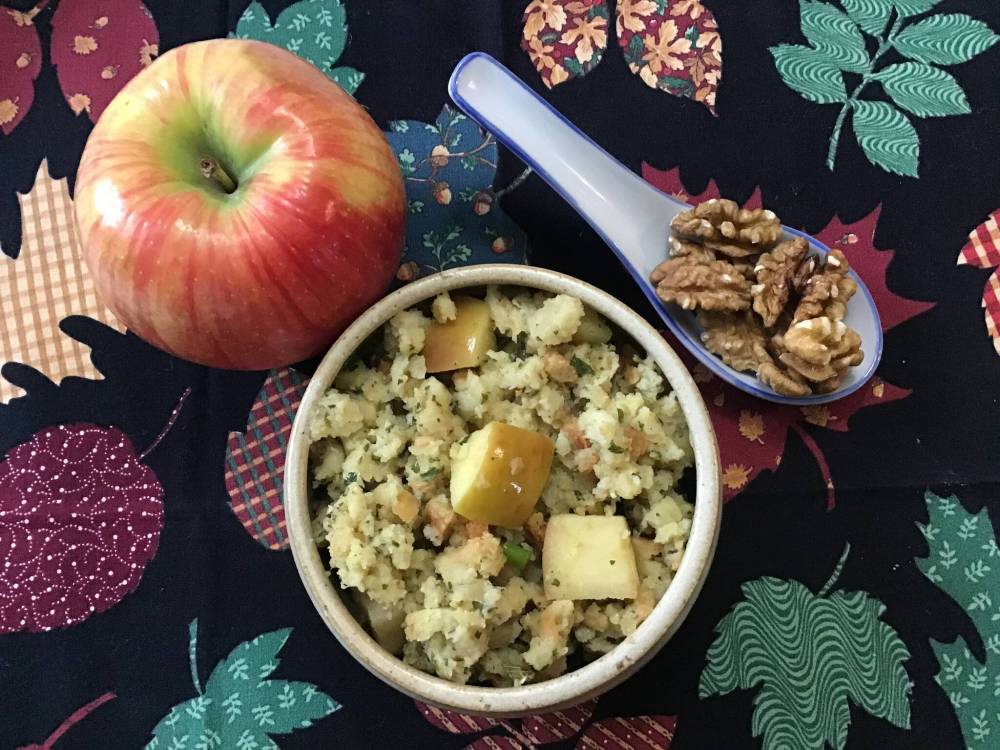
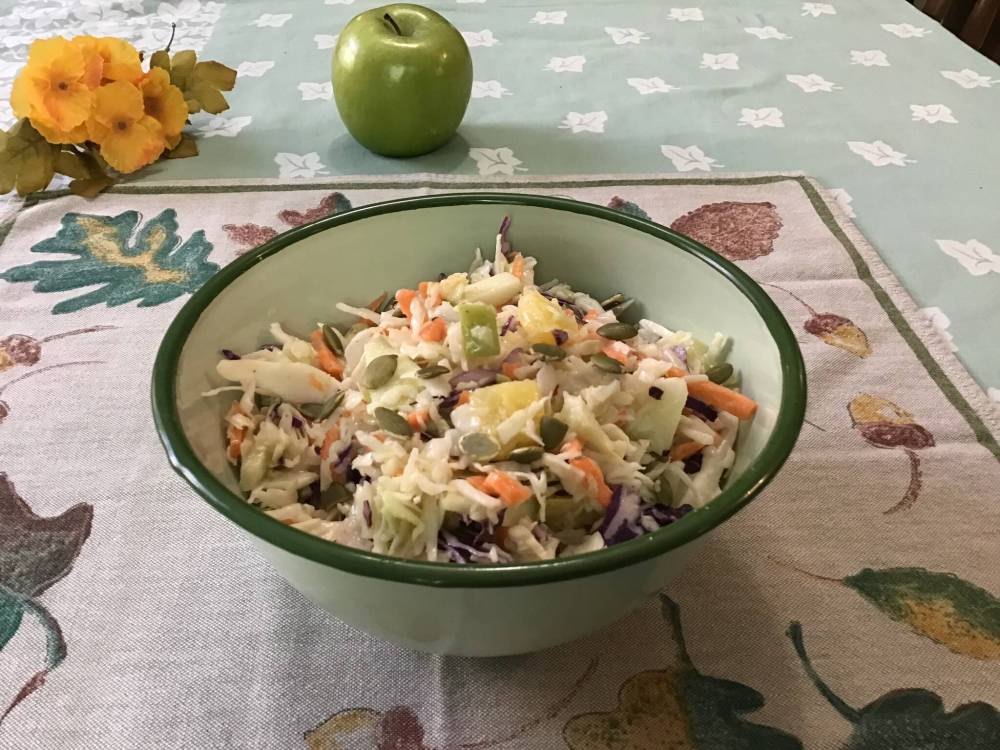
Thanksgiving is not far away and there are plenty of fresh apples (and apple recipes) to add to your menu. Coleslaw with a hint of curry would make a good side with leftover turkey.
» wendyjbking@gmail.com