
Killarney Meats thriving during pandemic
Advertisement
Read this article for free:
or
Already have an account? Log in here »
We need your support!
Local journalism needs your support!
As we navigate through unprecedented times, our journalists are working harder than ever to bring you the latest local updates to keep you safe and informed.
Now, more than ever, we need your support.
Starting at $15.99 plus taxes every four weeks you can access your Brandon Sun online and full access to all content as it appears on our website.
Subscribe Nowor call circulation directly at (204) 727-0527.
Your pledge helps to ensure we provide the news that matters most to your community!
To continue reading, please subscribe:
Add Brandon Sun access to your Free Press subscription for only an additional
$1 for the first 4 weeks*
- Enjoy unlimited reading on brandonsun.com
- Read the Brandon Sun E-Edition, our digital replica newspaper
*Your next Free Press subscription payment will increase by $1.00 and you will be charged $20.95 plus GST for four weeks. After four weeks, your payment will increase to $24.95 plus GST every four weeks.
Read unlimited articles for free today:
or
Already have an account? Log in here »
Hey there, time traveller!
This article was published 28/05/2020 (2334 days ago), so information in it may no longer be current.
The COVID-19 pandemic has been rough on farmers, but a Killarney business has been booming under the circumstances.
Killarney Meats has had such a demand from livestock producers that the slaughterhouse is currently booking clients into this fall.
Co-owner Ian Jensen, who runs the business with partners Ronilo Sardal and Brittney Ross, told the Sun he’s never had a backlog that big before. “The phone never stops ringing,” Jensen said.
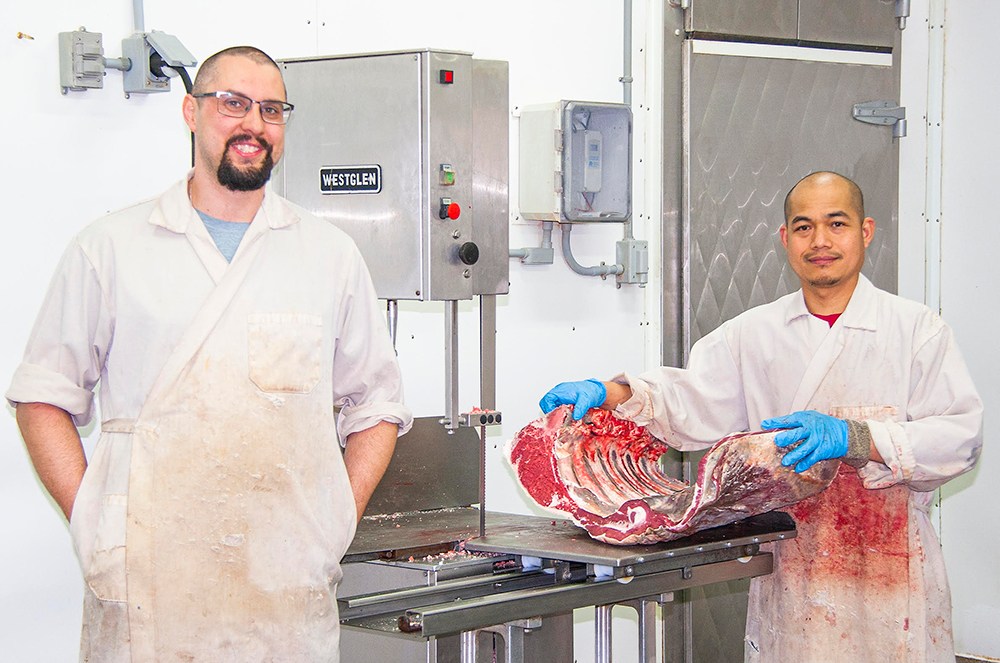
“Usually we can book work three to four weeks out,” he said. “Right now, we’re booking clients into mid-September, three to four months out at this point. I’ve been here five years, and this is the first time it’s gone this far out.”
Jensen isn’t sure if his customers would have ordinarily sent their livestock to be processed in the plants in the United States and Canada that have been temporarily shut down after employees were diagnosed with COVID-19, but the situation has certainly driven business his way.
“We thought maybe something like this would happen, but not the way it’s panned out in the end, no,” he said. “It’s been nice to be important to the community.”
He thinks the increase is likely from farmers looking to supplement their income by selling meat directly to customers during the pandemic instead of going through middlemen. There are also a couple of producers Jensen works with who market their meat to Brandon and Winnipeg that he said have seen a “very large” increase in demand for their products.
“Price volatility has been a key concern for producers since the onset of the pandemic,” Manitoba Beef Producers told the Sun in an emailed statement. “Further, processing plant disruptions have slowed the movement of cattle to these facilities, adding extra feeding costs. It has been estimated the Canadian beef industry will lose half a billion dollars by June on market-ready cattle alone if the situation isn’t addressed.”
According to Jensen, the restrictions put on businesses to prevent the spread of the virus haven’t affected them much because they were already doing many of the suggested safe practices as a food processor. “Everybody washes their hands 50 times a day,” he said.
The other side of the business is a retail storefront, and they’ve also seen success there. Jensen said profits from the storefront are three or four times above normal right now. He said ground beef is currently the biggest seller followed by themed meat packages, such as packs of steaks that have been far more popular than they expected.
Jensen’s specialty is making sausages, while his partner handles the custom meat cutting. Killarney Meats sells 12 different kinds of sausages and has helped customers develop custom sausage flavours.
“I think the sausage book has got 50 recipes in it now,” Jensen said. He added that the Friday before the interview, the business made just over 270 kilograms of sausage in one day.
On an average day, the shop can process two beef carcasses or 10 to 12 pigs, although that can change depending on the size of each animal. With the business practising social distancing, the bulk of their orders are coming over the phone or through social media.
They’re not delivering, though. “We’re not really set up for delivery here,” Jensen said. “We’re just a small town, so it never really seemed like a thing (to do).”
If customers let them know when they’ll be arriving at the business, they’ll package things up for curbside pickup.
The employees are getting extra business and working extra hours during the week, but Jensen said they’re making sure no one works on weekends so everyone can spend time with their families.
» cslark@brandonsun.com
» Twitter: @ColinSlark